13 Wonderful Things To Do in Lake Atitlán, Guatemala
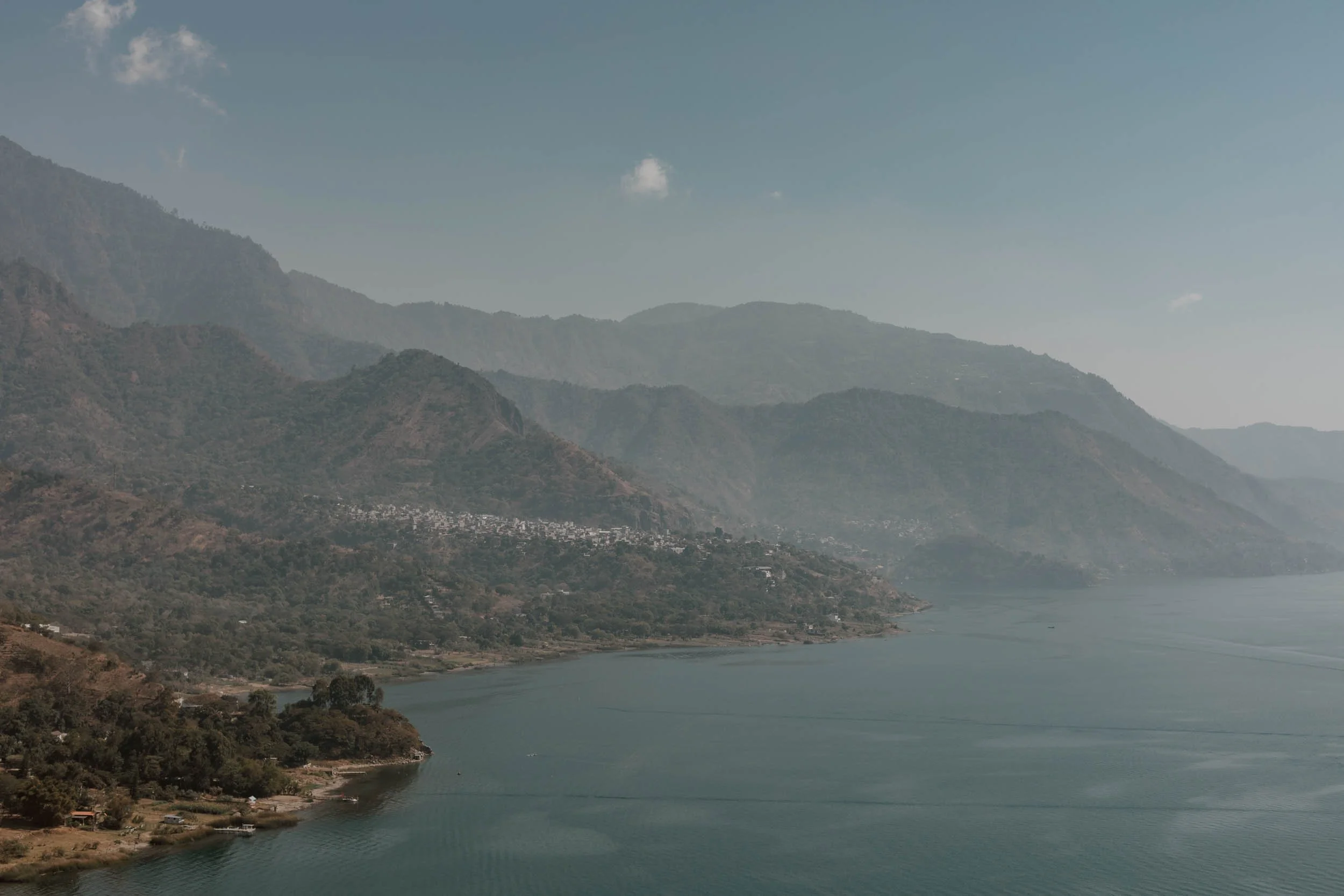
Want to know the secret to making the most of Lake Atitlán?
Forgetting, momentarily, that it's a lake at all.
That may sound like a foolish or impossible endeavour. This is, after all, the most storied, famous, and beautiful body of water in Central America, and a core part of every first-time Guatemala itinerary.
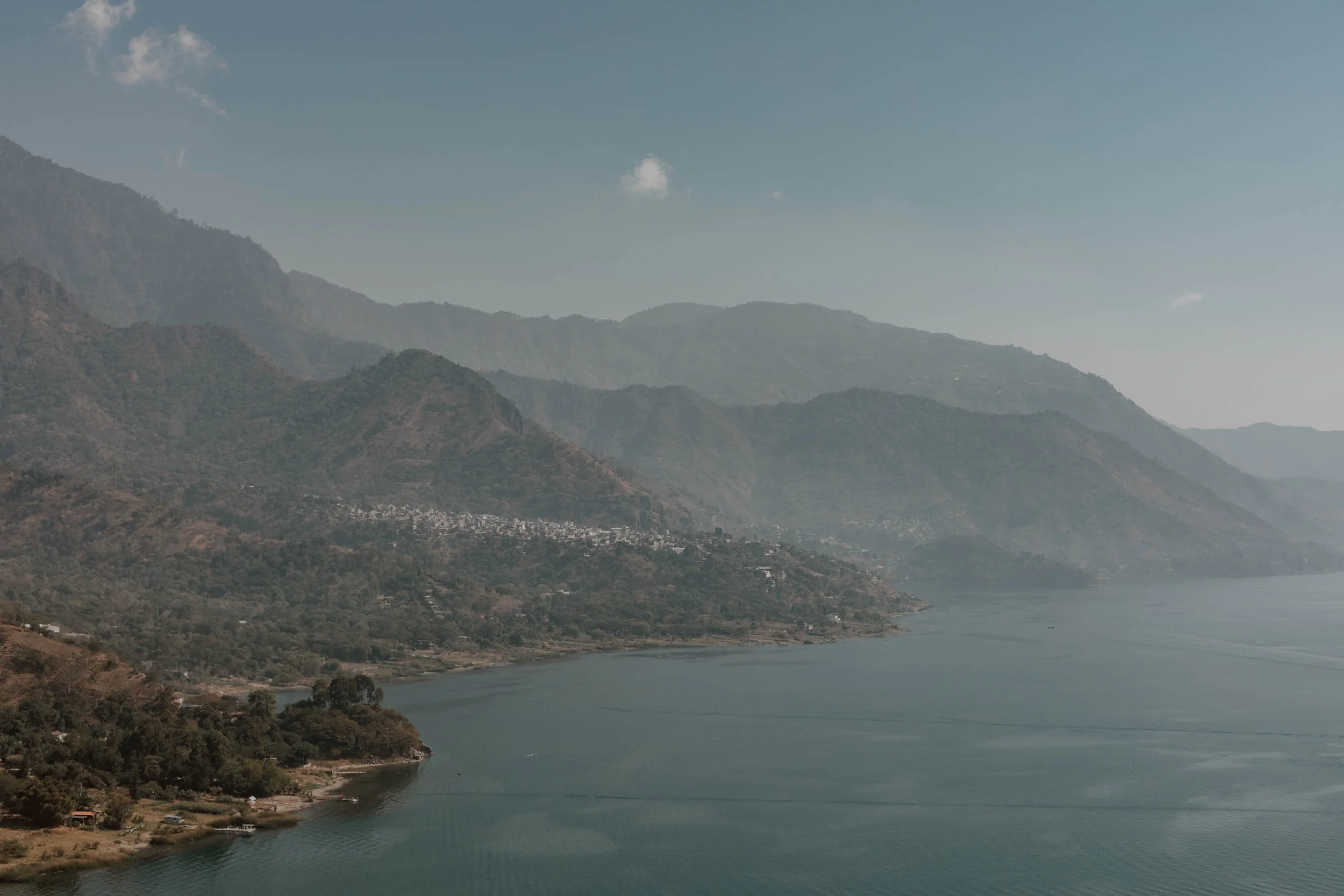
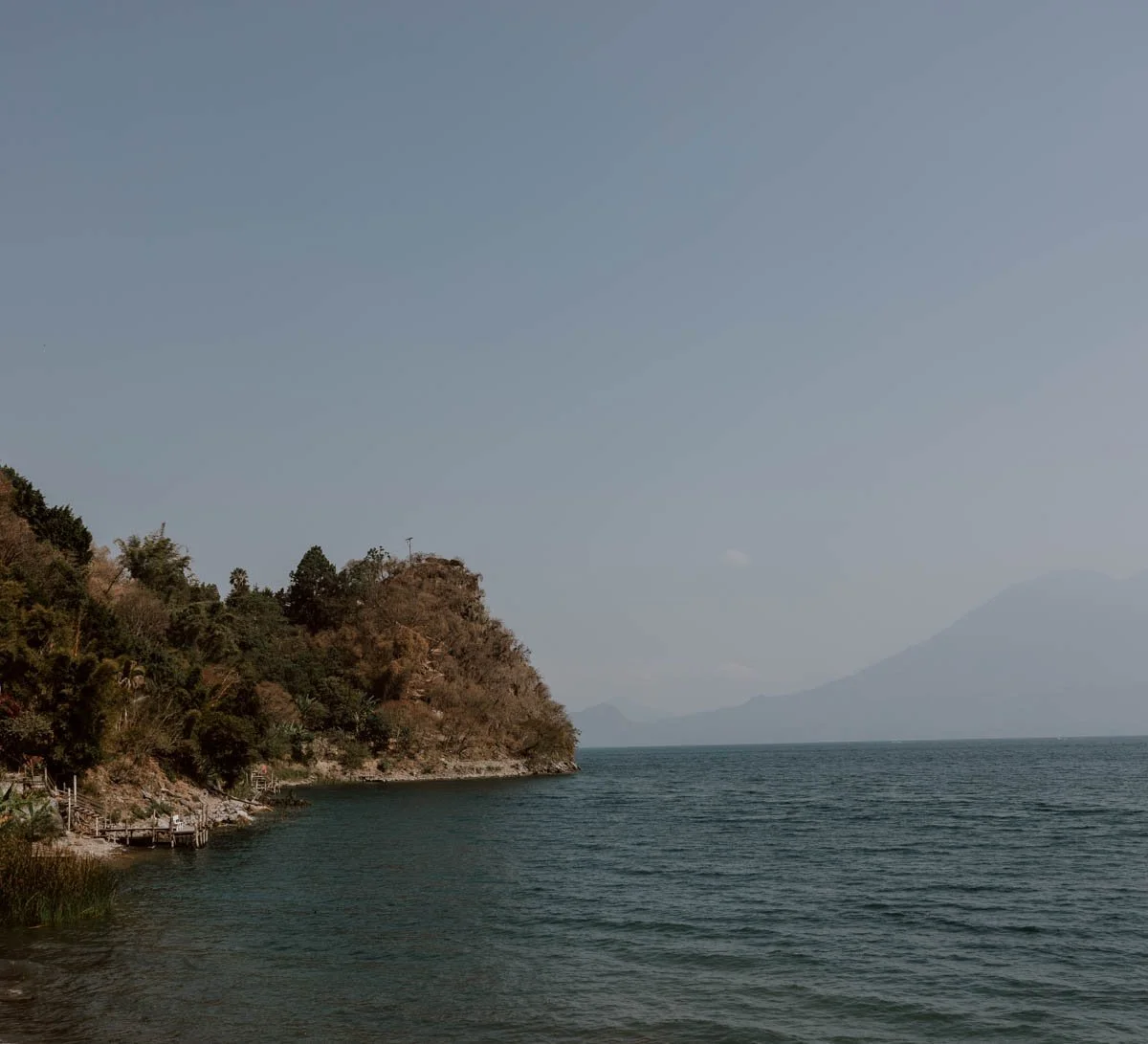
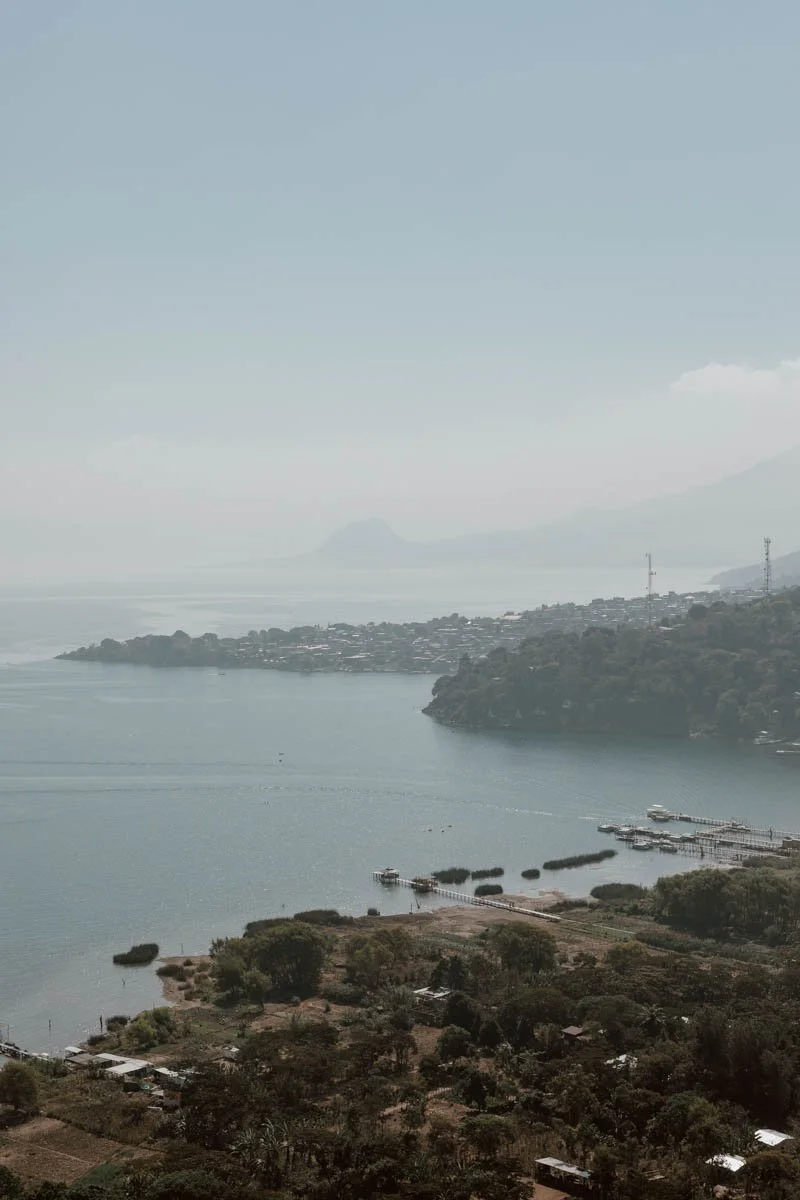
Formed thousands of years ago within the crater of a volcanic eruption, Lake Atitlán is ringed by three stoic volcanic guardians - San Pedro, Atitlán, and Tolimán - and stark, steep hills and valleys. Its deep high-altitude waters, covering an area bigger than Paris or San Francisco, are imbued with much spiritual significance by the indigenous Maya communities that live on the shoreline.
When cast in the golden light of a still morning, the landscape can move one to tears. As the afternoon mists roll in below the peaks, rising waves and currents give the impression of facing out to sea. Under the silent moonlight, it feels as though everything - and everyone - has disappeared.
Aldous Huxley was on to something when he called it “too much of a good thing”.
And yet, beyond the romance, it is also a home and a highway: a road as much as a lake.
Official and unofficial low-slung fibreglass boats zip along and across it all day, ferrying those who live and visit between the dozen or so Maya-majority towns named after disciples. When first planning time in Lake Atitlán (Lago de Atitlán), many travellers misunderstand is that it isn’t one destination: it’s a body of water, it’s an impossible cluster of volcanoes, and it’s a collection of distinctive towns and villages.
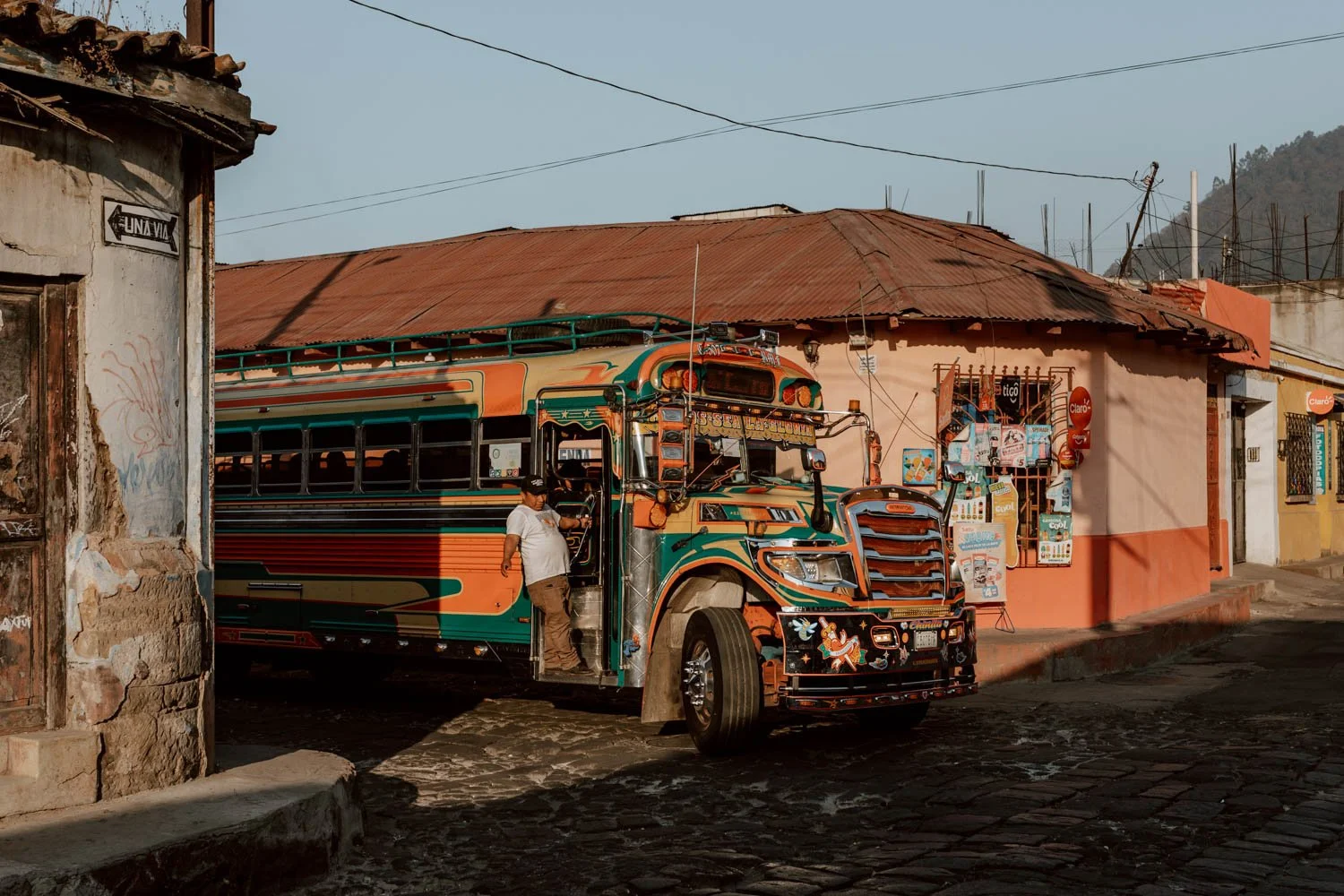
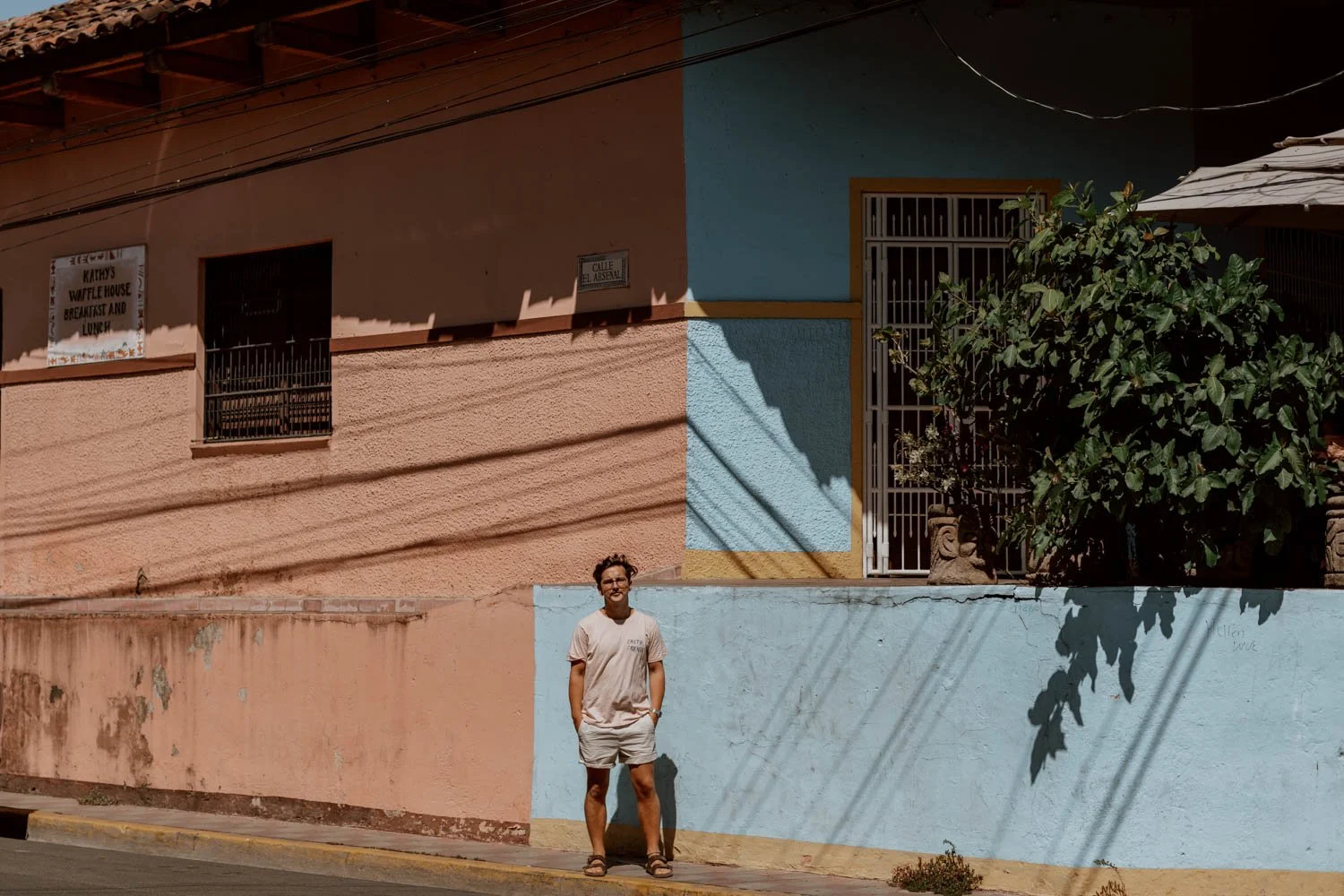
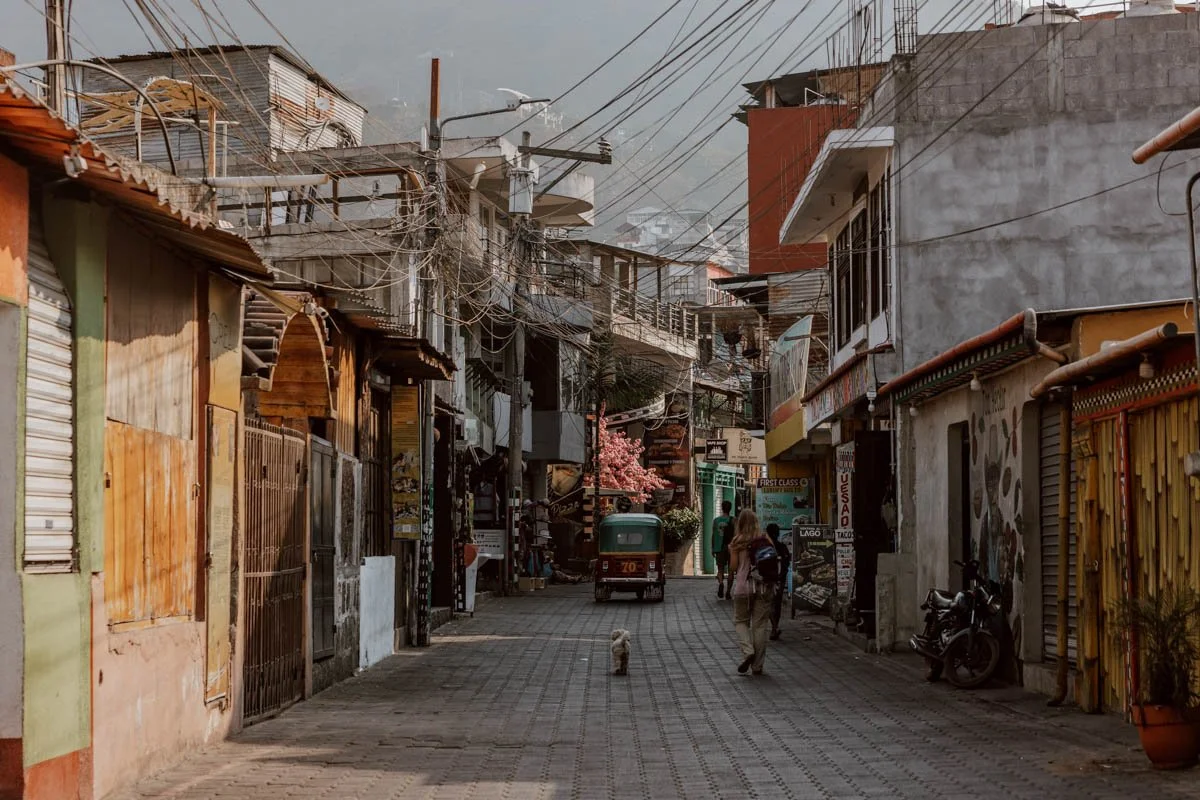
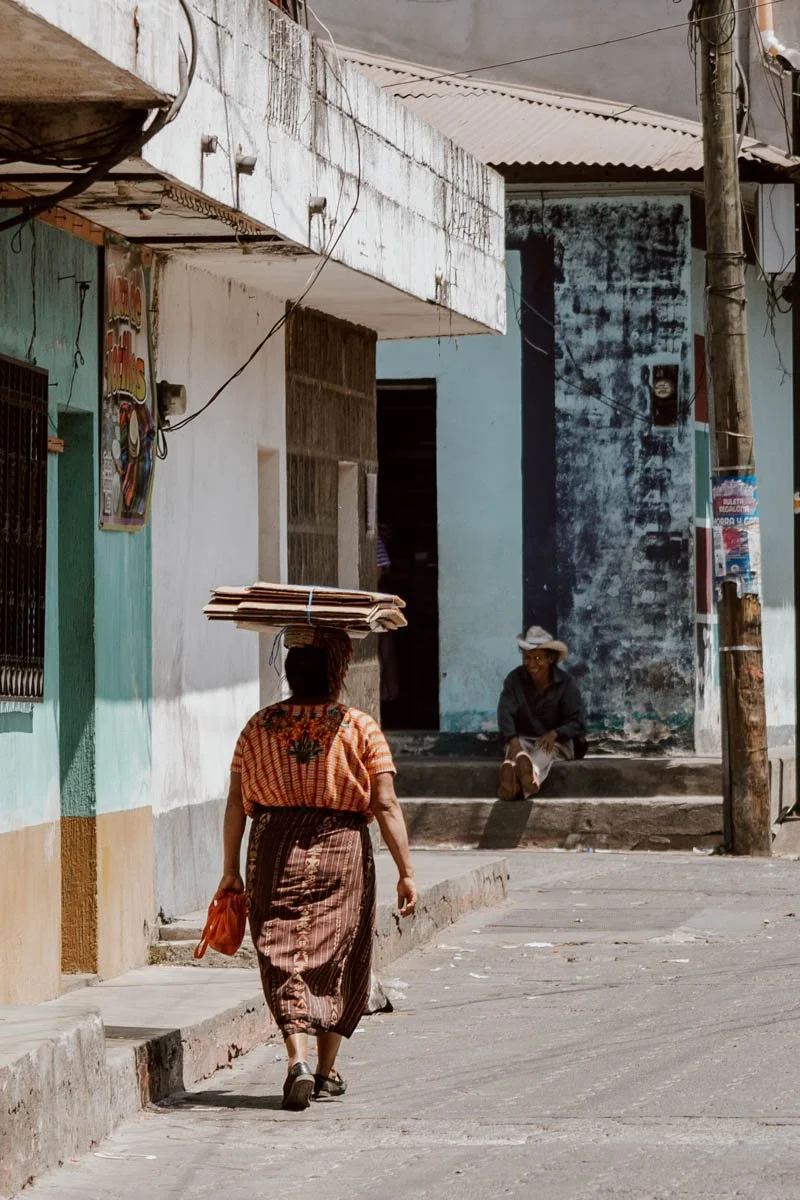
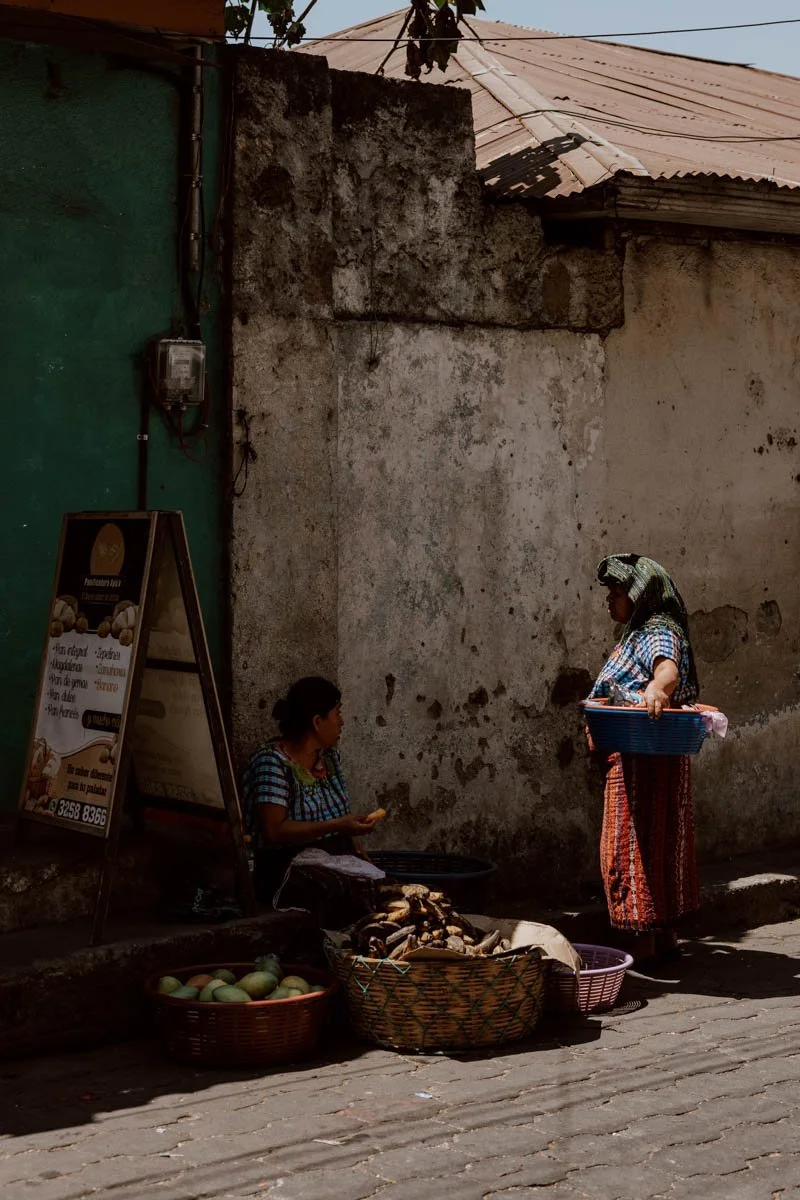
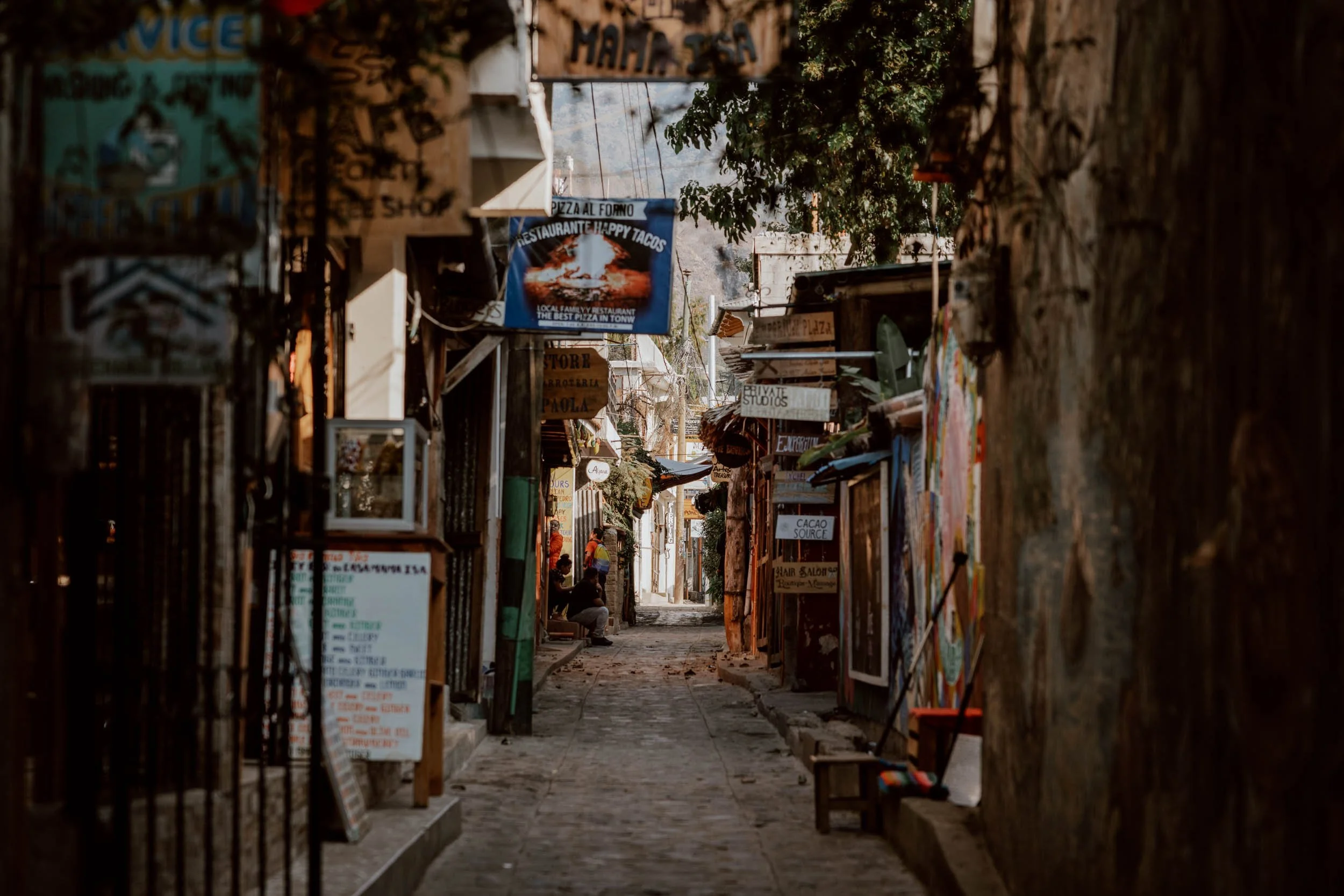
Many activities involve zipping across the lake to spend time in these towns, but this often takes you away from the shore and into a typically Guatemalan street of grey concrete, oozing mortar, ochre brick, tangled wires, hairdryer engines, and big blocks of colour to promote a political party, corn, cerveza, or Coca-Cola. That urban environment - rather than swimming or sitting with your feet dangling in the blue, sunbathing on secret beaches, or hanging out on a boat deck for sunset dips and dives - can often characterise much of a rushed or poorly-planned stay.
Yes, this will be interspersed with some fantastic views, but the truth is that Lake Atitlán can disappoint because some travellers expect something quite different, and in that gap between expectation and reality, frustration arrives.
Indeed, that mismatch and surprise that being around the lake is often more fundamental than being out on the lake is why some leave Lake Atitlán after two or three days asking themselves what all the fuss was about (and why on earth there were so many hippies).
Fundamentally, from our two trips a decade apart, we've learned what it is and what it isn’t as a destination - and that there’s a way to do it better.
To give you a balanced perspective on the Lake Atitlán travel experience, and ensure mismatched or unrealistic expectations don't prevent you from finding some of its magic, one must appreciate that the towns, the makers, the produce, the nightlife, the noise, the boats, and the indigenous communities are all as much a part of the travel experience here as the stunning vistas.
This is 13 Wonderful Things To Do in Lake Atitlan, Guatemala.
The Lake Atitlan Essentials
Swim / In the Cerro Tzankujil nature reserve
Hike / The Indian Nose for sunrise - this is the tour we recommend
Watch / The weavers of San Juan La Laguna
Search / For the folk saint Maximon
Learn / Spanish at affordable language schools
Find / The perfect lakeside retreat
Hop / Between the towns and villages by boat
Join / The San Marcos wellness community
Eat / At social-purpose restaurants
Go / Kayaking or high-altitude diving
Taste / Local coffee and chocolate
Visit / Chichicastenango market
See / The painted town of Santa Catarina
The Best Things To Do In Lake Atitlán
Swimming At Cerro Tzanjukil
We adored our days on Cerro Tzankujil.
When the sun is shining, this is the place that perfectly captures those lakeside summertime vibes you may be hoping to find on Lake Atitlán.
It’s a small, sacred nature reserve on the western side of San Marcos La Laguna, and there are several altar points where local ancestral ceremonies continue to take place; its protected designation became even more important as tourism expanded along the shoreline.
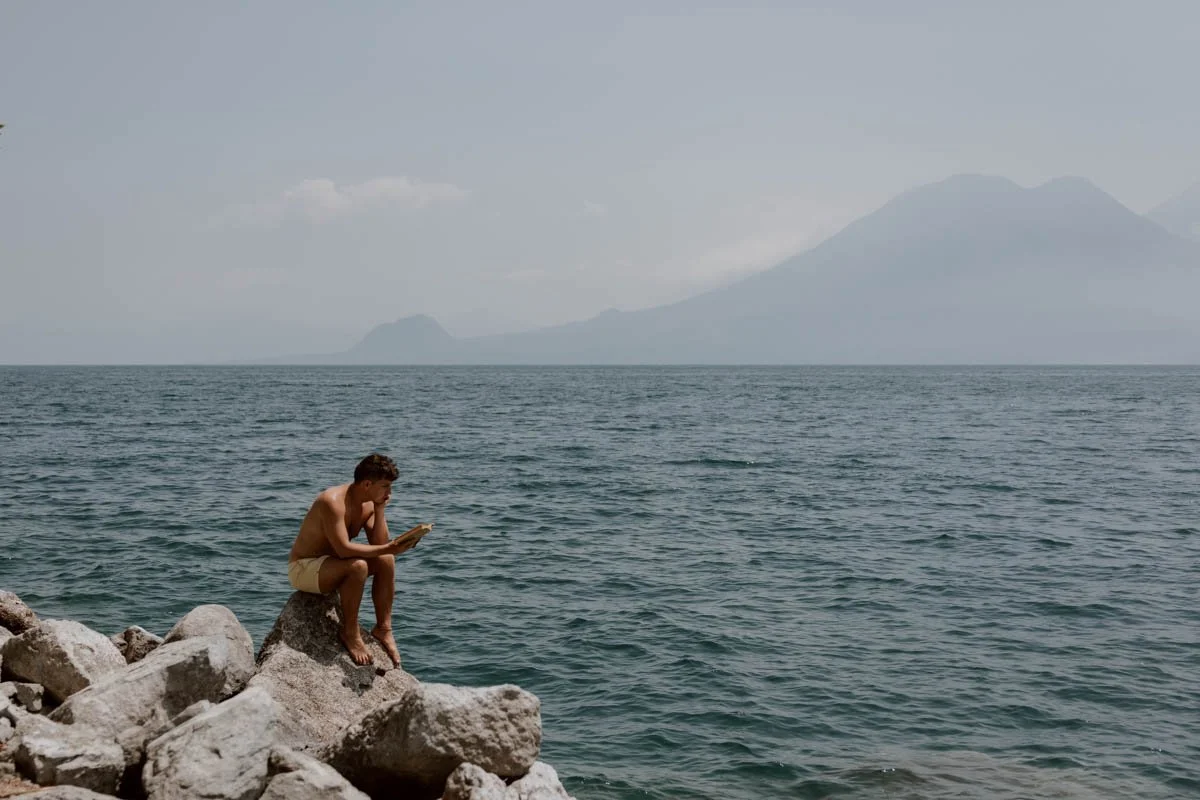
There are several very short, manageable nature trails amongst the tropical forest to viewpoints and the altars but, for most travellers, the real draw lies down by the rocks and the water.
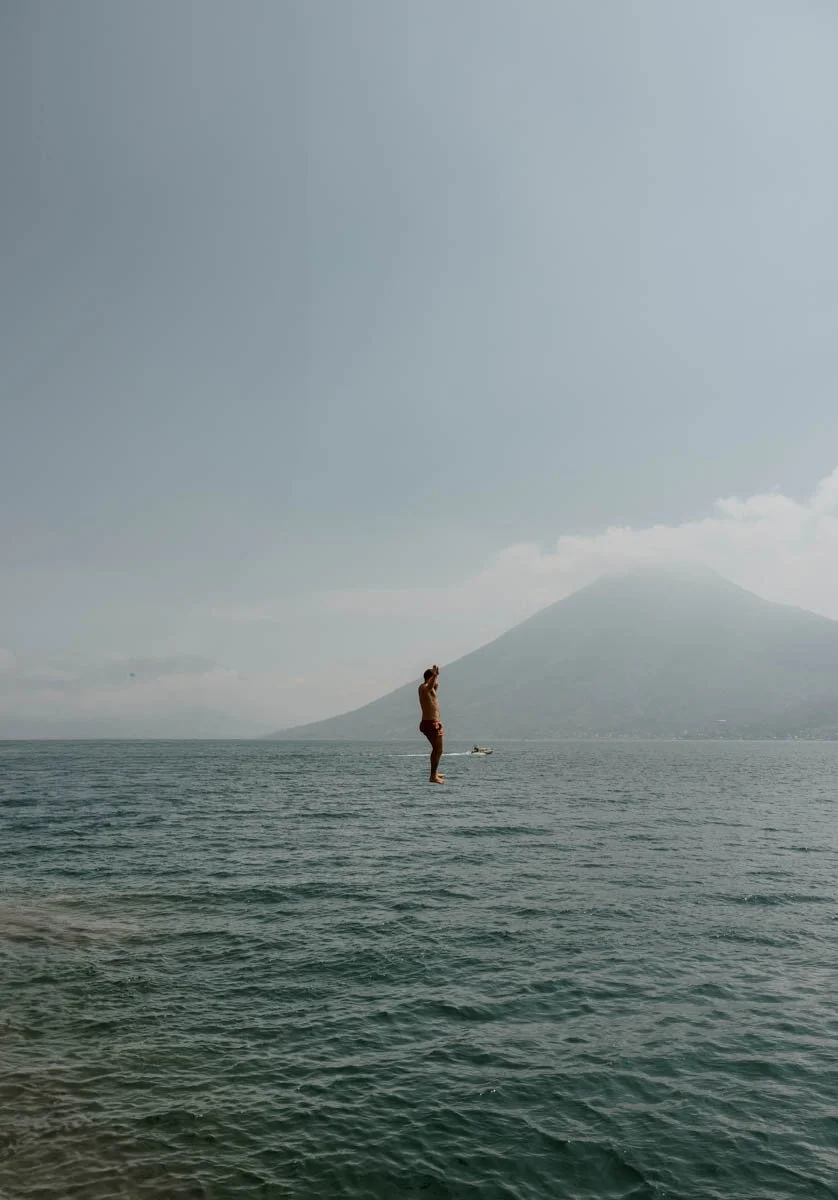
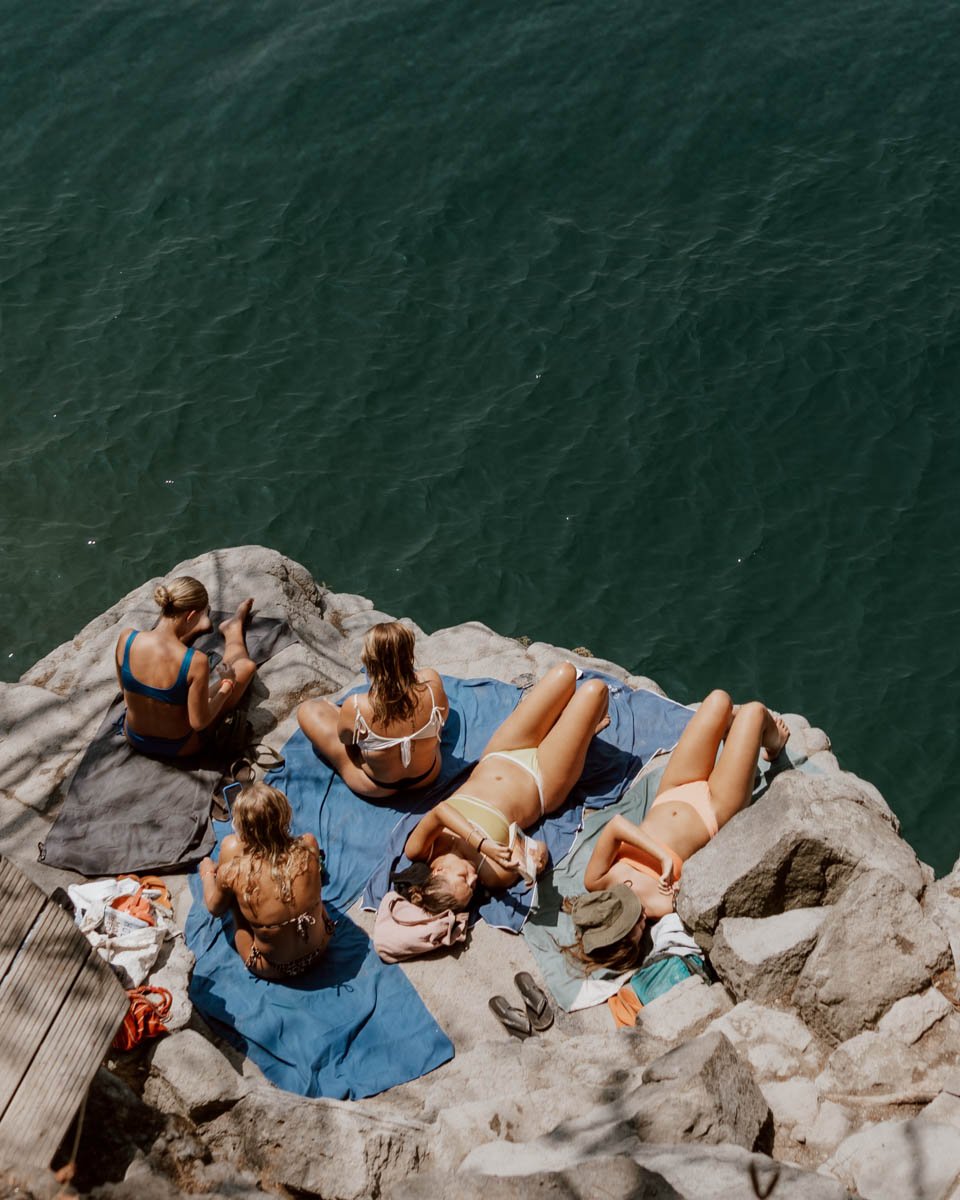
One can sunbathe for hours, swim in the shallow or deep and, if you're feeling adventurous or brave, jump from the 12-metre platform (misleadingly referred to as a ‘trampoline’).
It really is a fantastic spot, blessed with those quintessential Atitlan views of the water framed by volcanoes.
Where + When | Cerro Tzankujil is located in the town of San Marcos, about 5-10 minutes walk from the main dock: find it here on Google Maps. From the entrance, you can bear left to go straight to the rocks and swimming / sunbathing area., or go right and up to access the nature trails, Mayan altars and viewpoints.
It’s open every day from 8am to 4pm, and you’ll have to leave by about 4.10ish. Entry is 20Q for foreigners (extranjeros), cash only.
We suggest giving yourself two or three hours to make the most of it. For those of you visiting Lake Atitlan in the cooler, inclement season, the experience of the reserve will unfortunately get downgraded quite a bit but it’s still worth including in your plans.
Plan | We've shared more details in our short San Marcos La Laguna Travel Guide
Travel Tip // There are a few ‘beaches’ to be found on the shores of Atitlan, but they genuinely aren’t worth getting that excited about or basing your trip around.
Hike The Indian Nose For Sunrise
Our second trip to Lake Atitlan began at its most stunning viewpoint with two armed police officers.
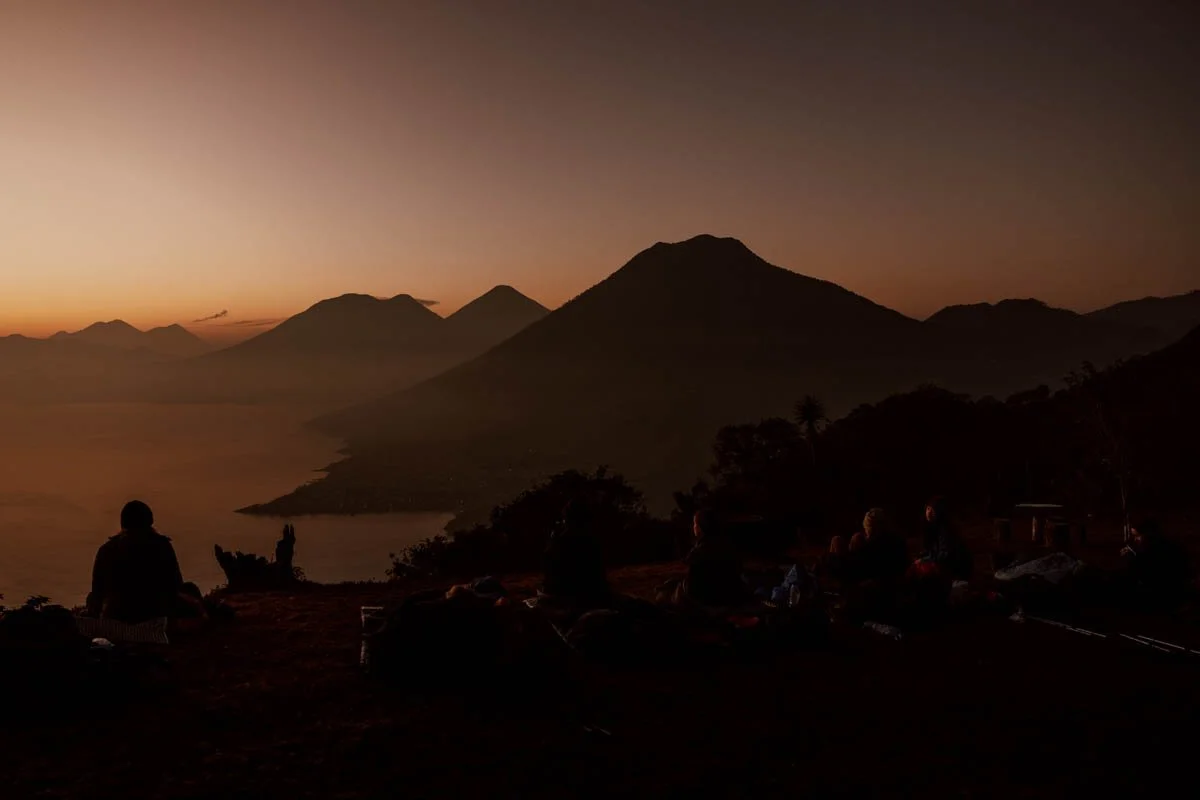
After hiking three days from Quetzaltenango, snuggled up in our sleeping bags with porridge and coffee in hand, we watched the sun rise above the peaks of Tolimán, Atitlán, and San Pedro.
With the water mirroring the changing light, the contours of Lake Atitlán slowly revealed themselves to us out of the darkness, and it was simply one of those perfect, unforgettable travel moments.
Thankfully, to earn that sunrise, you don't have to walk quite that far - but you do have to get up bloody early!
The Indian Nose - so-called as its profile is said to resemble the face of a reclining Mayan man - isn't difficult to access and the walk will be manageable for most. However, the privately-owned land that forms the main viewpoint and a section of the trail is subject to local disputes, and bandits frequently target hikers heading up in the darkness and down in the daylight.
Hold on, don't go!
Hiking the Indian Nose is usually the sort of experience we wouldn't hesitate to do independently but, based on all we learned, saw, and heard, the risk is simply too high; this is the reason our Quetzaltrekkers group had an armed escort!
That’s also the reason why you really do have to opt to join a guided tour with a local guide to give yourself more certainty and security, as well as a guarantee of actually making it up in time to savour the sunrise.
Book | You can find Indian Nose tours offered in pretty much every town on the lake, and they’ll either take you via public or private transport to the start points.
If in doubt, or looking to book before you arrive, this guided sunrise hike is very highly-rated.
You can check out the three-day Xela to Atitlan hike here.
Important // We really don't want to make anyone paranoid about travelling in Lake Atitlán, but the reality is that robberies on certain trails and roads between towns are not uncommon. This was already a long-standing issue when we first visited 10 years ago, and we fully expected it to have dissipated when we returned this year.
Unfortunately it hasn't, despite tourism police being semi-permanently stationed in and around a couple of hotspots and free armed escorts offered for some hikes.
Having travelled extensively across Central America, this is one of the few places where this kind of issue is persistent and well-documented.
For the majority of travellers doing their research (hey, that's you!), the mere knowledge of this fact will minimise the chances of it affecting you. However, it will negatively impact your ability to independently undertake some trails around Lake Atitlan, including one particularly well-known volcano hike (more on that later).


The Weavers of San Juan La Laguna
Each of the dozen or so towns and villages on the shores of Lake Atitlán has something distinctive in their character, population, setting, identity, tourism levels, and traveller demographics.
In broad brushstrokes: San Marcos is for spiritual hippy types (but increasinly bougie). San Pedro for backpackers and boozers. Panajachel for those who didn't do their research, Santa Cruz for those that did. Santiago and Santa Catarina for anyone who wants to be away from most other travellers.
Of all the towns around the lake, San Juan La Laguna perhaps best illustrates the mutual benefits of tourism, both in what it has brought to the local community and what the community brings to the experience of visiting.
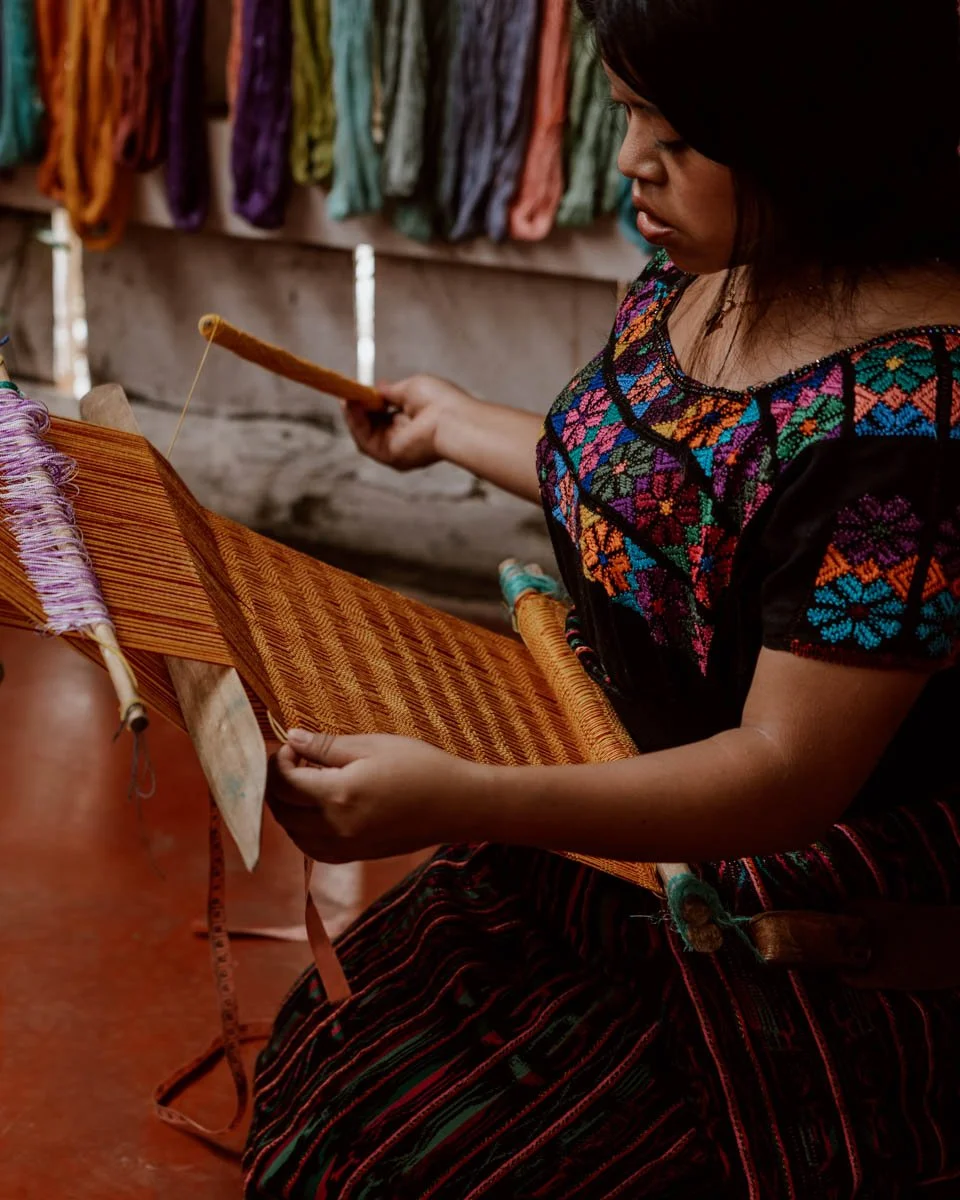
The town is renowned for the presence of several weaving cooperatives that preserve the craft of backstrap weaving, as well as fostering pathways to education and financial independence. Managed predominantly by Tz’utujil women - one of several ethnic groups indigenous to the lake - these co-ops are the best place to appreciate the human-led complexity and artistry of traditional Guatemalan weaving.
Natural dyes and materials are still commonly used to create the intricate, colourful embroidered clothing that is still frequently worn across Guatemala. Each region, and often each village, has its own unique style of huipil (a handwoven blouse worn by women), corte (wraparound skirt), and tzute (a multipurpose woven cloth), and in the Atitlan region you can still see some men wearing fabulous trousers specific to their community.
San Juan is the place to pick up the thread on all of this, as well as give yourself the opportunity to purchase some beautiful, meaningful, and high-quality handmade goods (rather than the mass-produced machine-made fare you'll see on lots of stalls elsewhere in the country).
Most of the weaving co-operatives give free demonstrations, whilst some also offer workshops for those who wish to learn more.
Stay | Though it's becoming busier and busier with day trippers each year, street-art filled San Juan remains an excellent base on Lake Atitlán for a certain type of traveller who prefers things to be a little slower, a little more immersive, and isn't too concerned about having lots of international-focussed restaurants on their doorstep.
We recommend checkout out the following accommodations: Sacred Heart, EcoHostel Mayachik, or Woochooch

Learn Spanish By The Lake
As we’ve mentioned in our guides to Antigua and Quetzaltenango, we know from personal experience just how good a place Guatemala is if you really want to learn or improve your Spanish.
Aside from the affordability of one-on-one classes and excellent opportunities to practise outside the classroom, schools are largely set-up around the rhythms and needs of backpackers and slow travellers. The Spanish spoken in Guatemala is also famous for its clear pronunciation and neutral accent, making it one of the easiest to understand and an excellent choice for language learners.
For those who don't want to be in the two cities, or want to spend longer by the water in a meaningful way, Lake Atitlán is the best choice to do a Spanish school.
Most are concentrated in San Pedro, but there are a few scattered across San Juan, Panajachel, and San Marcos. The classroom is often outside in lush gardens or by the lake, and prices start at around $110 USD for 15 hours of one-one-one lessons, but the rate becomes cheaper the more hours you include or if you buddy up with another student.
If booking a school in advance of your arrival - or travelling specifically to learn by the lake - the most important factor is choosing a school in the town that’s best for your travel style and hopes. For example, if you're looking to pair your learning with a yoga retreat, then San Marcos makes sense, whilst San Pedro is a good shout if you're looking to straddle social with your Spanish! For those who are more focussed on immersion opportunities, somewhere like San Juan may be a better choice.
If you're travelling loose and slow, then it's not a bad idea to arrive at the lake, get your bearings, then personally visit some schools before making your pick.
You can read more on how to pick a language school in Guatemala in our short guide.
Travel Tip // Beyond the relative affordability of one-on-one lessons and inclusion of cultural activities, Spanish schools in Lake Atitlán usually offer the option to include a homestay with a local family in your package. Beyond the obvious linguistic and cultural opportunities, this could add a much more meaningful dimension to your overall travel experience in Guatemala.
Go In Search of Maximon
Imagine Keith Richards (or Emily on a good night out), and you're sort of getting close to the saint they call Maximon.
He smokes, he drinks, and he punishes those who fail to provide sufficient offerings. The legends around his origins are numerous - a morally questionable Spanish priest loved by his community, a hard-drinking vagabond Mayan shaman, a judge that favoured indigenous rights, or a special tree that turned out to be a bit of a shagger - but what's clear is that he wasn't made a saint simply for his unimpeachable virtues.
Consequently, those who sin are just as worthy of the salvation he offers.
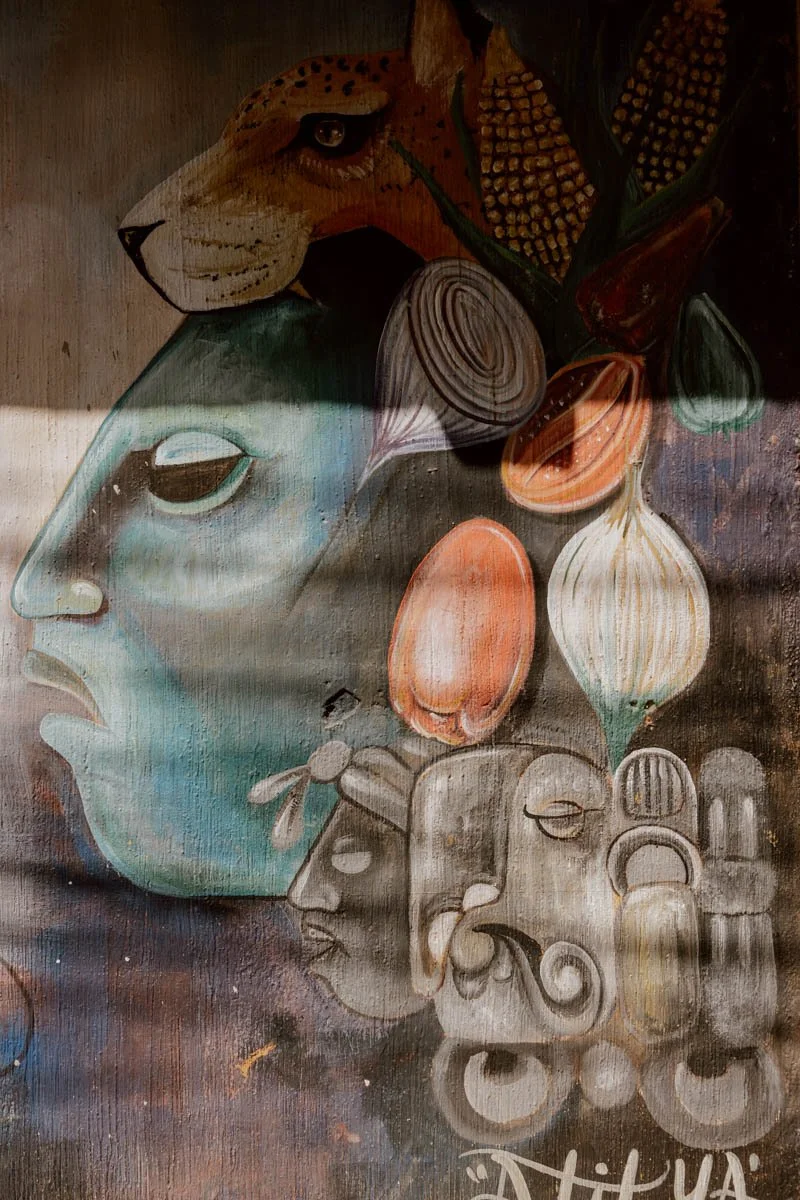
Dressed like a cowboy vaquero and usually with a lit cigarette hanging out the corner of his mouth, Maximon is crucially important in Guatemalan folklore and spirituality. He is thought to be one of many consequences of the religious syncretism (hello word of the day!) that characterised colonialism in Central America - where indigenous pre-Colombian gods and beliefs were incorporated or tacked onto the Catholic imposition.
You'll find this outlaw saint in the shadows of dive bars and hidden in backrooms - always seating due to his broken legs - and surrounded by small bottles of Quetzalteca, dripping candles, and a plume of cigarettes and incense, but one of the main places to go in search of him is in one of the lesser-visited towns on Lake Atitlán.
The privilege of hosting his effigy rotates annually between households in Santiago, ensuring Maximón is never found in the same place two years in a row and locating his shrine isn't always straightforward. However, tourists are now expected and generally welcome for a small fee, and there are usually those who are only too willing to lead you toward him for a few quetzales.
Plan | Find out more about our own search for Maximon, and a few more suggestions for a day trip or stay, in our Short Guide to Santiago Atitlán
Find The Right Lakeside Retreat For You
Trying to decide where to stay in Lake Atitlán can be a little overwhelming.
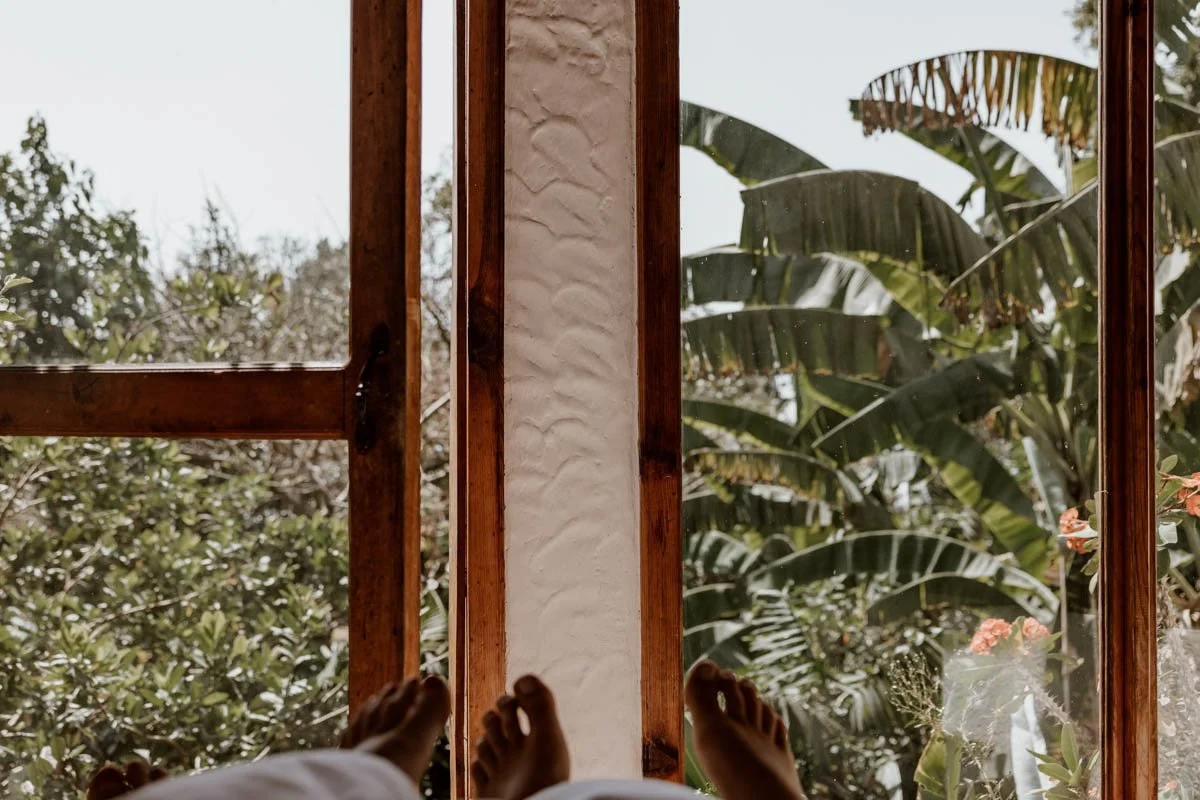
Not only must you settle on whether you’d prefer a hostel or a local-run guesthouse, a sustainable (but luxurious) eco-retreat or a gorgeous house with private lakeside access, but you also have to pick a location from quite a disparate selection scattered along the shoreline of a crater lake.
And, as we mentioned, what many travellers fail to appreciate when first planning time in Lake Atitlán, is that it isn’t one destination: it’s a collection of unique towns and villages, each offering a different experience.
Whether you’re here for early morning yoga and cacao ceremonies, cheap beers and Spanish lessons, or simply a quiet balcony with unbeatable views, where you decide to stay really will shape your time at the lake. Some spots are ideal for those on a shoestring budget, others cater to travellers looking for a little luxury. Some are remote and isolated, whilst others easy to reach. Some are sleepy and contemplative, while others serve up a healthy dose of late-night chaos.
An example: on our most recent visit, we split our time between the lovely Lush Hotel in San Marcos and this Airbnb in San Pedro. Whilst this was absolutely fine for our travel style and that specific Guatemala trip, we would probably have had a more memorable week if we swapped out one of those for La Iguana Perdida Hostel in Santa Cruz (it was fully booked unfortunately).
So, if you're looking for a spiritual retreat, then you should probably focus on being with like-minded individuals in San Marcos and Tzununu. But, if you're more about rest and relaxation in peaceful, isolated surroundings with stunning views, there are potentially far better bases and spaces on the north shore like La Casa del Mundo, La Fortuna Atitlan, and the luxe Casa Prana.
If you’re looking for that place you’ve seen on Instagram or TikTok, then this is it.
Good to Know // Choosing the gateway town of Panajachel as your base might seem convenient for travel in/out, but it is likely not going to provide the most satisfying or memorable experience of the lake.
Read | For more advice on the best base for your travel style, and our pick of the accommodations in each, check out Where to Stay in Lake Atitlan
Town-Hopping Boat Trips
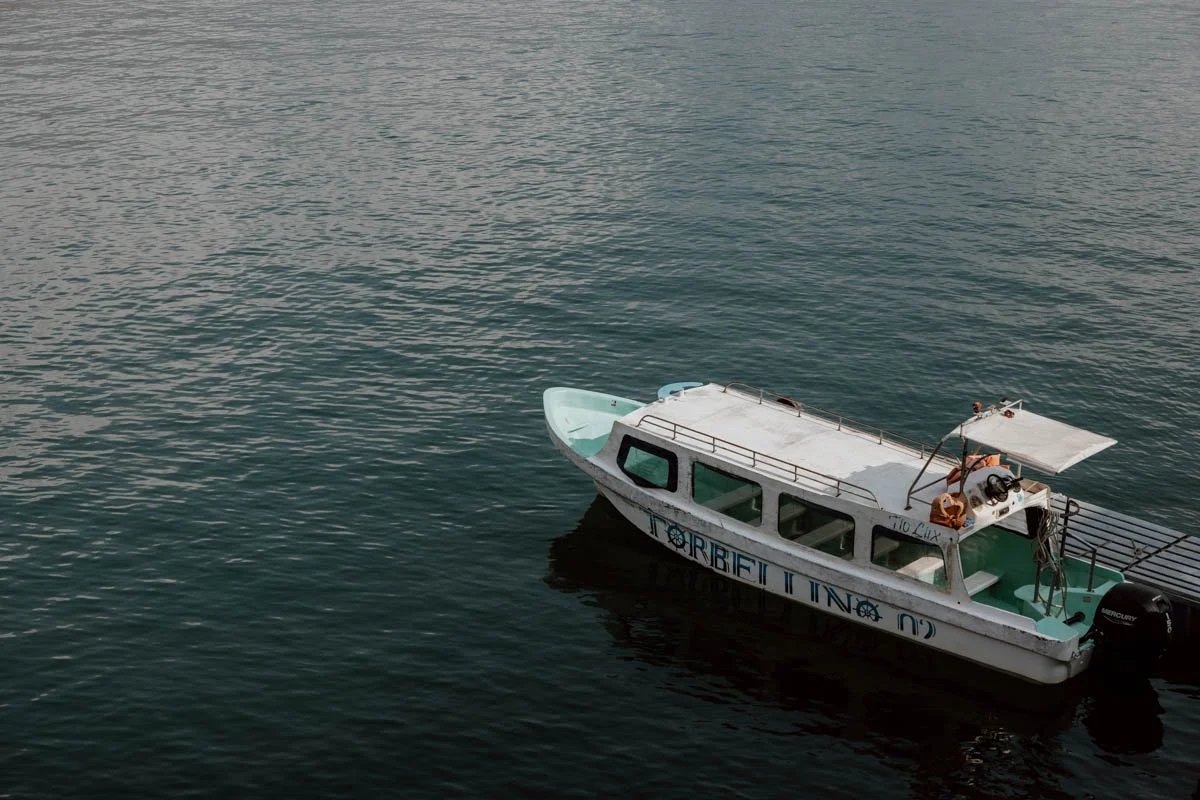
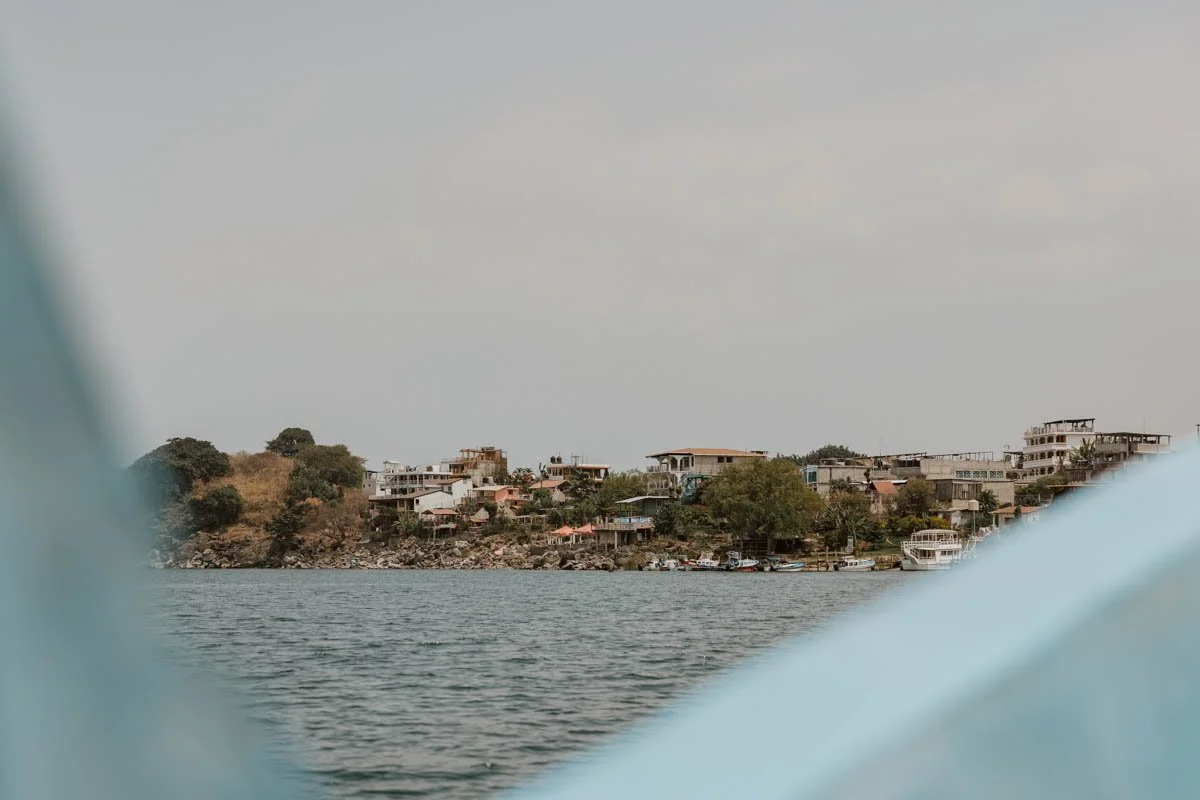
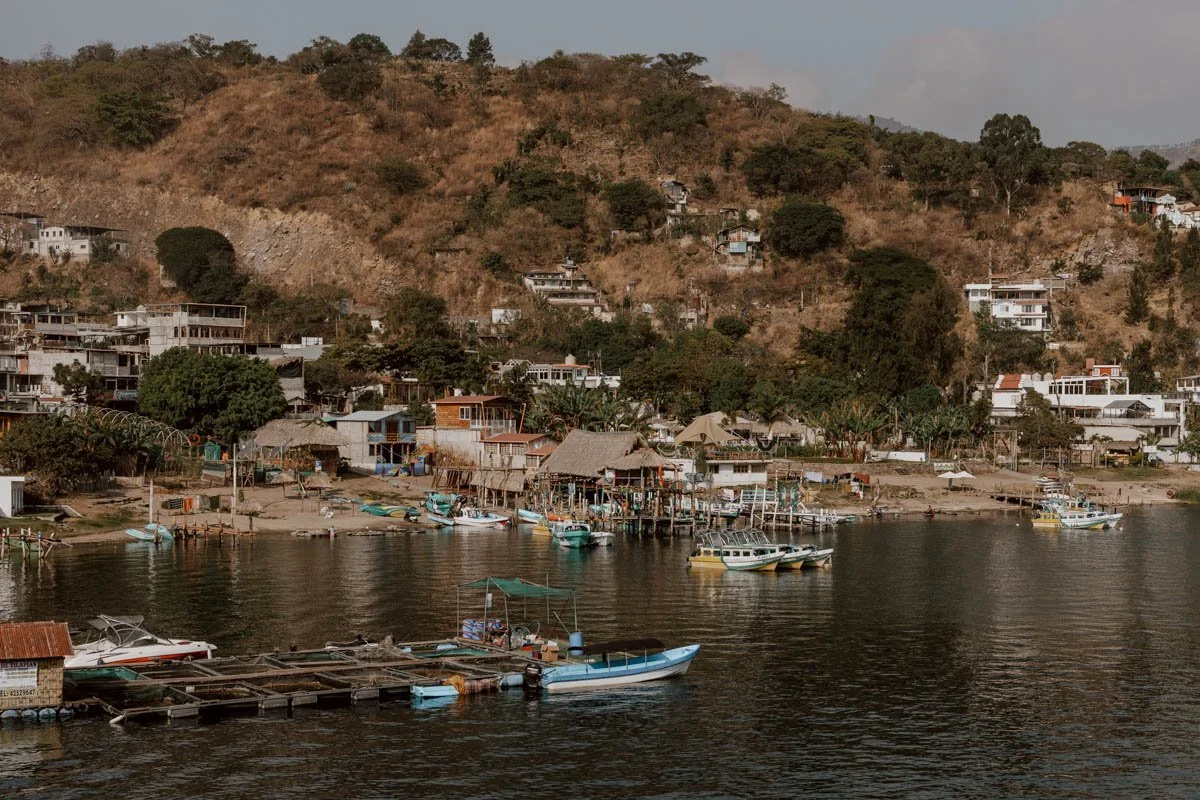
As there’s no single road encircling the lake, and car access is still not possible for several places along its shores, boats are the main way to get around and make independent day trips between the towns. Indeed, this mystical body of water surrounded by volcanoes functions as much as a highway as anything else!
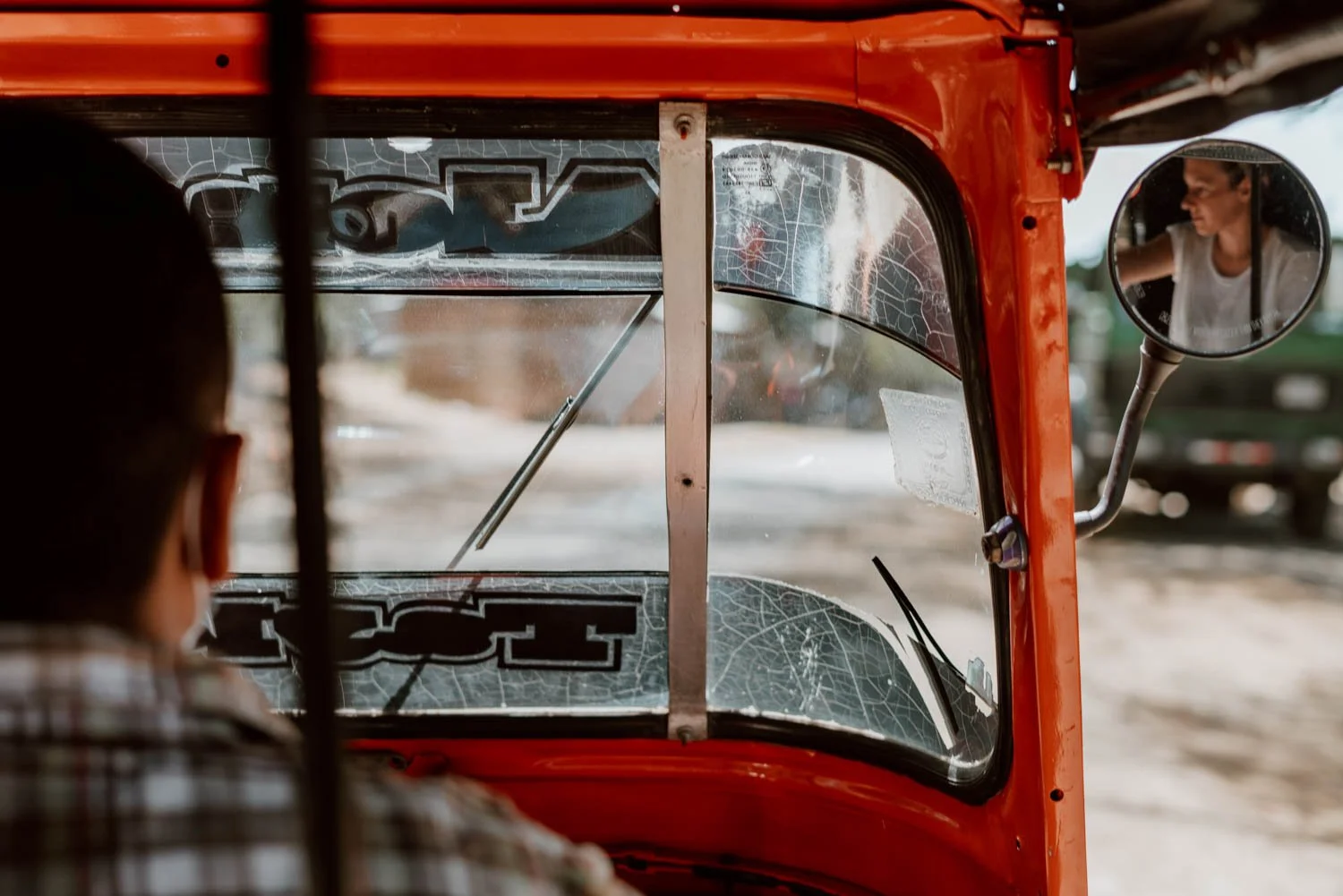
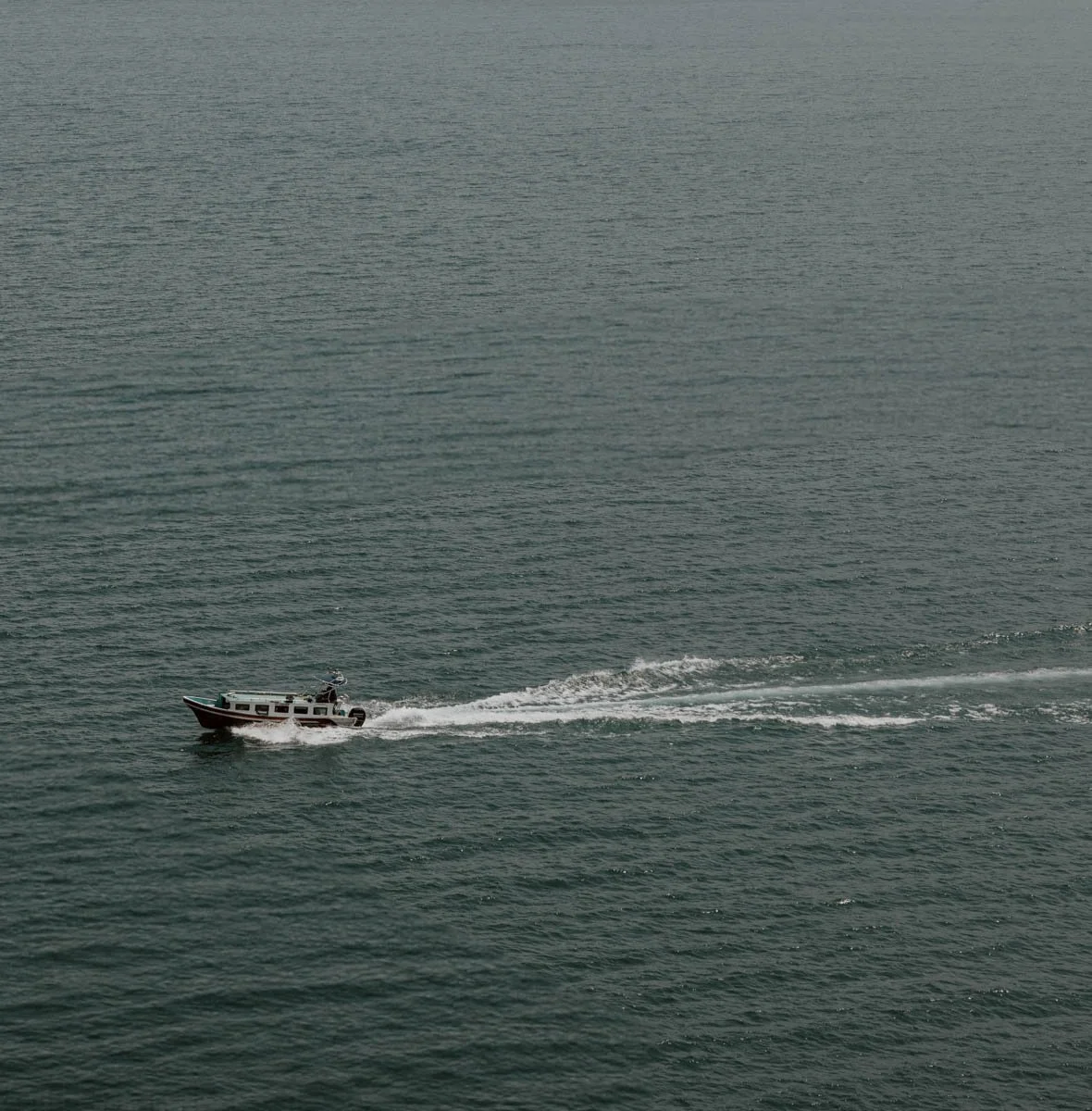
However, Lake Atitlán isn't awash with ferries or pleasure boat companies shuttling large groups of tourists from one town to the next like a mini-cruise - and this is a very good thing. Instead, the frequent affordable lanchas are the main public transport system and, save for the odd tuk-tuk or trail, it's likely that all your journeys across Lake Atitlán will be made by these simple long boats.
Thankfully, the lancha rides are an affordable and fun part of the whole travel experience, offering up a whole range of beautiful views and unique perspectives of Atitlán too.
They also make it super convenient to independently cover a lot of ground in a day or two. The longest one-way journey - Panajachel to San Pedro - take around 40 minutes, and the docks of most towns, villages, and more isolated hotels are stops along the way. This makes it entirely realistic to base yourself in one place and do meaningful day trips to several other towns.
Those that should be on your radar at a minimum are: San Juan, San Marcos, San Pedro, Santa Cruz, and Santiago.
By the way, nearly all towns have the suffix 'La Laguna’, but few use it.
Plan | Find out more about the schedules, the stops, the docks, the scams, and the prices in this short explainer to the Lake Atitlan Boats
Travel Tip // Of course, it is possible to organise boat tours via tour agencies or directly with a private boat captain. However, the town-hopping boat tours tend to be for those who are visiting the lake on a day trip from Antigua - which we don't recommend - rather than those based here for a few days.
If you are really tight for time, or would just prefer someone else taking care of the logistics, then check out this highly-rated Lake Atitlan Boat Tour: San Juan, San Pedro & Santiago in 1 Day - also available to book here.
Wellness and Woo-Woo in San Marcos
The reputation precedes San Marcos La Laguna.
Drawn in by the mystical lake and isolation, this little village on the west bank of Lake Atitlán became a hub in the 70s for the curious or already converted to new-age spirituality, alternative medicine, and yoga: a place where they could find their voice and their tribe.
It remains the place in Guatemala that those in search of something to flock toward, and somewhere to participate in things like sound baths, cacao ceremonies, crystal realignments, breathwork, ecstatic dance parties, ‘conscious intimacy’ workshops, and much yoni-egg based woo-woo fun.
Today though, the hippies are just as likely to be rubbing shoulders with those staying in high-end hotels scattered in the hills or studying at an exclusive yoga & meditation retreat by the lake. There’s also a fair few backpackers that base themselves here.
As cynical Brits, it’s easy to take the piss, but the truth is that San Marcos is a magnet for tourism in Lake Atitlán, drawing many to its shores.
Yes, it has its fair share of bullshit, contradictions, and insufferable barefoot hula-hoopers, and is in some ways the most imbalanced community dynamic we saw on the lake, but for those looking to recharge, explore alternative wellness, or immerse themselves in it, the offering and location is unmatched.
Plan | You can find out lots more about the various retreats, centres, and workshops on offer in our main guide to San Marco La Laguna.
Backpacker Tip // San Pedro is a short boat ride from San Marcos, and it’s more of a reliable option if you want a boozy backpacker night out. Some travellers will prefer to be based in one and venture over to the other, and it just depends on your travel style and tastes.
For our tips on the places to go, check out our short guide to San Pedro.
Hiking Volcán San Pedro & The Trails 🌋
Two trips, ten years apart, and we still haven't been able to hike up Volcán San Pedro. So why on earth are we mentioning it here in the best things to do in Lake Atitlán article?
Well, as mentioned earlier, this is a destination that has long been affected by organised robberies on certain hiking trails.
And it is a terrible shame.
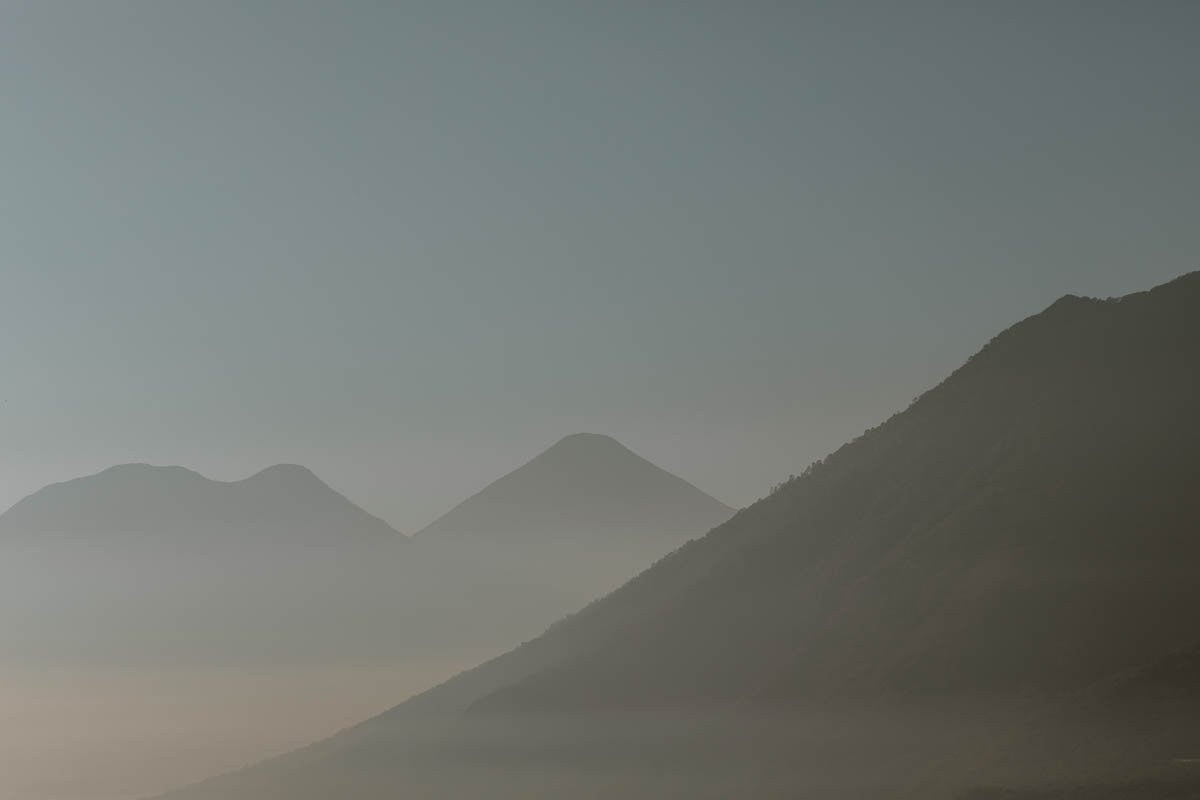
The unique geology, the landscapes, and the fact that the lake is SET IN A VOLCANIC CALDERA AND RINGED BY THREE BLOODY STRATOVOLCANOES, should make hiking for panoramic views a signature of the Lake Atitlán travel experience. However, the presence of police patrols, armed escorts, and frequent accounts of theft mean those views continue to remain out of reach for many.
Long-time readers of Along Dusty Roads will know that we're not saying this as the paranoid sorts: we've travelled in Central America so often that we're not the alarmist types and we’ve done lots of random independent hikes in remote places.
But, we aren’t the types who will whitewash an issue just because we haven't been affected by it, or tell you it’s all going to be fine.
Local disputes over land ownership, access, and concerns about encroaching tourism are very understandable - as well as reluctance to see government take over private land held for generations - but that doesn't justify or rationalise the armed, sometimes violent, robberies targeting travellers. There also aren’t as many trails to hike as you’d reasonably expect due to these disputes.
Alongside the aforementioned Indian Nose, Volcán San Pedro is perhaps the best (or worst) example of this. We couldn’t go up it a decade ago because robberies were so common, and when we returned, we were stunned that armed police were now stationed near the summit to prevent them. However, the bandidos simply changed their approach by going up to the summit before the police started their shift, and striking when hikers - even those accompanied by a local guide - were at the top.
Crazy.
Of course, this didn’t impact every person who went up there - and travellers still do the hike safely - but it was mentioned so frequently in trail reviews and traveller chats, that we decided the reward simply wasn’t worth the risk.
Until that changes, we can't currently recommend any of our readers hiking Volcán San Pedro.
The same threat also affects certain trails that link up the villages and towns, whilst the Toliman and Atitlán volcano hikes are long, challenging, and probably not a priority on shorter visits.
Does this mean Lake Atitlan isn’t a safe destination for travellers? Not at all - but it just isn’t a place that hikers can enjoy freely.
If you are considering any of the volcano hikes or the other trails, we highly recommend thoroughly reading reviews on AllTrails and Google Maps (not just the last five or so!) before finalising any plans. You should also enquire locally about the situation.
Hiring a local guide is also recommended, and precautions also need to be taken e.g. so many people have had their passports stolen.
If the hiking safety situation worsens or improves dramatically, then please do let us know in the comments or over e-mail.
Alternative | As mentioned, we arrived via a three-day group trek from Xela to Lake Atitlan. It’s run by Quetzaltrekkers - a fantastic non-profit organisation we’ve done a few hikes with in Central America - and we highly recommend checking it out.
A number of followers get in touch about hiking tours with a lovely local lady called Elena. She offers homestays, but also arranges escorted day hikes on the Lower maya Trail. To find out more, check out her Instagram page
Travel Tip // You should really only travel to Guatemala if you’ve brought your hiking boots - volcanoes and hikes are a huge part of the experience. If San Pedro remains off limits, there’s no shortage of alternatives to climb elsewhere in the country. We’ve been fortunate to hike up (and even sleep on) many of them, and we’ve pulled together all the inspiration and practical info you’ll need here: Five Volcanoes You Need to Hike in Guatemala (published soon)
Eat Good Food, Support Good Causes
Due to its first-draft status on most Guatemala and Central American itineraries, and increasing levels of tourism each year, there are understandably a number of foreign-owned and foreign-facing businesses around the lake.
If staying here for a short time, it would be super easy to patronise just these to indulge in smoothie bowls, kombucha, falafel wraps, sushi, croissants, and flat whites. Whilst these places directly employ and support a lot of locals, it's important not to forget that one is still travelling in Guatemala to feel like one is travelling in Guatemala, and more traditional, locally-owned restaurants and options still exist in every town.
More affordable and more interesting, intentionally seeking them out is an easy way to cut yourself off a little from the crowd, and spread the positive tourism spend beyond the usual suspects.
If concerns about a language barrier or quality puts you off, then we'd specifically point you toward three restaurants on your day trips and stays. All of these are doing good whilst filling bellies:
Alma de Colores | A hidden-away restaurant in San Juan that provides social and employment opportunities for local disabled people, with fair wages to match; it's a great pick for breakfast or lunch if you're there for a day trip!
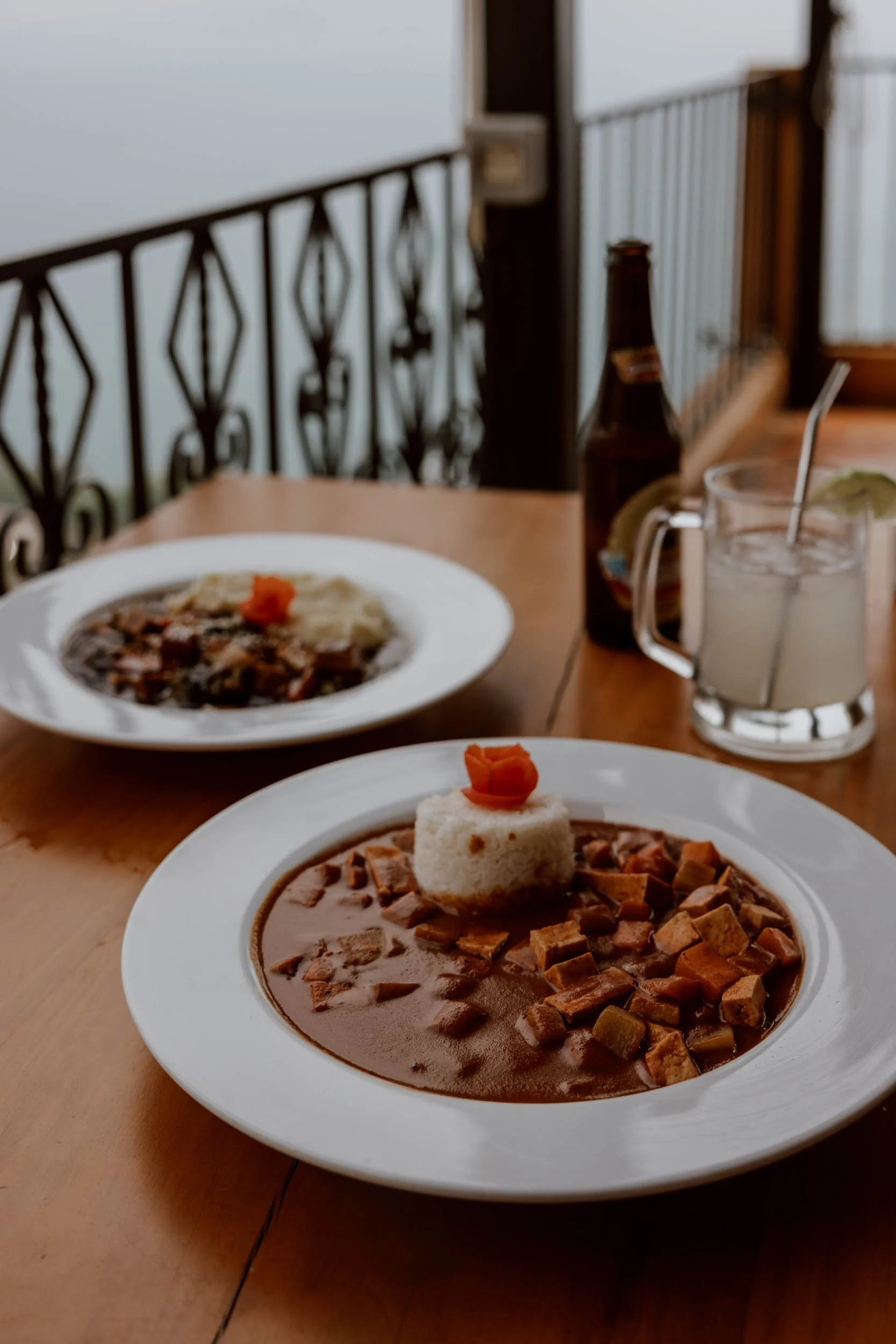
Café Sabor Cruceño | Staffed entirely by students in Santa Cruz, it offers a practical training space to refine culinary skills while preparing traditional Guatemalan dishes like Pepian, Kak’ik, and fresh tamales, all made with locally sourced ingredients. For veggies, they also offer a decent selection of tofu-based dishes!
There are seats inside by the kitchen, but we recommend making a beeline for the terrace that offers stunning views of Lake Atitlán and the surrounding volcanoes. Find it on here on Google Maps.
Konojel | A non-profit social enterprise that gives women of San Marcos the opportunity to have a “stable and dignified job, through employability, training, and social inclusion'“ The menu focuses on homemade Guatemalan and Mayan dishes, and there’s a different ‘plate of the day’ option that always includes a vegan-friendly traditional dish like pulque or subanik.
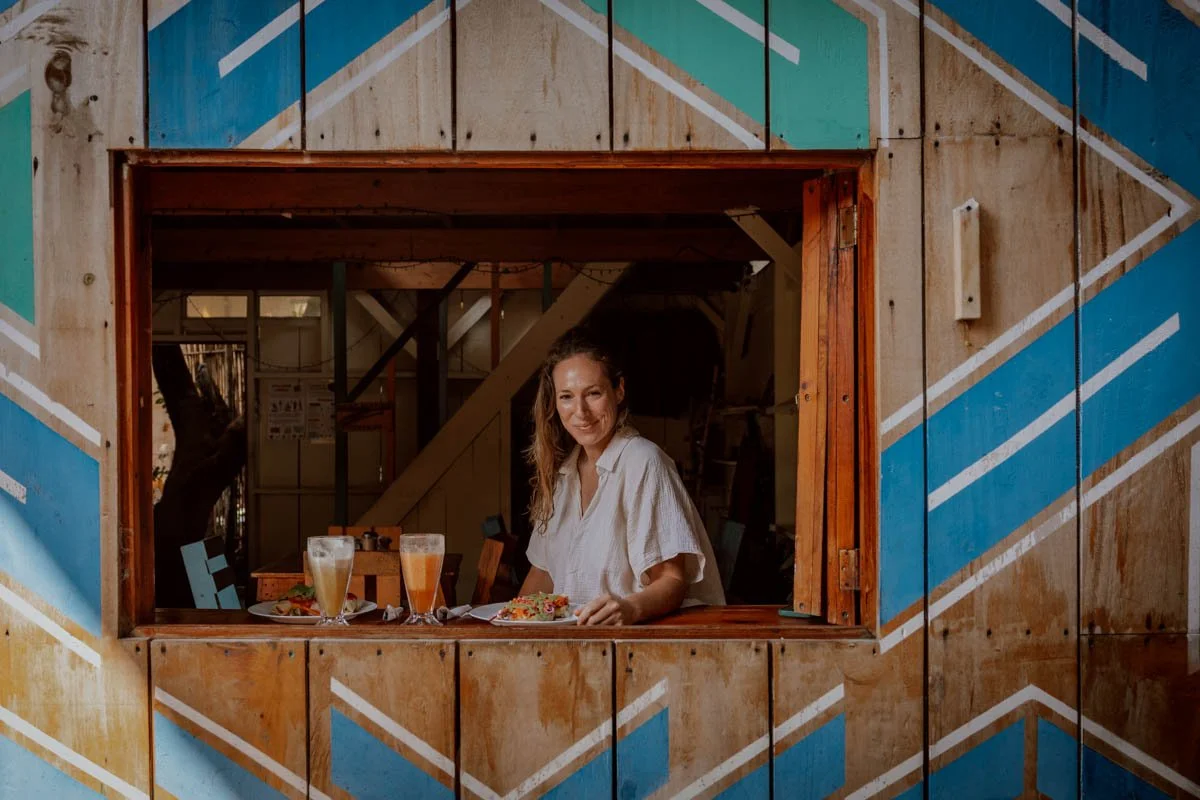
Everything’s 100% organic and freshly-prepared, profits go toward social programmes, and if you can get a seat at the whole in the wall bench, you can watch the world go by whilst you eat.
Travel Tip // If you're interested in learning more or going a little deeper into the local produce and palate, one of the best things to do in Lake Atitlán is a cooking class. There are a couple of excellent options in San Pedro - Mayan Kitchen and The House Of The Traveler - whilst CECAP offer this one in Santa Cruz with a former student of Café Sabor Cruceño.
You can also easily book the Mayan Kitchen with free cancellation here
Kayaking & Diving
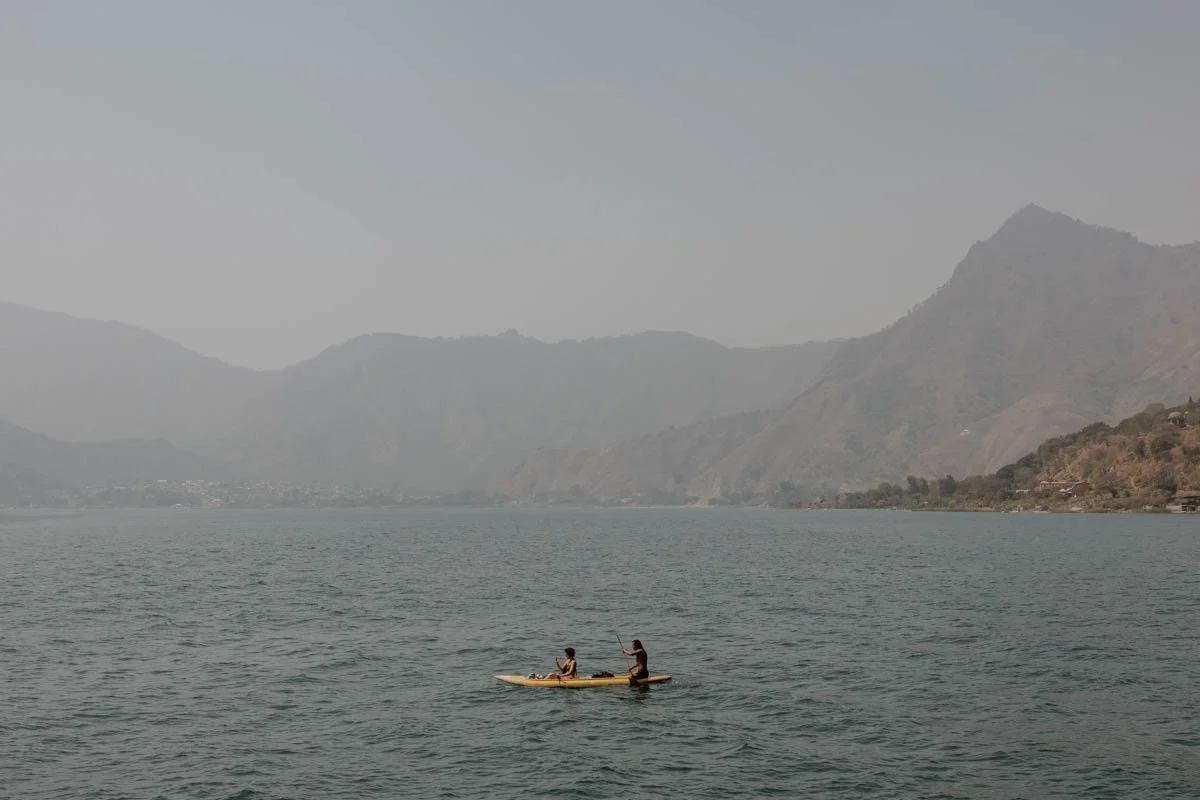
If outdoor activities are your thing and you assumed that Atitlan was going to be a mecca for watersports, then we have good news.
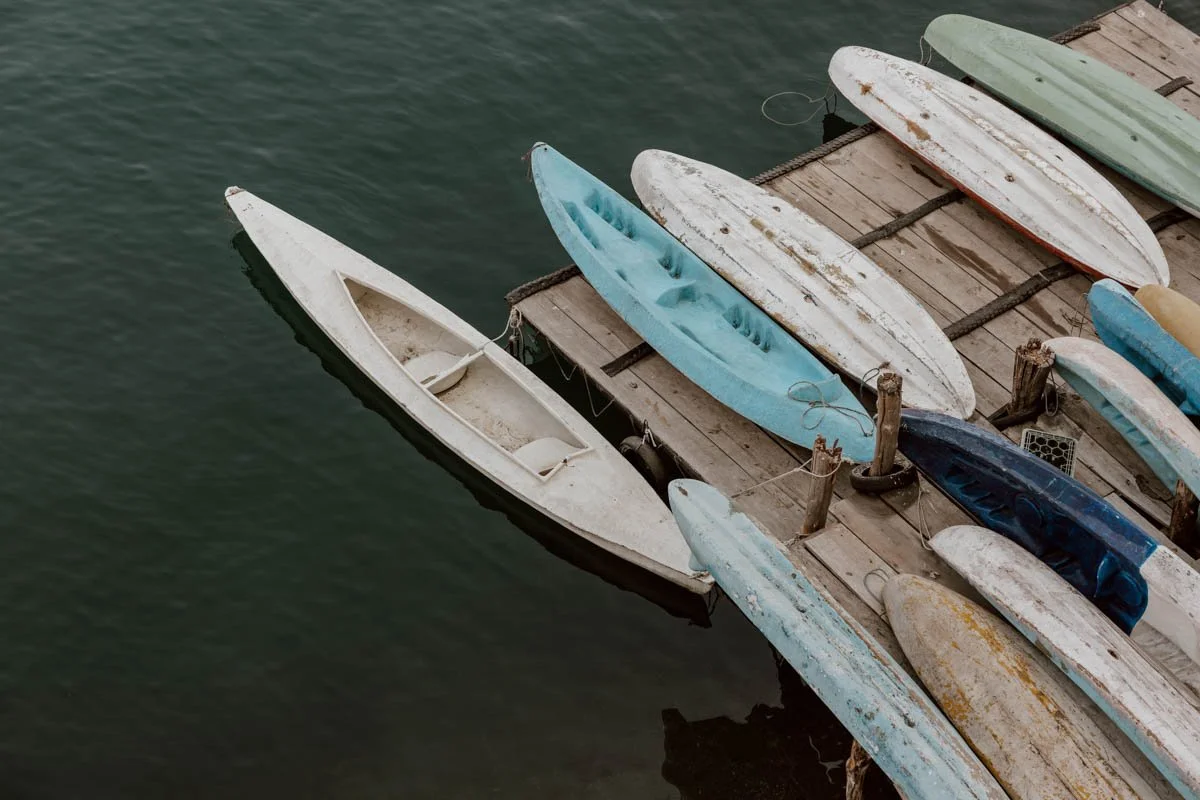
Whilst being out doing things on or by the lake isn’t as big a part of many Lake Atitlán experiences as you’d expect, it is super easy to head out with a rented kayak or stand-up paddle board (SUP). They’re available to rent by the hour in nearly every town for around 15Q ($2 USD), and it's a much more invigorating way to explore the shoreline than depending on the lanchas.
Personally though, in order to cover more ground, we suggest opting for the kayak with a buddy over the SUP - and don’t underestimate the scale and distances involved!
If you’d prefer everything to be taken care of a guide to lead you, then consider booking this popular and action-packed Kayak + Hike experience.
For something more adventurous, it's also possible to go diving in the deepest and highest altitude lake in Central America.
Santa Cruz la Laguna has established itself as the hub of watersports on the lake, partly due to its location on the north shore offering easy and undisturbed access to the water. It’s also enjoys far less surrounding boat traffic.
Travellers can choose from introductory or intense freediving + scuba diving courses at Freedive Atitlan and ATI Diving: the latter also do fun dives if you're already certified. We were attracted by the thought doing an altitude lake dive, but just couldn’t get the logistics sorted for our week.
If that’s your thing though, and you want to be on and in the water as much as possible, then you should definitely consider staying La Iguana Perdida - the hostel our followers recommended more than any other on the lake!
Know | Conditions on the lake are usually much smoother in the mornings, with cloud cover and choppier waters more likely in the afternoon.
Travel Tip // Want to learn to dive in Central America? Go to Utila, Honduras. It’s a literal diving paradise, and two weeks there got us both Open Water and Advanced PADI certs. The waters are also quite a bit warmer and clearer than Atitlán…
The Coffee & Chocolate Co-Ops
The indigenous communities around Lake Atitlán, including the Tz’utujil, Kaqchikel, and K’iche’ Maya, are rural at their roots; for many families, daily life still revolves around the land and the lake.
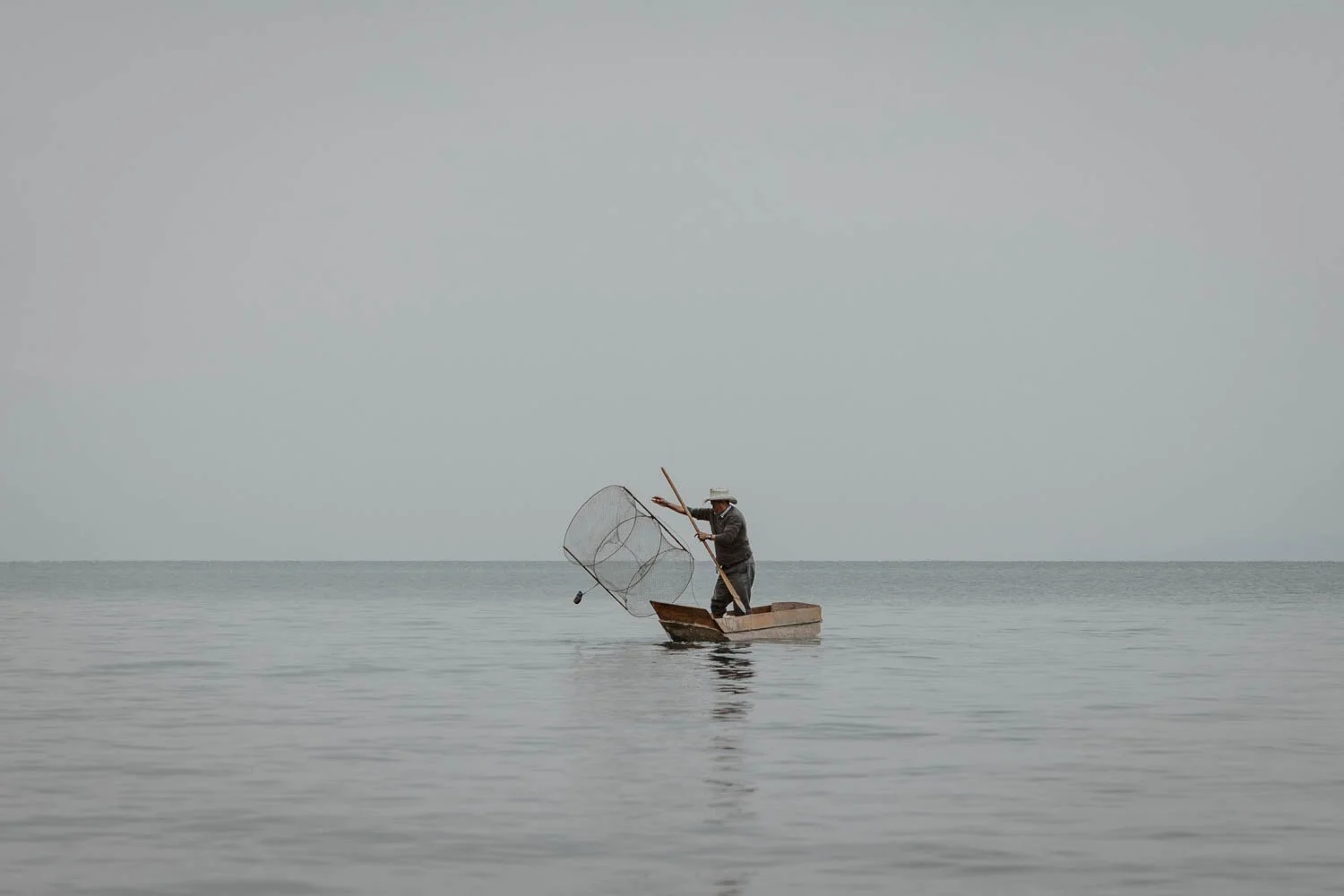
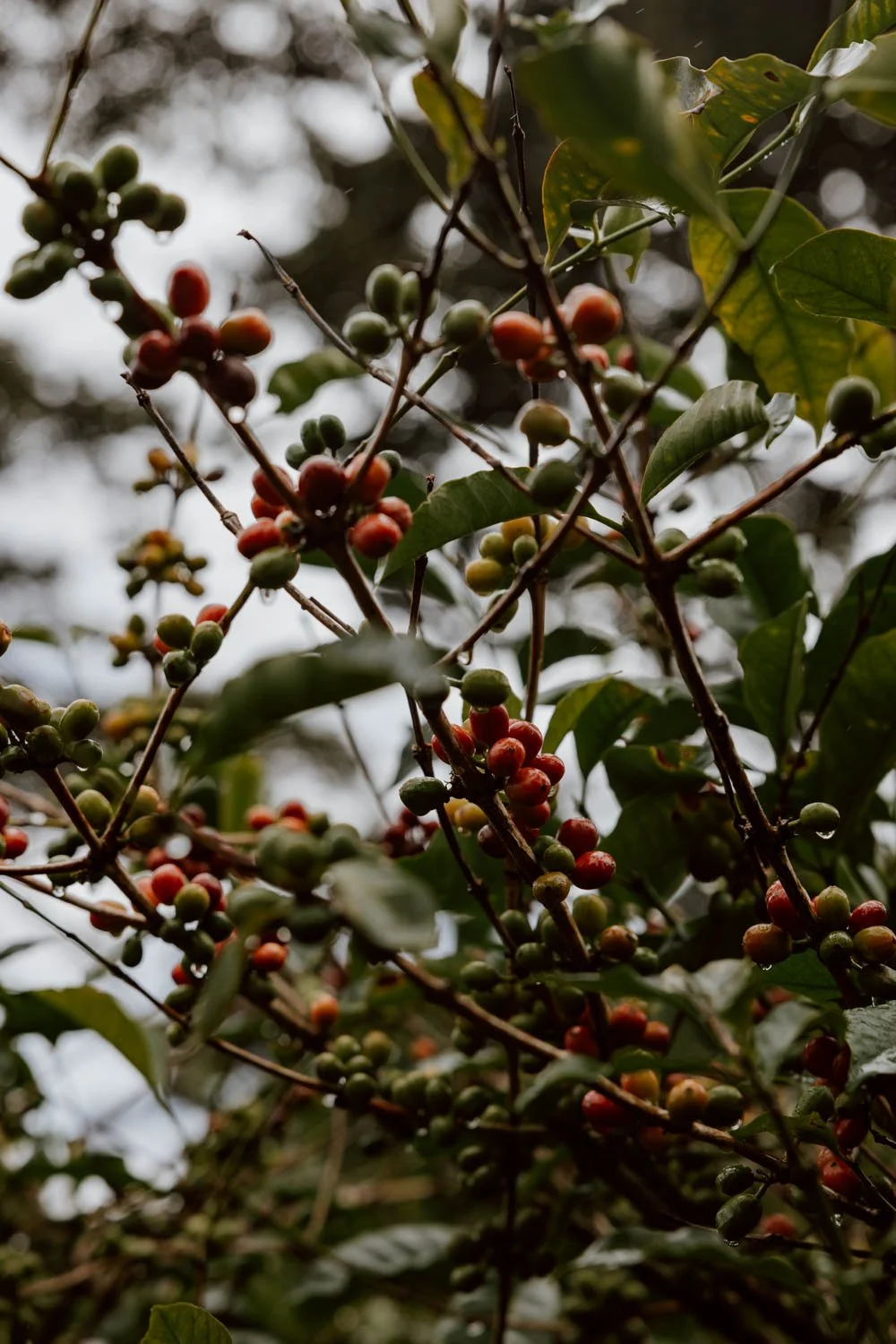
Most livelihoods remain deeply connected to the environment and tradition, with agriculture and fishing forming the backbone of the local economy. Staple crops like maize and beans grow alongside coffee and vegetables in small-scale plots made fertile by the region’s nutrient-rich volcanic soil; many are worked collectively through local co-operatives that pool land, labour, and income.
In the mornings, men and boys can be seen fishing from hollowed-out canoes or with simple rods from the rocky shore: routines that have changed little over generations.
Tourism has arrived gradually, bringing income and opportunity, but also tension. It has shifted local economies, altered demographics, and, in some places, diluted traditions. That said, one of the positive developments has been the rise of small-scale, community-led experiences that celebrate this this produce as well as providing a market for it.
A few shining examples of this are to be found in San Juan - with tours and tastings possible - but every Lake Atitlan town has one or two places if you look hard enough or ask around:
La Voz | This cafe serves organic coffee from the 'La Voz' cooperative, an association of several families of producers near the town. They also offer a short but sweet tour of the finca so one can see the process from bean to brew, with a tasting at the end.
Licor Marron Chocolate Factory | Offers free 10-minute tours, but if you want to go deeper into the ancient methods and significance of chocolate-making in Maya culture, you should opt for one of their workshops.
Honey | Two neighbouring honey farms specialise in producing with tiny native stingless bees (who knew!?). The first is Xunah Kaab, a third-generation family business of apiarists who provide an informal tour as well as samples at their shop, which has lots of surprising honey-infused products for all manner of ailments, and the other is Mundo de Abejas Mayas - a co-operative of 17 families that offers more formal 25Q 10-minute tour and tasting.
Know // Guatemala grows truly excellent coffee, and we think one of the best places for it by the lake is Spacecoffee502 in Santiago Atitlan. To go deeper, check out this very highly-rated Lake Atitlan coffee tour. You can find many more recommendations for our favourite coffeeshops in our Quetzaltenango and Antigua travel guides.
Take a Day Trip to Chichicastenango Market
More commonly known as 'Chichi' by locals and travellers alike, Chichicastenango market isn’t your average shopping trip.
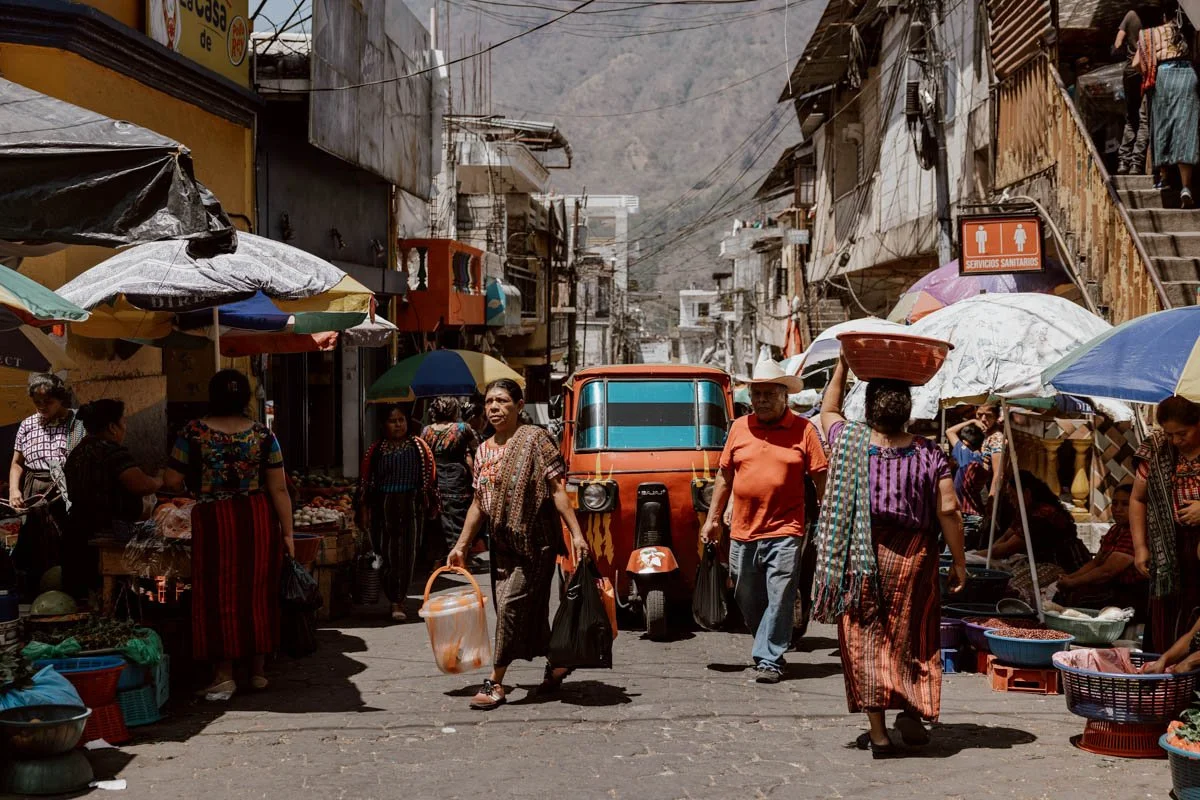
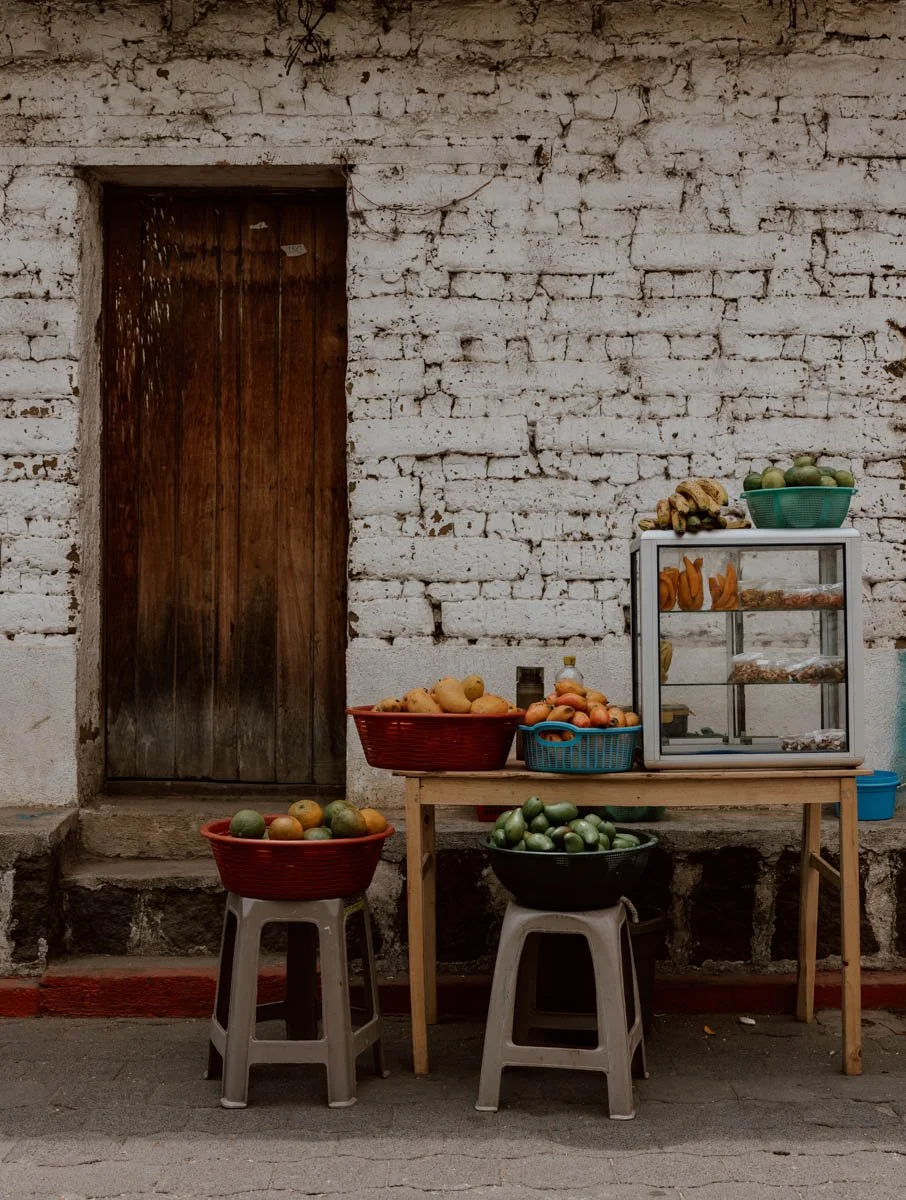
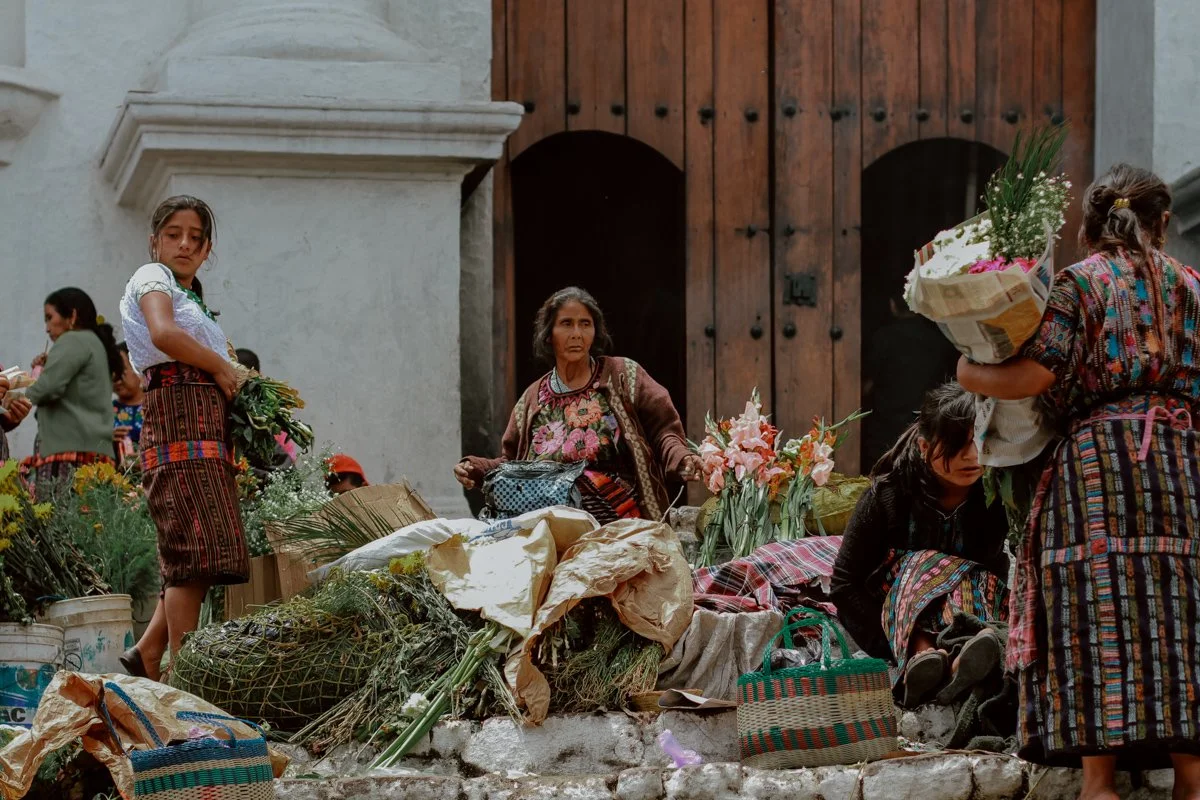
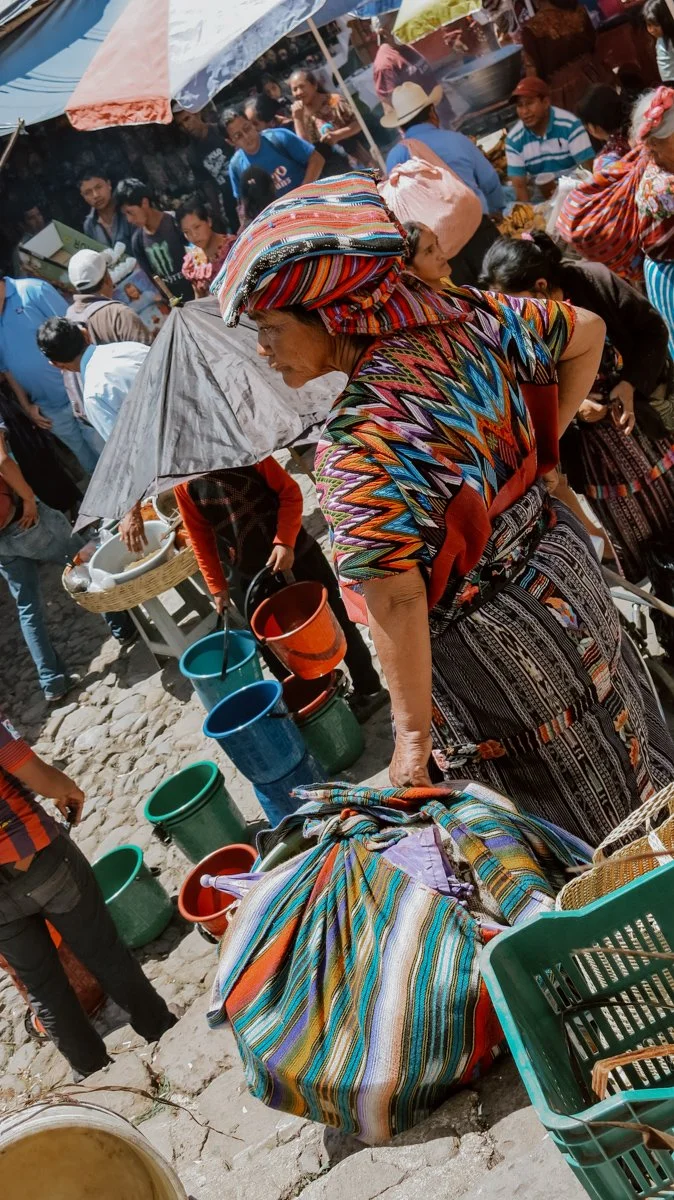
Twice a week, this traditional highland town transforms into a vast, chaotic whirlwind of colour, sound, and life, making it one of Central America’s largest and most famous markets. Starting early and slow, by mid-morning, its cobblestone streets are packed with stalls offering everything from embroidered huipiles to live chickens, the air is thick with incense and sizzling street food, while the square buzzes with the chatter of K’iche’ Mayan and Spanish.
You’ll find all sorts of items for sale here, from artisanal hand-painted ceramics and wooden masks to piles of second-hand clothing and cleaning supplies. However, for most travellers, it’s the textiles that steal the show. Some are very clearly mass-produced on machines, but many of the handwoven pieces are detailed works of art, each tied to the identity of the maker’s village and taking hours and even days to create. They’re not cheap, but the craftsmanship deserves admiration, even if you’re just browsing.
It’s important to note that Chichi now quite a touristy market to visit (which is why we opted for the much less visited San Francisco El Alto for our second trip to the country), but it remains an essential stop for many Guatemalan itineraries - and is a popular day trip from Lake Atitlan.
When | The market is held every Thursday and Sunday, with the latter being the busiest.
How to Get to Chichicastenango | As with much of the country, it has become increasingly popular to rely on tourist shuttles to make the journey from Lake Atitlan to Chichi market.
Most shuttles depart from Panajachel (the transport hub), but we did see flyers in Atitlan for departures from San Pedro as well. The shuttles cost between $20USD and $30USD (for the roundtrip) depending on the company, with a journey time of 1.5 to 2 hours each-way and departyre at 8am.
You will usually be back in Lake Atitlan around 4pm - find further details, prices and book on GuateGo and Bookaway.
There’s also a tour from Panajachel available to book here.
If, like us, however you happen to love chicken buses or fancy a bit more of an adventure, opt instead for public transport. It requires a little more planning and involves a couple of changes, but it’s significantly cheaper and - certainly in our opinion - a lot more enjoyable. Just aim to leave early to avoid the midday crush and give yourself plenty of time to soak up the experience!
To reach Chichi market from Lake Atitlan by public transport, follow these steps:
Take a boat from your base on the lake to Panajachel
From the dock, walk two minutes to this bus stop on Calle Principal and wait for the bus heading to Solola. The buses come pretty regularly and cost 5Q per person. Journey time is around 20 minutes.
Get off the bus in Solola’s main square, head to this bus stop, and wait for a bus to Los Encuentros. The price should be 5Q per person and journey time is around 40 minutes.
You’ll get dropped off in what essentially is a large intersection with lots and lots of buses and various stalls. It’s likely that some bus workers (ayudantes) will try and direct you towards a bus heading to Chichicastenango, but if not just ask around - it won’t be long until you find one.
It’s a relatively short distance from Los Encunetros to Chichi but the hairpin mountain roads mean it will still take around 40 minutes. Cost is around 10Q.
Top Tip // Negotiating prices is very much part of the process of purchasing souvenirs in Guatemala, but it’s vitally important that you do so politely and with respect. If you land on a price that seems fair to you for the goods - not just the lowest one possible - then everyone’s going to be happy!

The Painted Town of Santa Catarina Palopó
This small Kaqchikel Maya town just south of Panajachel is a place of remarkable natural beauty and cultural wealth, yet its story has long been shaped by economic struggle.
Despite being located in one of Guatemala’s most visited departments, for years Santa Catarina Palopó was largely overlooked by visitors to Lake Atitlán, partly due to the fact that it’s still not on the main boat route. Whilst this spared the community from the negative impacts of a tourism boom, it also meant missing out on growing economic opportunities others around the lake enjoyed.
For generations, residents here relied solely on the traditional livelihoods of textile weaving, fishing, and subsistence farming; trades and practices that often fell short of providing stable incomes or meeting the growing needs of the community.
Faced with these challenges, the town turned to its most enduring resource: creativity.
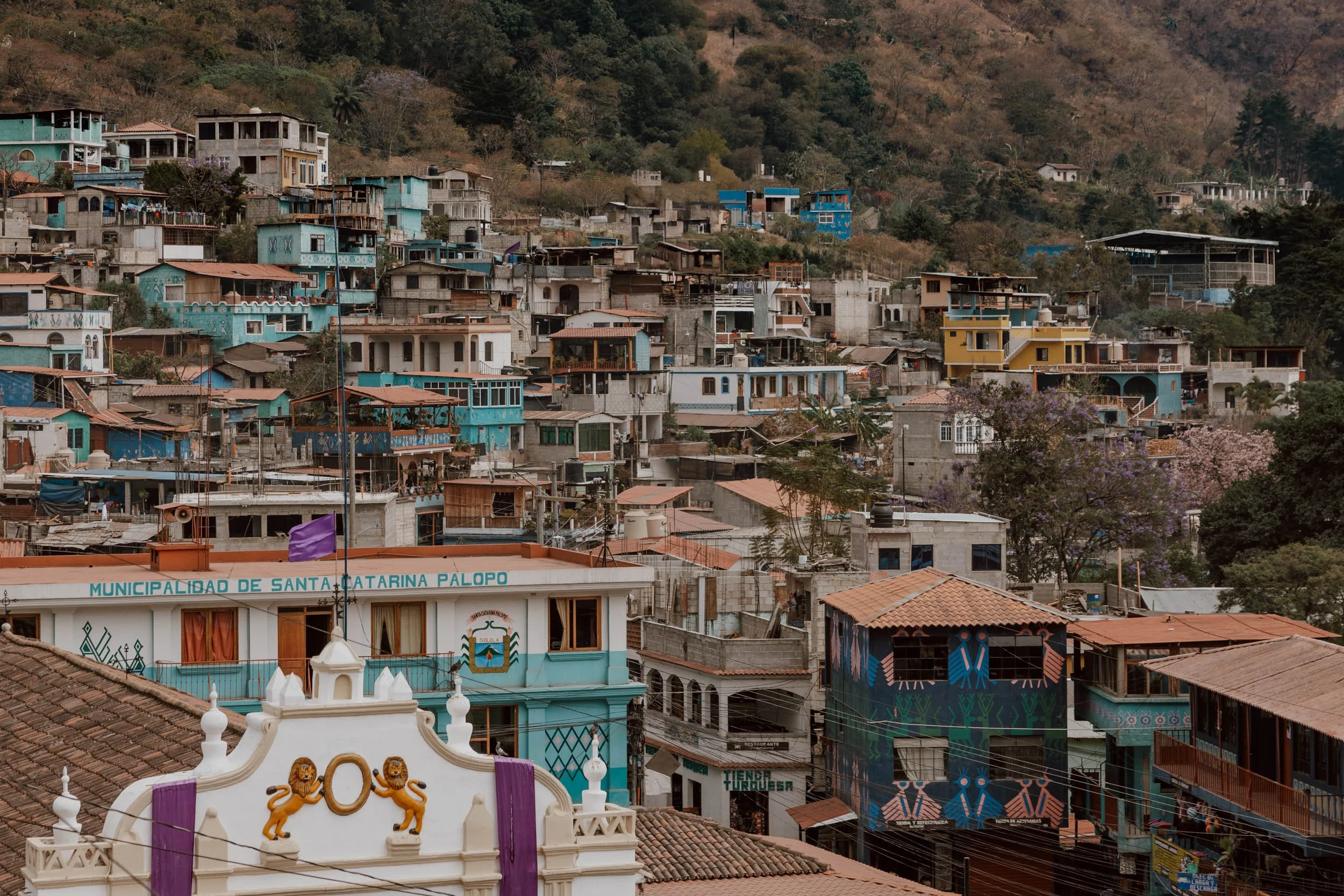
In 2016, Asociación Pintando el Cambio, a local non-profit, embarked on an ambitious project to reimagine Santa Catarina as a living canvas; transforming the town into an open-air gallery where every building would tell a story drawn from the Maya traditions, symbols, and natural beauty.
It was a bold move, inspired in part by Brazil’s famous painted favelas, but with a uniquely Guatemalan twist.
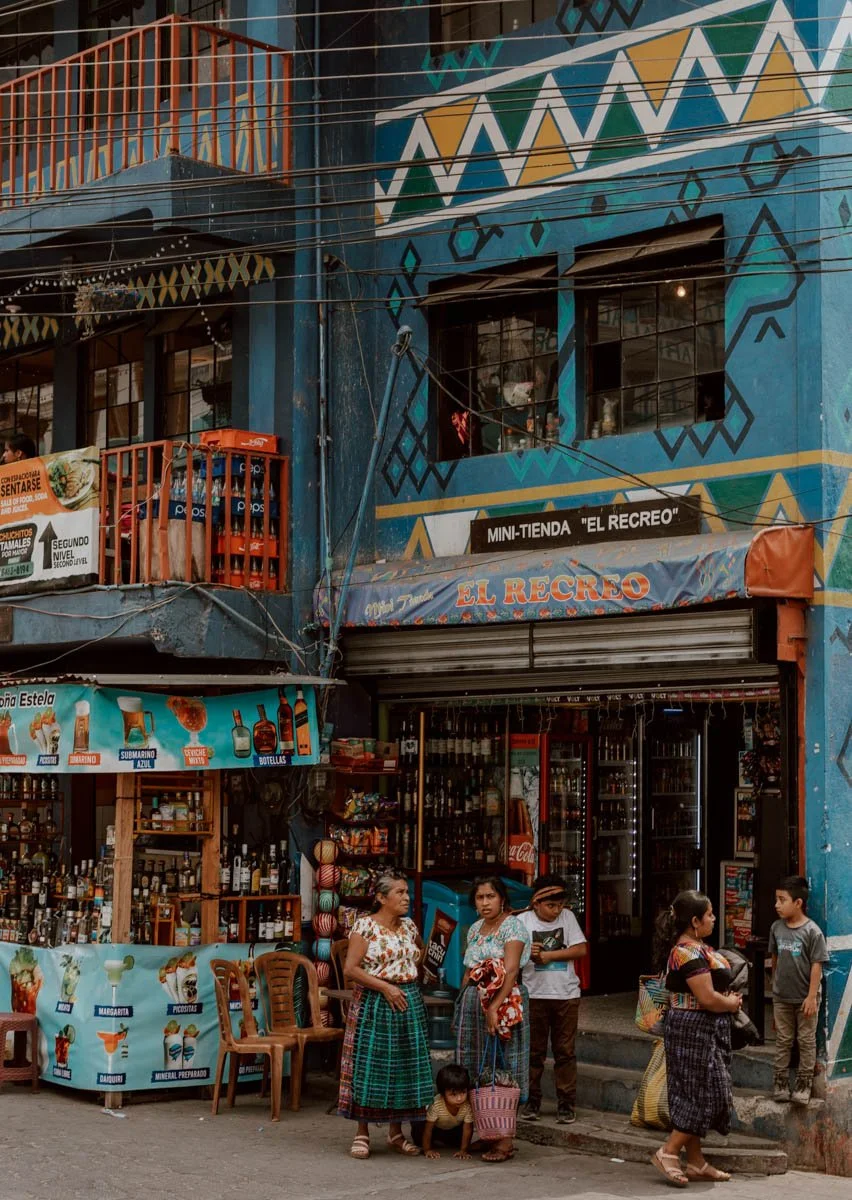
Blue, in all its shades, dominated - a homage to the lake and shade the local women wear - while motifs of maize, quetzals, and volcanoes paid tribute to the culture and landscape that have defined the lives of the people here for centuries.
Now, it might sound as though all of this was an external cultural imposition on the local indigenous population, who may have been quite content with how things looked and how things were.
Those who live here became co-creators, selecting designs for their homes and working shoulder to shoulder with professional artists. The project wasn’t just art for art’s sake; it was a collective statement of pride and resilience for the indigenous Kaqchikel community.
With 850 houses painted, the impact of Pintando Santa Catarina has been transformative - but the small town remains a relatively off-the-beaten-track thing to do in Lake Atitlan. Yet, if you want to travel deeper or gain a different perspective, this should absolutely be in your sights.
Where to Next?
Our Lake Atitlan Travel Guide
·
·
Short Guides / San Pedro - San Marcos - San Juan - Santiago
Santa Cruz - Santa Catarina Palopó
·
How to Get Around Lake Atitlan By Boat
·
·
Visit our Guatemala page for the latest posts