How to Get Around Lake Atitlán By Boat
An essential guide for all visitors to Lake Atitlán, this post covers everything you need to know to get around by boat.
Day trips and connections between the dozen or so Lake Atitlán towns and villages are primarily done by boat.
There’s not a single road encircling the lake, car access is still not possible for several places on its shores, and the transport system isn’t centred around colectivos or chicken buses.
So, whilst most of us think of this mystical body of water surrounded by volcanoes purely as a destination, the reality is that it operates more like a highway for locals and travellers.
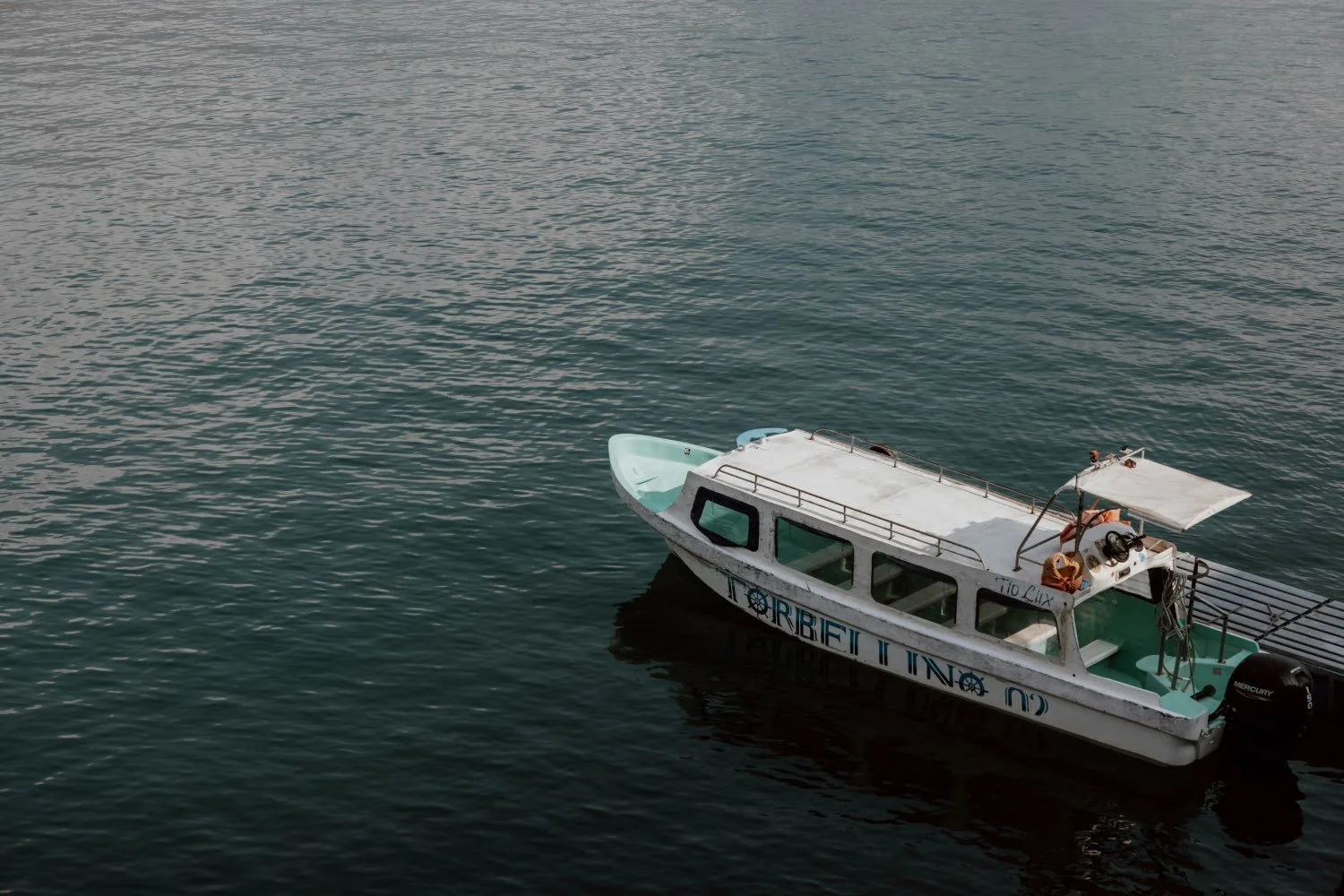
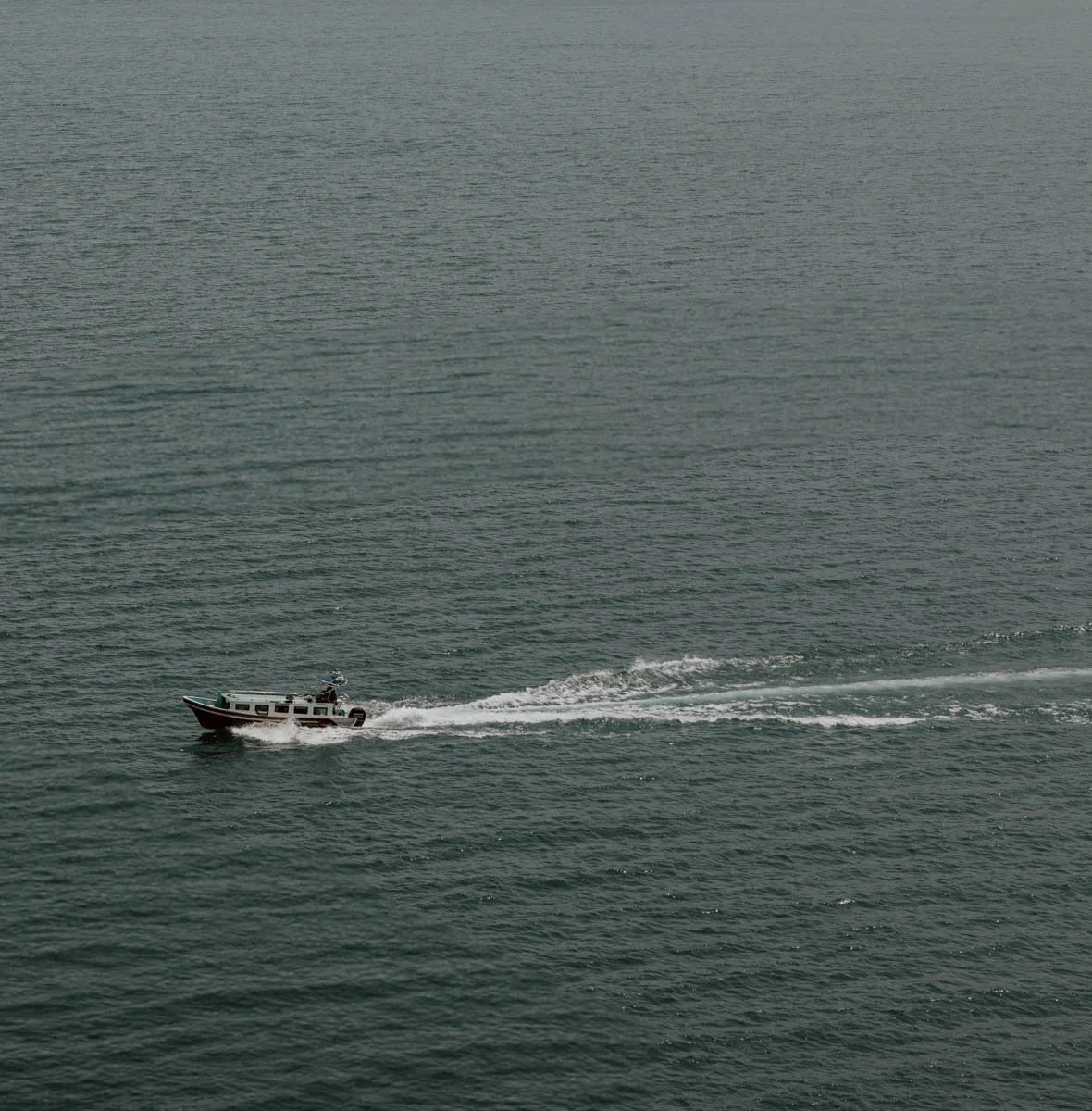
It’s likely that, save for the odd tuk-tuk or trail, all your journeys along and across Lake Atitlán will be made by the quicker, low-slung fibreglass lanchas with the cut-out windows and occasional cracked roof.
The limited road access and nature of transport around Lake Atitlán also means that most travellers arriving by chicken or shuttle buses from elsewhere in Guatemala will have to hop on a boat to reach their final destination or accommodation.
Thankfully, the boat rides are an affordable and fun part of the whole travel experience, offering up a whole range of beautiful views and unique perspectives of Atitlán too.
It can get rather bumpy at times though…
To help you travel better, in this short 'explainer' guide we've shared (mostly) everything you need to know about how to get around Lake Atitlán by boat.
From routes and prices to scams, schedules, and shuttle bus connections, you’ll find the essential details and advice you need.
We’ve also shared our two golden rules to guarantee a much smoother ride!
-
By the way, we’ve written a whole series of Lake Atitlan guides to help you plan ahead — you can find them all here or get started with 13 Wonderful Things To Do in Lake Atitlán
The Essentials
· Boats are main mode of transport between towns
· Run both directions between Panajachel & San Pedro
· From sunrise to sunset, with trips every 20-30 minutes
· Cost varies by route, but maximum one-way fare is 25Q
· Foreigners will pay more than locals - bring small notes
· Morning rides mean a smoother experience
· Private boats also available, but more expensive and unregulated
· Get inspired with our Lake Atitlan travel guide
The Lake Atitlan Boats
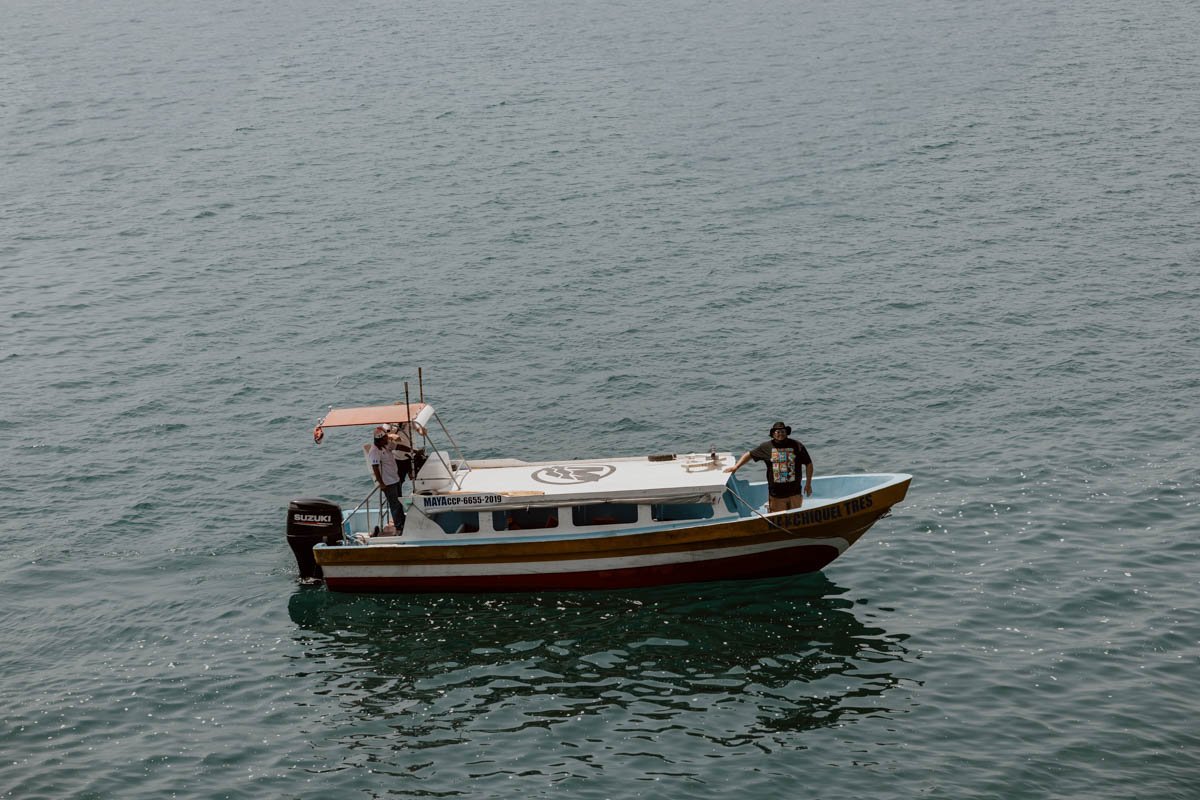
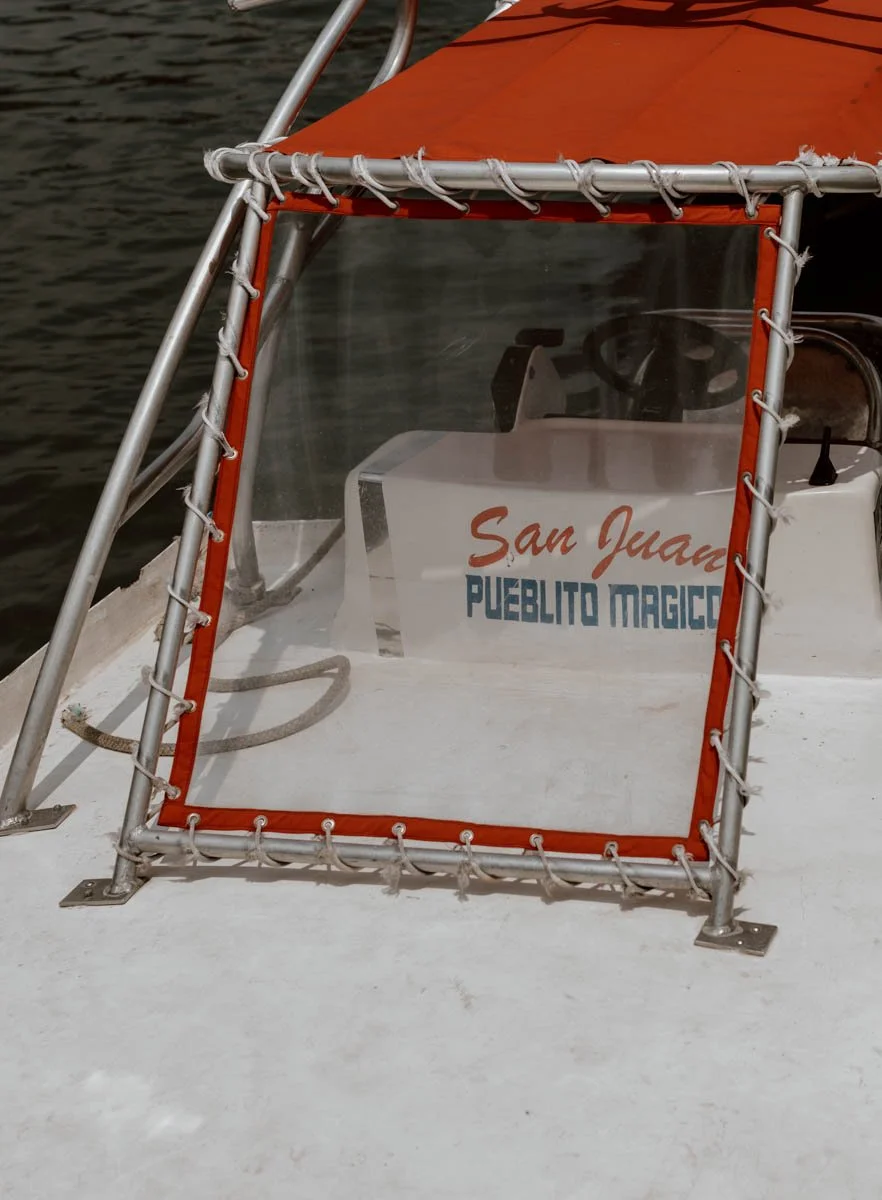
The Ianchas are commuter boats for residents, rather than pleasure rides for tourists. Low-slung and close to the water, the waterline is not much below your eye level.
Some of the boats are in pretty good condition, whilst others are decidedly not.
The windows are usually just cut-out in the fibreglass, with a plastic flap to roll down if it’s windy or the afternoon waves are spraying through.
The boats have capacity for about 20 people, or as many as the crew think they can squeeze in when it’s busy. Generally, there are six rows of plastic seats or benches that can sit three to five across. Sometimes there’s a gap in the middle for people to pass through, but often there isn’t, and sometimes boxes, bags, or a person will fill the space anyway.
When it’s busy, several people will have to sit at the front of the boat without an actual seat.
For people with short legs the layout is fine, but tall and long-limbed travellers with may find it quite uncomfortable.
The boats are not wheelchair-friendly and, if you have mobility issues, getting in and out on some docks may be a little challenging.
Know // In terms of how your luggage or backpacks are stored, it’ll either be inside the boat when it’s not busy or on top of the roof - usually the crew take it from you and decide on your behalf. You should always keep your daypack or valuables on your person though.
Tickets, Costs & Scams
There are no advanced tickets, reservations, card payments, or ways to buy online.
Instead, it’s a cash-only system, and you usually pay the guy working on the boat as you’re disembarking on the dock, or he’ll collect it as your approach. You’re charged based on where you get on and where you get off, and it’s supposed to be a fixed-price system.
This is where the sense of feeling scammed, or actually being (a little) scammed comes in, and you’ll hear or see quite a few people mention this.
The reality is that locals in Lake Atitlan pay less than foreigners (and some visiting Guatemalans) for the exact same journey. This is why it’s common to see fellow passengers hand over a smaller note than you, and it’s understandable that you would want to question it. However, this isn’t a scam: it’s just how the transport system works here.
That doesn’t however mean that some of the boat guys won’t try to charge you more than the actual fare for foreigners though!
Some, but not all, of the docks have signs with the official prices, and we’ve shared the specific prices for the most common journeys in our individual town guides. As of 2024 though, no one-way journey on the shared public Lake Atitlan boats should cost more than 25Q per person (£2.50, $3.25). For shorter journeys, the price should be 10-20Q.
Beyond having an idea of the prices before you board though, the best advice is to try and always carry small banknotes and coins so you can just hand over the correct fare. If you hand over a 50 or 100Q note for a 15Q fare, then don’t be surprised if he bumps up the price, delays, or doesn’t hand back all the right change.
Lastly, all tickets are one-way, and you shouldn’t buy any return ticket if offered.
Lake Atitlan Boat Schedules, Stops & Routes
The lanchas run from sunrise, with departures every 20-30 minutes.
Services go in both directions between Panajachel and San Pedro, taking 30-45 minutes from one town to the other depending on conditions and number of passengers.
Typical Boat Stops and Journey Times around Lake Atitlán:
• Panajachel → 12 mins → Santa Cruz
• Santa Cruz → 3 mins → Jaibalito
• Jaibalito → 6 mins → Tz’unu’n
• Tz’unu’n → 5 mins → San Marcos
• San Marcos → 5 mins → San Pablo
• San Pablo → 3 mins → San Juan
• San Juan → 2 mins → San Pedro*
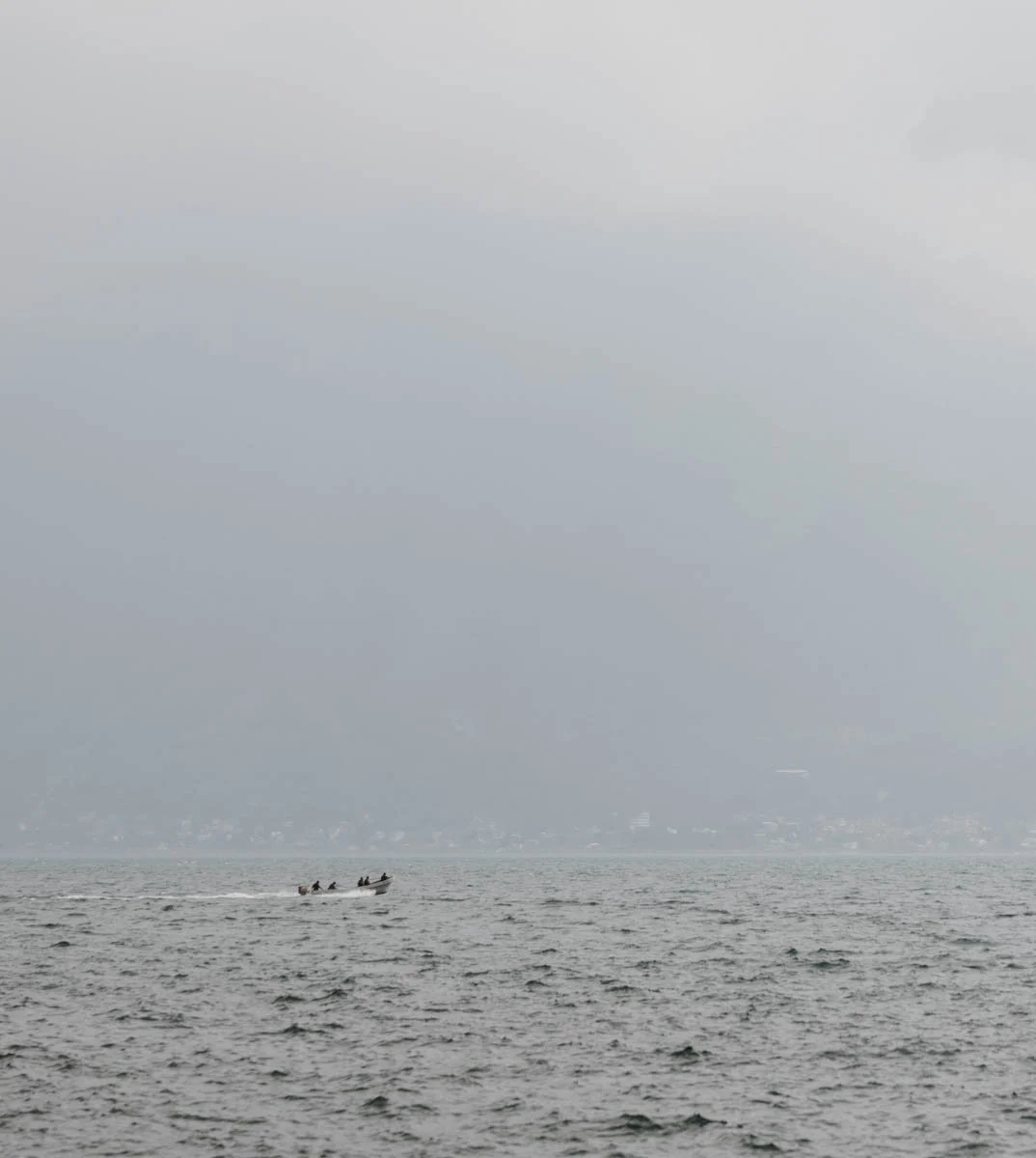
The boats skirt the shore, rather than criss-cross the lake. This is mainly because it’s a lot quicker and more efficient, but also because the waves and winds are stronger the further out they go.
Note that you may have to request stops at some of the above - Tz’unu’n, Jaibalito, and San Juan - if the driver can’t see any passengers waiting to board. However, they usually shout and ask if anyone needs to get off there. If nobody replies, they don’t go to the dock.
If you’re looking to take the first boat in the morning, getting to the dock before 6.30am is the rule of thumb, but it’s still a good idea to ask around the day before to get an idea. Due to this, we actually took the first boat from San Pedro to Panajachel at 6.10am.
The last boat from San Pedro departs at 5.30pm, whilst the last boat from Panajachel leaves at 7pm - but you should absolutely get there earlier to ensure you don’t miss it.
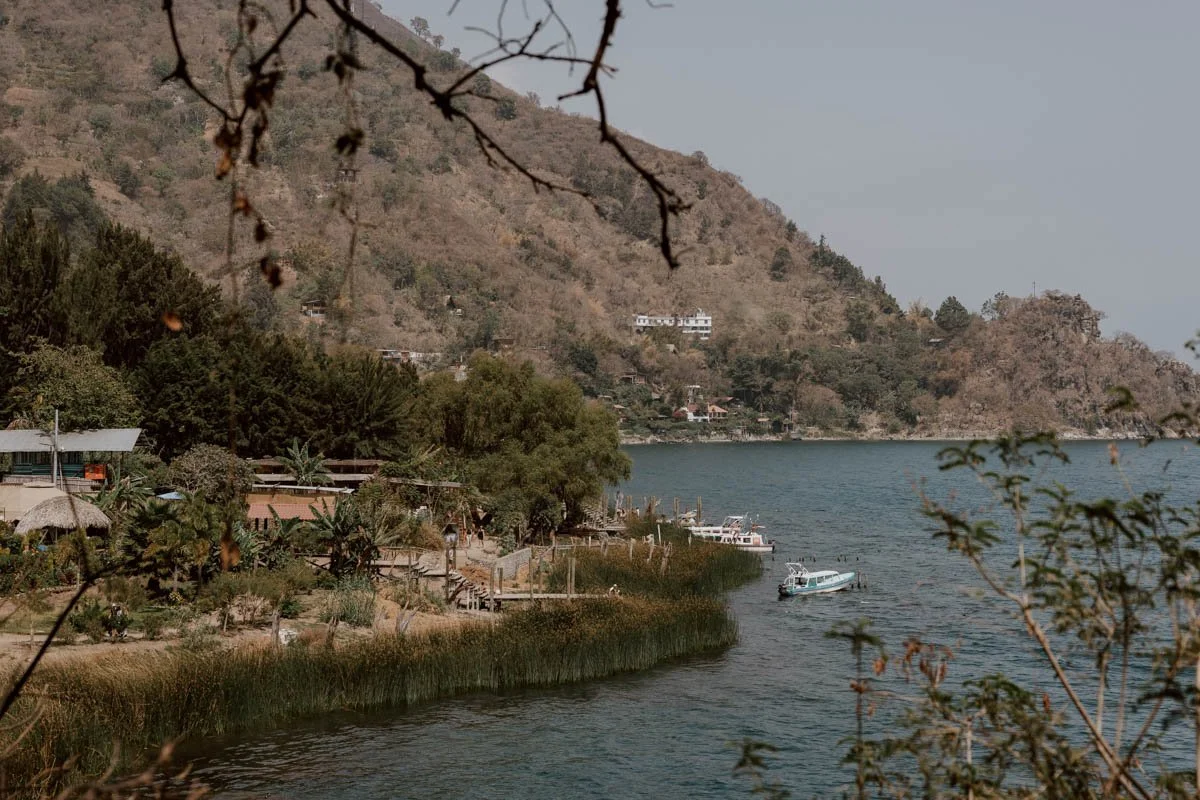
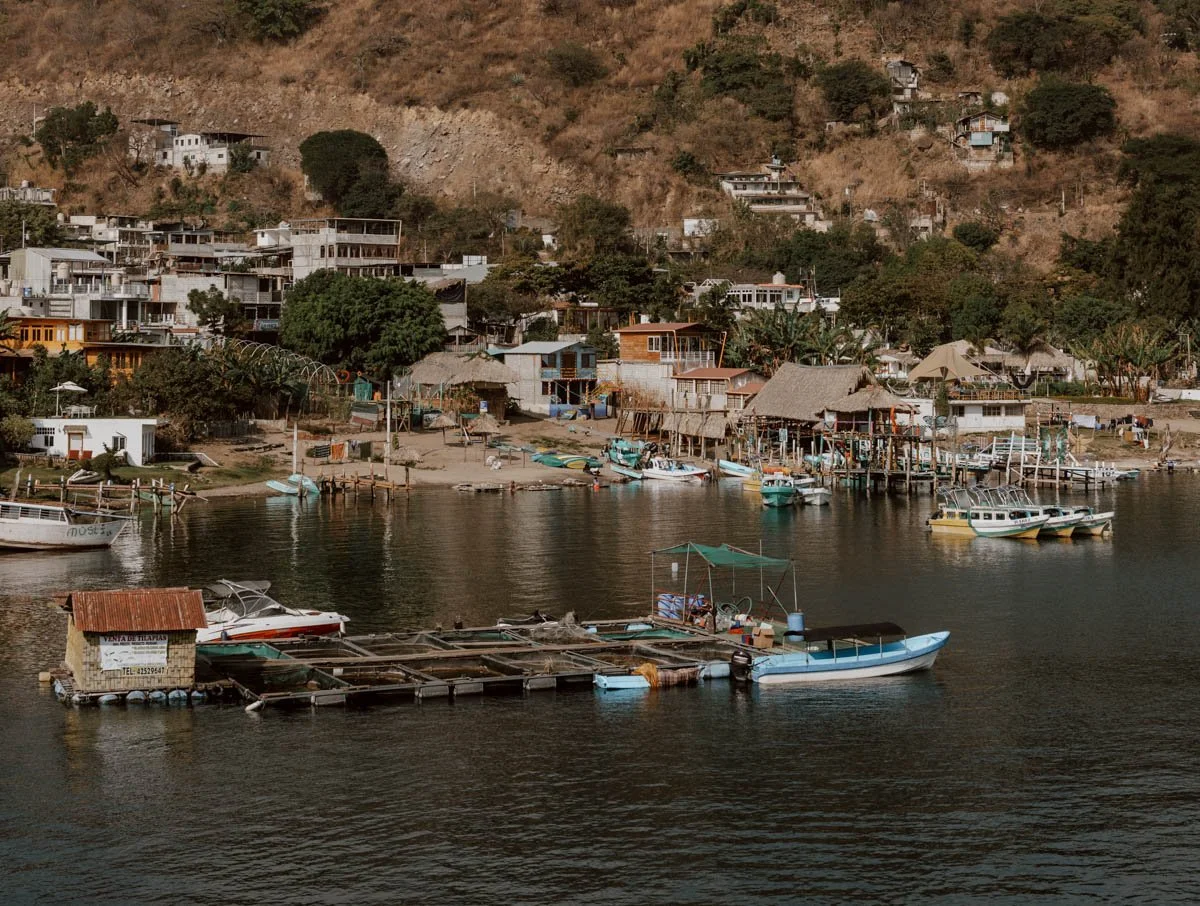
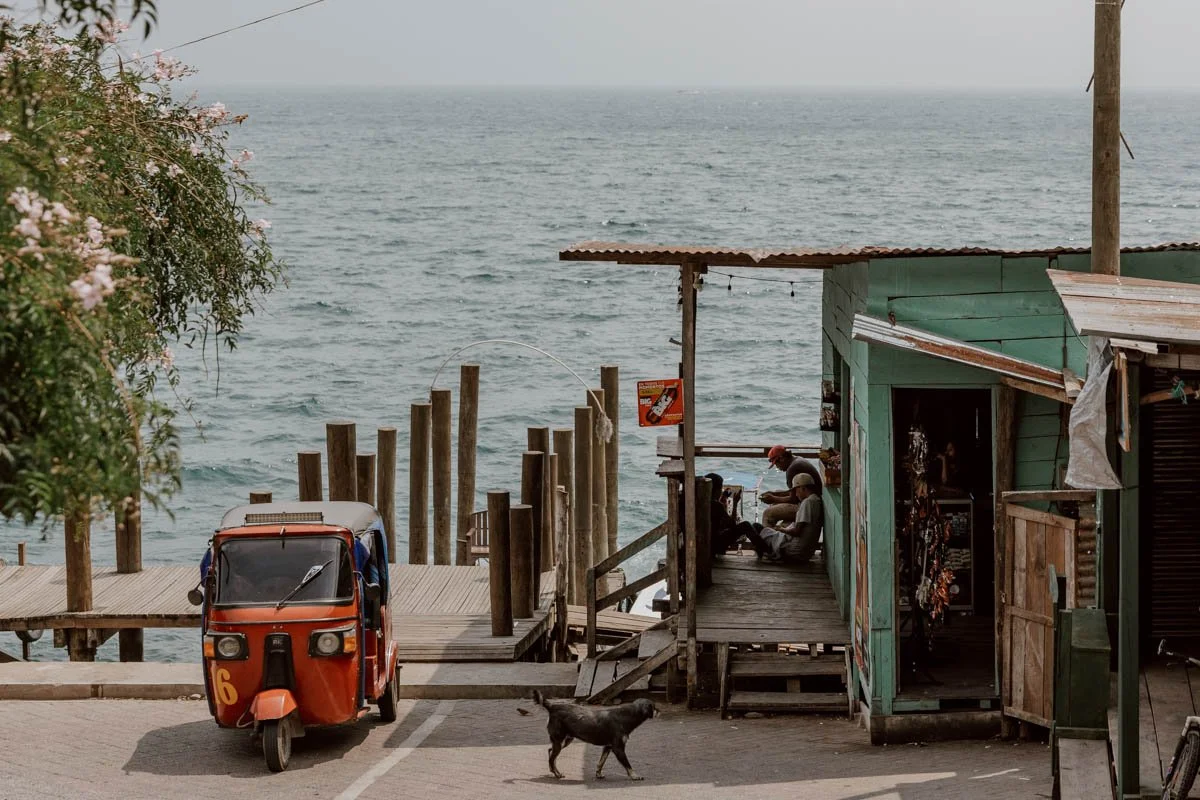
To catch the boat, you simply have to go to each town’s respective dock (or docks in the case of Panajachel and San Pedro), and wait for one to show up.
If you’re lucky, there’ll be one just getting ready to go or coming in; if not, you simply have to wait for the next arrival going in the right direction. When the boat is coming in, just say to the guy where you want to go and he'll confirm or tell you to wait for a different boat. On occasion in San Marcos and San Juan, there are official people working to point you in the right direction and prevent rogue captains.
If the boat you need has just pulled away, it’s worth shouting out to them as they will sometimes - not always - come back in to collect you.
If staying at one of the more remote accommodations, like Casa del Mundo, it’s not a bad idea to hail the boat if you know it’s going in the right direction, just to make sure it sees you and pulls in.
Shuttle Bus Connections
As mentioned, the lack of road access and nature of transport in Lake Atitlan means that most travellers arriving by chicken or shuttle buses from elsewhere in Guatemala will still need to a boat to reach their final destination.
If you’re going to Lake Atitlan from Antigua, Guatemala City, Xela, El Paredon, or Semuc Champey, then you will almost certainly arrive in Panajachel or San Pedro.
From each, you just need to make your way to the right dock and await the next boat:
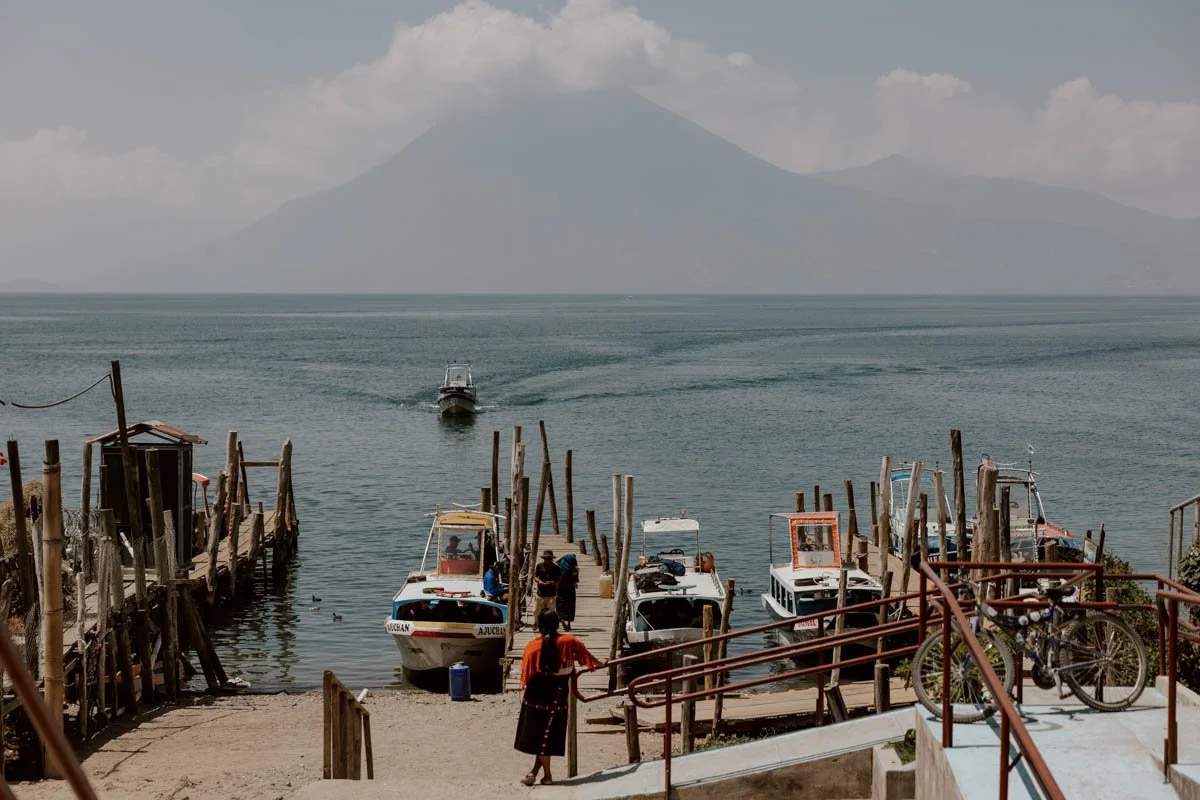
· In Panajachel, go to Muelle Tzanjuyú (here on Google Maps). It’s pronounced ‘san hooyu’ and that’s where all the public boats leave.
· In San Pedro, go to the main dock (maps) for departures to Panajachel.
· If staying in the town of Santiago, you need to catch a different service from the other dock in San Pedro - we’ve shared more in our guide to Santiago.
· Between San Pedro and San Juan, you can also opt to take a tuk-tuk along the connecting road instead of waiting for the boat.
Note that, if you’re taking a later bus or the shuttle from Semuc Champey, you’ll almost certainly need to spend the first night in Panajachel or San Pedro.
Private Boats
The above all refers to the public boats in Atitlan, the crew of which are generally part of an association permitted to run the service.
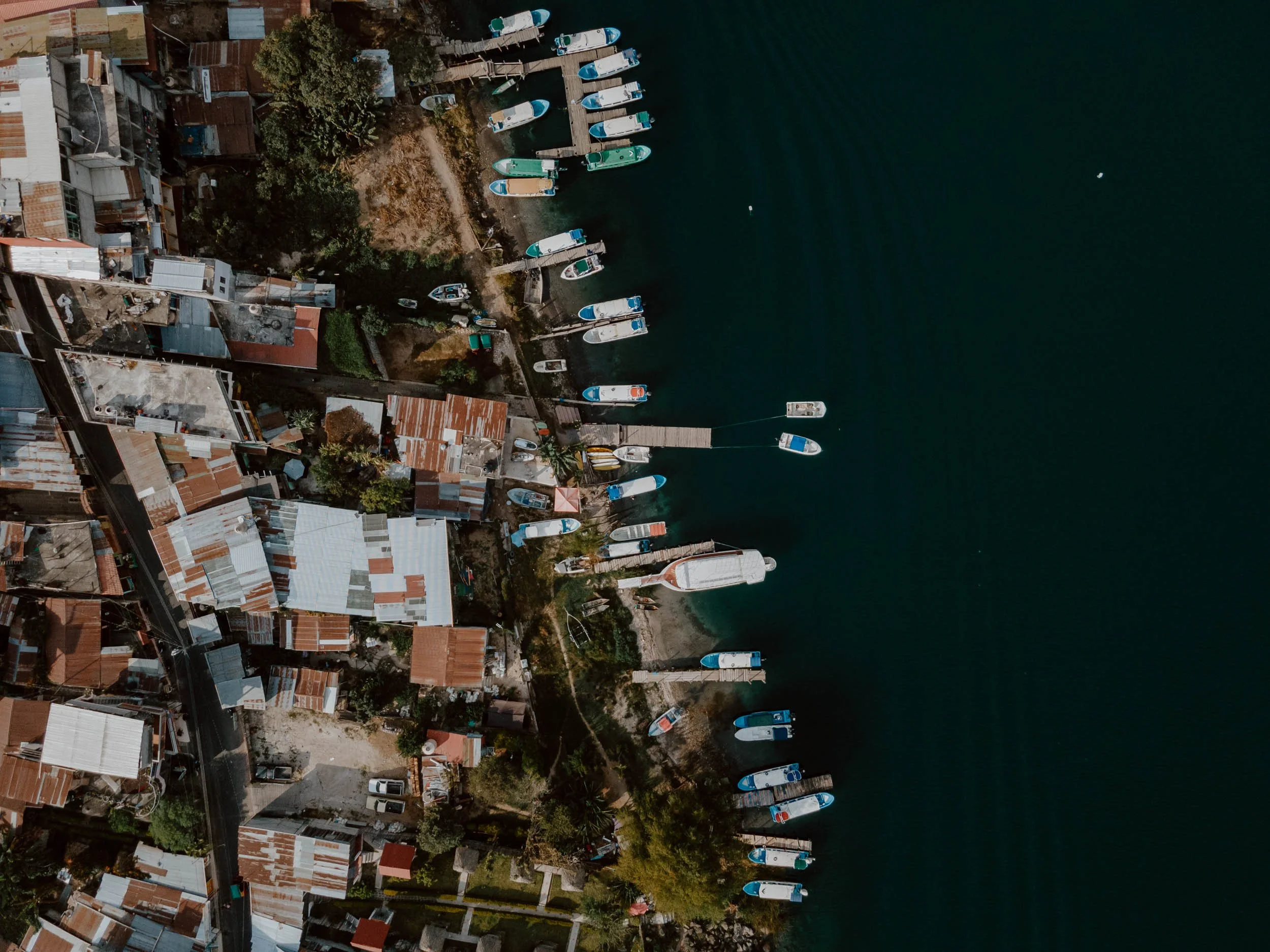
There are also guys hanging around the docks offering private boat services. Sometimes, particularly in San Pedro and Panajachel, they may give you the impression that they’re official and ask you to follow them to their boat.
Some of them are dodgy and will try to get as much out of you as possible, but sometimes they are just offering an alternative, quicker direct option.
They can also be the last resort if you’ve missed the last boat after a day trip.
If you do consider taking a private boat, be aware that fares are determined by negotiation and will always be more than the public boats. Also, we’d recommend only ever taking these private boats in a group, and always ensure you have agreed a fixed, final price and payment before you set off.
How To Have A Smoother Ride
The lake is typically calmest and most pleasant to ride on in the morning, with the afternoon waters tending to become quite choppy due to the xocomil: a strong wind caused by the lake’s unique geography.
For the smoothest journey, you should try to sit toward the the back of the boat, closest to the captain. This will mean less of a bump or jolt when there’s a wave caused by the wind or a passing boat, which can take its toll on your back and bum over the course of a 15-30 minute journey.
However, services at peak times in the morning and afternoon can be totally full, so don’t expect to always have a choice on where to sit; when it is packed, some passengers may have to sit at the very front of the boat where there are no actual seats.
The xocomil doesn’t mean you should avoid afternoon boats - that would be silly - but just be aware that conditions can be quite different.
It’s can also be quite chilly in the morning and later afternoon, so it’s a good idea bring a layer for those day trip boat journeys.
Travel Better Tip // We recommend trying to do one boat ride in the early morning when the fishermen are out, ducks are in the reeds, the lake is silky smooth and, if you're lucky, the cloud has yet to cap around the volcanoes.
The captains want as many fares as possible though, so have a tendency to hang around longer in the morning; this is another reason why you should leave early if you've got a shuttle connection to make Panajachel or a tour to meet.

Our Lake Atitlan Travel Series
We are right in the middle of publishing all the guides to help you travel better by the lake, so keep an eye out or visit our Guatemala page for the latest posts.
13 Wonderful Things to Do in Lake Atitlan
Our Lake Atitlan Travel Guide
Short Guides / San Pedro - San Juan La Laguna - Santiago - Santa Cruz