13 Wonderful Things To Do in Panama City
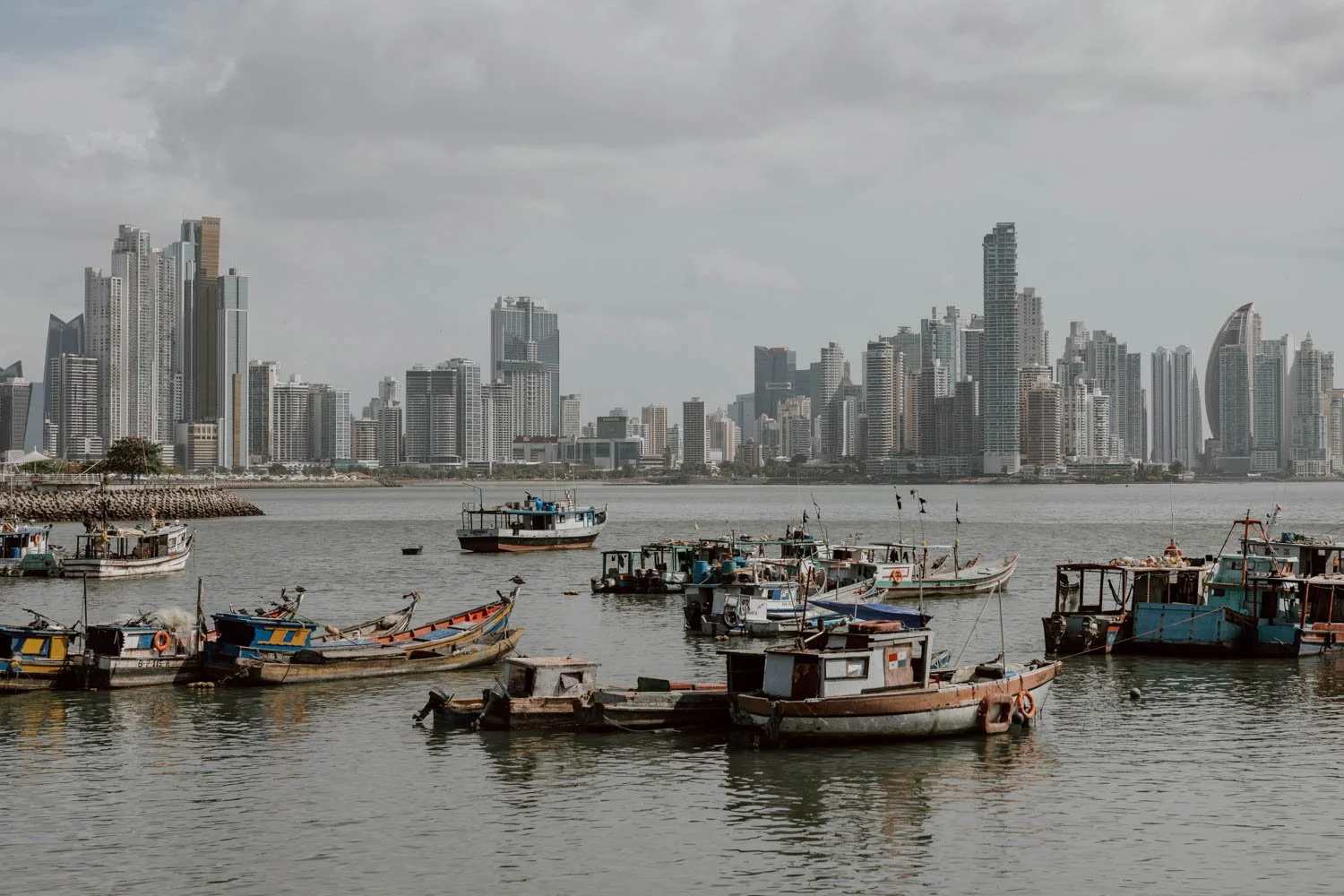
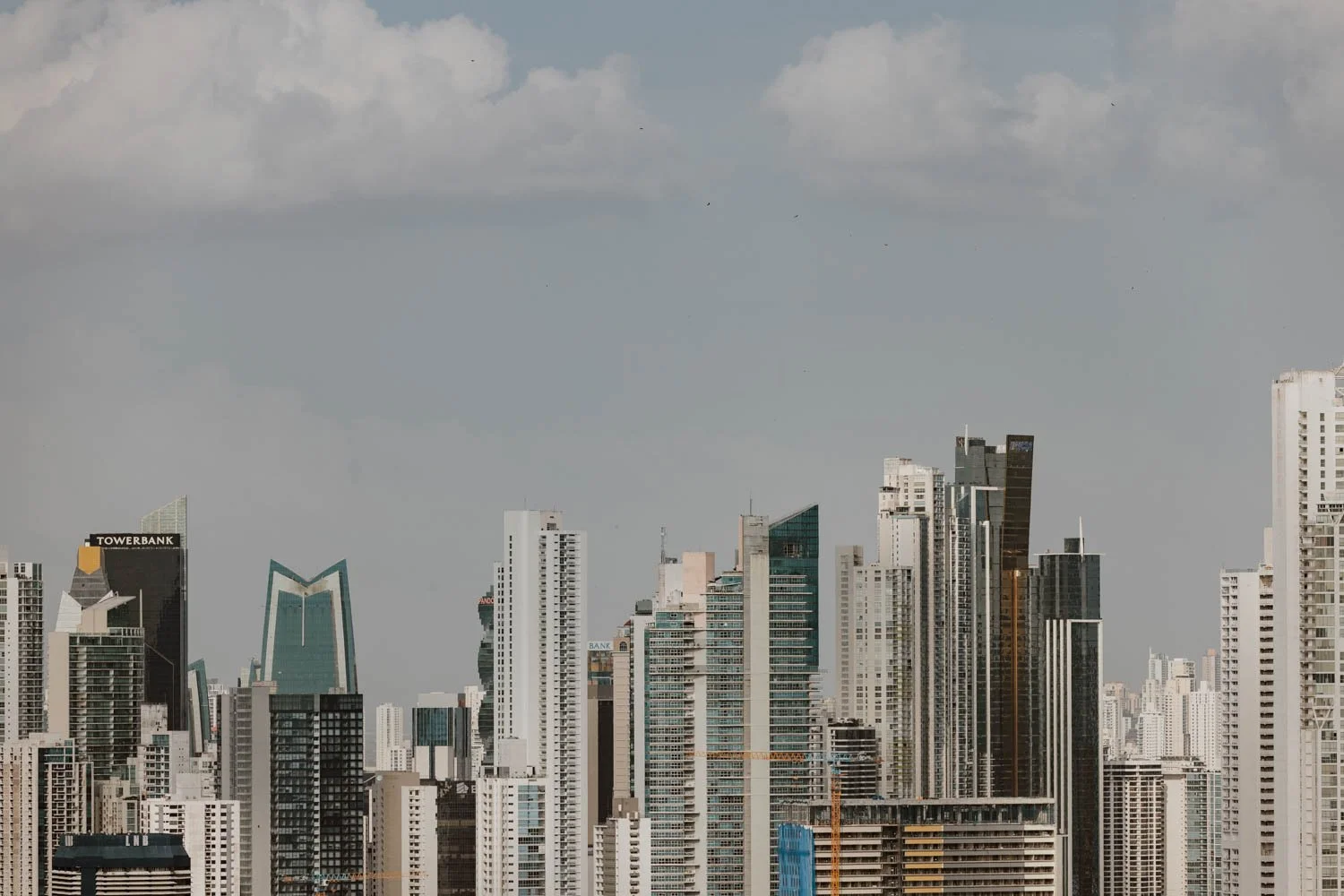
‘Miami meets Dubai’
On the flight to Panama, the seat-back screen played a short advert to promote the capital city as a destination; unfortunately, that pairing in their marketing may put off more travellers than it tempts.
People tend to know two things about Panama City: it’s either home to the famous canal or a place where dirty money can be made clean amongst the skyscrapers. The crossroads of the Americas and place where oceans first joined together, its layout and position as a financial and commercial hub for the region can make it a city that’s difficult to warm to on first impressions.
On the Central America circuit, it doesn’t get much love, with many rushing through or avoiding it entirely. Indeed, we had a week based there during our two-year trip a decade ago, and never anticipated finding a reason to return.
Yet, return we did - and the good news is that we left with a different, more nuanced perspective that has nothing to do with Miami or Dubai comparisons.
A perspective that, for all its glass and steel and cement, Panama City remains anchored between the water and the wild, still shaped by salt and sky.
—
Whether you’re only focussed on a Panama adventure or backpacking odyssey through Latin America, the capital is likely to form a more important part of your trip than you may anticipate. Beyond its position as the country’s gateway for international flights, it’s also the start/endpoint for the San Blas (Guna Yala) excursions which almost everyone is going to want to do!
This means you’re probably going to spend a minimum of a couple of days here - and we want to help you make the most of them.
From the colonial streets of Casco Viejo to cycle rides along the causeway, our Panama City guide has got you covered. There are sunset rooftops with a view, art gallery and Geisha coffee picks, our secret to finding the most delicious ceviche, plus everything you need to know for the best sloth-spotting experience we’ve ever had in Central America!
We’ve also shared tips to travel better here, personal accommodation recommendations, and an honest take on visiting the canal from the capital.
This is 13 Wonderful Things To Do in Panama City, Panama.
The Panama City Essentials
Wander / Casco Viejo’s streets
Cycle / the Amador Causeway
Eat / ceviche at Mercado de Marisco
Sail / the Panama Canal by boat
View / art at MAC Panamá & MUMO
Find / your favourite rooftop bar view
Book / a local-led food tour
Spot / sloth bottoms on Cerro Ancon
Drink / Geisha coffee + an expert tasting
Step / into local neighbourhoods
Explore / the ruins of Panama Viejo
Plan / your San Blas adventure
Learn / at the Museo Interoceanico
Stay / American Trade Hotel, Viajero Hostel, our Airbnb, Casa Magnolia
The Context
· Panama City’s layout can be logistically frustrating, so it pays to plan your days in clusters of nearby sights. This is partly a legacy of its recent history, with a clear divide between the American-run Canal Zone and the rest of the city.
· The Pan-American highway slices through the city, and driving through the downtown involves a surreal loop of glass towers and giant billboards. Factor in extra time for the daily morning gridlock in/out of Casco Viejo, where most of you will stay.
· Outwith Casco Viejo and the Amador Causeway, walkability can be limited: places that look close on the map are often cut off by the highway or go via a busy overpass with no pavement in sight. There are also a few neighbourhoods to avoid or be extra cautious.
· There’s a metro and cheap public buses but, if you’re short on time, it’s definitely worth taking taxis or Ubers between Casco Viejo, the skyscraper districts, and the canal.
· Flying in? Then find out the cheapest and quickest routes in our explainer: How To Get From Tocumen Airport to Panama City
· Lastly, budget is an important consideration for your enjoyment of Panama City. Prices for some experiences are high for Central America and sometimes closer to European rates, so those on a budget or longer backpacking trip may have to prioritise and make choices on activities.
· For more practical tips, make sure to check out 14 Things To Know Before You Visit Panama City
· Choosing the right neighbourhood as a base makes a big difference. Find the best one for your travel style and budget - and our curated selection of hotels, hostels, and Airbnbs - in the guide to Where To Stay in Panama City
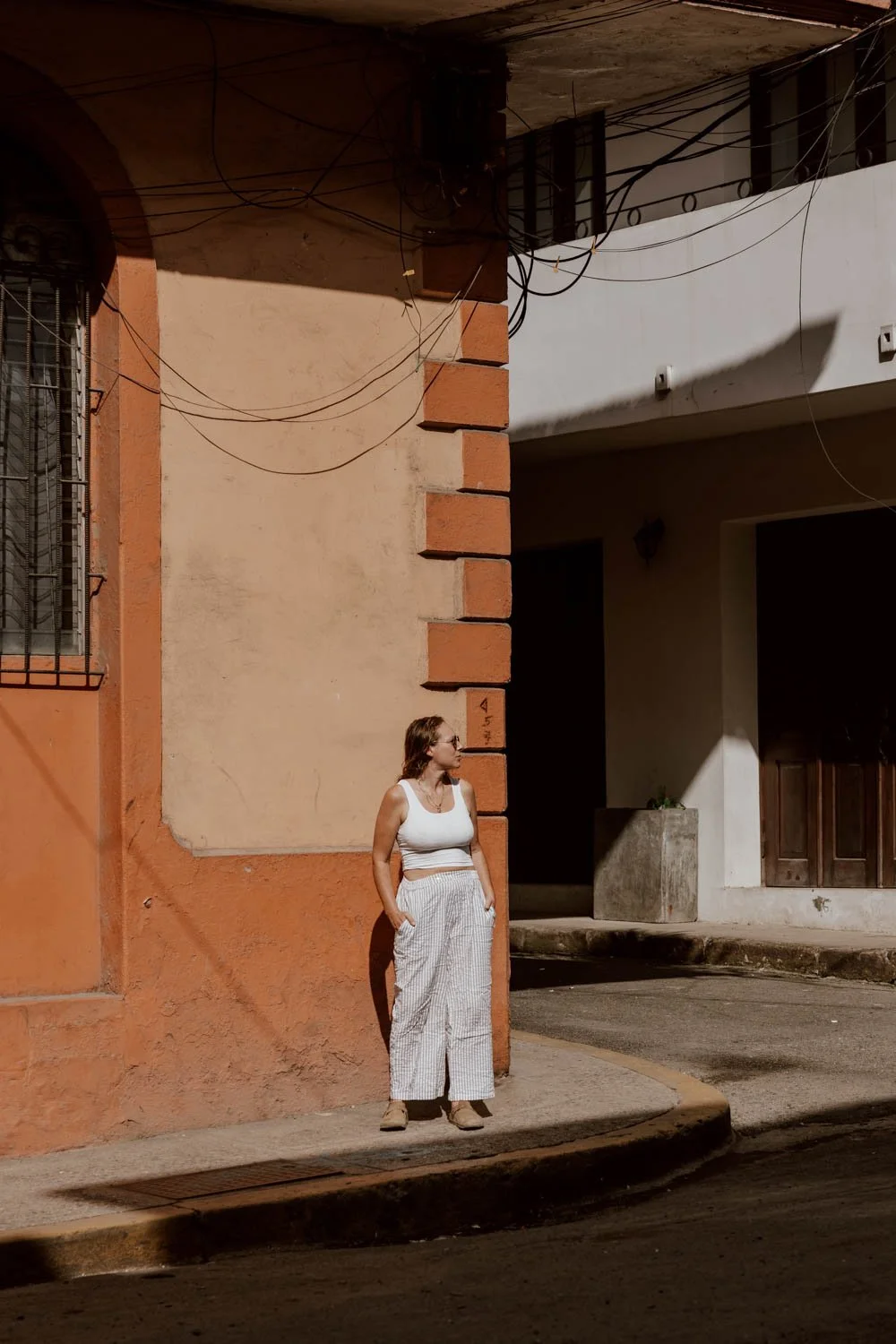
The Best Things To Do in Panama City
Wander Casco Viejo
If you've read other guides, you may be concerned about adding to the impending gentrification of Casco Viejo.
You can leave those worries behind though, as that ship has very much sailed.
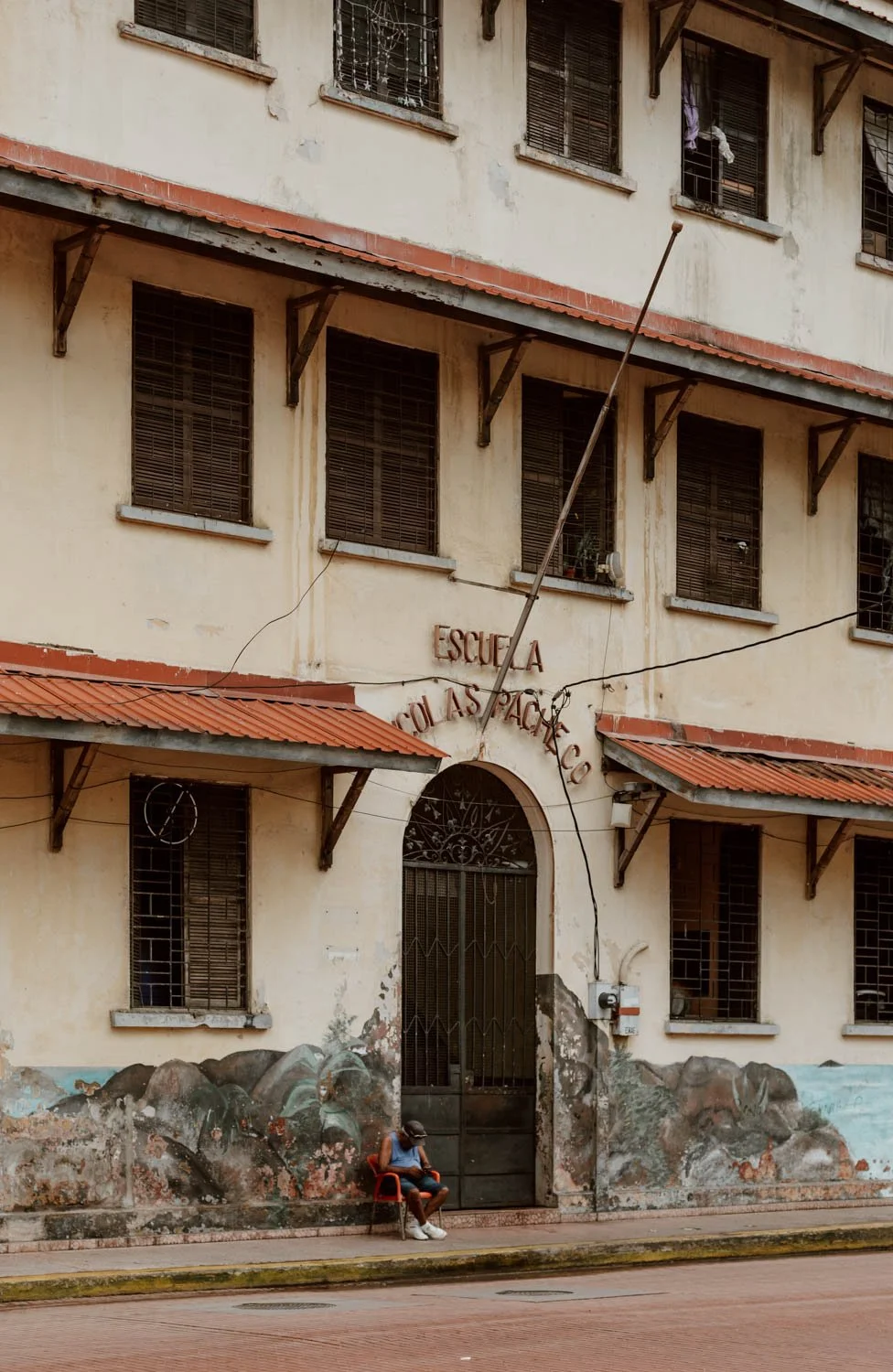
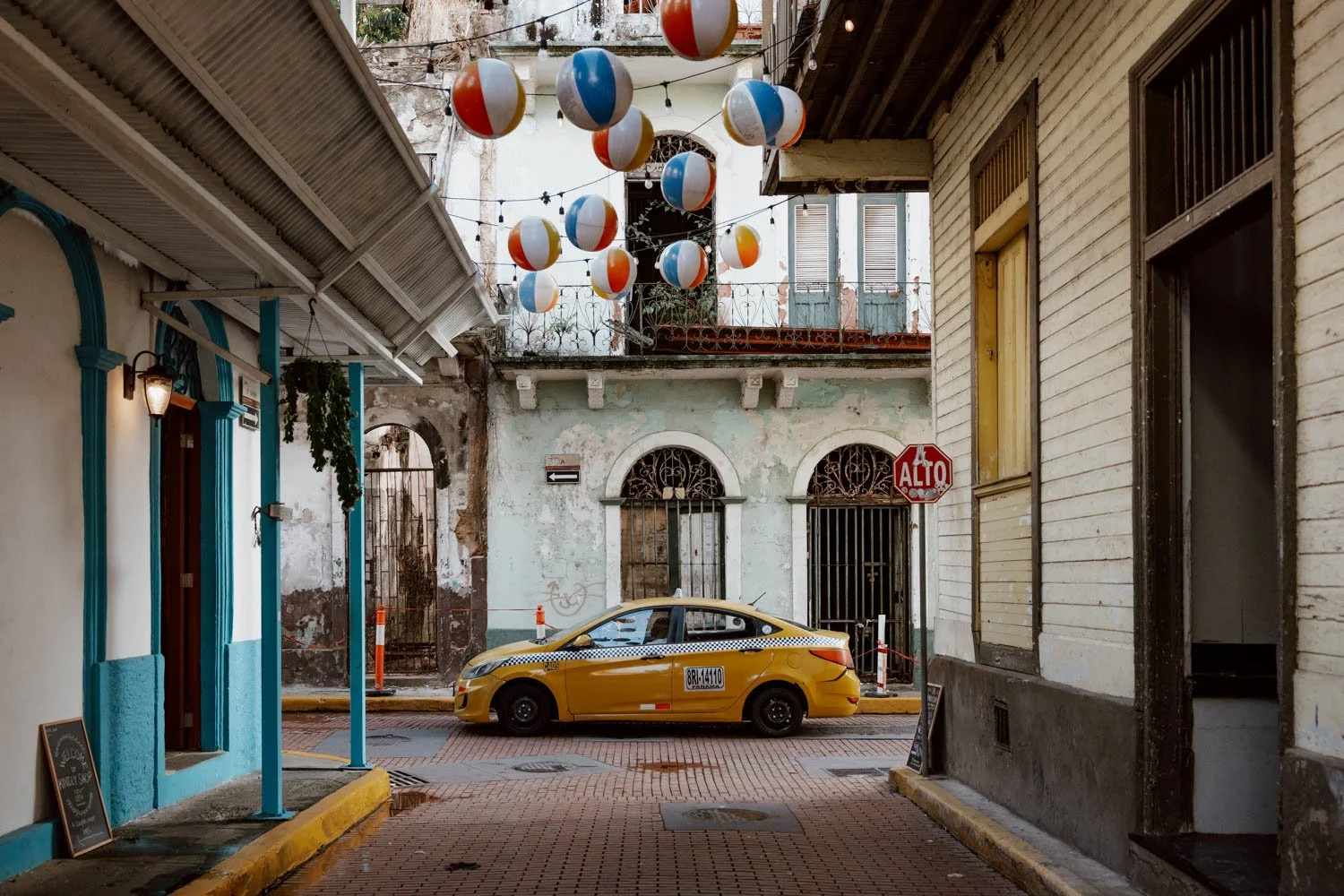
Also known as Casco Antiguo, Panama City’s colonial quarter is a UNESCO World Heritage Site and the city’s most popular area for visitors. A compact maze of pastel façades, stone churches, and charming plazas, it’s a world away from the skyscraper stereotype. However, it’s undergone a significant transformation since we first visited.
Several streets are lined with grand hotels and high-end restaurants, and overlooked by exclusive rooftop bars. Some of this renovation has been tasteful and thoughtful - executed beautifully - but some have lost something in the process, becoming modern pastiches of the originals; more like a new ‘Miami colonial’ version of an old building, rather than a sympathetic revival of what stood there for centuries.
Nevertheless, similar to Cartagena in Colombia, all of this has definitely brought a new level and bracket of tourist - and wealthy locals - to the neighbourhood.
And yet, for anyone expecting a perfectly polished colonial-era quarter, the reality is more complicated.
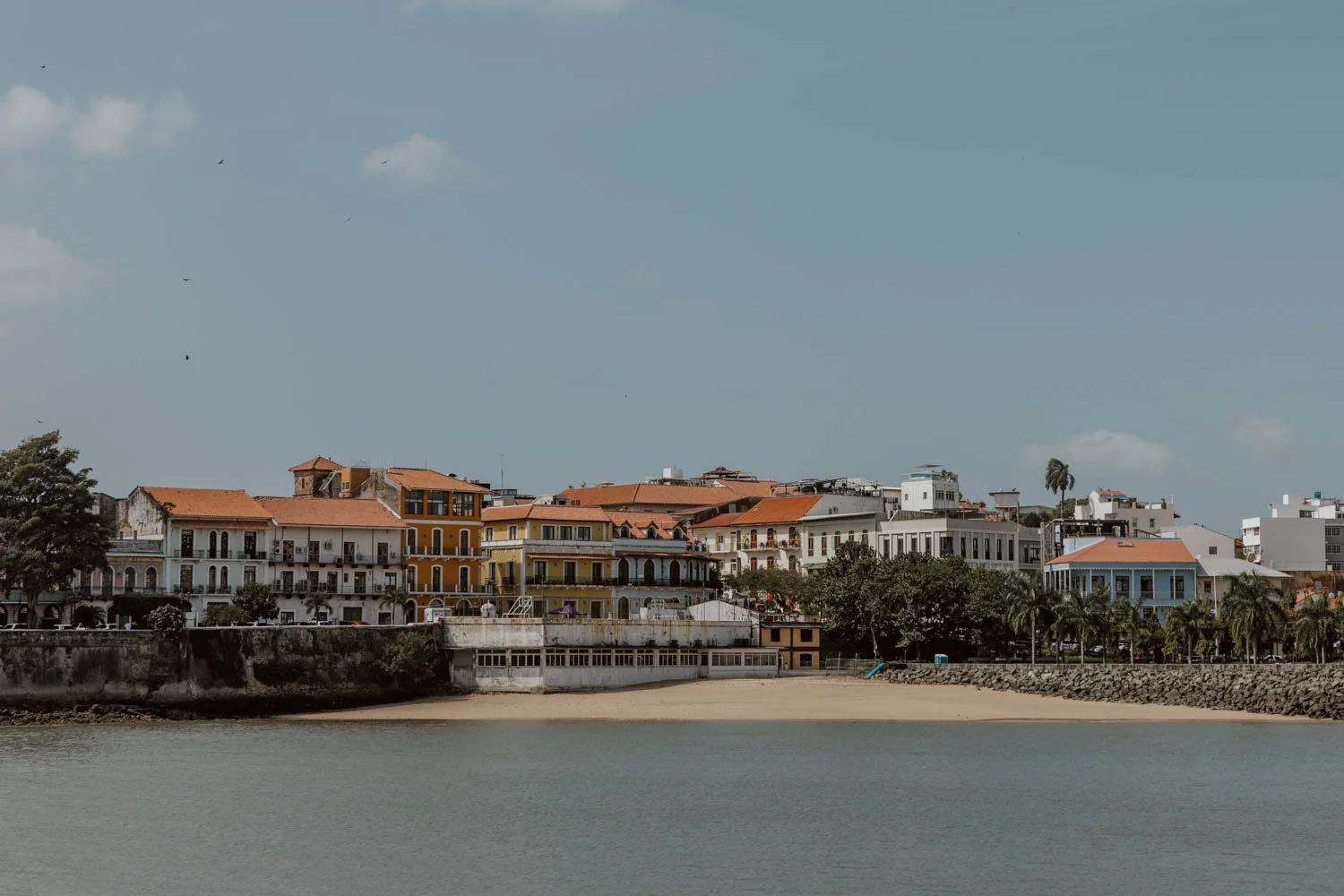
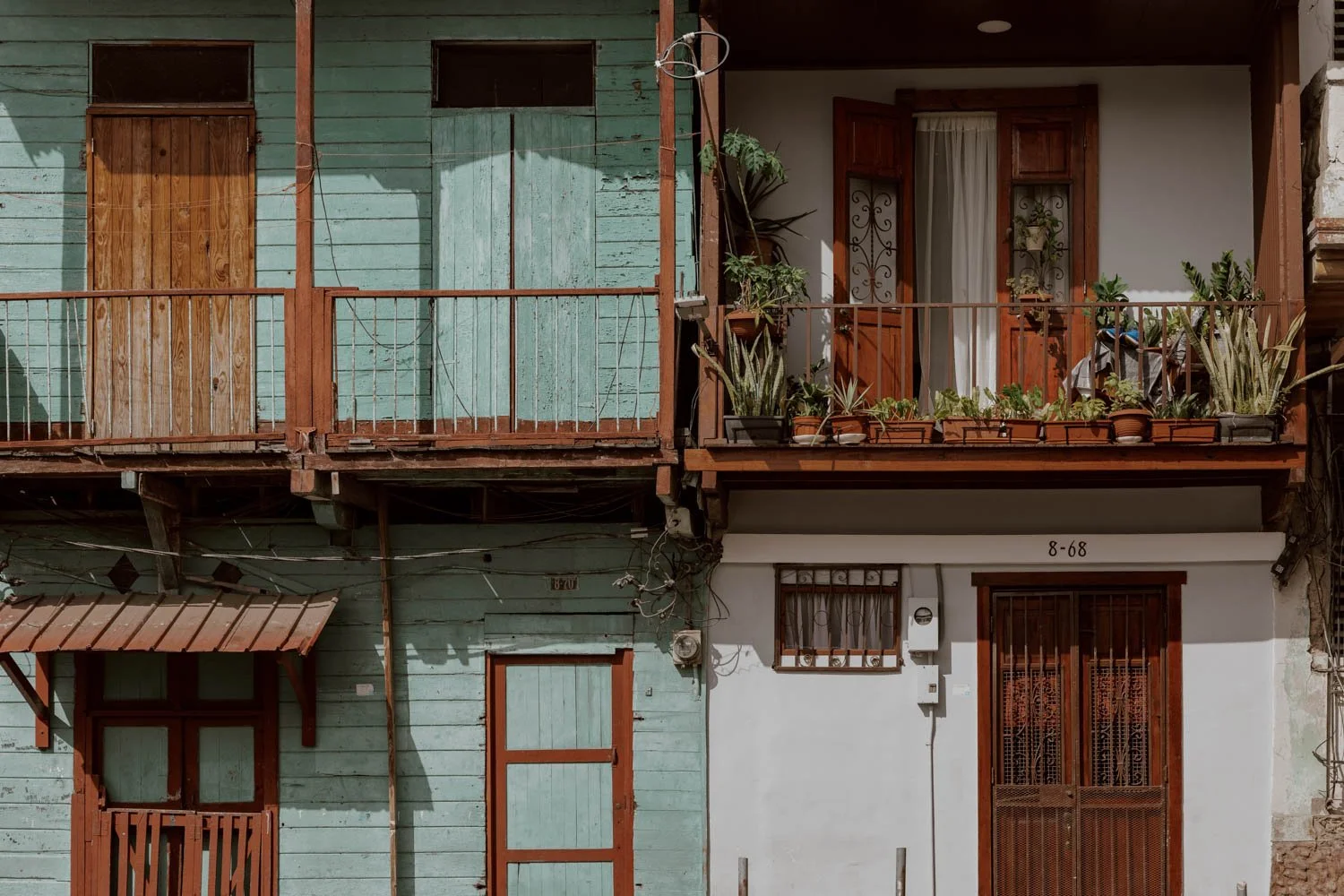
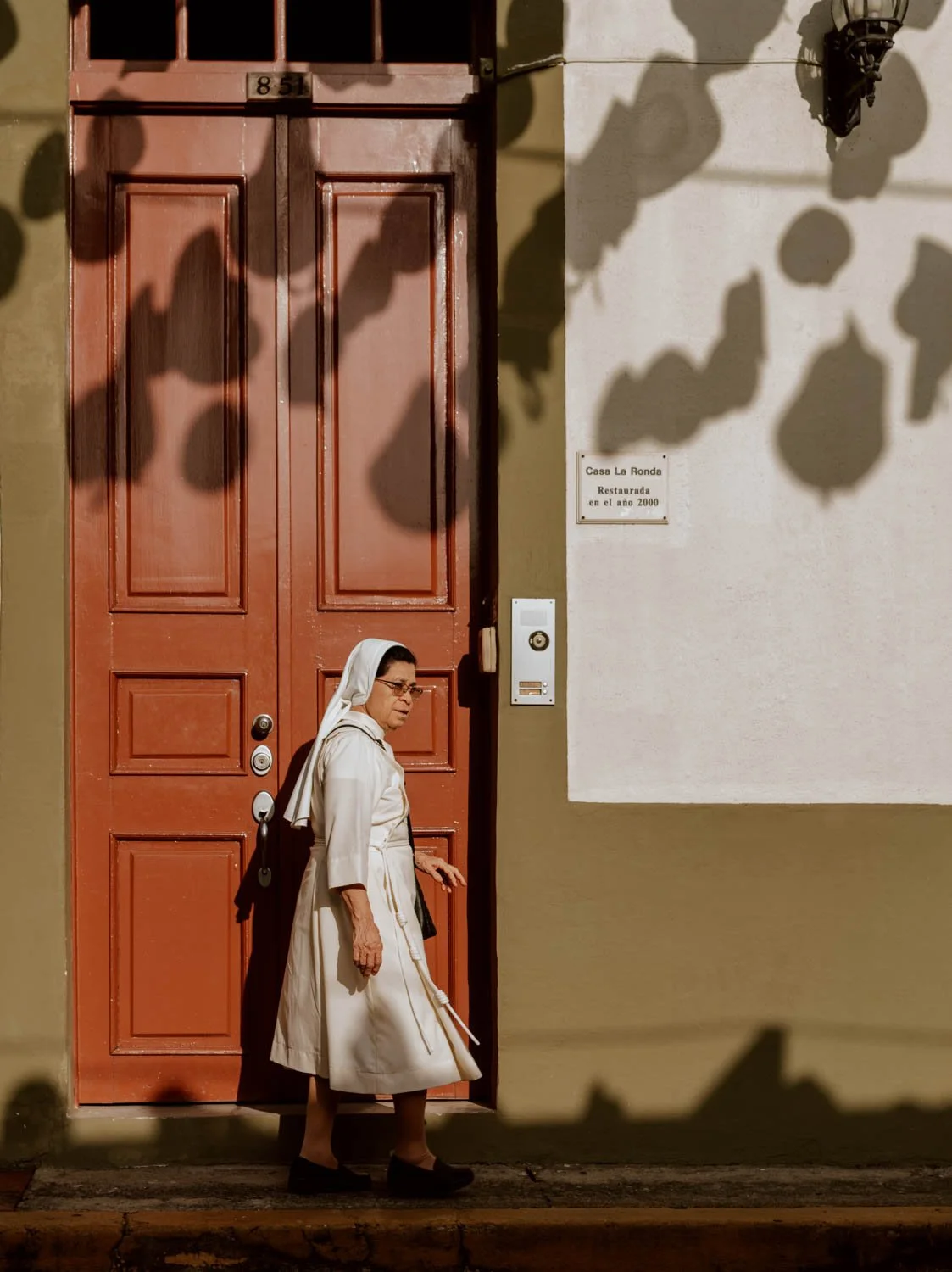
Just as many of the buildings stand abandoned: completely gutted, left only with their handsome façades, supporting scaffold, and a ‘se vende’ sign. Some have cinder blocks in the windows or plants growing unencumbered by ceilings and floors, nature reclaiming from within as they await the next investor to gamble on which version of the past will sell best in the future. And, wander down certain streets in Casco Viejo and you’ll find homes of brightly coloured, rotting clapboard and others that appear half-derelict, but remain occupied by several generations; those who haven't jumped yet or are clinging on to the place they’ve always called home.
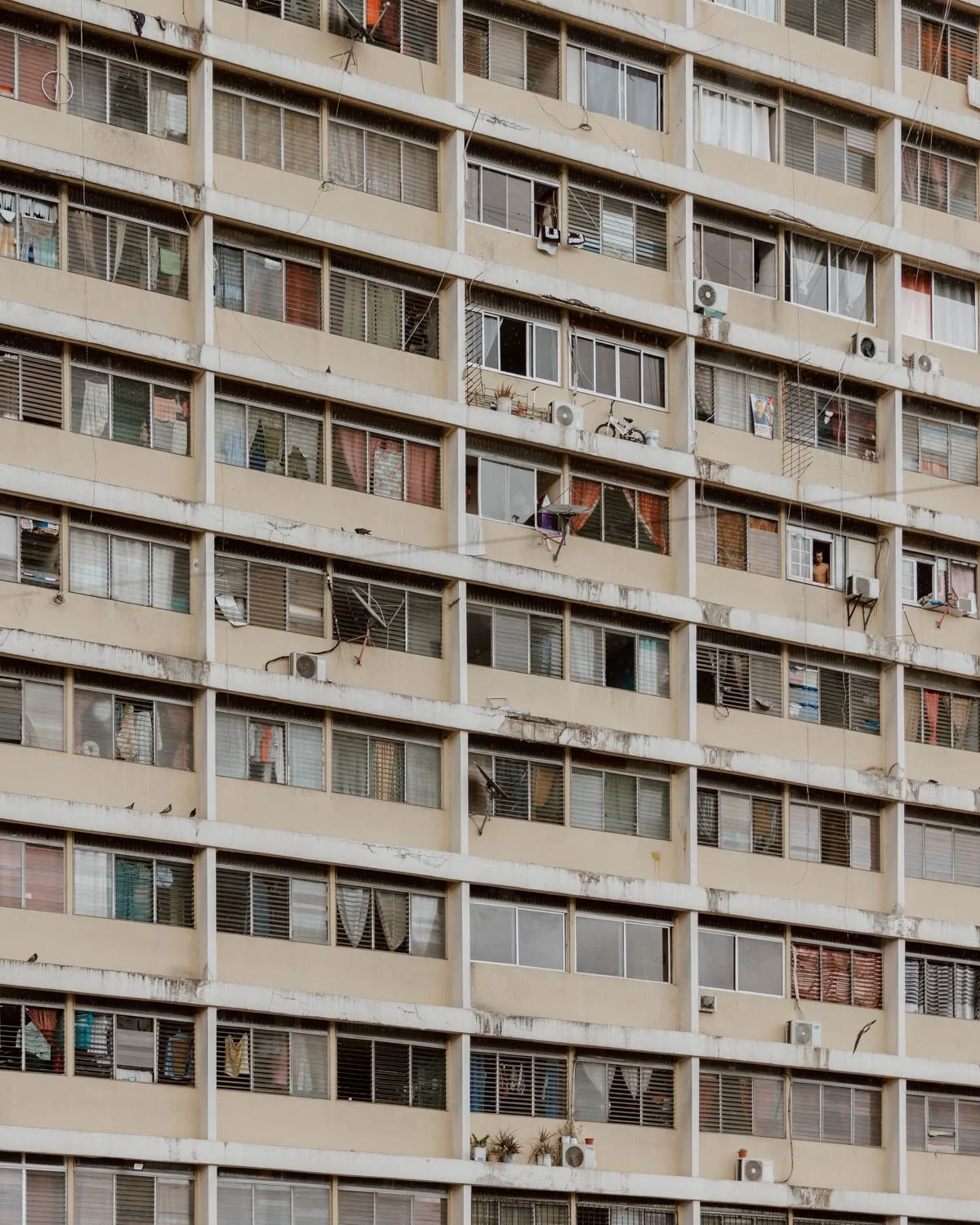
In a relatively small neighbourhood, the contrast is stark and often jarring. Whilst there’s a clear demarcation between the polished, tourist-facing streets of Casco Viejo and the more lived-in parts, the boundaries remain porous, bleeding into and butting up against one another in unexpected ways. Scrappy kids playing football next to the plaza of choice for the well-heeled, the crackling song of street preachers keeping guests awake in a revamped hotel.
There are also invisible borders, which a first-time visitor won’t realise they’re crossing over. Sometimes they’re marked out by the sudden peeling of paint, a change in signs, or the presence of strategically-positioned police patrols (also partly due to the President’s residence being here).
For better or worse, we know which will win out in the end.
Despite these tensions and the sense that it’s edging too close to being overly touristic - focussed only on those of us from elsewhere - Casco Viejo is undoubtedly going to be the highlight of Panama City for most travellers - and also the best base. It’s safe, walkable, architecturally fascinating, and full of cafés, bars, restaurants, viewpoints, and a few exhibits.
Just know that if you’re craving something less curated (and less expensive), the best food, markets, and snapshots of everyday life lie outside its streets.
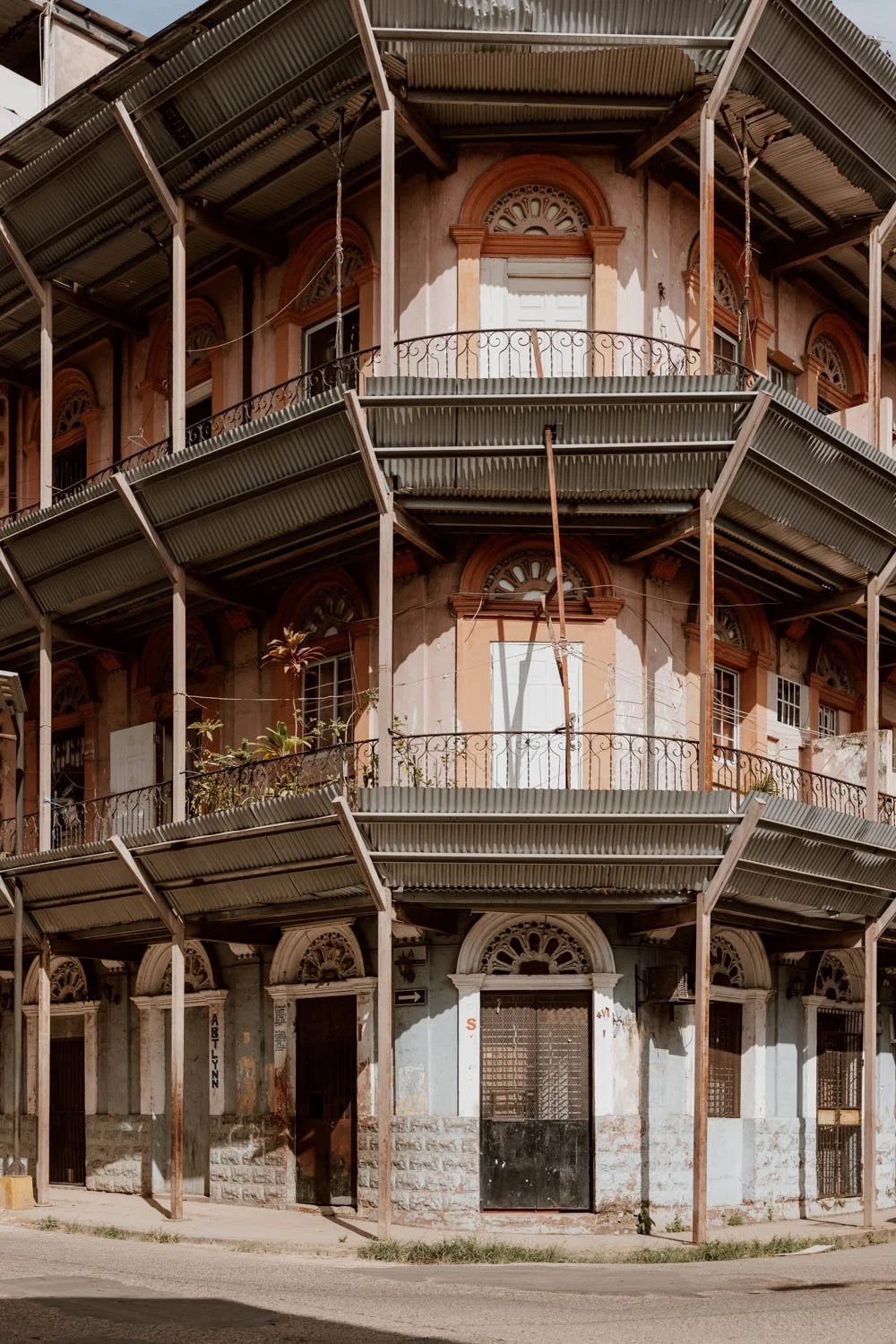
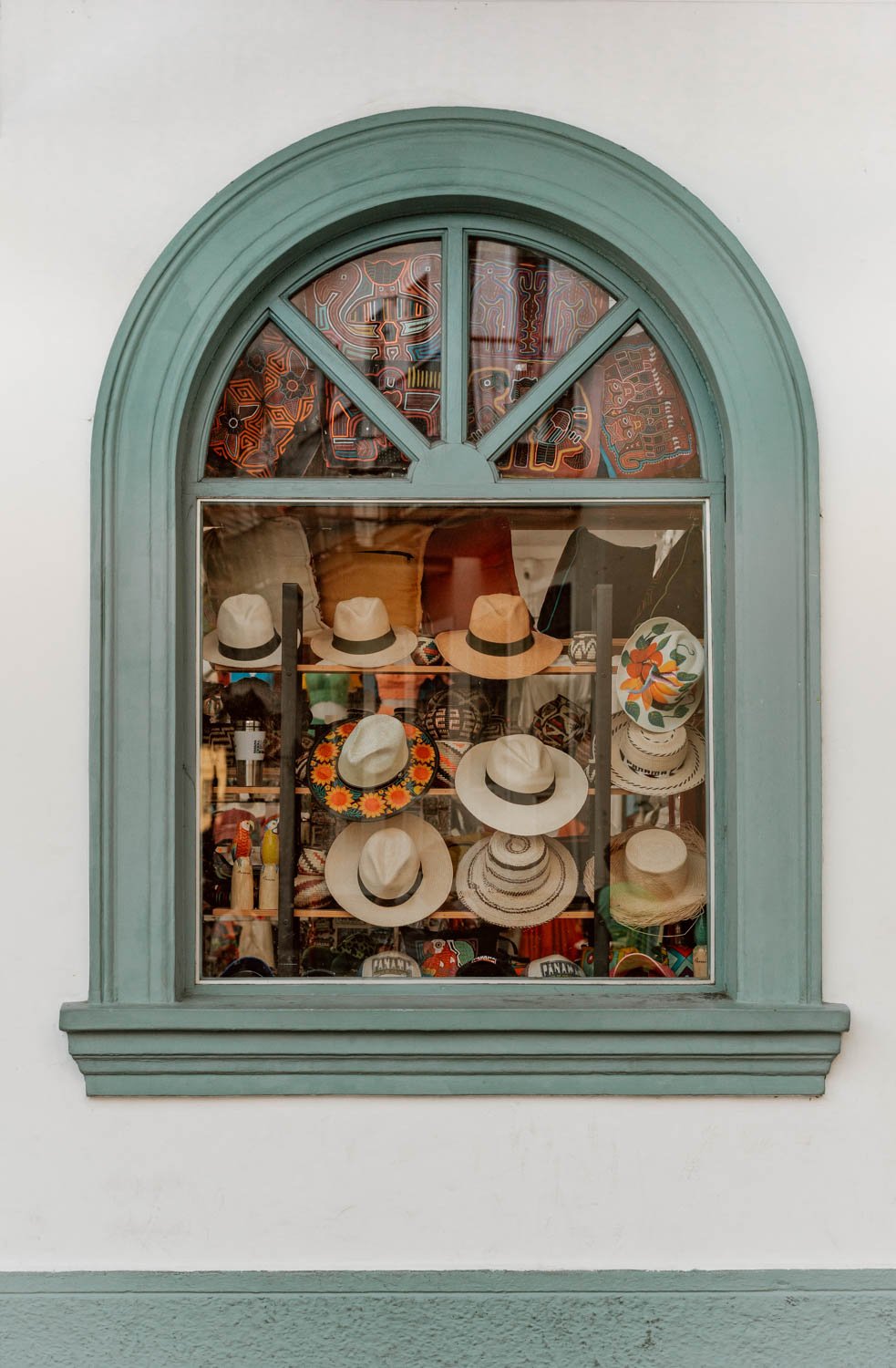
A few of our favourites to put in your map are:
· A walk along the Paseo Las Bovedas | This waterfront walkway take you along the colonial fortifications, where there are various stalls, viewpoints of the skyscrapers and Cinta Costera, and a glimpse of the Puente de las Américas in the distance. This is particularly beautiful around golden hour and for sunset.
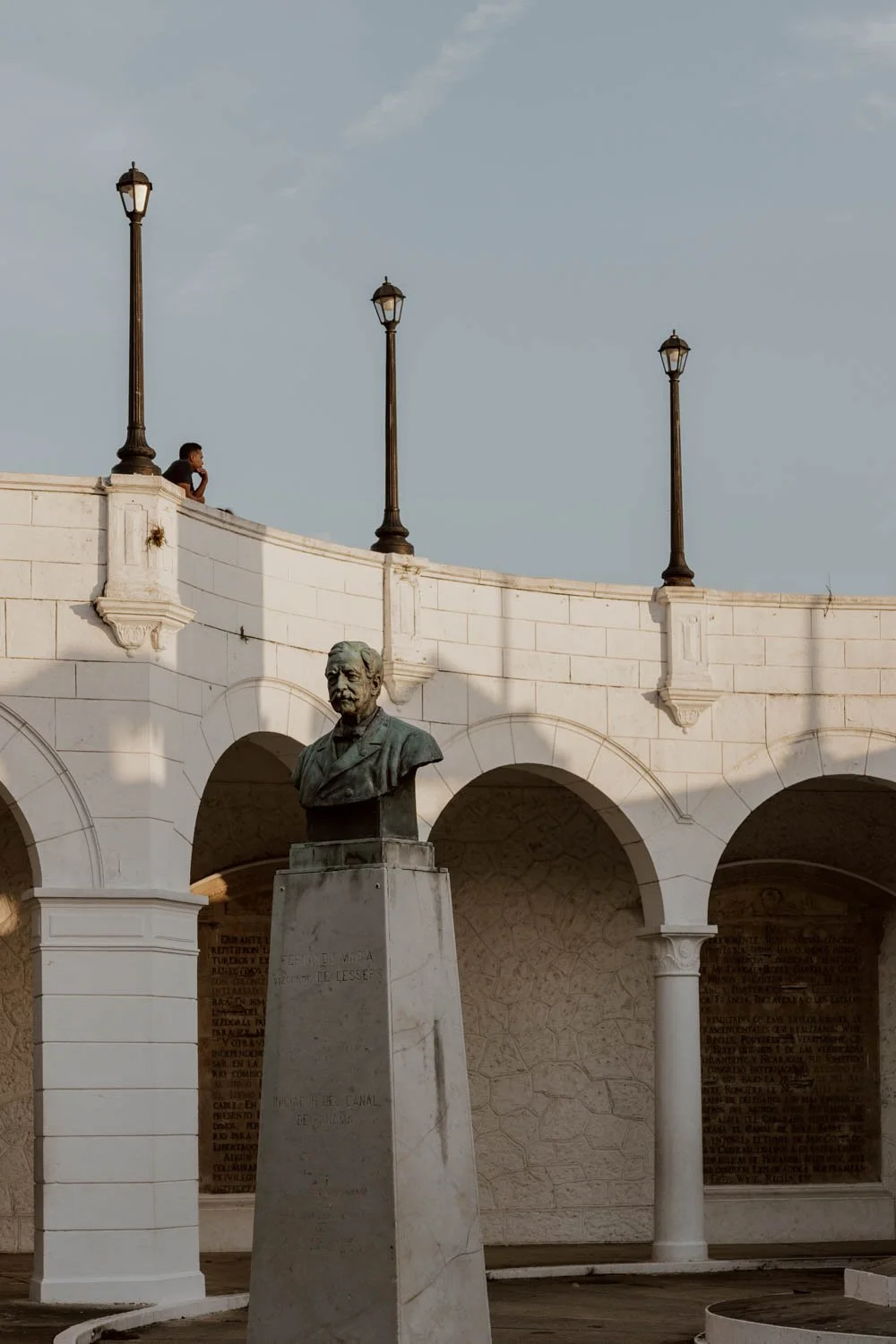
We suggest accessing it via the stairs on Plaza de Francia, which honours the failed French attempt to build the canal, with busts of key figures from the project - find it here on Google Maps
· Plaza Simón Bolívar | A pleasant square to hang out for a little bit. It’s lined by Iglesia San Francisco de Asís, guarded government buildings, and a few relaxed bars and cafes with tables spilling out onto the pavement. A tremendous bronze and granite statue of Bolívar dominates the centre, marking his liberation of the Americas and the 1826 Amphictyonic Congress of Panama, which he convened here to promote cooperation between Latin American republics after independence from Spain.
· Museum Of Religious Art | Next to the beautiful of ruins of Convento Santo Domingo and the Arco Chato, this little museum in the church is dedicated to local religious art from the colonial period. Worth popping in.
· Rako’s | This quirky local artist creates some of the coolest, most original souvenirs you’ll find in Panama - and we still love the two t-shirts we bought there. There are now two stores in Casco Viejo - here and here.
· Museo de la Mola (MUMO) | Guna women, an Indigenous people from the remote San Blas islands, create intricately layered textiles called molas - and you’ll see these sold at stalls. A relatively new addition to the city, the Museo de la Mola showcases their artistry and this rich cultural tradition across five exhibitions. Open every day except Monday, it’s free to enter - find out more on the official website.
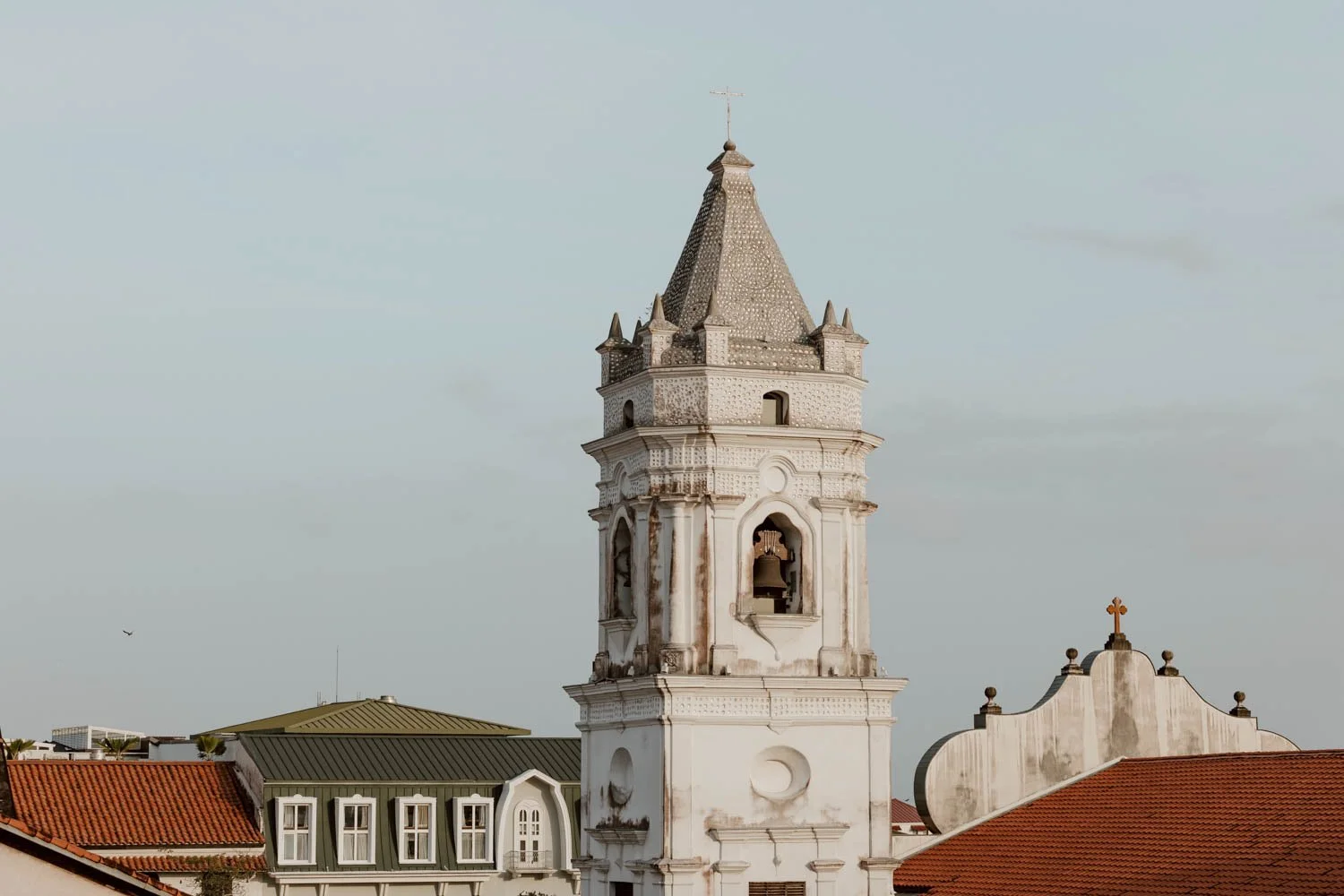
· Metropolitan Cathedral & Plaza Mayor | Built with stones carried from Panama Viejo (more on that later), the cathedral and square form the heart of the historic quarter. It’s very much an important and active place of worship so, if going inside, please dress and act appropriately, removing hats on entry.
· Mahalo | If you’re looking to start your day with a delicious bougie breakfast or brunch in a lovely setting, this is our personal recommendation. Lots of veggie/vegan options too, and also open for dinner. If you want something much more local, then just walk a little further to the place on the corner of Calle 12 and Av.B or Cafe Coca-Cola
· Plaza Herrera | Probably the classiest square in Casco Viejo, anchored by the luxury American Trade Hotel. Ideal for fancier drinks, it’s a charming spot to soak up the atmosphere in the late afternoon or early evening. We stayed in this nearby apartment, which we highly recommend for couples.
If you’d like to go deeper, then consider joining the incredibly highly-rated ‘Legends and Hidden Gems of Casco Viejo’ walking tour - it’s available to book here and here. If that’s already full for your dates, then this is a good small-group alternative.
Travel Tip // Though not daily, an increasing number of cruise ships are docking in Panama City, and their huge groups can transform the atmosphere of Casco Viejo in a heartbeat, suddenly crowding plazas that moments earlier felt local and languid. We always recommend checking out the schedule on a website like CruiseMapper to help plan around avoiding them! Read more in 14 Things To Know Before You Visit Panama City
Cycle The Amador Causeway & Cinta Costera
If the sun is shining, this should be near the tippy top of your list of things to do in Panama City.
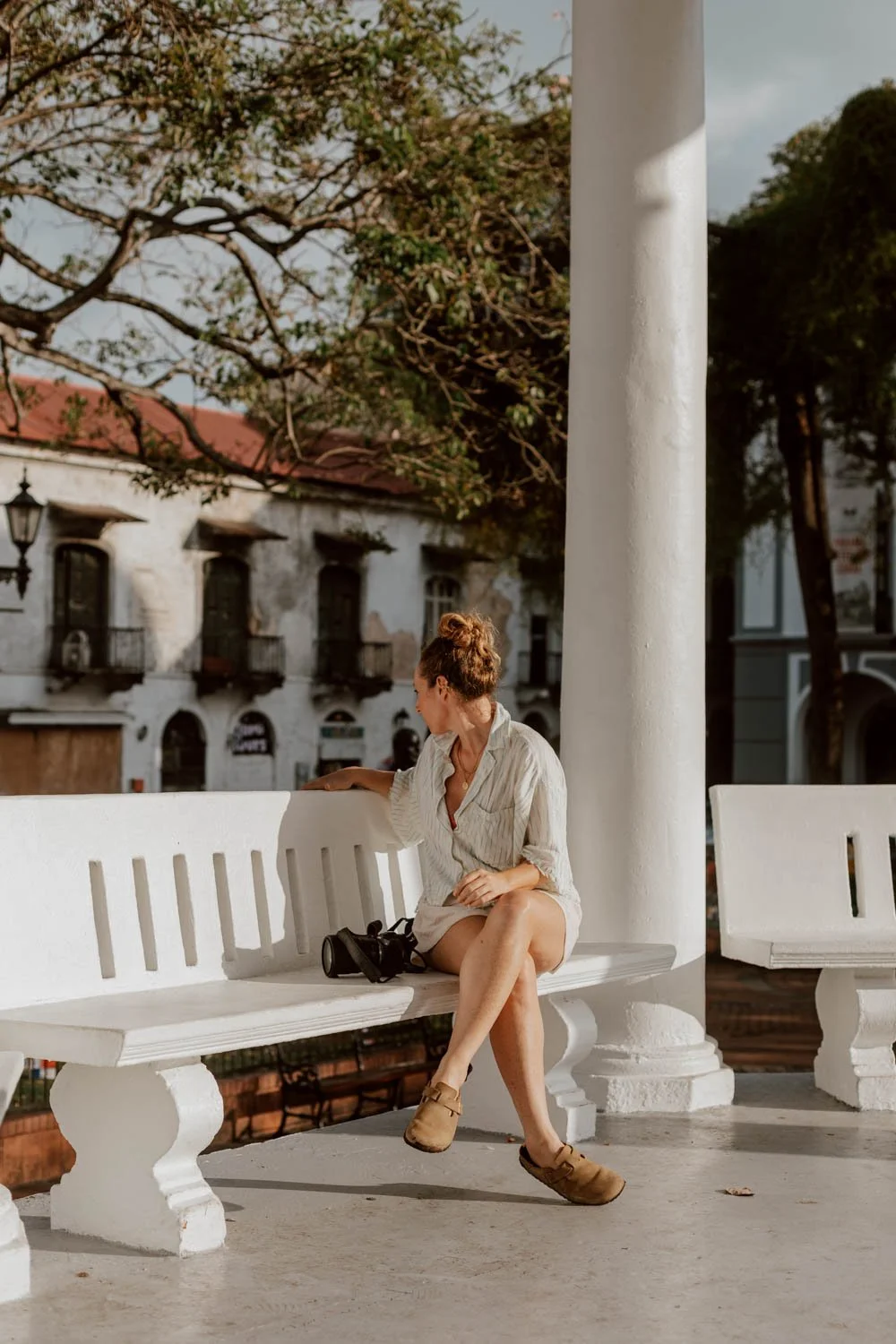
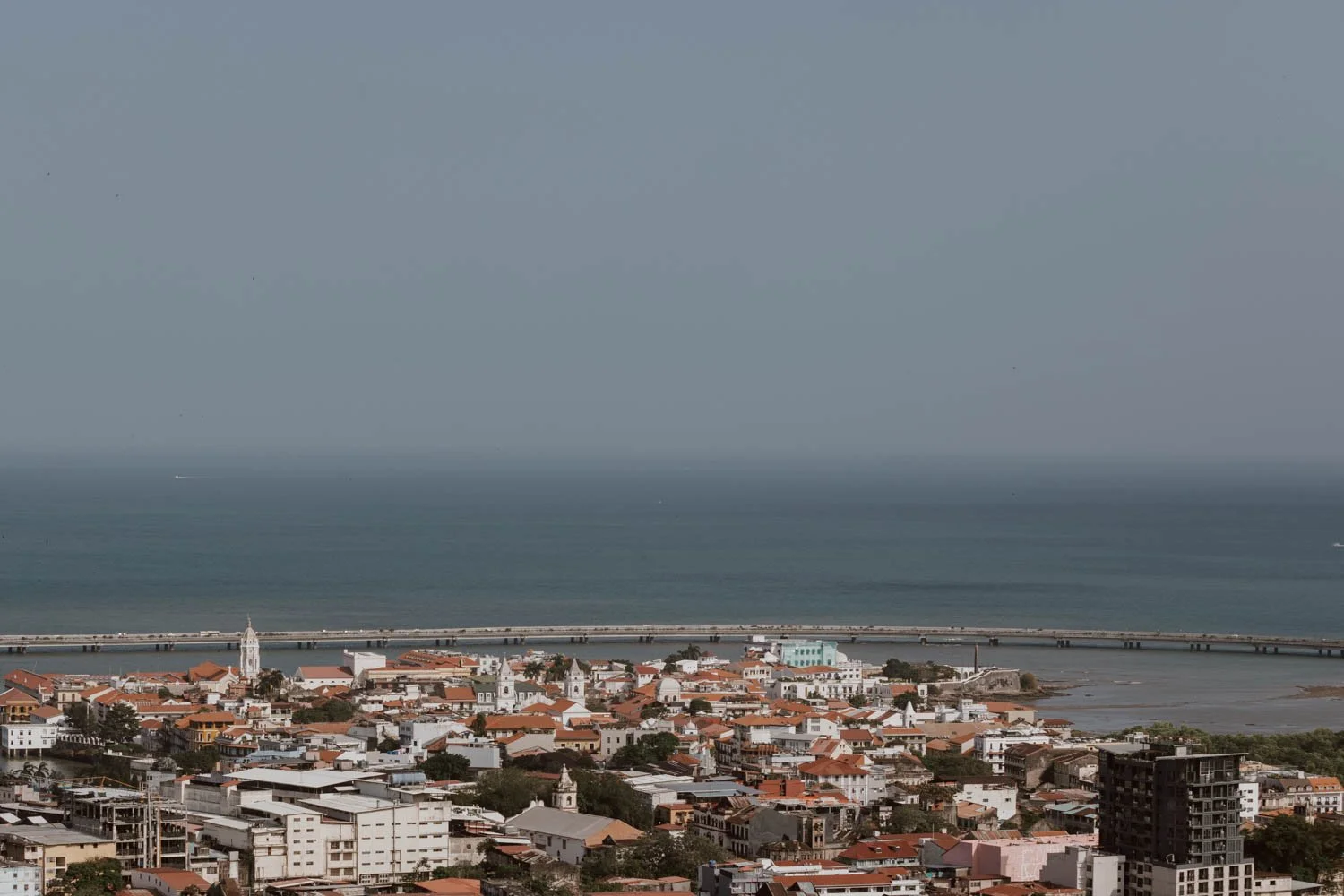
Cycling the Amador Causeway (and the Cinta Costera that leads to it) transformed our whole perspective and appreciation of the city as a place and urban landscape. It’s also where you’ll find some of the best panoramic views of the old and new skyline, especially in the golden early evening light.
Once part of the former Canal Zone - a 16-km-wide strip of land around the canal that was effectively American territory on foreign soil, complete with its own laws, schools, and military bases - the Amador Causeway was for decades only accessible to US personnel and Canal Company employees. Built from the rock and earth excavated during the Canal’s construction, it links four small islands: Naos, Culebra, Perico, and Flamenco.
Today, it’s a sweeping, four-mile stretch of reclaimed land turned into one of the city’s most scenic and well-thought out public spaces - linking four small islands: Naos, Culebra, Perico, and Flamenco - whilst the Cinta Costera (Coastal Belt) is a new arc of road that curves out over the bay, carrying traffic around Casco Viejo rather than through it.
There are several bicycle rental companies, and dedicated cycle lanes run the entire length - along both sides of the causeway - with an orange/red path for pedestrians and a grey one for cyclists. It’s wide, almost entirely flat, and well maintained, and one doesn’t have to be particularly active or fit to head out and enjoy this.
If cycling both ways, you’re looking at around 24km.
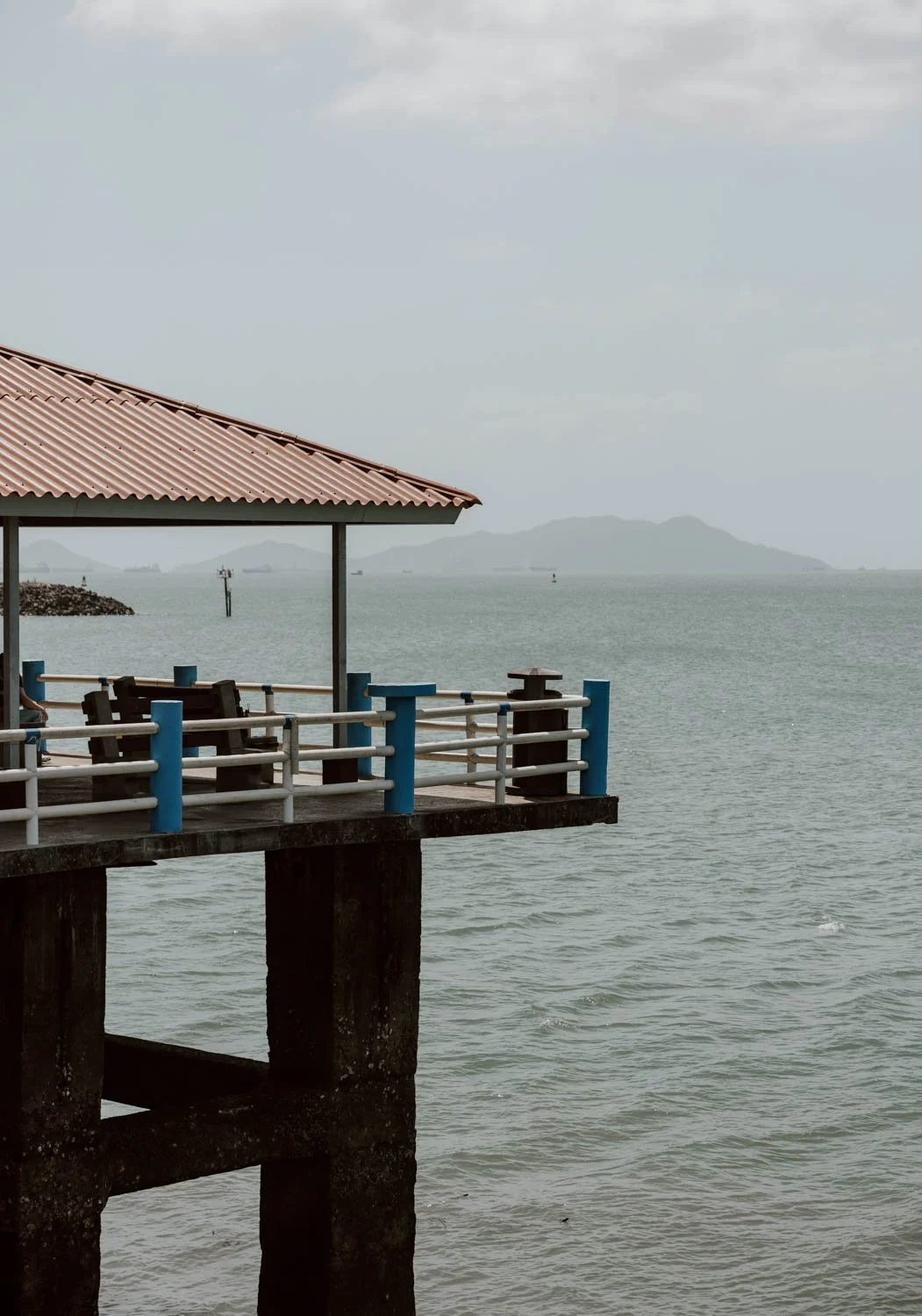
On one side, you’ll see fishing boats bobbing against the backdrop of towering skyscrapers, composing a scene that feels more Hong Kong than Central America. When the tide’s out, locals wade in to collect cockles (or some sort of shellfish); pelicans dive; families fish off the edge of the promenade, and young lovers share secrets. On the other, calm turquoise water, palm trees, and green hills frame a quieter, more natural bay that feels far removed from the glass and hum of the city.
Frank Gehry’s colourful BioMuseo sits on the route - and if that’s in your plans, it’s a good idea to combine - whilst there are also plenty of benches, shaded viewpoints, and lots of explainer boards about the area’s history and biodiversity. At the end of the Causeway, you’ll find various restaurants, a marina, a shopping mall, and a cruise terminal - we didn’t linger for longer there, but for some it may be an enjoyable place to hang out and eat.
We spent just over three hours out on our rented bicycles, with lots of stops for photos, but you could easily extend it into a half-day or longer! Note that the route is also fully pedestrianised so, if you're a runner or a walker with time on your hands, do head out that way too. In fact, this would be a dream to run if you’ve got your trainers and it’s not too hot.
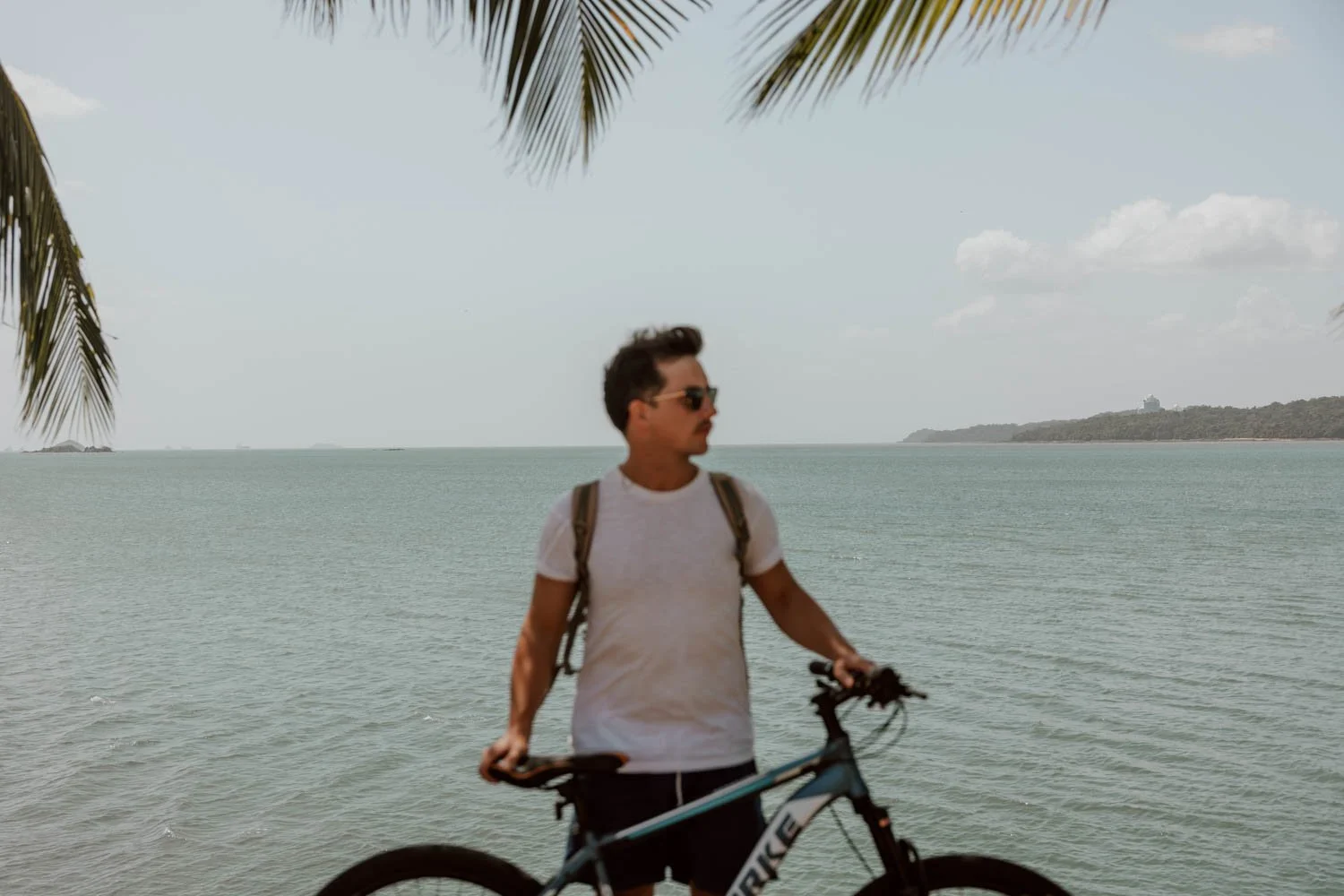
Rent | There are bicycle rental companies by Casco Viejo and at the end of Amador Causeway, so you can start/end from either direction.
We rented from Burke's Bikes (maps), which is conveniently located by Casco Viejo and has a quality selection - note that they’re usually open from 9.30am, but 6am on Sundays! The price for regular bikes was $5/hour or $15/the whole day (until 6pm). Helmets available on request. They also have scooters, rollerblades, and ‘Bicicletas Familiares’, those four-person pedal buggies which are part absurd, part brilliant but great for groups and families.
We rented from 10am and returned by 1.15pm, and it cost $32.10 (inc. tax)
If you don’t fancy doing the ride both ways, it’s also possible to just rent for one-way and drop off in their Casco Viejo or Causeway store, but this is $3 extra per bike and you'd have to sort your transport back.
Prefer to be led? Consider this popular Panama City bike tour
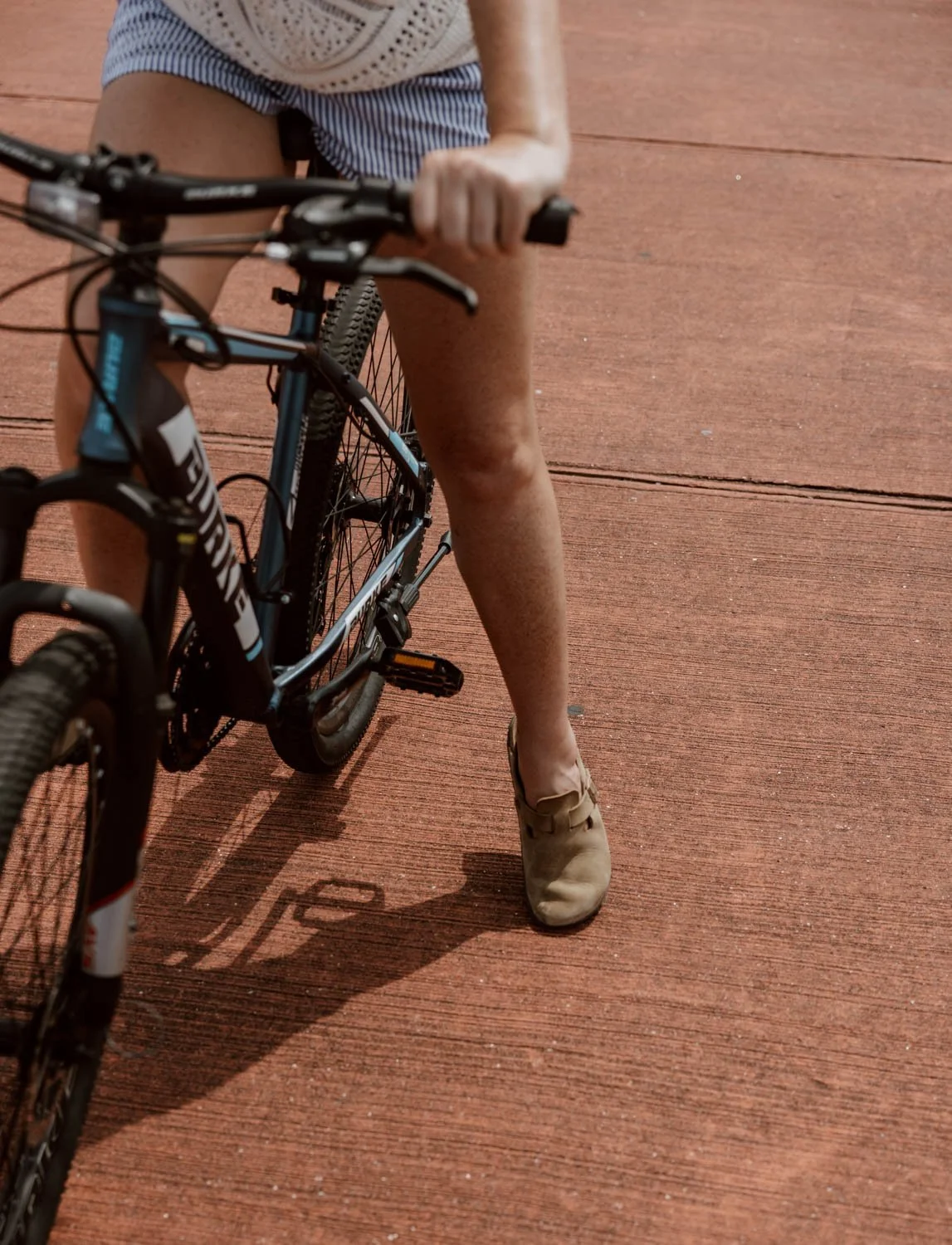
Prep | It’s best to avoid being out there in the peak heat of the day, so work out whether you want an early start or to save it for the afternoon. Either way, slap on suncream and bring plenty water - there are some fill-up stations on the cycle path but only a few places to stop for shade. Expect to get sweaty, so wear appropriate clothing and factor in the high risk that you’ll want a rest / change of t-shirt after.
It can be quite windy on the causeway, and we don't recommend doing this activity if it's rainy or poor weather.
There are cycle lanes on both sides of the causeway: on the left-hand side, if you're coming from the city, you have views of the skyscrapers across the water; on the right-hand side, you have beautiful, almost uninterrupted views of water in the Panama Bay.
We recommend riding down one side of the causeway, stopping at the miradors and viewpoints, then looping back along the other side for new perspectives.
If you're nervous at all about taking a bicycle along the Cinta Costera - please don't be. You are totally separated and on a different level to the traffic. The only bit we found a bit hairy/confusing was at the beginning when trying to finding our way onto the Cinta Costera - wheeling the bikes as you cross the road over to the dedicated bike lane by Mercado Mariscos seemed to be the safer option.
Note that Sundays will be much busier with locals running and riding on the paths.
Eat at The Mercado De Marisco Cinta Costera
It’s easy to do this fish market wrong.
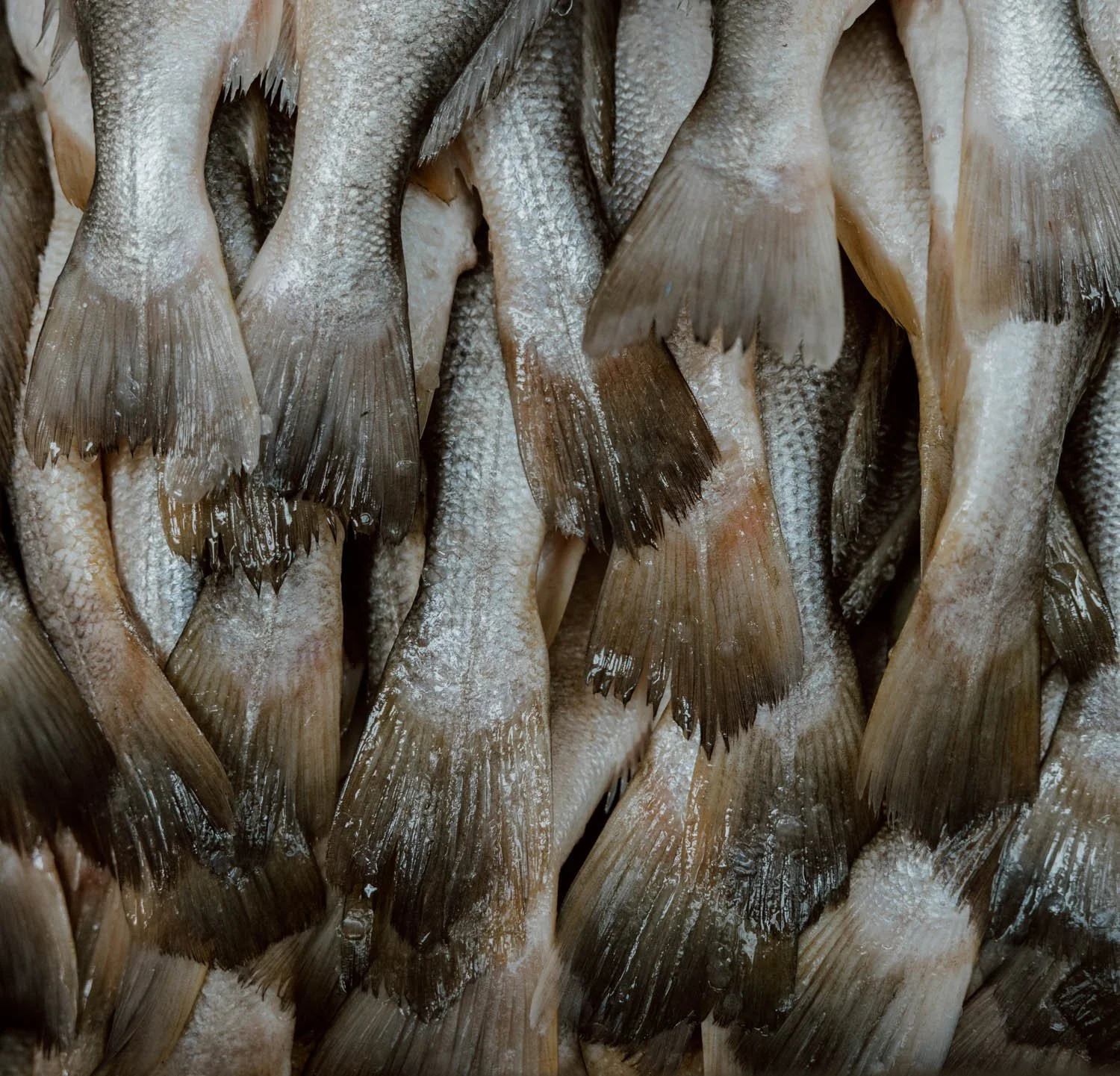
The small market is a photogenic, cacophonous space full of characters, with fish heads and guts, blood-stained plastic bags and weighing scales, dripping cubes of ice being carried on tired backs, and perhaps a rogue heron or two lurking in the rafters.
We loved it.
Next door are the restaurants - open-sided but undercover - and visitors unfortunately (and unsurprisingly) often leave with a mixed response. Rather than the food, this is primarily due to the hassle of the insistent proffering of menus and special offers of teeny tiny portions of 'free ceviche' to tempt you in. All offer a pretty standard thing and prices aren’t greatly out of step with one another, but the hawking definitely increases the chances of a poorly chosen, disappointing, and overpriced meal.
This is a real shame, especially as fresh fried fish with plantains or rice is pretty difficult to screw up, and a good meal like this in this sort of lively, noisy food hall environment is a core part of the Central American travel experience for us.
In fact, if you could transport us back to Panama City right now, this is what we’d seek out - and it’s a really Anthony Bourdain sort of place.
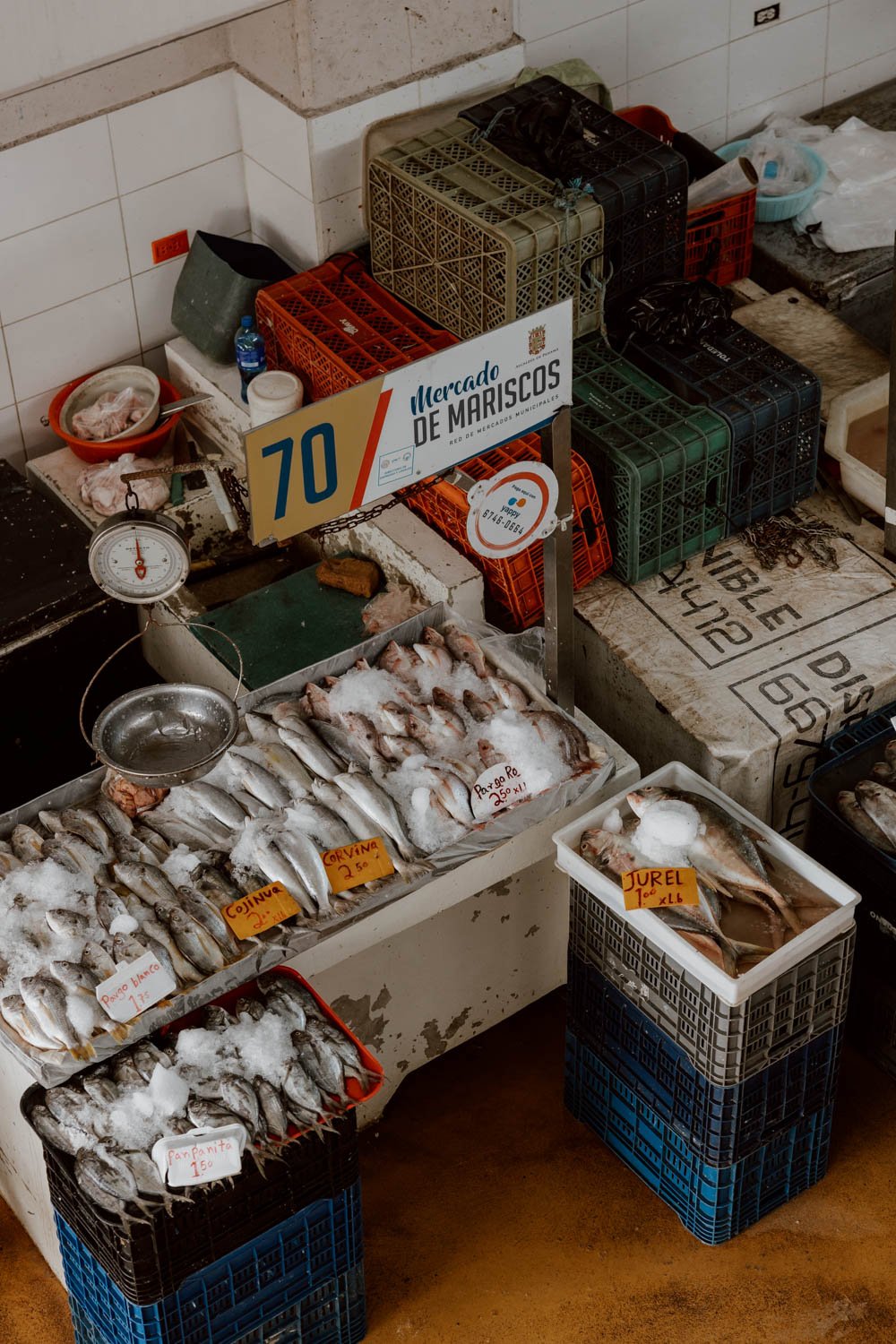
So, you need to put your blinkers on, be patient, a maybe a bit more bloody-minded than usual. When you enter and the solicitation starts, just smile and say acabamos de comer (we’ve just eaten) so you can wander around and patiently choose based on menu, vibe, or reputation. Look to see if there's a place where it isn't just tourists at the tables, and there’s a messy spread of satisfied, empty plates.
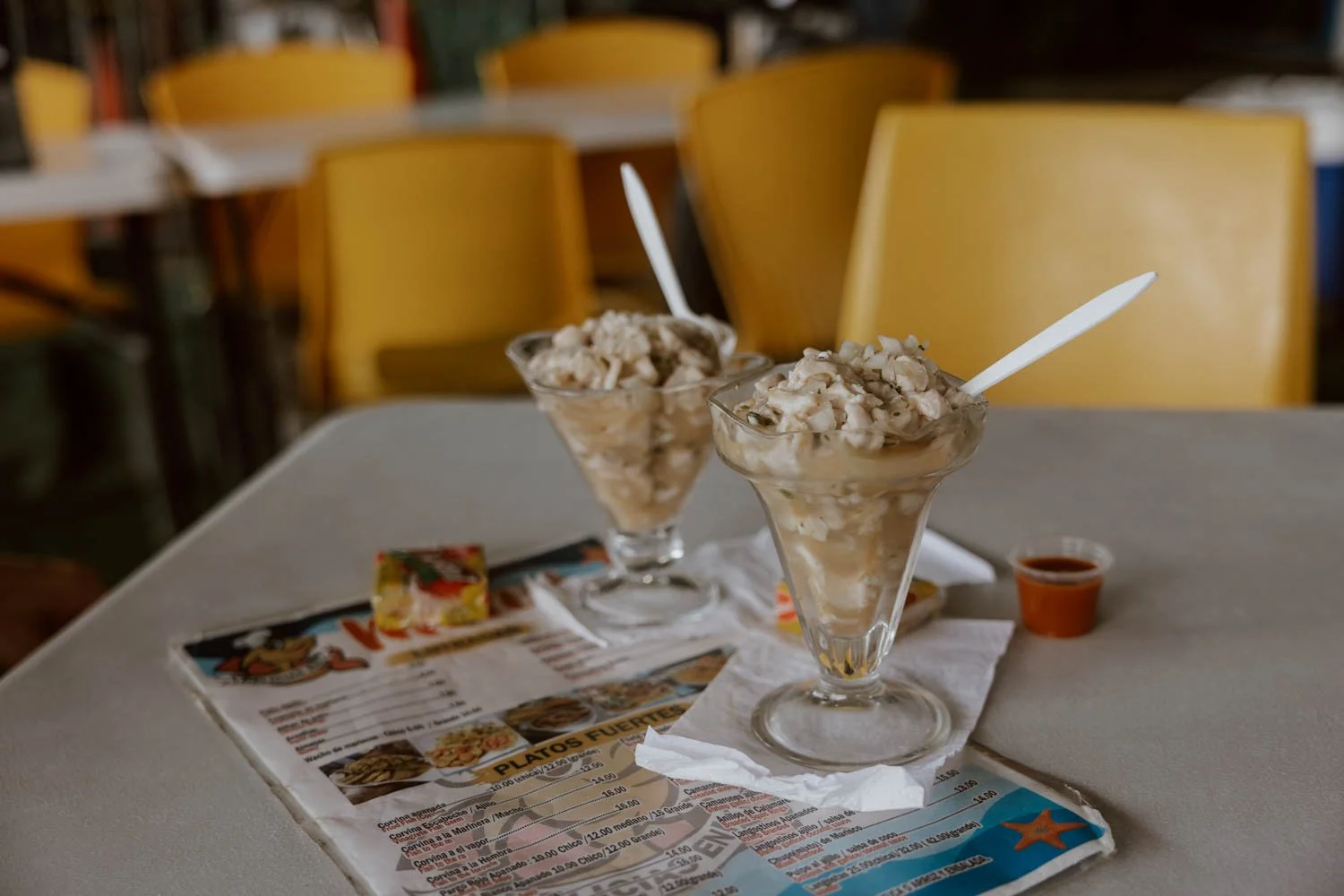
In terms of what to order, we highly recommend getting yourself a massive ceviche cocktail. Peru is most famous for it, but this bright, tangy dish of fresh raw fish ‘cooked’ in citrus juice, usually mixed with onions, chili, and herbs, delightfully served up here with a little pack of crackers is served up all over Latin America.
Raw fish in lime may not sound too appetising to some - and some palates are better wedded to the sour zing flavours - but trust us that you’ll learn to love it.
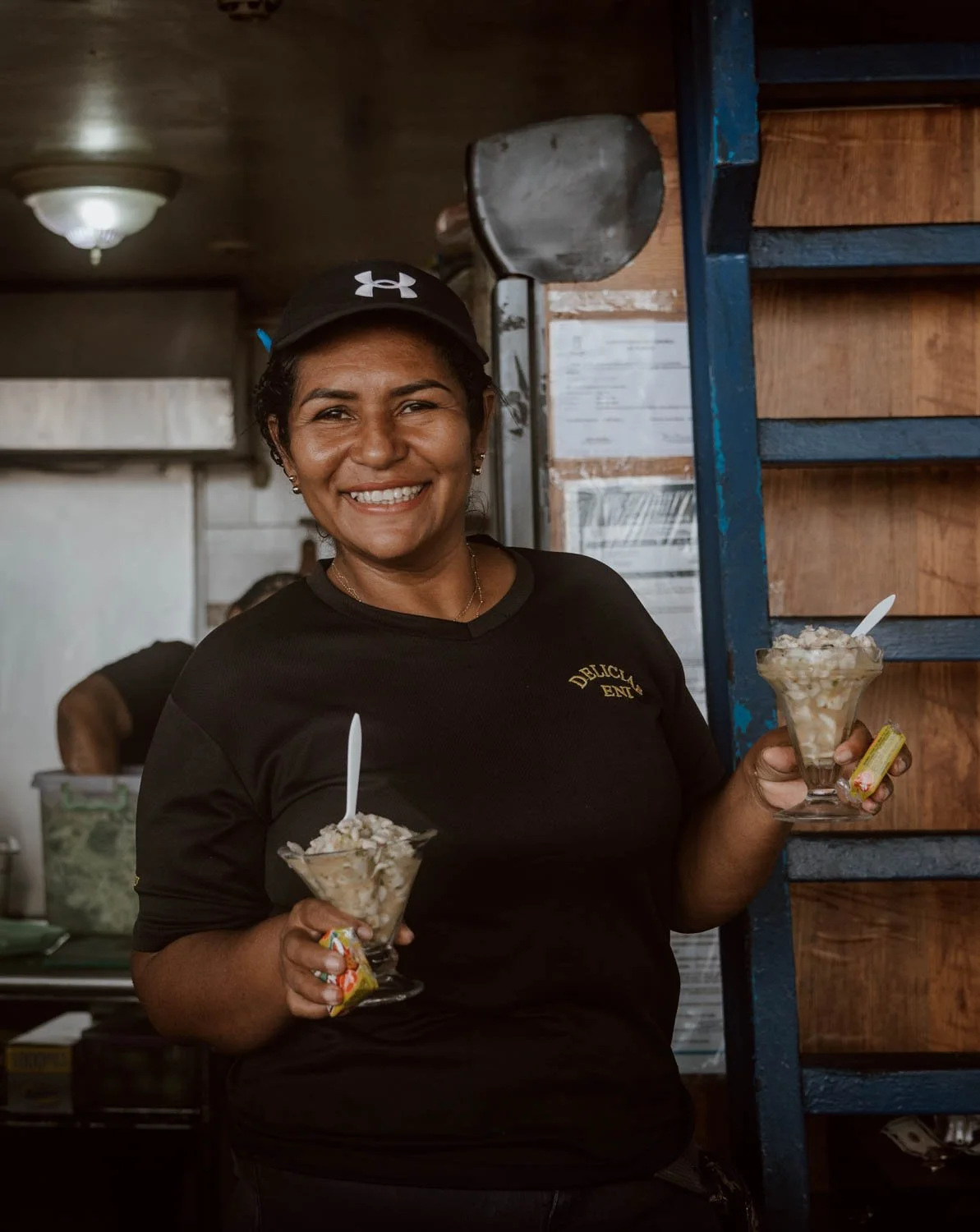
We ate at Restaurante Delicias Eni (maps), and can happily recommend it, but there will likely be other gems. There is also a single restaurant on the second floor of the market.
Where + When | On the waterfront, the Mercado De Marisco is an easy five-minute walk from Casco Viejo - find it here on Google Maps. Note that the road can be quite difficult to cross, so just take your time.
The restaurants are easily found next door, and we found that going in via the backway on the muelle side, rather than going straight in from the fish market side, bypassed some of the more insistent servers.
The fish market is open every day from 5am-5pm, but we suggest visiting it in the morning if you want to sample the atmosphere (and eat the freshest fish).
Most of the restaurants are open every day from around 10am until 10/11pm.
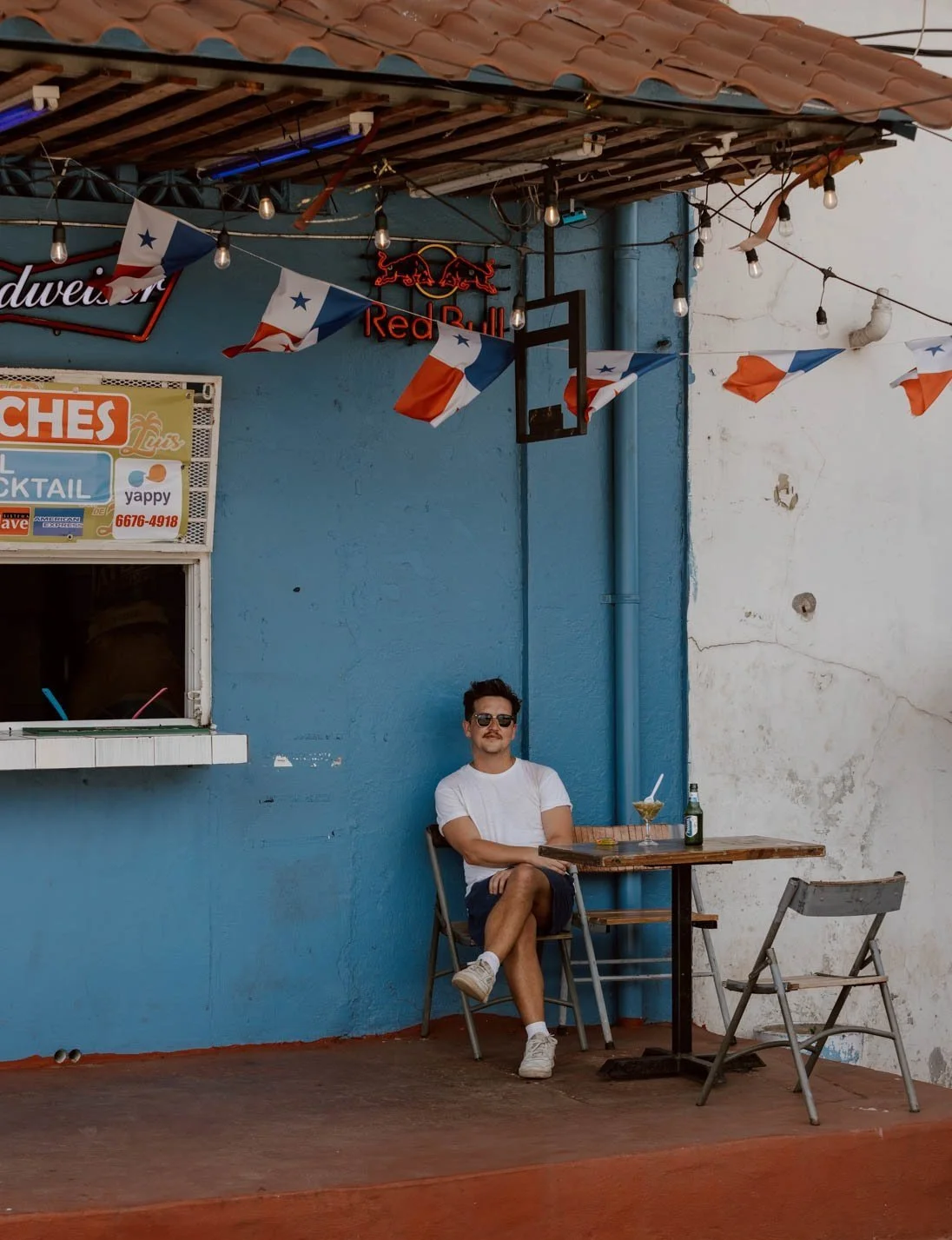
Insider Tip / If you’re already in the ceviche-lovers club, then we highly recommend heading out of the market and across the road to Ceviche Restaurant Donde Luis (maps). It’s a little hall in the wall local favourite - not on the tourist radar - and great shout if you want some good, honest shark-free ceviche and a cold Balboa at the right price.
Two out-of-the-way foodie picks we heard about are Cantina del Tigre and Maito Restaurante.
For a truly immersive foodie experience, join Ana Patricia’s markets & tasting experience - it include the fish market and various other stops, skipping tourist traps and embracing local vendors. It’s recommended to arrive hungry! Alternatively, this Afro-Panamanian cooking class has rave reviews.
See & Sail The Panama Canal
You’ll often see Panama referred to as ‘the isthmus’, and this geographical term is crucial to understanding the country’s destiny.
This slender strip of a country connects North and South America, and has long been the bridge between oceans and continents. Long before the famous canal, indigenous peoples and later Europeans established overland routes across this narrow corridor, carrying gold, silver, and other goods between the Pacific and Atlantic coasts, making the isthmus a crossroads of trade and ambition.
Its strategic importance was clear to many, and the dream of a canal existed long before the first locks were dug.
The French were the first to attempt it in the late 19th century, under the direction of the man behind the Suez Canal. Ambition ran ahead of engineering know-how, and tropical disease, unstable soil, and mismanagement led to catastrophic failure. Sensing an opportunity, the United States backed Panama’s 1903 declaration of independence from Colombia, largely so that it could gain control of the canal project.
Taking over in 1904, the United States and a legion of international workers completed the Panama Canal a decade later.
The construction project was seismic in every sense: an engineering challenge on a scale never before attempted, cutting through mountains, diverting rivers, creating lakes, and carving the locks that revolutionised global trade and still control the oceans’ flow.
Its completion made this city the primary hub of American influence in the tropics and is why, for much of the 20th century, Panama was regarded by some as a canal with a country attached, rather than a country with a canal in it.
And, if you’ve mentioned your upcoming trip to anyone, we guarantee that they either mentioned this or the hats first.
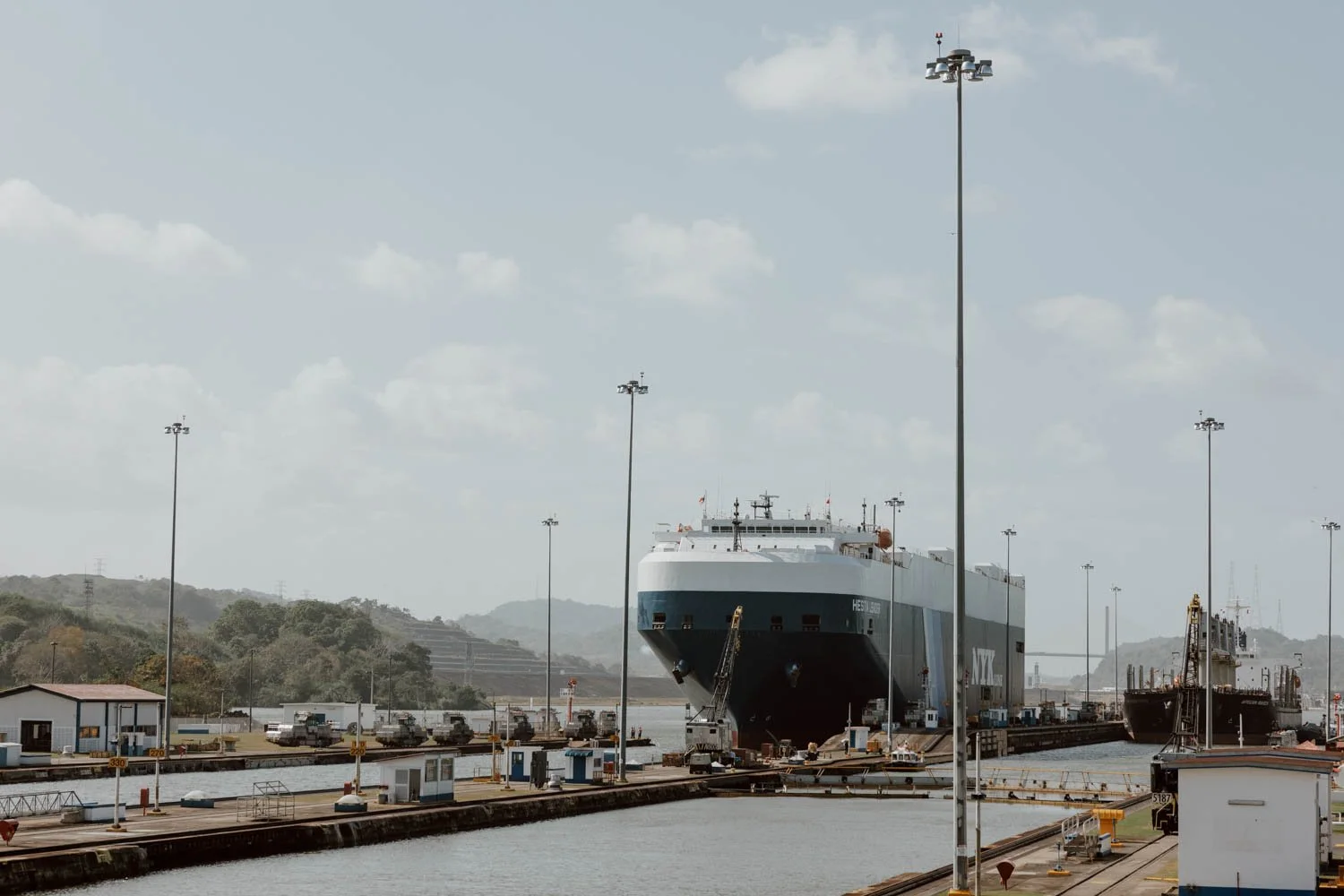
From the capital, you can easily visit the oldest part of the canal to see the gargantuan ships navigate the tiny channels of the Miraflores Locks. Whilst it’s primarily industrial - and a little bizarre as an attraction - they’re very well set-up for visitors with platforms and viewing decks, and it offers a tangible way to get your head round the engineering and logistics.
For an even more memorable experience, there are limited number of tours that allow you to sail it from ocean to ocean.
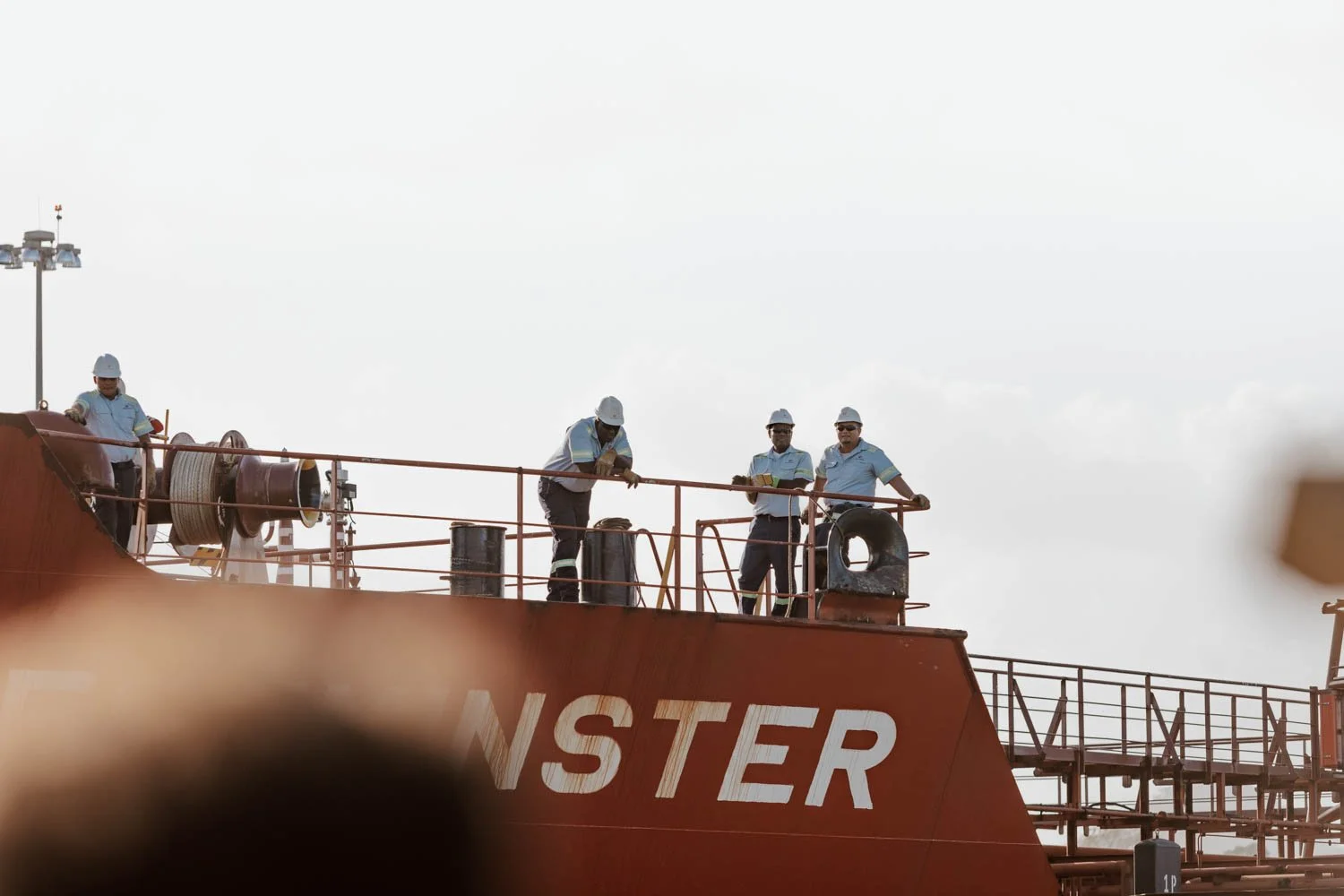
Where + When | The Miraflores Locks Visitor Centre is a 12km / 20-minute drive from the capital, and you easily can get there independently by public bus or taxi. A tour really isn’t necessary but, if you want a guide and transport, one of the best options is to combine the Locks with a boat tour on the artificial Gatun Lake - also part of the canal - where you can spot monkeys, sloths, and crocodiles between passing cargo ships.
The visitor centre is open from 8am-6pm every day, with the ticket office closing at 5pm.
This is probably the most popular thing to do in Panama City, but the secret is knowing that you can actually only see the boats during two specific morning and afternoon time slots, so it’s best to plan ahead around them.
We recommend about two hours for the activity, which includes your time in the IMAX cinema (yes, really).
One to win the pub quiz: as Panama bends more than most think, this Pacific-side terminus actually lies east of the Atlantic one!
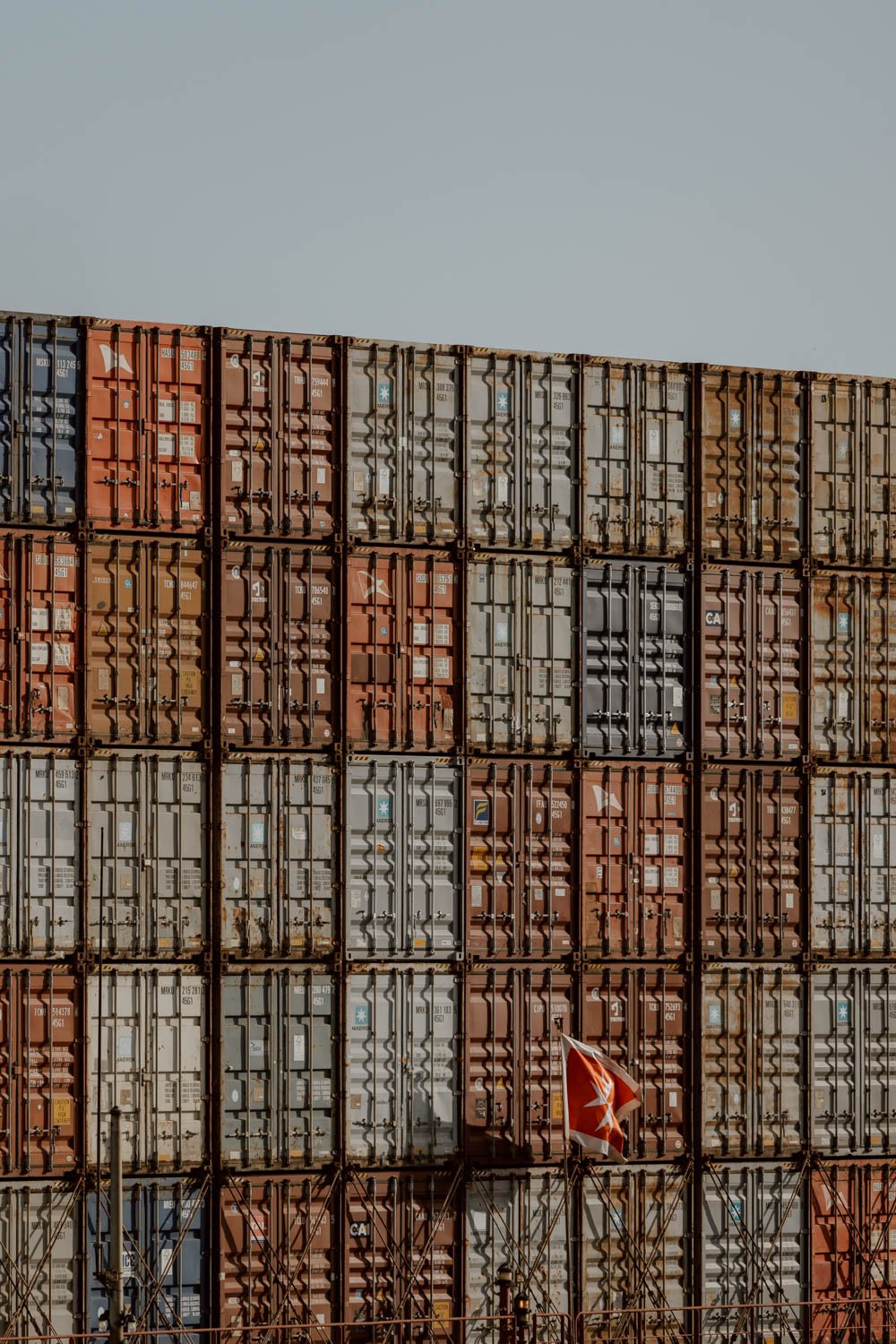
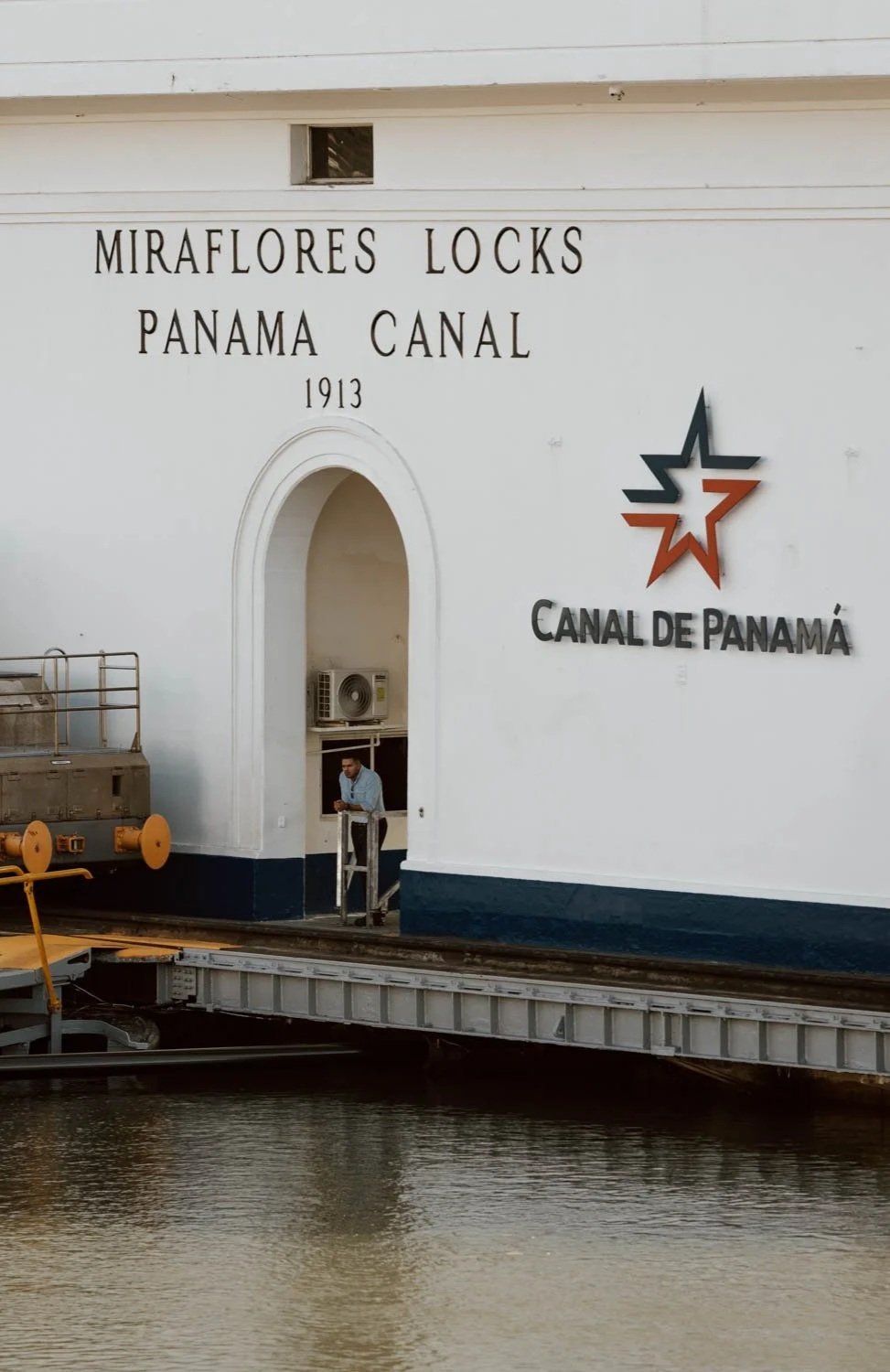
Tickets // A standard foreign adult entry ticket for the Miraflores Visitor Centre & Locks is $17.22; for children aged 6 to 12 years old, it’s $7.22. Disabled visitors can get tickets for $8.61.
It’s possible to purchase tickets in advance on the official website, but that’s only necessary if you wish to skip the queues.
We appreciate that this is another activity that’ll represent quite a lot of daily spend for budget travellers, so we recommend reading our dedicated guide to visiting the Panama Canal before you make your final decision.
A wildcard alternative for those who’d prefer to have a completely different perspective and experience of the Panama Canal’s scale and engineering, there are now several tours that allow you to travel through the canal on a boat. Do note that these tours only run on a limited number of dates each month, so need to be booked in early and specifically planned around.
. Panama Canal Tour: Ocean to Ocean in One Day | book here or here
· Six-Hour Panama Canal Cruise with Lunch | Souththbound or Northbound - also available to book here
· Panama Canal Partial Transit | book here
· Panama Canal Full Transit Tour | book here
Plan // If you’re serious about making the most of your canal visit - from timing the ship transits to choosing the right boat tour, and even spotting wildlife along Gatun Lake - our dedicated guide to visiting the Panama Canal has all the insider tips, practical advice, and links to the best experiences.
MAC Panamá | Museo de Arte Contemporáneo
In our opinion, for a capital of its size and reputation, Panama City lacks a standout art gallery.
Sure, it’s a city of commerce rather than culture, but it feels like it should have something of international renown. That brief was probably filled by the colourful Frank Gehry designed BioMuseo on the Amador Causeway, but it’s focussed on nature and biodiversity, leaning more toward family-friendly than pretentious hipster.
For now, the closest thing is MAC Panama and, whilst it's not a must-visit for those short on time, it's definitely a worthwhile way to spend a couple of hours if you wish to go beyond the obvious tourist picks in Panama City.
The country’s principal contemporary art institution, Museo de Arte Contemporáneo de Panamá is housed in a former Masonic temple on the slopes of Cerro Ancón. It’s a different side to the city and little out of the way, but that’s not a bad thing. Primarily focused on showcasing local and regional artists, there’s a mixture of works, genres, and styles on display, rather than a singular focus or huge permanent collection.
We visited in the middle of a transition from one exhibition to another, so it was difficult to get a proper read on the balance between permanent and temporary displays, but it’s a small, manageable space to navigate.
Their little reading room, with shelves stacked to the brim with the sort of art and photography books we crave, is a delight.
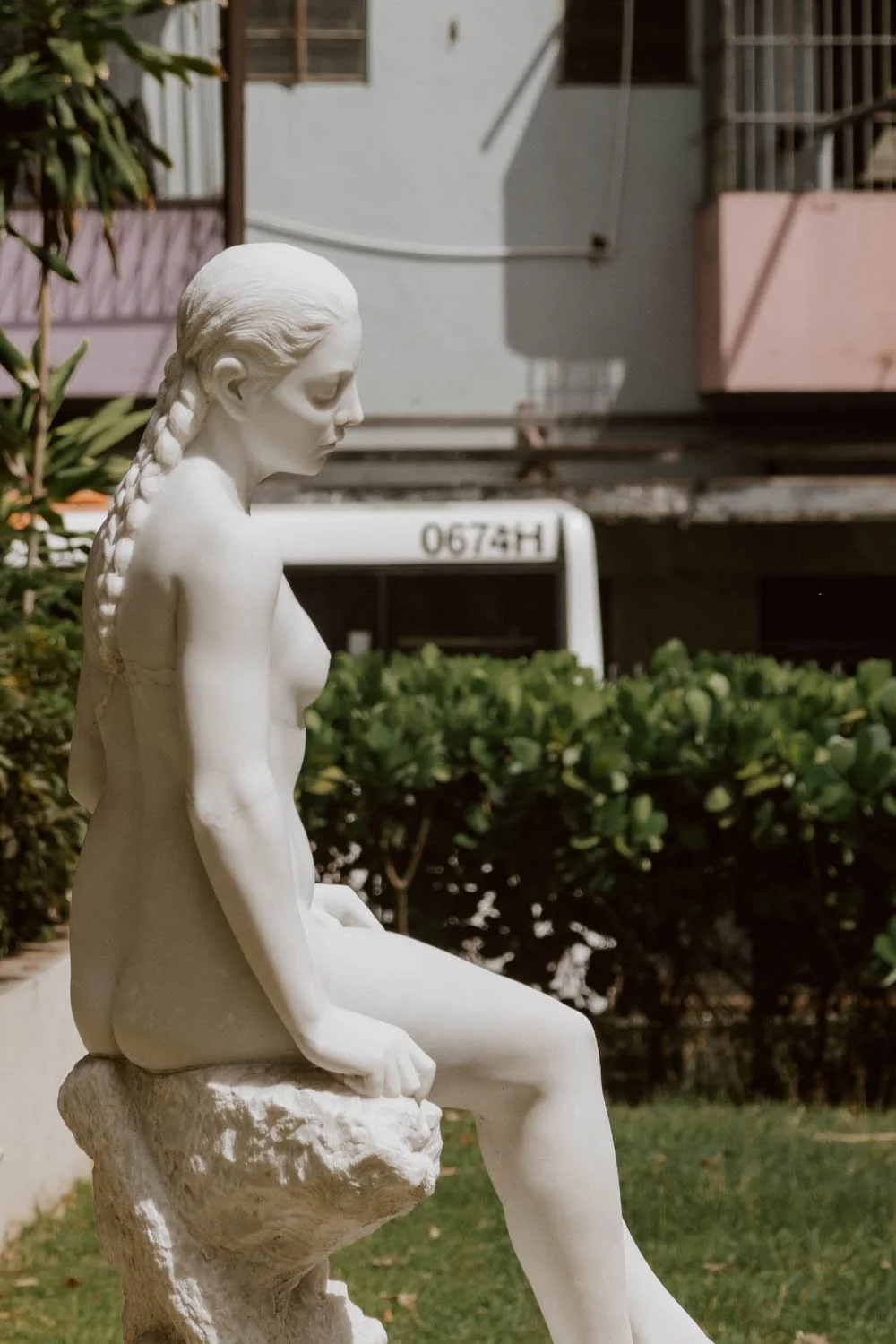
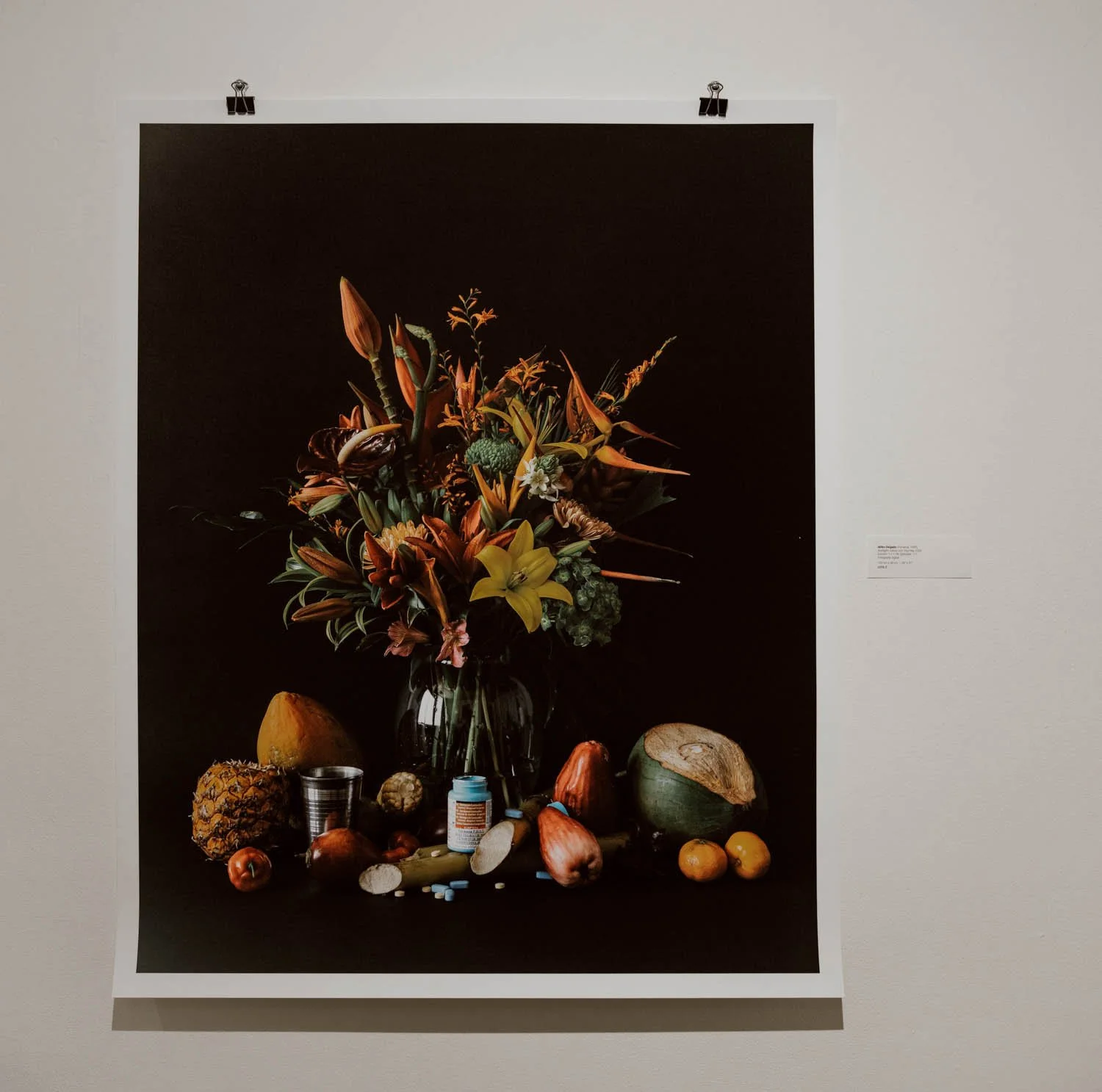
Where + When | You can find MAC Panama here on Google Maps, a 10-15 minute ride from Casco Viejo. It was one of those places we’d thought we could just walk to, but there’s a lot of roads and loops, so an Uber is sensible.
It’s open from 10am to 5pm, Tuesday to Sunday, and we suggest setting aside an hour or so to enjoy it.
Entry is $10 for foreign adults and $2.50 for foreign children, but free for all on the last Sunday of the month (please do let us know if this DOESN’T apply to foreigners though).
Tip | A smaller satellite of MAC Panama opened up in Casco Antiguo a couple of months after we visited, so do let us know your thoughts. It’s open Tuesday to Sunday, 12pm to 8pm, but we’re not certain if the entry ticket for the main gallery includes it or not. Find it here on Google Maps.
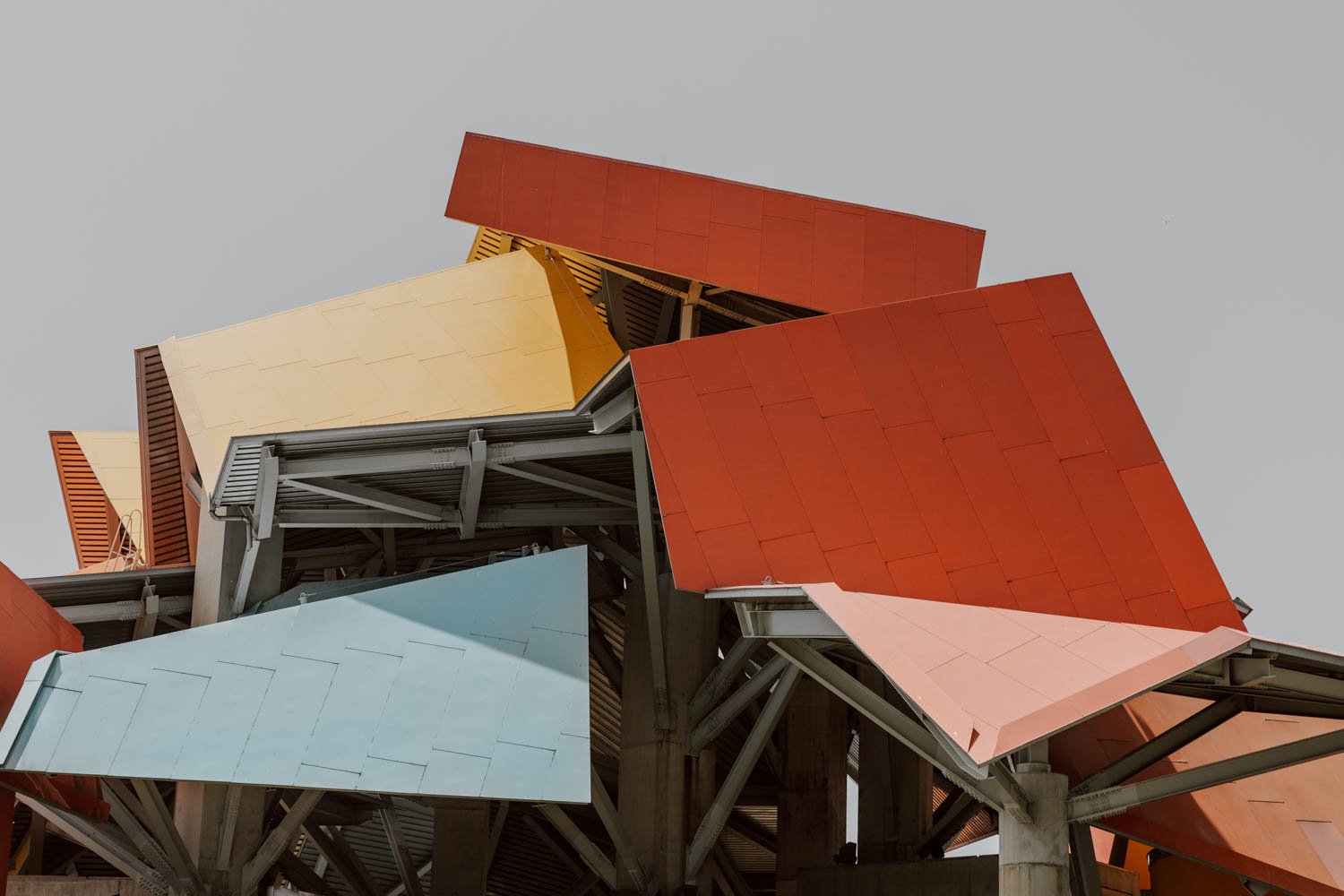
Know // The BioMuseo is one of the most visited attractions in Panama, but it actually doesn’t make the cut for our list of the city’s must-dos. This is partly due to one of us feeling that Gehry phoned it in slightly on the building - a bit obvious and playground-like, but perhaps we missed the point - but also because the cost of $20 for adults is ridiculous.
That being said, it’s definitely worth considering a couple of hours there for families or travellers looking to understand how this narrow strip linking North and South America reshaped the planet. The Great American Interchange saw species migrate, ecosystems collide, and a new biodiversity hotspot emerge, and the museum is the place to learn more.
We suggest pairing it with your cycle ride along the causeway, but bear in mind that visiting will increase the overall cost of rental.
The BioMuseo is open 9am-3pm every day except Mondays; from 10am onweekends - find it here on Google Maps and visit the official website
Rooftop Bars & Late-Night Cocktails
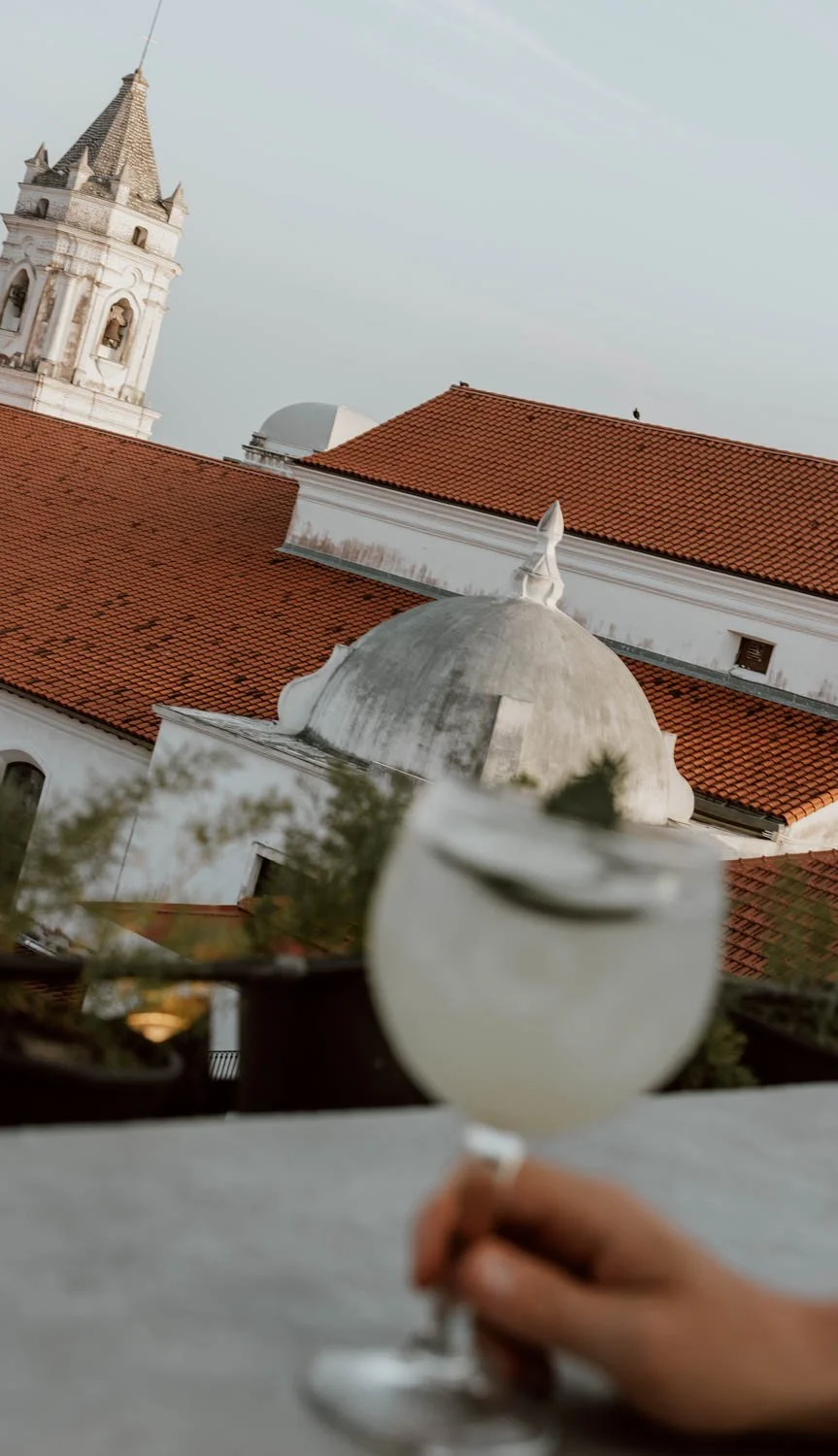
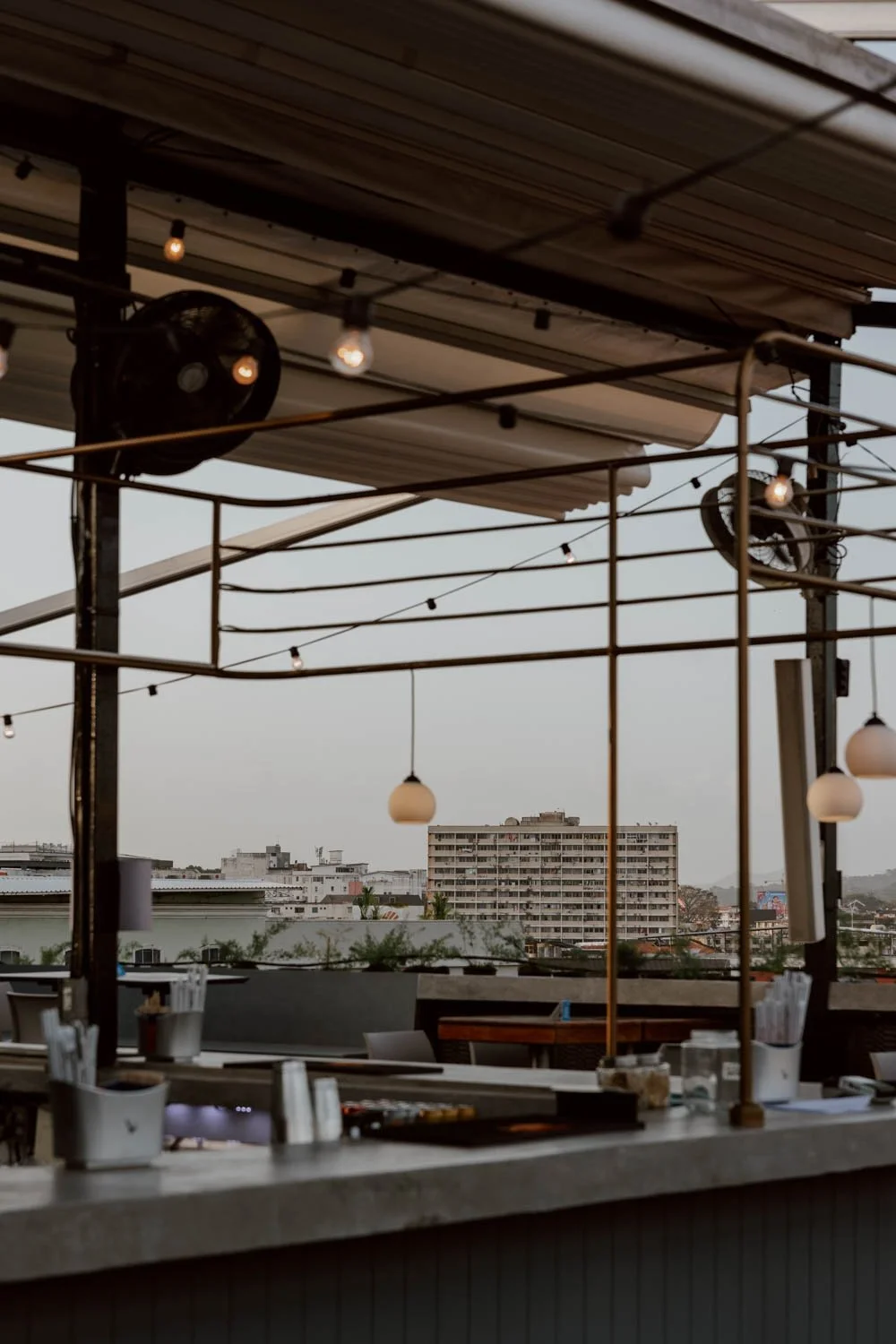
By night, Panama City sparkles and the city’s best bars are mostly on rooftops.
That’s a winning combination.
Rooftops in Panama City are about more than just food and drink. They offer perspectives of the city you won’t get from street level, a chance to watch the sunset over the bay, and a sense of the scale and glitter of the skyline that’s hard to capture otherwise.
You absolutely won’t be able to visit them all, but here are a few we can recommend:
Tántalos | Though the cocktails weren’t fantastic, this popular spot for late-night music and dancing has a great view. It’s also a popular boutique hotel, but some rooms may require earplugs…
Tacos de la Neta | This huge rooftop bar/restaurant was a real favourite. The fish and prawn tacos were excellent, and the vibe is relaxed and traveller-friendly, rather than polished or touristy. There’s also a pool. It’s in the same building as the Viajero Hostel & Co-Work and guests enjoy free access.
CasaCasco | Located near our Airbnb, this overlooks Plaza Herrera and is at the fancier end of the spectrum. A good pick for sunset, and open until 2/3am on weekends. It’s also got a restaurant over three levels.
Lazotea Restaurant & Rooftop | A really popular option with visitors and locals, particularly at sunset. We decided against as it didn’t look like our sort of vibe, but its reviews are excellent and we thought we should let you know!
They’re all open during the day too and it’s a good idea to reserve ahead if your heart is set on sunset. By the way, it’s a good idea to dress a little fancier for some of the above (and others you’ll come across) as they’re just as popular with locals on a proper night out.
Backpacker Tip // For those looking for a less salubrious sort of evening - or to head out dancing with a group of travellers - there’s the OG Panama Bar Crawl.
It’s also available to book here.
Sloth-Spotting & Viewpoints on Cerro Ancon
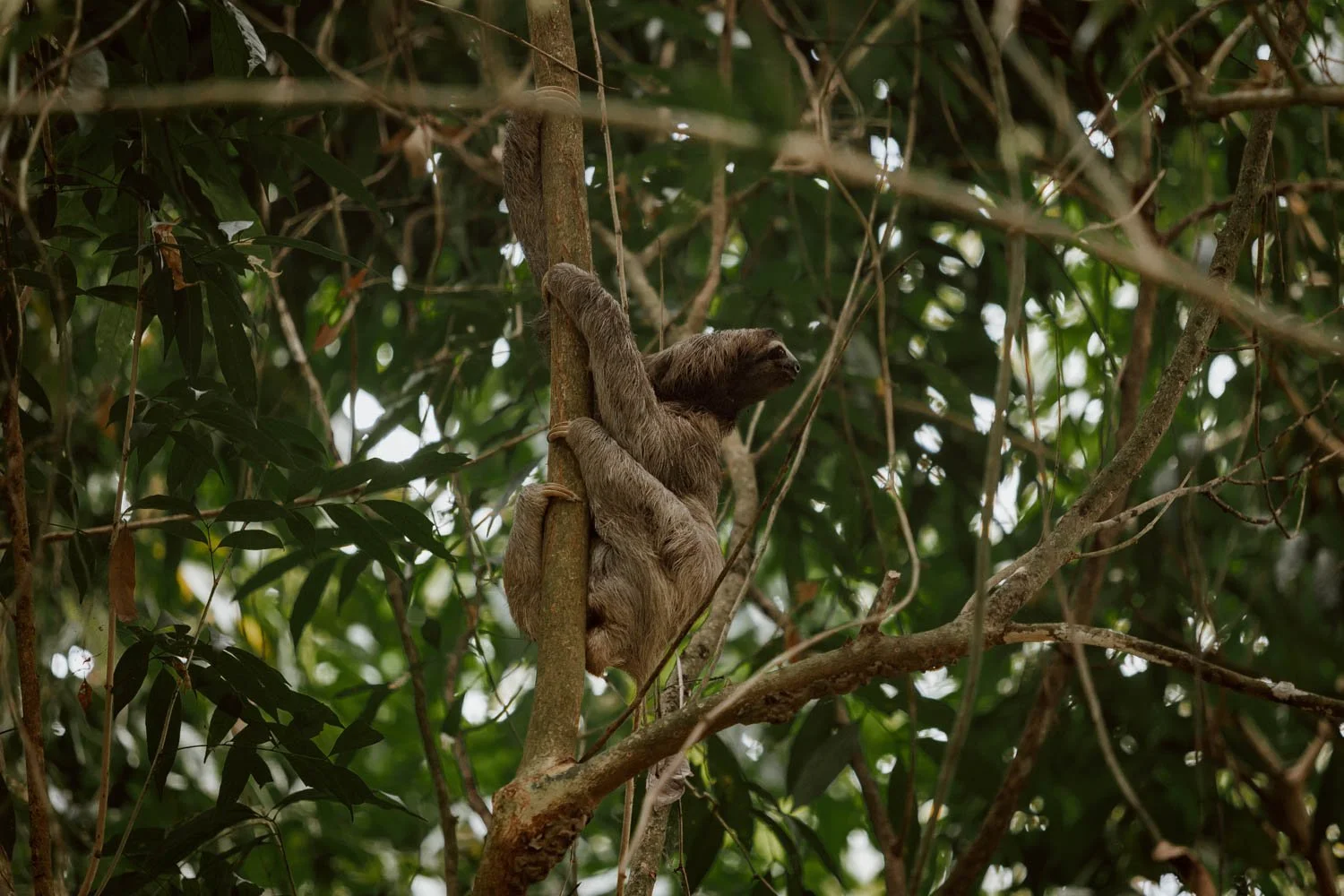
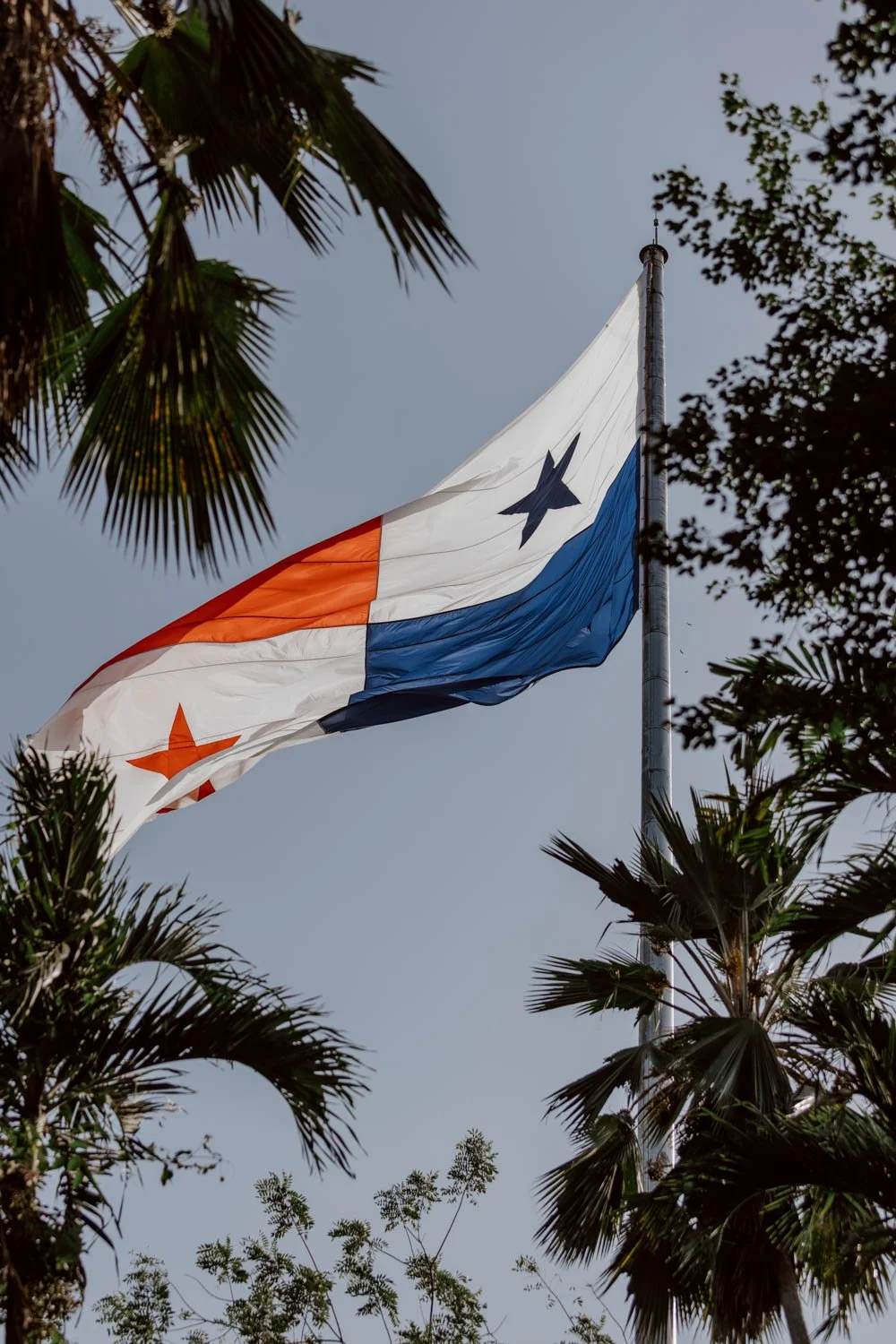
We went up this hill for the big flag and the view but, rather marvellously, ended up seeing more sloths in a couple of hours than over a couple of years travelling in Central America!
Do we have your attention now?
Walking to the top of Ancon Hill should therefore be very high in your Panama City plans. Not only is it totally free, nature-drenched, and sweatily satisfying with a very good chance of sloth spotting - but it also provides several wonderful perspectives on the city that unfolds around it. When you're not in or under the skyscrapers, they're actually quite a scenic and interesting counterpoint to the low-rises scattered beneath, and there’s also a good overlook onto the cranes and boats in the Port of Balboa.
Once the administrative heart of the Panama Canal Zone, it’s now the green lungs of Panama City, a tropical refuge and reminder of what this land once was. Locals have reclaimed its slopes for family outings and exercise, and this is going to be an easy, manageable walk for most travellers.
How To Get There | There are two different ways to access the single-track path to the top of the hill:
Take a taxi/Uber to the quite odd Mi Puelbito theme park car park (maps) - whilst not far from accommodation hubs, it’s not recommended to walk there.
From the car park, continue walking up onto Quarry Heights Road and you'll see a green-and-white sign with 'Hacia La Cima del Cerro Ancon'. Not long after the sign, you'll find some stairs on the right (maps) which will take you up on to the path.
Alternatively, you can walk to this security gate (maps). Just go through and take the path clearly signposted to the left - note that if a taxi won’t be able to take you all the way to the gate.
Both bring you onto the same path, but Option 1 is going to be slightly shorter and quicker overall.
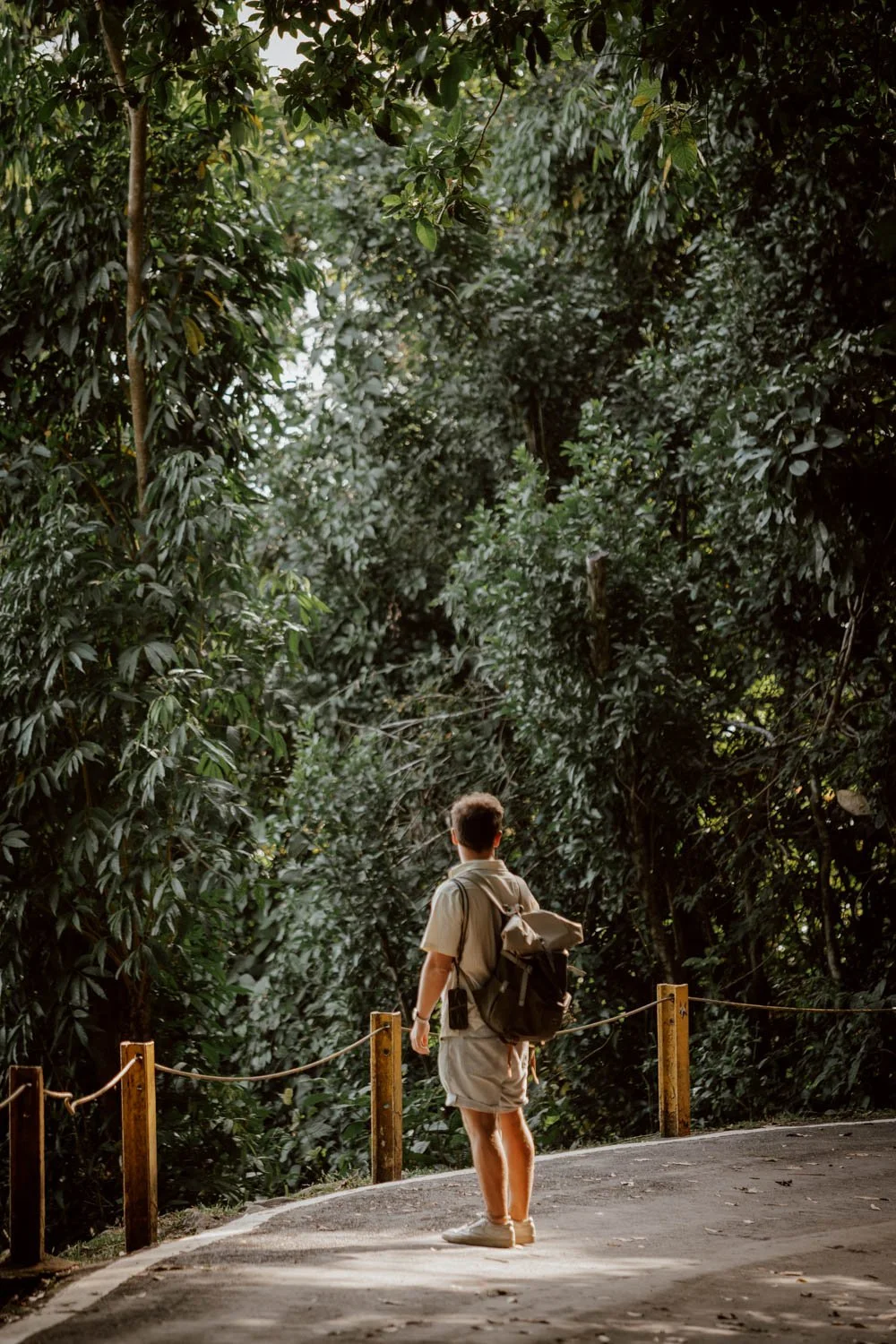
Once you’ve found the single-track tarmac road, the walk up is pretty straightforward: simply follow the road as it gently ascends and winds between the trees.
Note that it is possible for vehicles to drive up to the top of the hill, but we think this is reserved for official cars or security.
How long does it take? We lost track watching and photographing sloths for a good 45 minutes, so actually have no idea how long it actually takes to cover the 1.8km up. We’d probably say an hour to the top is reasonable, but that could definitely be done much quicker than that if you're focussed on pace rather than pleasure.
To leave, you can simply walk back down the same path, and we recommend taking the stairs down to Quarry Heights Road and Mi Pueblo as that’s significantly easier for a pick-up. It's a very good idea to take a taxi or Uber back from here to your accommodation or next stop.
Bring | Trainers are fine, but expect to work up a sweat. Bring plenty water.
Know | We are cautious of raising your expectations too high, especially as we had no idea that there were sloths up there. Emily, a fantastic wildlife spotter, recommends listening out for rustles, keeping your eyes on the thicker branches and being patient, as they tend to move slowly and blend seamlessly with the canopy. If you see a group of people randomly looking up to the trees, you’re likely in luck - just remember to be quiet and always keep a safe distance.
Early morning or late afternoon is going to improve your chances, plus be the best time to avoid the heat.
Definitely bring binoculars if you have ‘em!
Travel Tip // If wildlife is high on your list, then definitely consider a nature-spotting boat tour on Gatun Lake, where you can see howlers, capuchins, and tamarins in their natural habitat. This tour has excellent reviews and includes round-trip transport from Panama City.
Taste Geisha & Our Favourite Coffee Shop
If the mountain town of Boquete is already on your Panama itinerary, then you’ve probably heard whispers of Geisha - the coffee that put this country on the global coffee map.
Whilst Central America is famed for its beans, Panamanian coffee is far less common than that of El Salvador, Guatemala, or Honduras. What it lacks in mainstream quantity, however, it more than makes up for in quality.
Geisha flourishes only in places where the high-altitude climate, volcanic soil, and microclimate are just right. Not too hot, not too cold - it’s the Goldilocks of specialty coffee varietals. And the price isn’t far off gold either: in 2024, a Boquete estate’s Geisha sold for a world-record $13,518 per kilogram at auction.
For perspective, a really good bag of specialty coffee might set you back $30 - 50 USD a kilo!
This isn’t just a regular brew we’re talking about here: it’s one of the most expensive agricultural products on earth and the reason Panama is so revered amongst coffee hipsters and nerds!
So, when in the capital, one simply has to seek it out.
That being said, as aspiring knobs, Panama City’s coffeeshop scene didn’t quite live up to our expectations (especially compared with the waves being made in Guatemala), but we imagine it will only have an upward trajectory.
Our favourite spot? Sisu. Set in a minimalist space of poured-concrete, they serve single-origin pour-overs from the Lastima estate in Boquete. That estate was also one of the best we visited up in the mountains, and is the source of that record-breaking figure. A pourover is $8-10 and our tip is, if you really like it, then put your money toward a bag of beans ($25-45) to bring home instead of ordering a second cup!
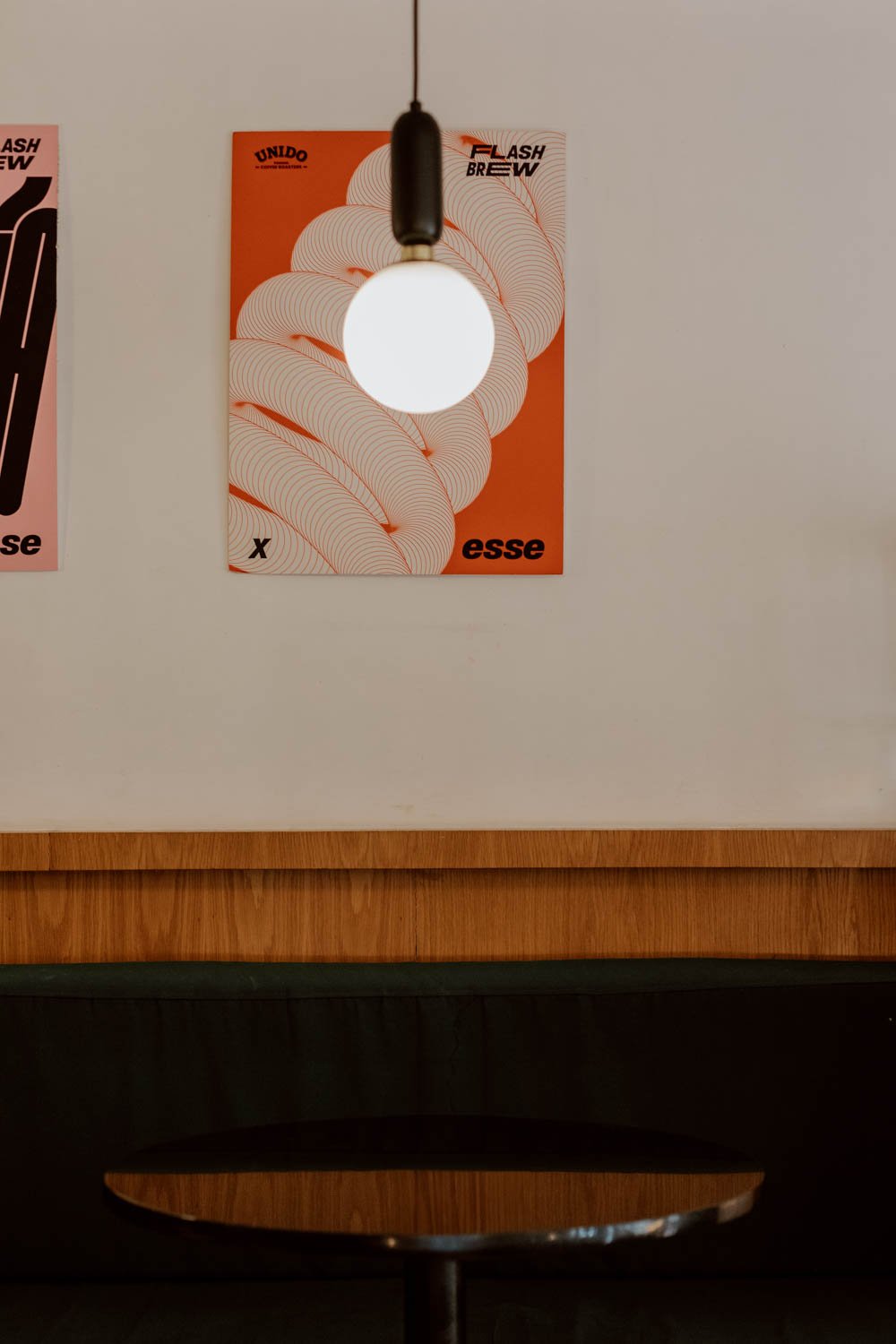
Another to consider is Unido. This small Panamanian third-wave franchise has good coffee and an ok two-level space in its Casco Viejo branch, but better suited to a casual stop or workspace hangout.
A little further out, Leto and Mentiritas Blancas were also on our list but we didn’t manage to make time.
Avoid the Trade Winds Cafe though: whilst it’s part of this gorgeous hotel and a nice space, its coffee isn’t at the same level.
Book | If you’re curious about coffee, then the Geisha Experience is an absolute must. This expert-led tasting goes far beyond your usual cup, and you’ll discover the story behind each bean, the meticulous process that makes Geisha so prized, and the flavours that earned it global acclaim. It’s set in a stylish, welcoming environment and consistently receives rave reviews.
It’s also available to book here with free cancellation.
Plan // Still shaping your itinerary? Don’t miss our guide to Boquete. Beyond the coffee fincas, the area offers spectacular hikes, a genuinely impressive waterfall, and unrivalled birdwatching opportunities - we accidentally spotted a resplendent Quetzal!
And if you discover a different favourite coffee spot in Panama City, let us know in the comments.
Trading Streets and City Life
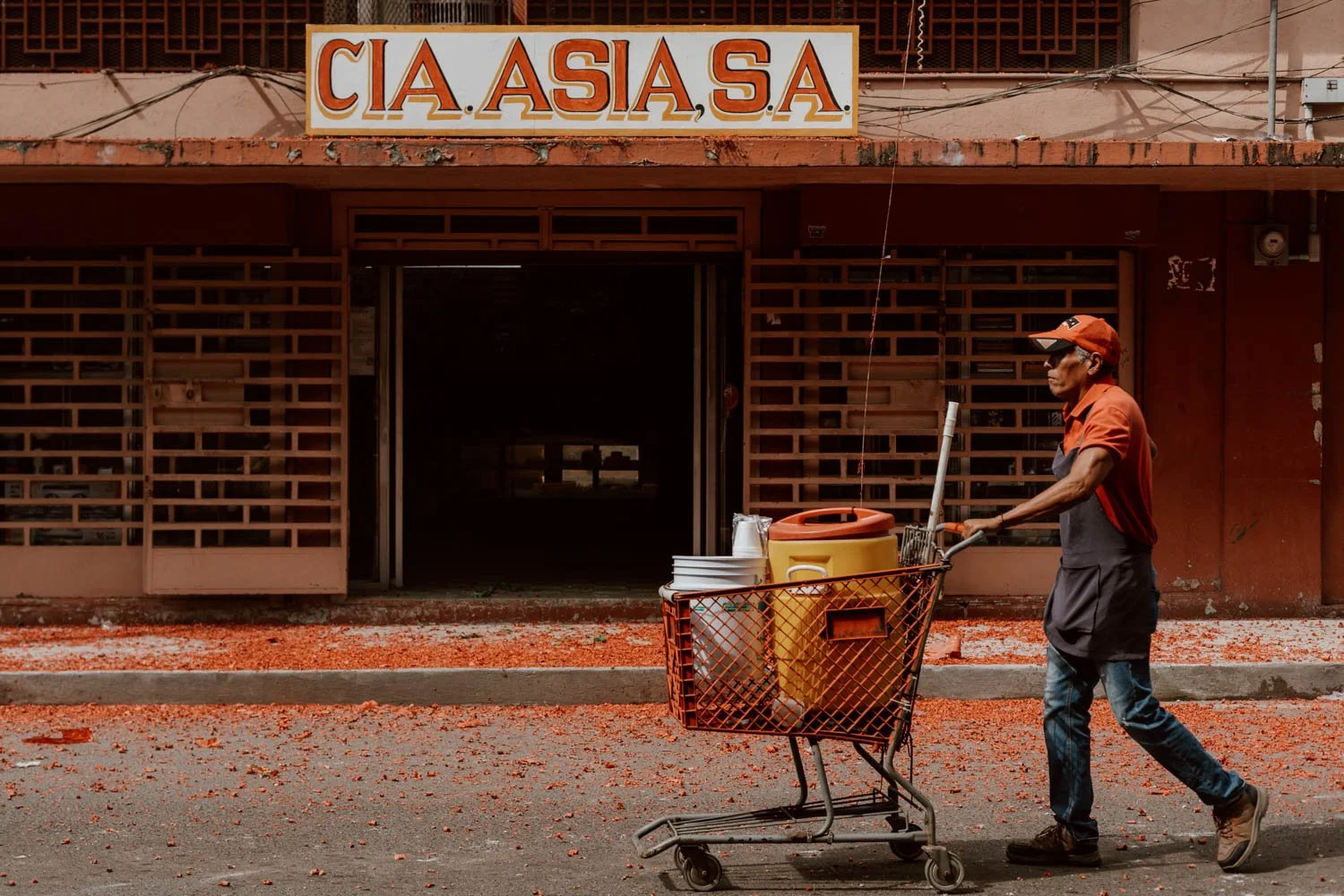
As hinted at earlier, if you only focus on Casco Viejo, the Canal, and certain parts of downtown, then you’ll perhaps leave with a single, slightly sterile impression of Panama City.
For some, that’s perfectly fine; for others, they’ll want to break out.
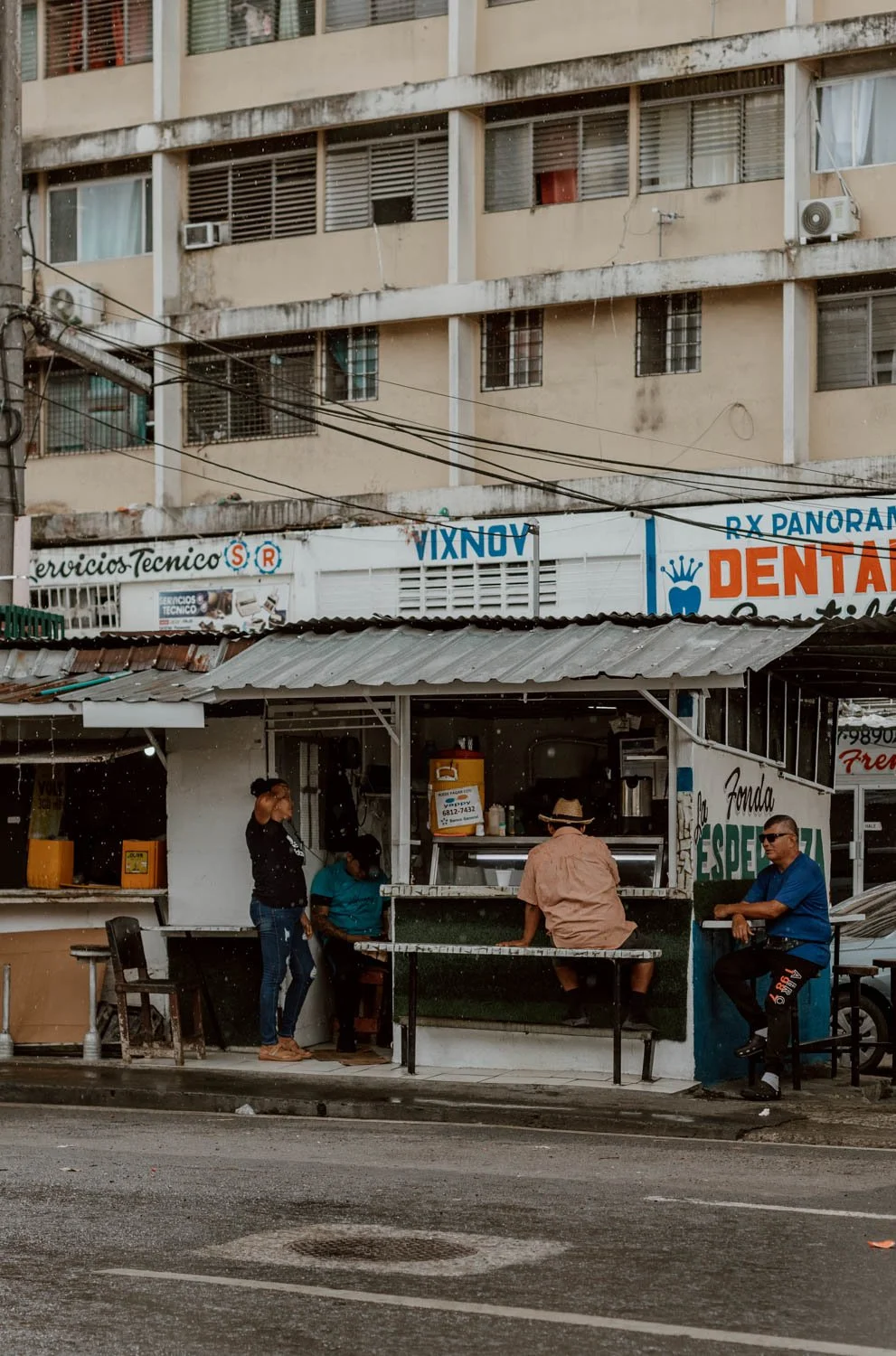
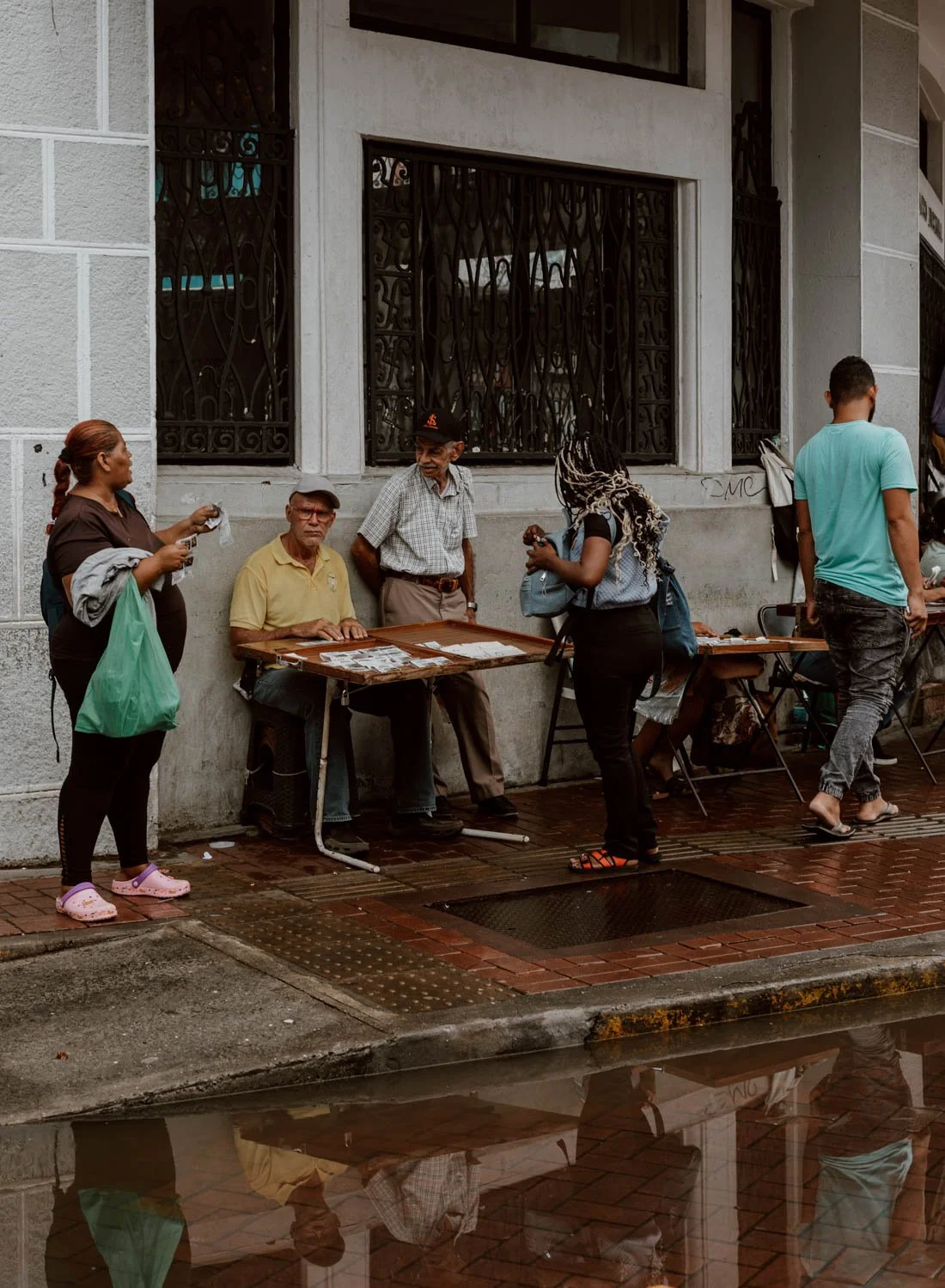
Venture north of the Viajero Hostel, and you’ll immediately hit areas more frequented by locals and moving to different rhythms.
Avenida Central España (maps) is a busy, eye-opening shopping street - fascinating by day, absolutely not recommended after dark - while Calle 13 Este has a small street market and plenty of characters. Along Avenida B, you’ll find a concentration of Chinese shops and restaurants, a legacy of the 19th-century railway and early Canal era, when thousands of Chinese labourers settled and built a community that still shapes the city and other parts of Panama today.
We also visited the little Museo Afroantillano de Panamá (maps), tucked inside a modest clapboard church built by its own congregation. It honours the arrival and contribution of West Indian workers, many of whom came to Panama to build the Canal, and we learned a lot. You’ll find it near Estación 5 de Mayo in a busy, grittier part of the city filled with stalls and shops, it offered another layer of context and reality.
Lastly, note that two taxi drivers strongly advised us to avoid venturing into or near the Chorillo neighbourhood - and we took that advice seriously.
Know | Workers for the canal came from 97 different nations, turning the project into a global crossroads for human migration too. Many of those labourers came freely with hopes of the ‘Panamanian Dream’, with better pay and a chance to build a life, but there was also forced labour. The best place to learn all about this is the Panama Canal Museum (discussed later)
Plan // Find the best neighbourhood and acommodation for your travel style and budget in our guide to Where To Stay in Panama City
Explore The Ruins of Panama Viejo
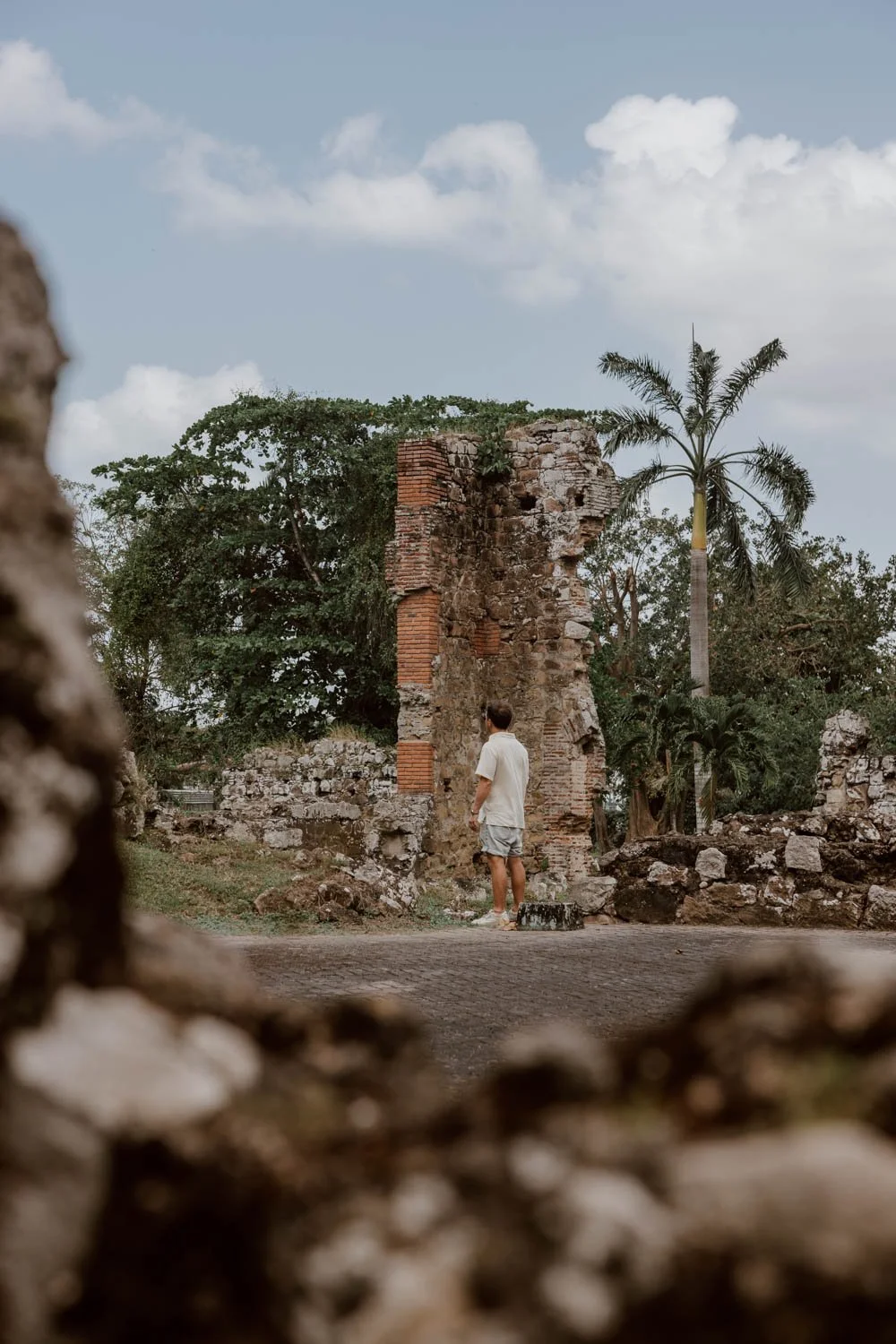
Not to be confused with Casco Viejo, this is the original site of Panama City and the first European settlement on the Pacific coast of the Americas.
(viejo means old in Spanish).
It was founded in 1519 by the conquistador Pedro Arias Dávila, who had been tasked with establishing a permanent colonial foothold for the Spanish. The site was chosen for its strategic location on the coast, where the bay and nearby rivers provided a natural harbour and access to the overland route across the isthmus. This made Panama a critical crossroads for the Spanish Empire’s American colonies: both as a strategic launch point for expeditions to Peru and a hub for transporting gold and silver back to Spain.
Its wealth and position also made it a target, culminating in an attack by Captain Henry Morgan in 1671 - yes, the one the rum’s named after - and the sacking of the settlement: the community’s forced relocation 8km along the bay created the foundations of Casco Viejo.
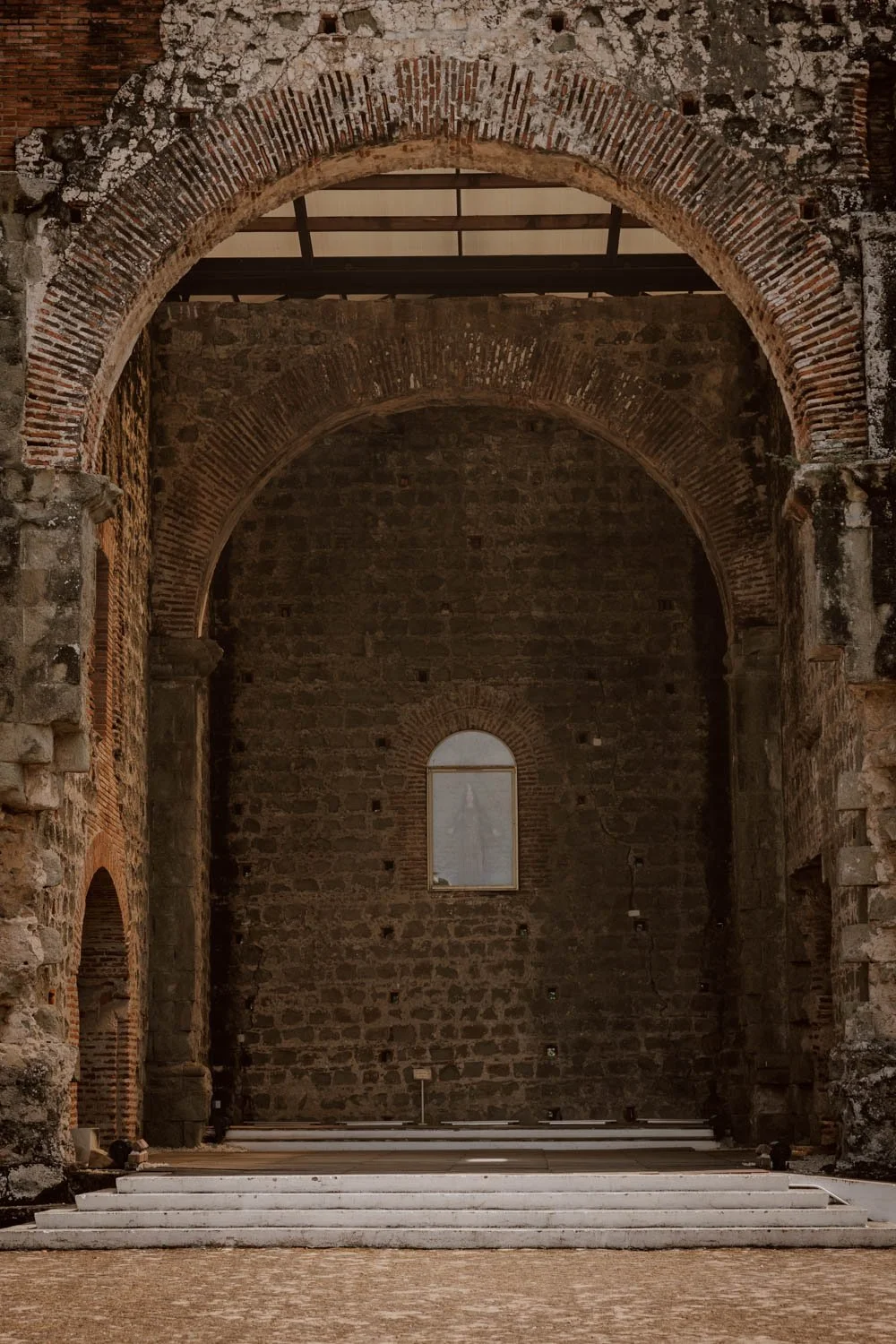
Today, Panama Viejo is mostly ruins - a quiet, uninhabited archaeological site amongst the trees.
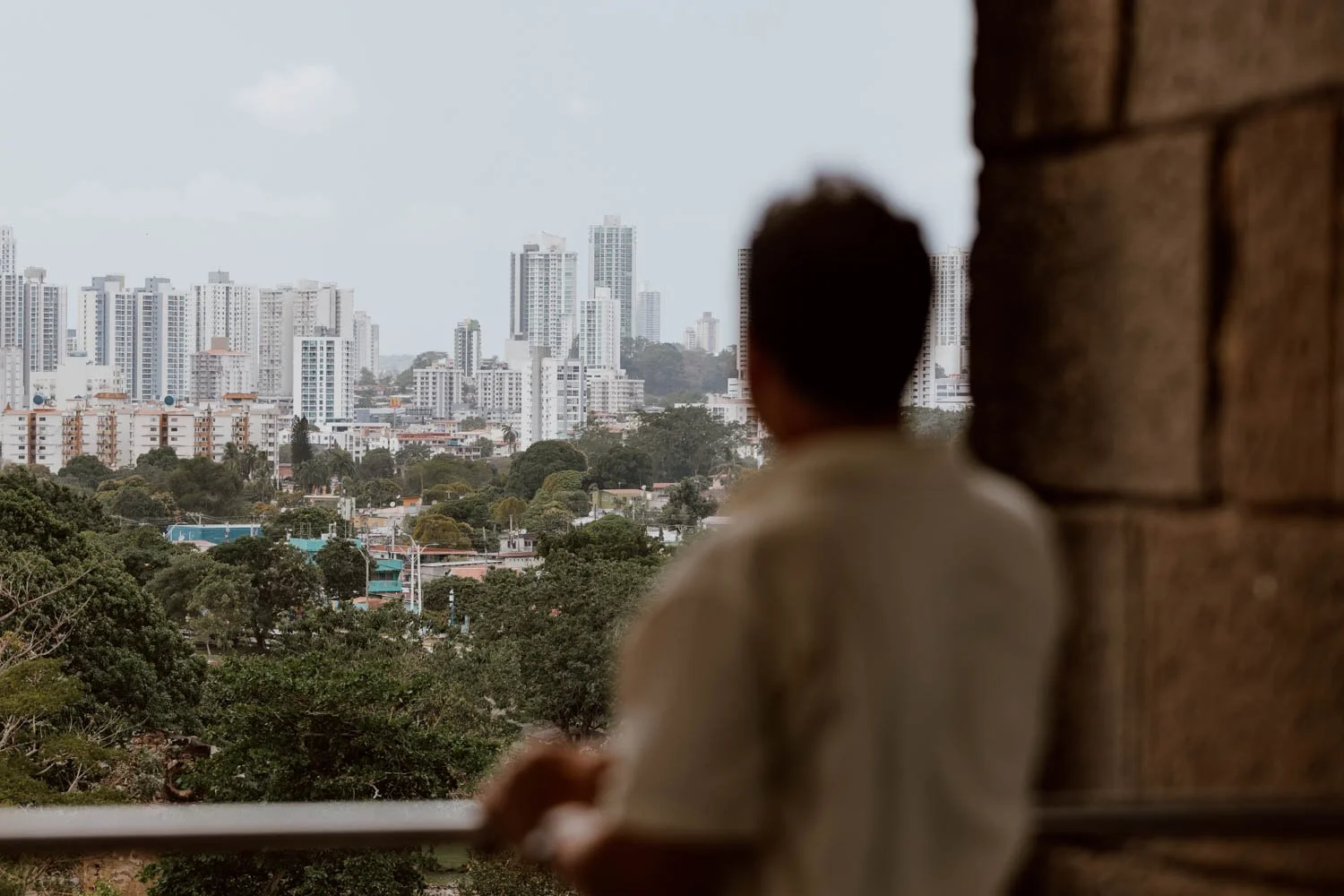
For some travellers, its historical importance and UNESCO World Heritage designation will make Panama Viejo a must visit. The two-floor Museo de la Plaza Mayor is also the best place in Panama to educate yourself on the origins of the city, the Morgan sacking, as well as some fascinating (and shocking) artefacts from the pre-Columbian period and beyond.
The view from its restored Cathedral Tower offers a striking contrast between the very old and the very modern, whilst the whole site is very tranquil.
However, the truth is that it won’t be an essential activity for everyone visiting Panama City. The price of entry at $17 is simply too high (closer to a Pompeii ticket than it has any right to be), whilst its location and layout means it isn’t going to be convenient to access for all.
Where + When | You can find the visitor centre & entrance to Panama Viejo here on Google Maps. From Casco Viejo, it’s a 25-minute/$5 Uber or a 60-minute bus ride. The site is open 8.30am-5.30pm Tuesday to Sunday, and we recommend setting aside about 90 minutes to two hours.
Tickets | Entry for a foreign adult is $17 USD, $7 for a university student with ID, and $5 for children under 17 years old. This includes entry both to the archaeological site and the museum. It’s worthwhile downloading the map and audio guide via the QR code.
Visit the official website for more information.
Know // The archaeological site isn’t huge, but quite spread out. Those who have poor mobility or are worried about the heat, can catch the free golf carts from the visitor centre to the museum - they leave every six to eight minutes. We walked in but took a cart back to save some time.
It’s a good idea to bring water, a hat, and suncream.
The Panama Canal Museum (Museo del Canal Interoceanico)
One really cannot understand Panama without first understanding its canal.
Beyond the engineering and the ships, the project explains the country’s demographics, economy, and shifting geo-political alliances: from separation with Colombia and decades of US control, to the conflicts of the 1970s, Panama taking full control on 31st December 1999 under the Torrijos-Carter Treaties, the massive expansion, Chinese involvement, and even President Trump casting his eye over it again.
In other words, the canal is Panama’s past, present, and future - but the best place to learn about it isn’t at Miraflores Locks. Instead, it’s at the Panama Canal Museum in Casco Viejo.
We think it’s very overpriced at $15 USD entry for foreign adults, and there’s a lot more work and curation that could be done on the displays. In certain rooms, it’s simply overwhelming and far too text-heavy, and a museum charging this much should have a more dynamic and interesting way of conveying the information to the average visitor.
However, if you’ve got enough time and interest, there’s an awful lot of good stuff about people, the politics, the conflicts, the stories, and the societal dynamics underpinning the man-made waterway that united two oceans and shaped this country.
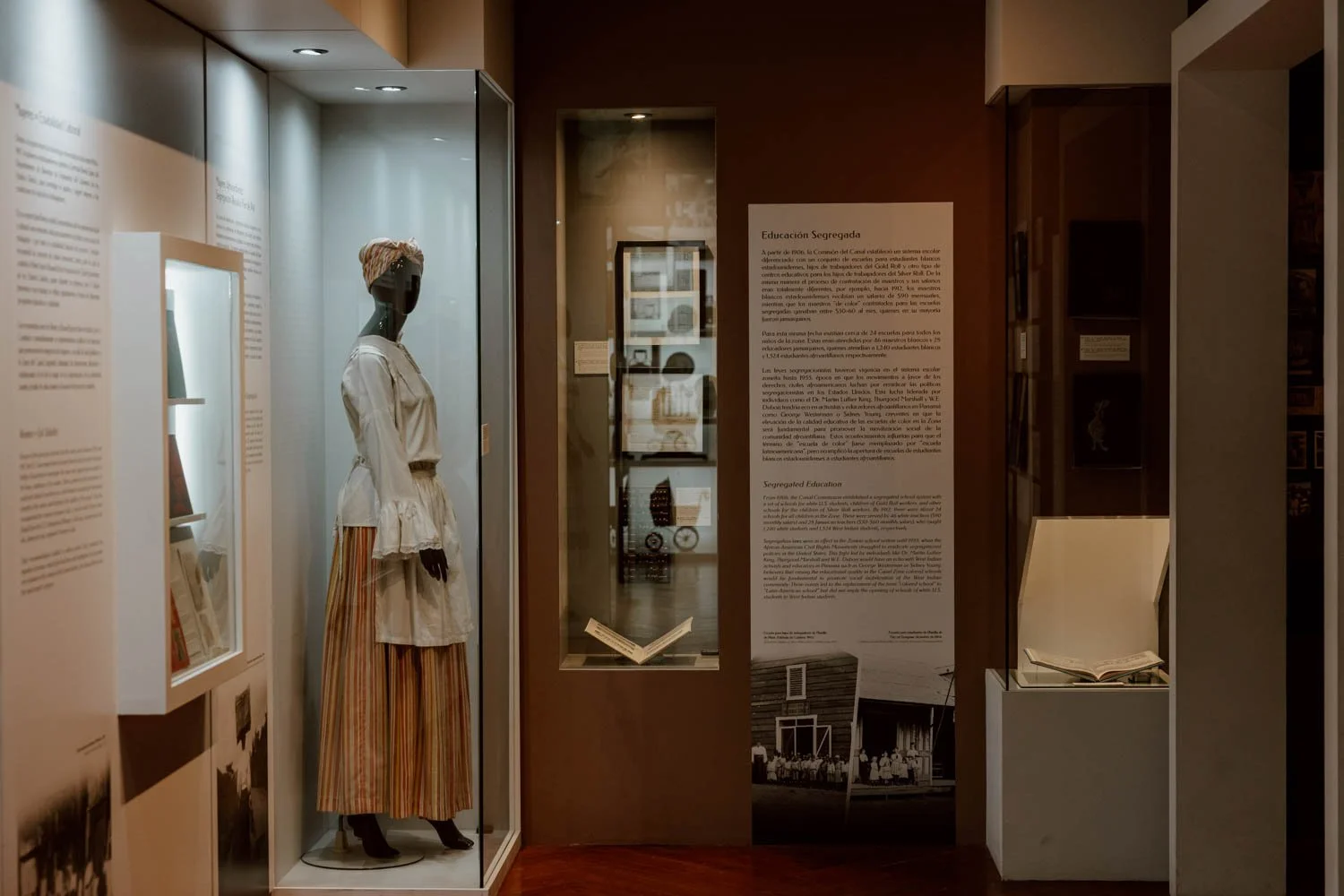
Where + When | The Panama Canal Museum is in Plaza Mayor - find it here on Google Maps.
It’s open 9am to 6pm (Tuesday to Sunday). We suggest most visits will need 1.5 to 2 hours, but those who really want to learn and take in all the detail could easily spend up to three hours.
Tickets | It’s $15 for non-resident adults and $7.50 for students and children aged 6 to12 years. You can easily buy with cash and card at the entrance.
Rather scandalously in our view, there's not a cheaper combined ticket for those who wish to visit both the Panama Canal Museum and the Miraflores Locks: this means the total cost for a foreign adult who wants to visit both is $32.22 (inc.tax).
Unfortunately, it does mean some travellers may have to pick and choose between them.