Visiting St Peter’s Basilica | Everything You Need to Know
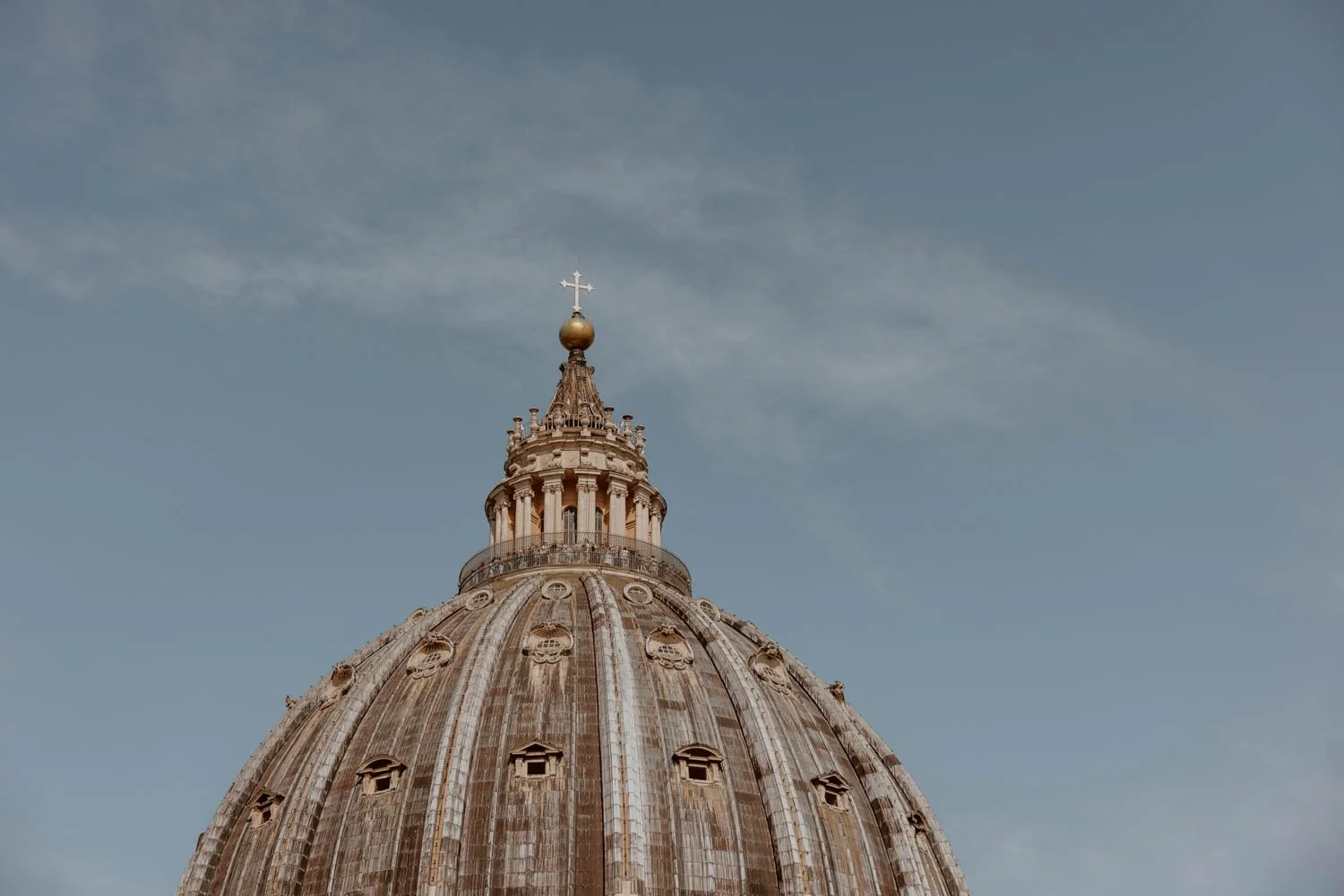
St Peter’s Basilica is not simply a magnificent building and the largest church in the world; it rises above the site where the Apostle Peter - considered the first Pope - is believed to have been buried following his martyrdom, anchoring it for centuries as the spiritual centre of the Catholic Church and the Pope’s primary place of worship and ceremony.
Its design, its art, and its sheer scale reflect a level of ambition that has shaped religious practice, artistic movements, and political power for half a millennium.
Even if you’re not a person of faith, it’s difficult to step inside without feeling the depth of history that has unfolded here within Vatican City.
What takes many first-time visitors by surprise, however, is that the experience itself isn’t necessarily that calm or contemplative. The numbers alone make that almost impossible: queues that stretch the length of St Peter’s Square, strict entry rules, and large tour groups moving through the space at all times of day.
The building may feel timeless, but the practicalities of seeing it are very much of the present - especially at it can see up to 50,000 visits per day.
Our guide focuses on simplifying the process and focussing on the essential things to know before you visit the Basilica - when to go, what to expect, whether you really need a tour, a scam to avoid, how to make the most of your time once you’re inside, and where to get one of the best views of Rome.
A little preparation goes a long way and, hopefully, with the right approach and a dollop of patience, you’ll be able to enjoy one of the world’s most significant and magnificent churches without the stress that often comes with it.
This is our guide to visiting St Peter’s Basilica in Vatican City.
Visiting St Peter’s Basilica | The Essentials
Where / In Vatican City - a sovereign state tucked inside Rome
Cost / Free to enter the Basilica itself - and no reservation required!
Expect / Long queues and large crowds
Tip / Arrive before 8am to avoid heat and worst waiting times
Dress Code / Knees and shoulders covered - strictly checked at the entrance
Bags / Only small day bags allowed & no storage for luggage
Dome / Ticket required: €8 if using stairs, €10 if taking lift
Accessibility / Main floor accessible but the Dome is not
Duration / Basilica needs 1-2 hrs, but 2-3 hrs with Dome
Tour / If you'd like a guided tour of the Basilica and Vatican Museums, we recommend this one. For a specialist, small-group tour focussed on St Peter’s, consider this one
St Peter's Basilica is Free to Enter
We've become so used to paying entry fees for various churches and religious monuments in Europe, that we were quite shocked to discover that the Basilica itself is not ticketed.
It’s also not required to reserve your spot in advance or book a specific timeslot to visit.
Given the inevitable costs of visiting a popular city such as Rome - particularly if you're travelling as a family - it's quite wonderful that entry to this beautiful and important religious site is not limited only to those who can afford it.
However, when combined with the sheer number of daily visitors, this free-for-all status does exacerbate some of the main issues.
Entry the vast Dome that sits atop St Peter’s Basilica does have a cost attached to it, and we'll cover this in more detail below.
Know // Ignore several websites that turn up quite high on Google with promises of selling official St Peter’s Basilica tickets: these are all a scam.
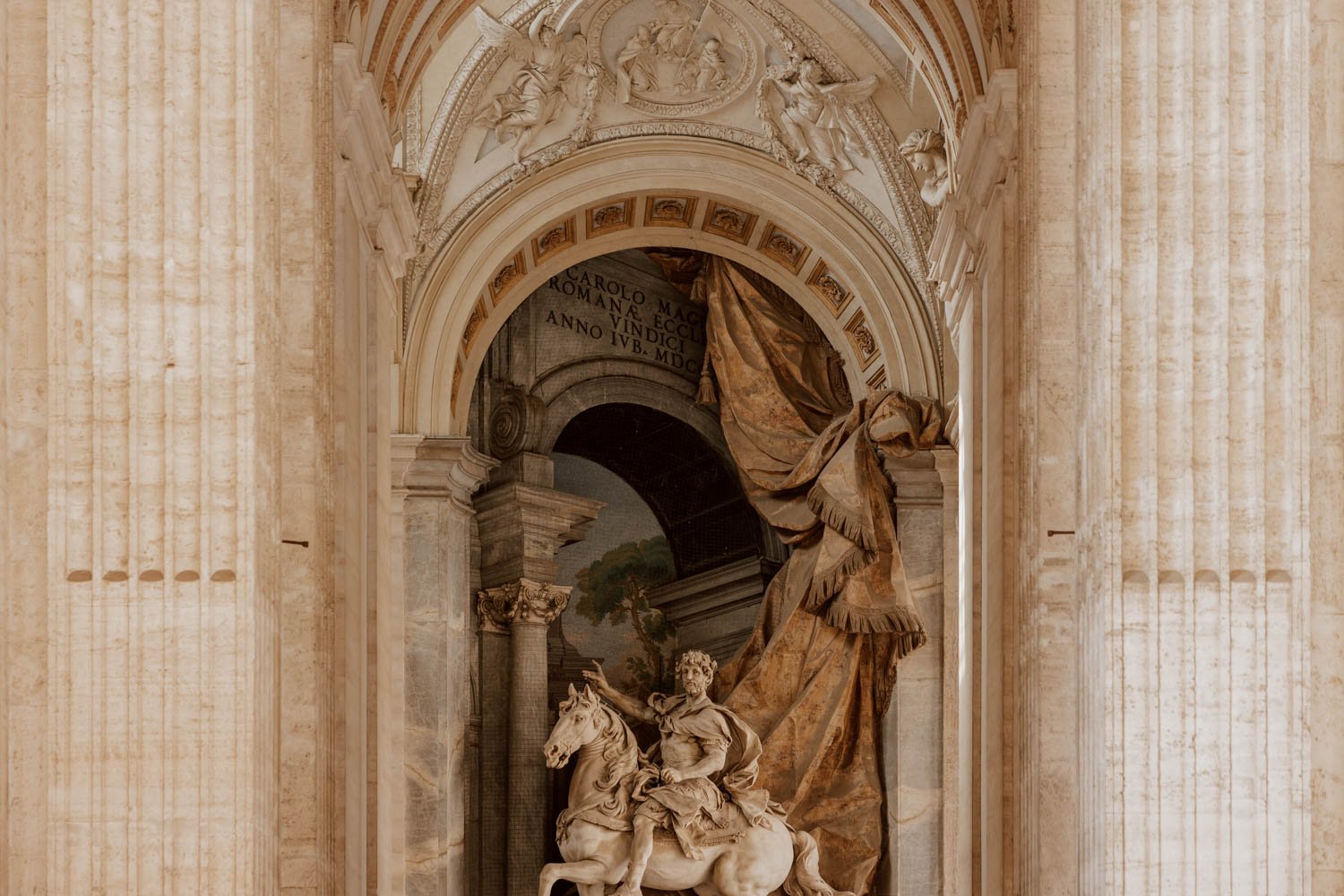
Understand ‘Skip-the-Line Tickets’
We thought about mentioning this in the above section, but honestly it's so important - and information online so often misleading - that we really felt it needs to be stated very, very clearly.
You’ll see plenty of reputable websites selling skip-the-line / pre-reserved tickets for St Peter’s Basilica, and it’s easy to assume that you’ll be fast-tracked through the crowds and all the queues.
Unfortunately, that’s not how it works in reality.
As mentioned above, there is no entry ticket for the Basilica itself; it is completely free to visit. Those skip-the-line or pre-reserved options simply place you in a separate priority queue, and many recent reviews suggest this often takes just as long - if not longer - than the regular line. The reason is that so many tour companies buy tickets for this queue, that it ceases to offer a fast-track, or no-waiting-time privilege - and those pre-reserved entry times become merely a suggestion.
Paying extra to simply stand in a different queue doesn’t feel like great value, especially when everyone ultimately passes through the same security checks at the same pace.
For many travellers, it ends up feeling like a scam at worst or a misleading rip-off at best.
The only genuine way to avoid the long main entrance queue for St Peter’s is to visit as part of a guided Vatican Museums tour. These use a ‘staff-only’ passage from the Sistine Chapel into the Basilica, and that shortcut is exclusively available to tour guides and their groups.
This is a super popular and highly-rated tour which offers the shortcut.
If you tour the Vatican Museums independently, that shortcut will not be possible, and you’ll still have join the normal queue for St Peter’s.
We also learned the hard way that you should avoid any ticket advertised as a ‘Basilica + Dome’ entry combo. Anxious about visiting on a busy summer’s day, we bought one to guarantee access, but gained no advantage at all. We waited with everyone else to enter the Basilica, queued again for the tour’s Dome tickets, paid more than the standard Dome price, and actually ended up entering later than if we’d just joined the regular line from the start (due to the faffing around by the tour companies at the meeting point).
So, do learn from our mistakes!
Travel Tip // If you’d like a guided Basilica experience, then choose this Vatican Museums, Sistine Chapel and Basilica tour, which uses the direct access door.
Alternatively, for those looking for a more specialist experience, consider the Walks of Italy small-group tour of St. Peter’s Basilica & Dome. In comparison to a lot of the mass market options, this will offer more insight and space to breathe.
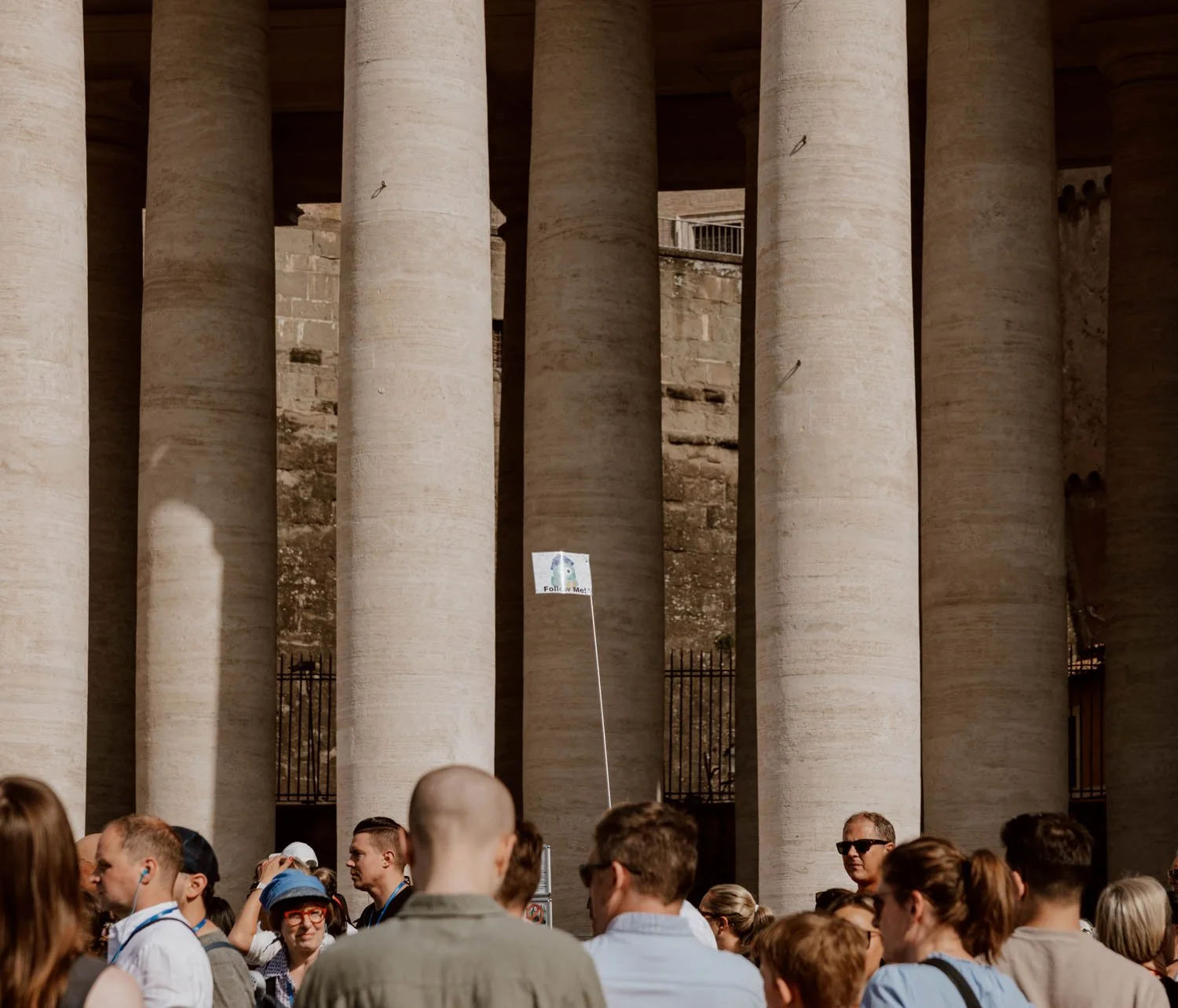
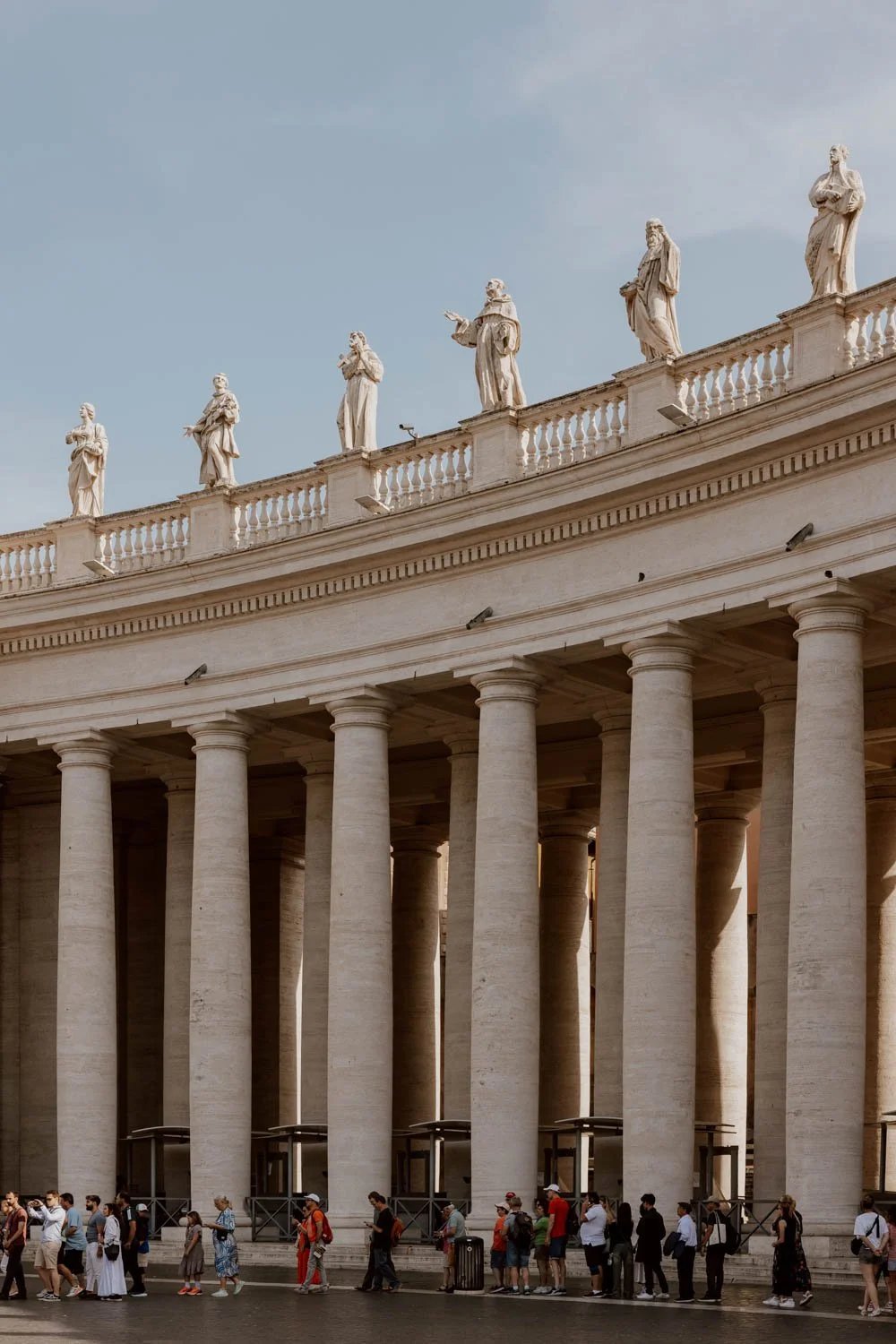
Know The Opening Times (Especially on Wednesdays)
Vatican City’s St Peter’s Basilica is usually open from early morning until early evening, but its schedule shifts slightly depending on the season, and access is sometimes restricted for religious services or papal events (like, you know, when they have to elect a new Pope!)
· April to September (high season) | The Basilica generally opens at 7am and remains open until 7pm
· October to March (off-peak) | Opening remains from 7am but closes at 6.30pm
One super important thing to be aware of is that the Basilica may be partially - or temporarily - closed to tourists for official religious ceremonies or for the weekly papal audience in St Peter’s Square. Historically, this mostly affects Wednesday mornings (with normal opening resuming after 12.30pm), but other feast or Holy Days can also be affected.
If in doubt, check the official website - especially if you're traveling during a major religious season or near a holiday.
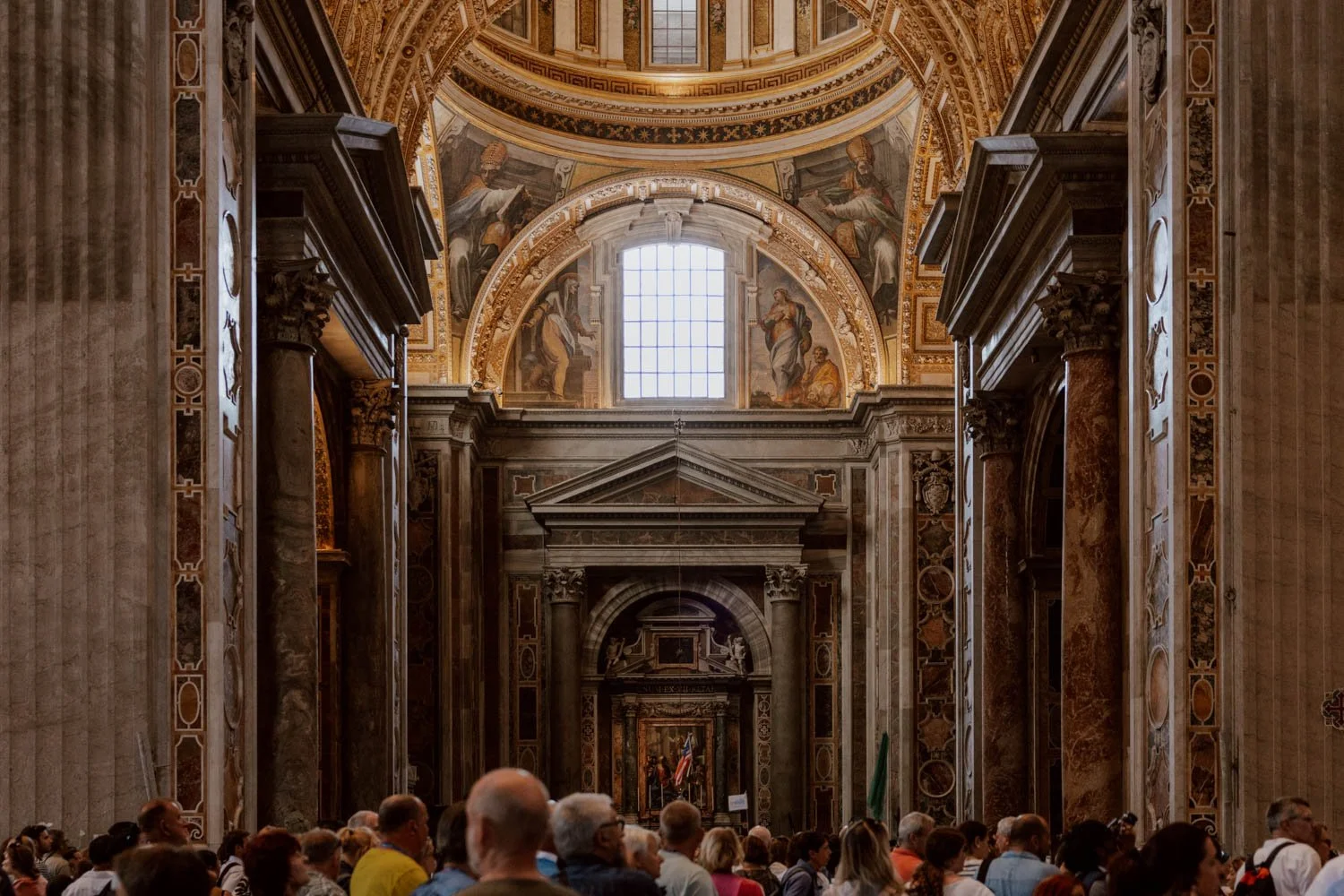
The Security & The Queues
Whilst there is no entry fee or St Peter’s Basilica ticket, this does not mean that you'll be able to saunter straight in.
This pilgrimage site is on every first-timer’s must-do list in Rome, and can legitimately be described as one of the world’s most popular tourist destinations.During the busy summer months, an estimated 40,000–50,000 people visit every day.
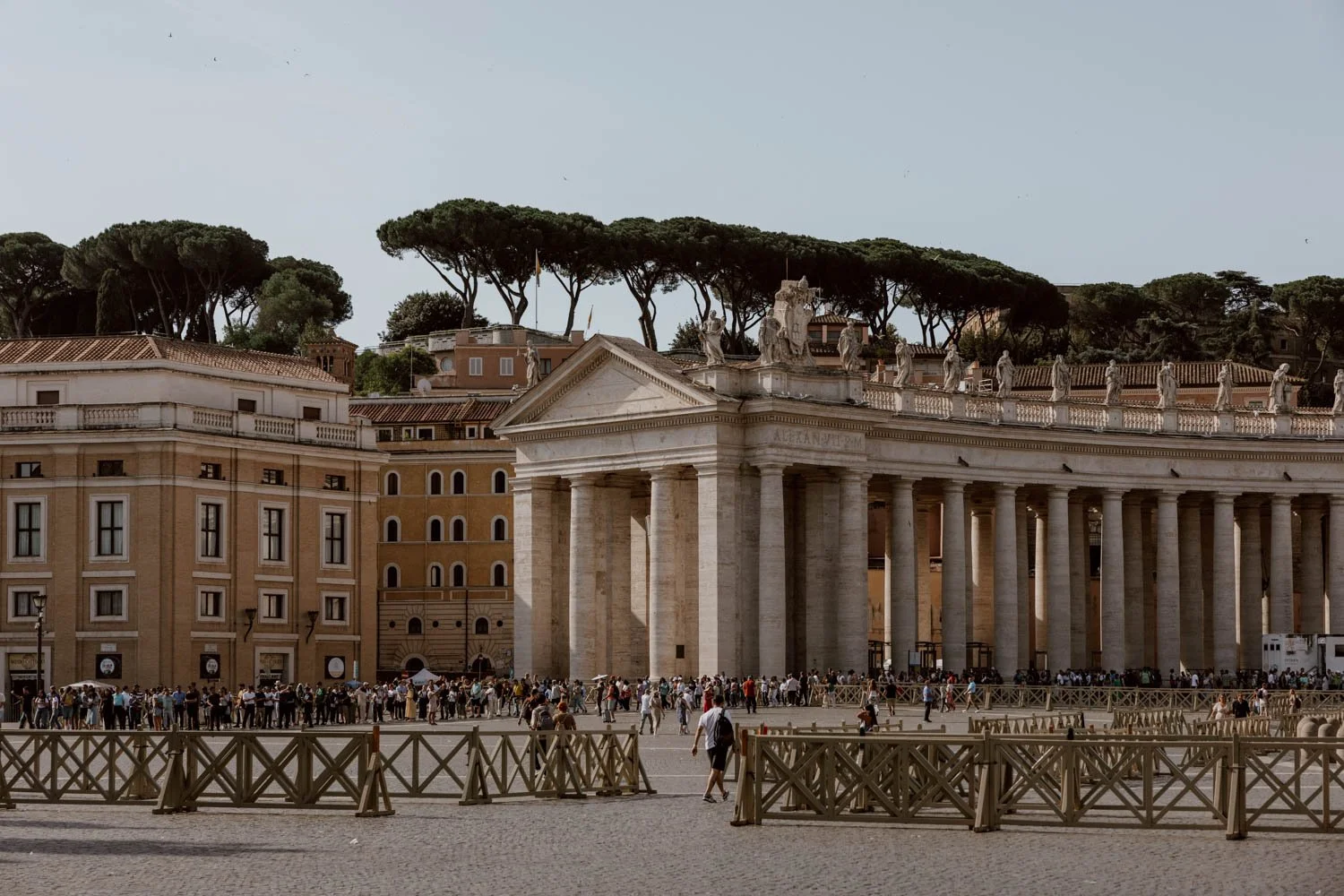
So, you need to expect to join a queue which weaves its way around St Peter's Square and towards the security checkpoint. It is often very, very long and tightly packed, with waits of two to three hours at peak times.
This wait time may be even longer in July/August.
Depending upon when you visit, the queue for the entrance will likely be very obvious, but to avoid confusion and save you stress: the visitor entrance is on the right-hand side of the Square as you face the Basilica - roughly near this pin on Google Maps.
Security checks are rigid.
Once you reach the front, you will place all your belongings through an airport-style scanner and then walk through a metal detector. Only small day bags are permitted through security - large backpacks or luggage will be refused, and there is no storage facility to leave them behind. No glass is allowed, but plastic or reusable metal water bottles are permitted.
After you’ve cleared these scanners, you’ll join a second, shorter line manned by staff whose sole purpose seems to be checking whether everyone is wearing the appropriate attire (more on what that means below).
How Long Do You Need? // Excluding queue times, a visit just to St Peter’s Basilica usually takes around two hours for those who wish to savour the detail. If you add in the Dome climb or plan to explore the underground area, factor in another 45 minutes or more.
This specialist early-access St Peter’s & Dome tour spends just under three hours.
So, How Do You Avoid the Queues?
Our time in St Peter's Basilica was not the calming and spiritual experience that we normally have when entering a Catholic church.
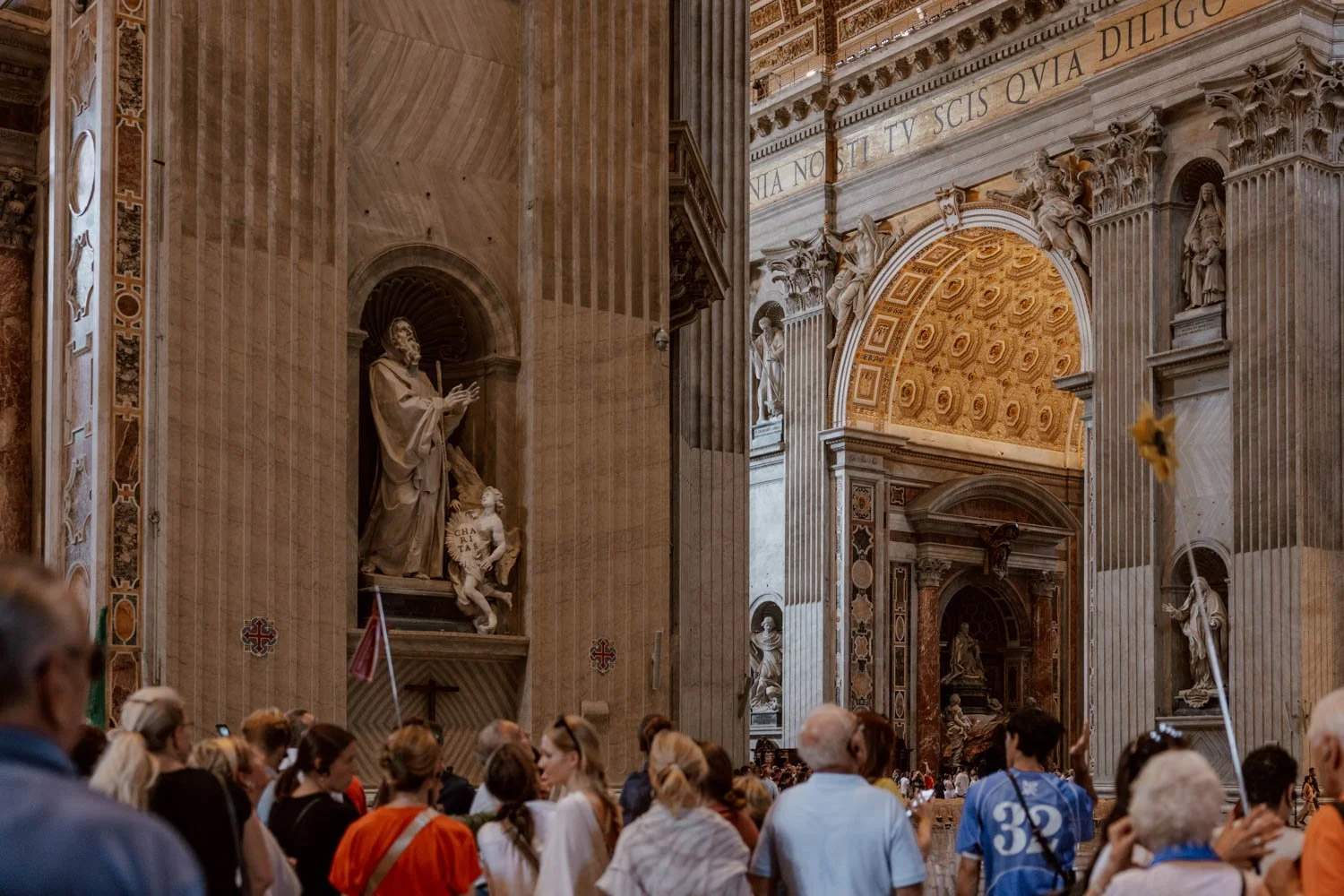
In fact, the sheer number of independent tourists and large tour groups cluttering every available bit of floor space (and the inevitable noise associated with it) was really quite overwhelming by the end.
Unfortunately, the popularity of Rome and the city's general battle with overtourism means that the days of experiencing St Peter's final resting place and this sublime architecture in solitude are long gone (unless you visit in the depths of winter).
This is a real shame, and something it’s important to be up front about so that you can hopefully have a more meaningful visit.
We've already explained why skip-the-line tickets aren’t as good as they first appear, but there is a way to beat the worst of the crowds: arrive early!
How early very much depends upon the time of year that you're visiting, but if your trip is planned between May and October, we'd recommend getting there as soon as you possibly can.
St Peter's Basilica opens its doors at 7am, and visitors during that first hour or so will enjoy a much more pleasant experience when exploring the interiors, as well as avoiding having to stand in line for too long before all the tour groups arrive.
So, consider setting the alarm early, and being ready to line up before then!
Our group joined the queue at approximately 8.45am, making it through the Basilica doors approximately 25 minutes later: if we knew then what we know now, we’d simply have joined the queue independently much earlier in the morning.
If, due to your itinerary, you have no choice but to visit during the late morning or early afternoon, we highly recommend bringing a hat, or perhaps even a sun umbrella to protect yourself. Rome was experiencing a bit of a mini-heatwave during our early June visit and it was already really quite hot; we can only imagine how horrid it must have been to stand with no shade for two hours on a hot summer's day afternoon. As glass isn’t allowed through security, you also need to bring a plastic or metal re-useable bottle of water.
Additionally, for those travelling in groups, consider taking it in turns to hold your place whilst the others get some respite in the (very limited) shade.
Travel Tip // If getting in the St Peter’s Basilica queue early is a priority for your trip, then consider choosing a base that’s conveniently near the Vatican - which may also have the added benefit of allowing you to also be amongst the first in the horribly congested Vatican Museums. A few to consider are:
· Adriana Boutique Guest House
· You can also find a selection of Airbnb ‘guest favourites’, all a short walk from the Basilica, here.
What About the Sistine Chapel & the Museums?
The Sistine Chapel is not inside St Peter’s Basilica
Most travellers pair their visit to the basilica with the nearby Vatican Museums, where you can see the Sistine
Separate entries, tickets, and queues apply for each
Expect crowds and long waiting times, especially in peak season - plan your visit to allow plenty of time for both
It can be a long, tiring day; if you have a specialist interest and more time, it’ll be better to split your visit across separate days
If you'd like a combined guided tour of the Basilica and Vatican Museums, we recommend this one
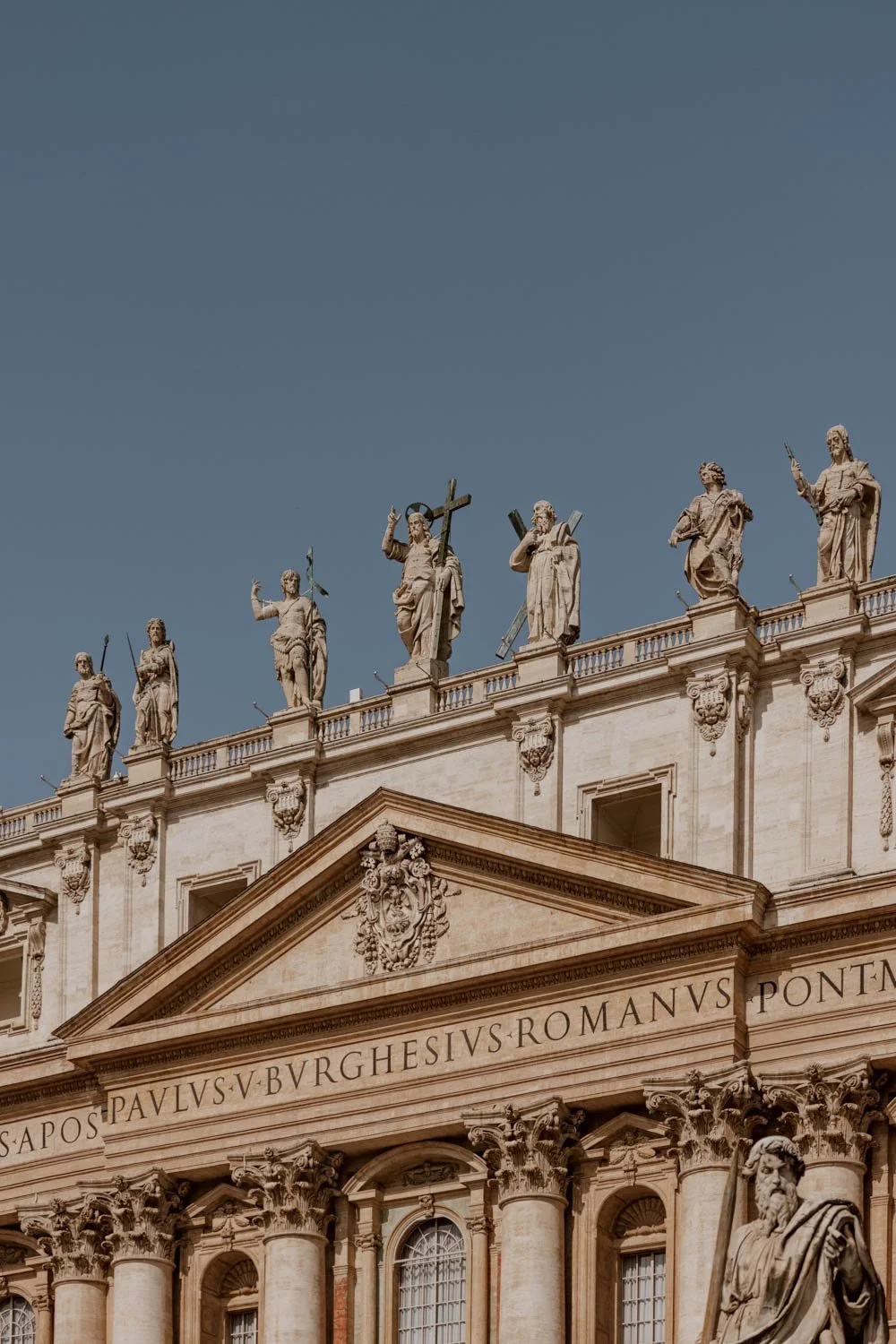
The St Peters’ Basilica Dress Code
As in all areas of The Vatican, there is a strict dress code that visitors must adhere to - and unlike some popular monuments that we visited in Rome (like the Pantheon), it is strictly enforced.
Irrespective of gender, your shoulders and knees must be covered. For women however, it's also recommended to also cover your chest.
Beyond this, it’s best to approach your clothing choices with sensibility in mind i.e. is this appropriate to wear to a pilgrimage site or better suited to a beach town?
You should also remove your hats on entry.
Emily wore long trousers with a vest to keep cool whilst queueing, and then threw on a linen shirt once at the front of the line (carrying a light, long-sleeved shirt or shawl like this in your daybag is always a good idea in Italy).
As we mentioned above, there will be a member of staff checking that you are properly covered, and if not, you'll be handed disposable, dark blue sheets to tie around your waist if you're wearing short shorts or a skirt, and another for your shoulders.
Some people take these off once they’re inside the building, and it’s just ignorant and disrespectful.
Lastly, from the queue onwards, remember that you’re within an ancient religious institution surrounded by a lot of devout Catholics - act appropriately and respectfully for the setting.
A Note About Accessibility // The Basilica’s main floor is accessible via ramps and wide aisles, but the Dome is not - after the lift, there’s a significant section of narrow, slanted staircases that make it unsuitable for anyone with mobility issues or claustrophobia.
What to See Inside St Peter’s Basilica
Upon stepping through the doors of St Peter’s, the first thing you notice is the scale - columns stretch wide, the dome so high it almost escapes your first glance - and then the noise - constant, echoing, and unavoidably present. For all its grandeur, this isn’t the hushed and contemplative space people imagine. Groups move in waves, camera screens glow, and every time you try to pause for longer than a few seconds, someone needs to get past.
Still, there are places where you’ll want to hold your ground.
In the first chapel on the right is Michelangelo’s Pietà, a marble sculpture of the Virgin Mary holding Christ’s body after the Crucifixion. Completed when the artist was in his early twenties, and expertly sculpted from a single block of Carrara marble, it reminded us a little of the Veiled Christ we saw in Naples - that same surreal ability to make solid marble appear soft to the touch, thinner than physics should allow.
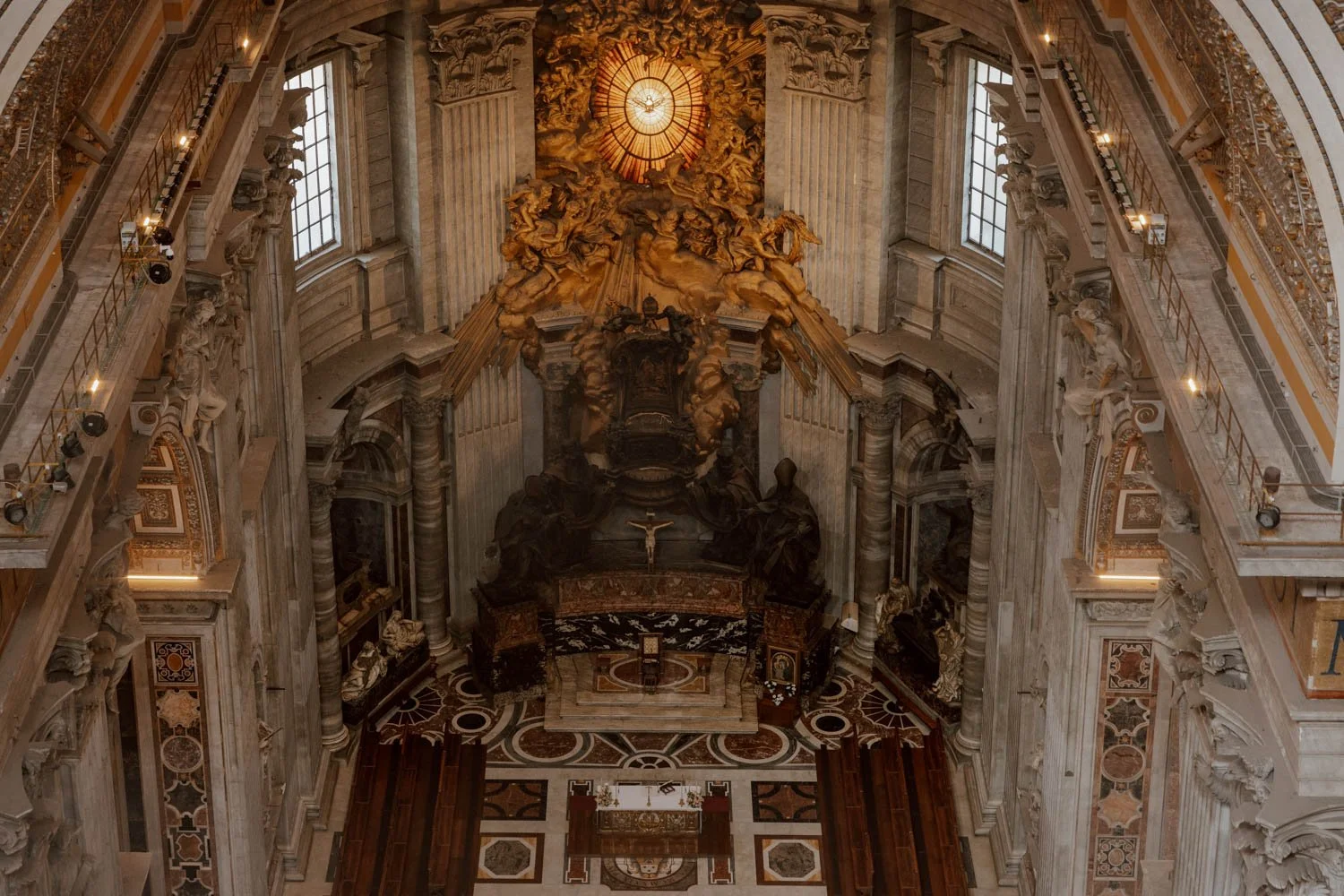
Beneath the Dome is the high altar, marked by Bernini’s large and ornately decorative bronze Baldachin, or canopy. This is the centre of the Basilica in every sense: directly above the site long believed to be the burial place of Saint Peter, and used only by the Pope or someone he authorises.
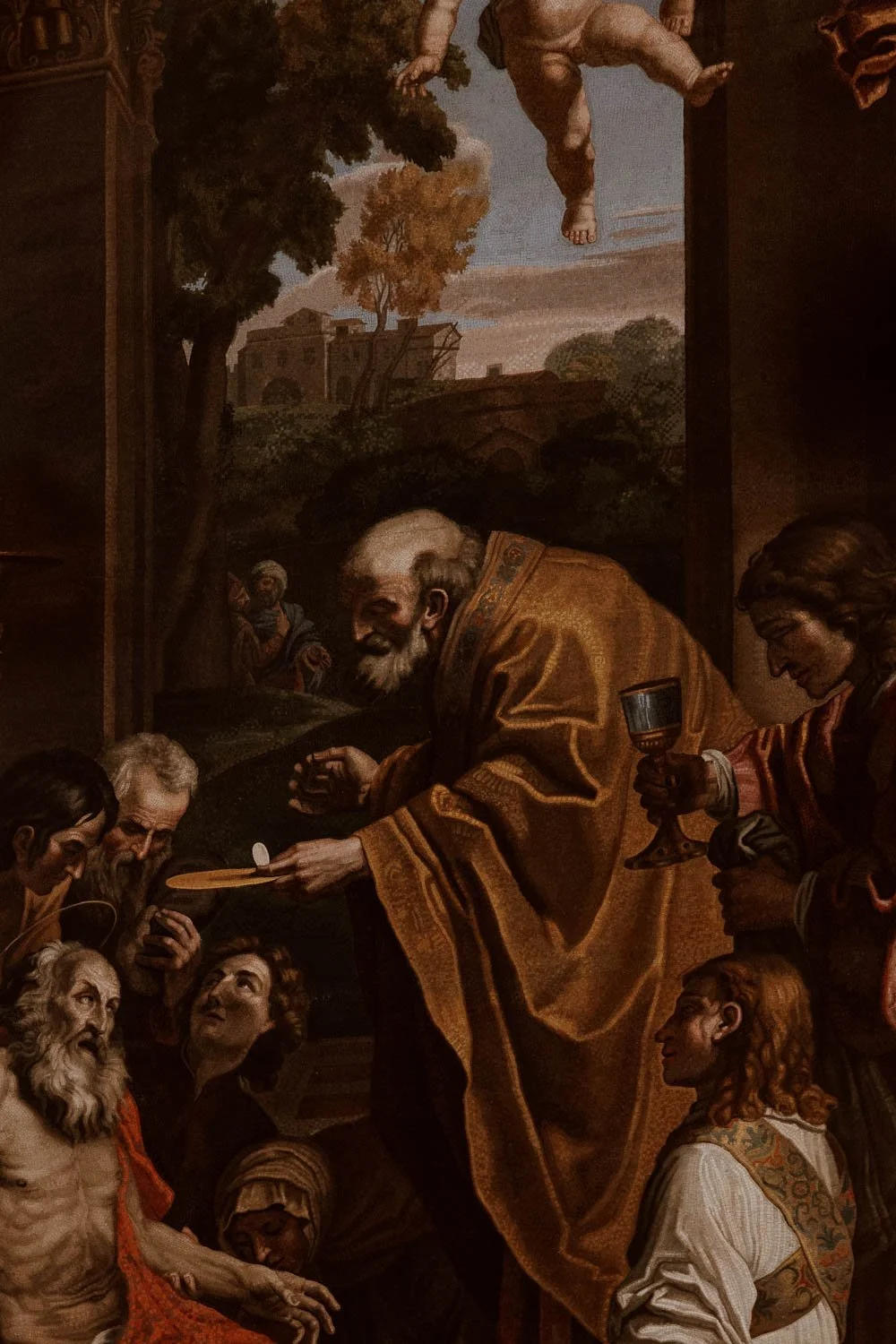
The nave stretches out from here, with chapels running along either side, each busy with their own stories - tombs of former popes, centuries old art works, marble figures created to honour and inspire. You’ll spot things that deserve their own moment, but you’ll also be jostled along before you’ve had a chance to fully take them in.
It’s better to accept that you won’t see everything than to try and fight the flow.
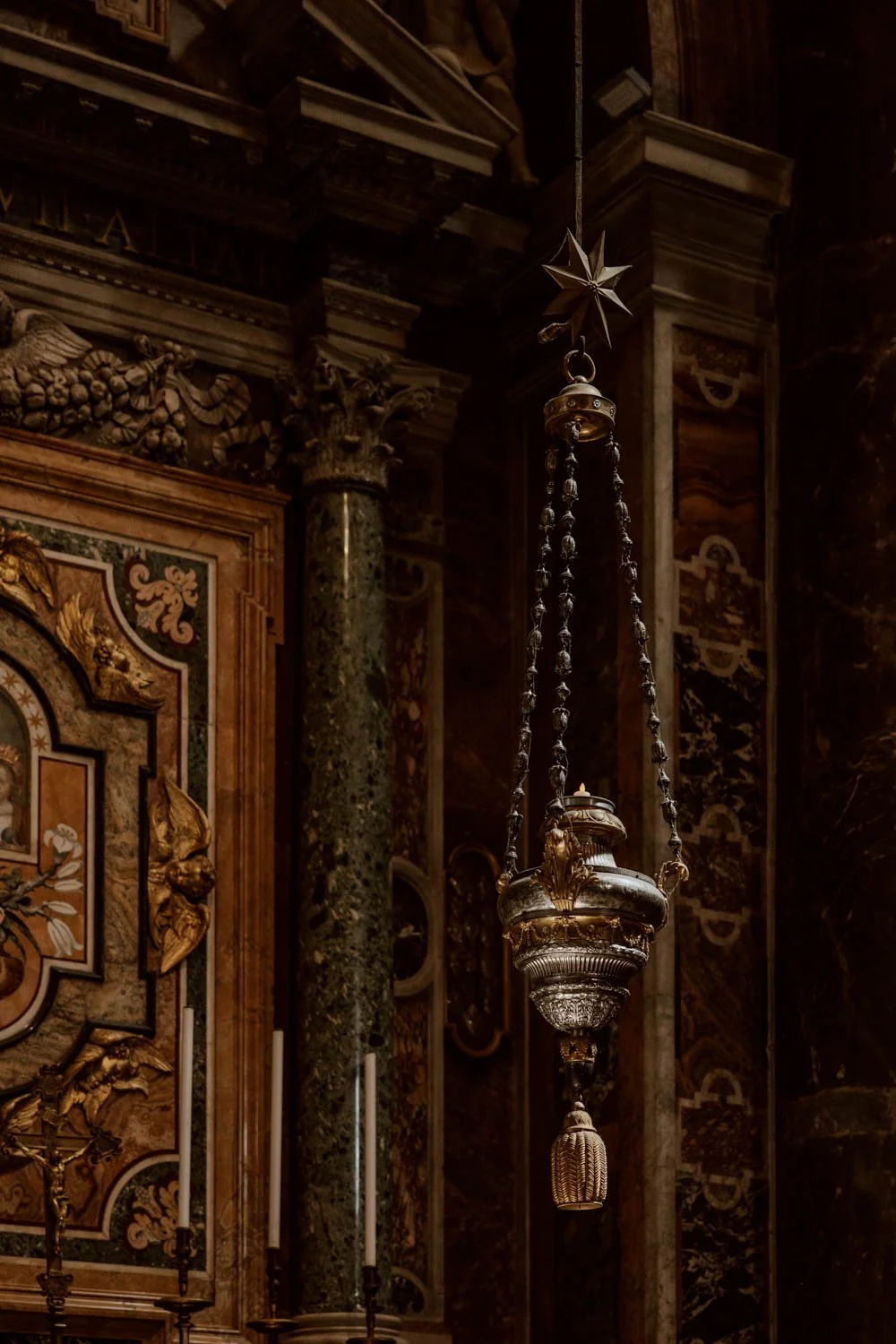
Despite this, there are quieter pockets too: spaces for confession and prayer that are only accessible to the faithful. Even if you’re not visiting for religious reasons, it’s worth remembering that many people are, and that this building remains an active place of worship rather than a static monument. Ensure that these spaces are left for those who need them - and don’t disturb or ‘create content’ with worshippers.
Continue on towards the back of the Basilica, and you’ll reach the Cathedra Petri - or Chair of Saint Peter - housed within Bernini’s large bronze monument (yes, the same Bernini). Although there is some scholarly debate, the Vatican believes it to be the episcopal throne of the Apostle Peter - which is quite an incredible thing if true - and its position here symbolises the continuity of papal authority from his time to today.
When you’ve finished taking in the main floor, consider heading below to a network of vaulted corridors known as the Vatican Grottoes. This level contains the tombs of numerous popes, as well as remnants of earlier churches built on this site. Access is included with a normal visit to St Peter’s, and there is no ticket or reservation needed.
Did You Know? Below the Grottoes lies the Vatican Necropolis, an underground archaeological site formed from an ancient Roman cemetery that predates the current Basilica. It includes early Christian tombs and the area is long associated with the burial place of Saint Peter. Inaccessible and untouched for sixteen centuries, access here is not open to general visitors.
Instead, the Necropolis can only be seen on a one-hour, small-group guided tour organised directly through the official Excavations Office, with very limited places each day (just 250 people). Tickets cost €20 per person, and tours are available Monday to Friday from 9am to 4.30pm, and Saturdays from 9am to 1pm.
Note that photography is not permitted, and the tight passageways make it unsuitable for those with mobility or claustrophobia concerns.
If you’re interested, you can fill in a form to arrange your visit on the official website.
How to Visit the Dome
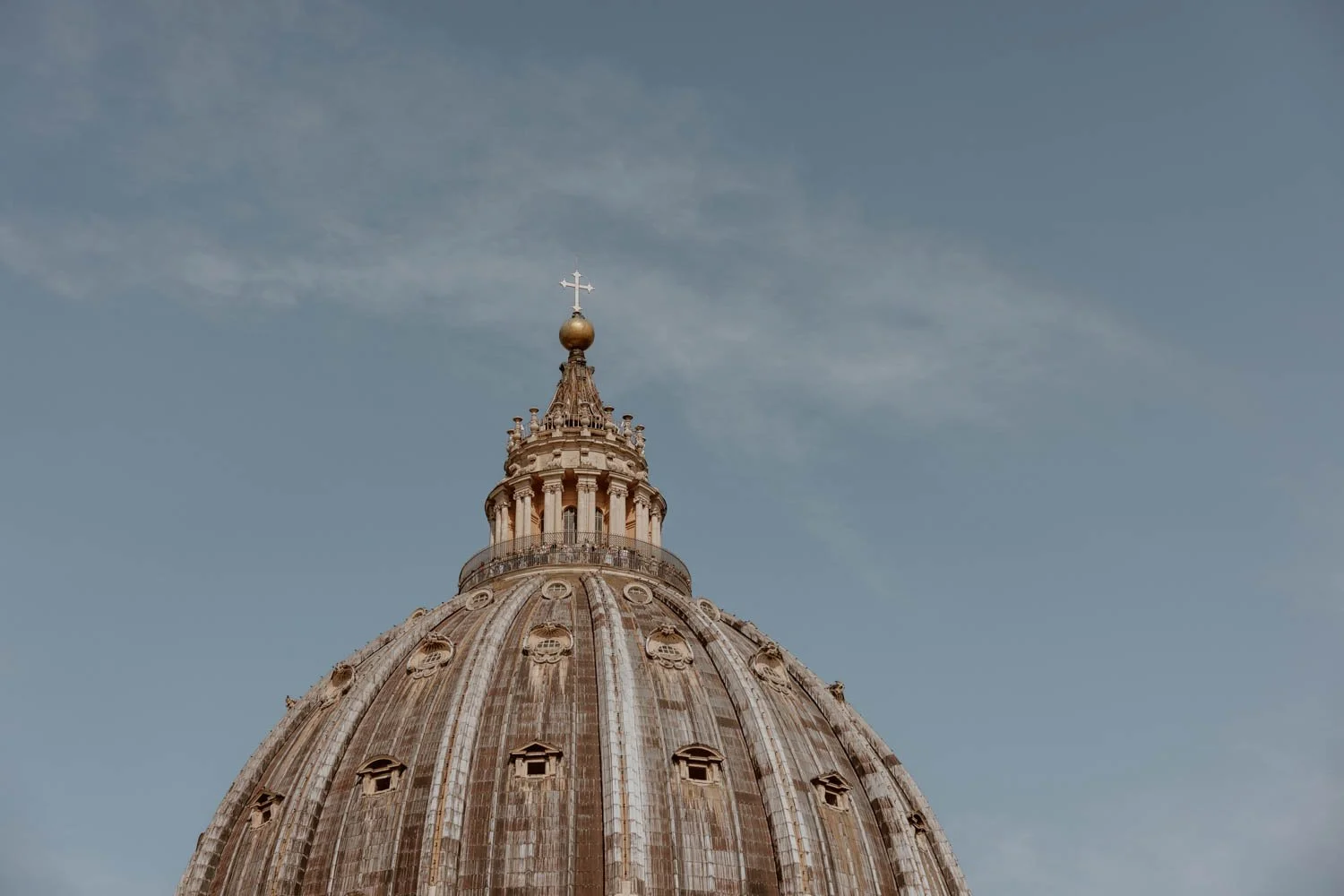
If you want the very best view over the Square and across Rome’s skyline, you’ll need to head up into the great dome that crowns the Basilica. In our minds it’s an essential part of visiting St Peter’s - just know that unlike the Basilica itself, there is a ticket price.
Tickets are purchased inside the atrium of the Basilica, after security and dress code checks, and the cost depends on how you choose to make the ascent:
· €10 per person if you take the lift part of the way
· €8 per person if you climb the full route.
It’s important to note that the lift only takes you as far as the roof terrace level - not to the very top - but it does avoid around 200 steps. The queue is longer (often much longer), but we’d recommend it for anyone with creaky knees or those visiting in the height of summer heat.
Personally, we found the climb up the wide, tiled spiral staircase to be relatively easy, and could be managed (albeit sometimes slowly) by most people with a reasonable level of fitness.
Crucially, for anyone with limited mobility, it’s also important to understand that the lift option still includes a lot of steps!
Whichever option you choose, your first checkpoint will be the roof terrace, where there’s shade, a small café, water fountains to fill up your bottle, a souvenir stand, and a chance to catch your breath.
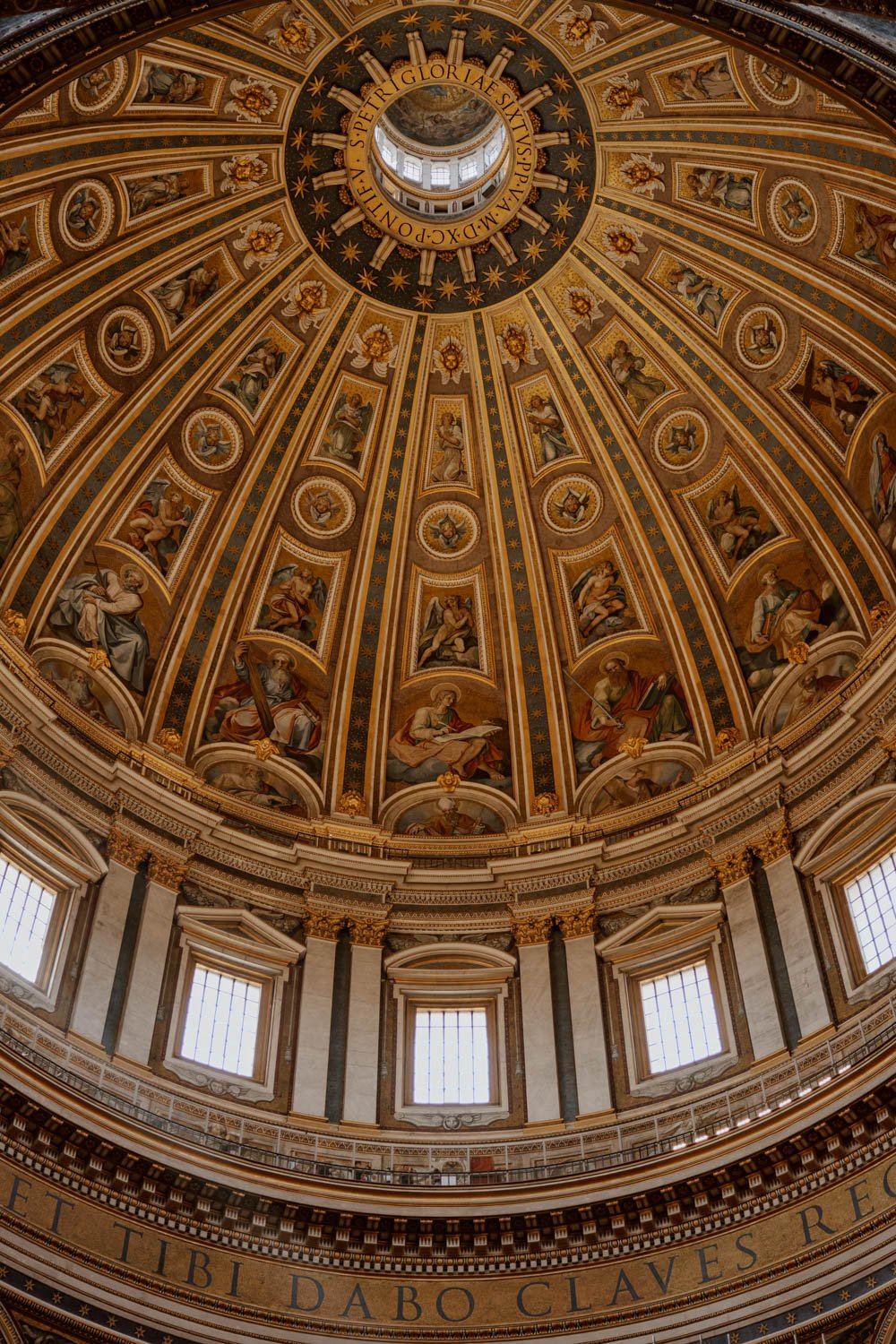
From here, you then step inside the internal gallery of the dome to look down into the Basilica. The mosaics and gilded details are mesmerising, and the view to the floor below really helps you appreciate just how vast this church actually is. Unfortunately, a clear perspex barrier was recently added for safety reasons, and although entirely understandable, it does make photography a little less special than it once was.
Then the real climb begins.
As the walls curve with the dome, the staircase narrows and tilts, becoming steep, single-file, and undeniably claustrophobic. The 320 steps aren’t somewhere for anyone with mobility concerns, bigger backpacks, or a dislike of tight spaces, and there’s also no proper one-way system in place, so progress can feel slow and occasionally awkward as people squeeze past each other.
Trust us, when you finally emerge onto the small external viewing platform - protected by a caged surround - the wind, the space, and the full 360° panorama feel especially rewarding.
We think it is definitely worth factoring in the extra time and cost for this viewpoint, but do we aware that it can become very cramped up at the top.
Photography Tip // Photography is best later in the afternoon when the light softens. The Basilica is intentionally oriented towards the east so that the rising sun illuminates the altar, which, whilst beautiful inside, means the square is blasted with harsh front-light all morning.