7 Things To Know Before Visiting The Pantheon in Rome
If you’re planning your first trip to Rome, chances are you’ll be visiting the Pantheon.
In this guide we cover everything you need to know before go, and tips on how to make the most of your time whilst you’re there.
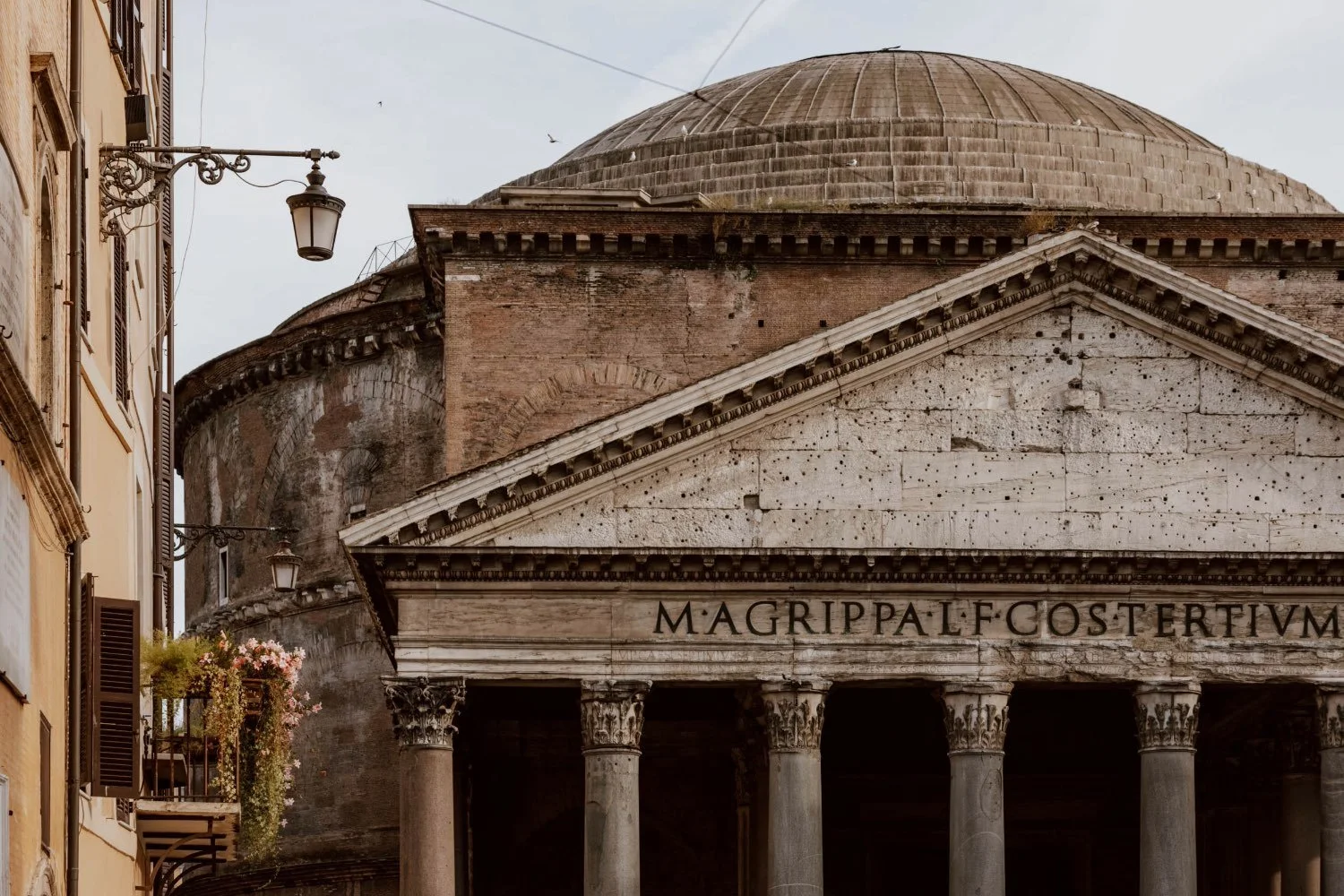
The most remarkable building in Rome, and arguably one of the greatest surviving from antiquity, the Pantheon should leave one awestruck.
And with a very sore neck.
A monument to both faith and human ingenuity, for over two thousands years engineers, architects, Emperors, faithful, scientists, classicists, astronomers, aesthetes, mathematicians, pilgrims, artists, historians, romantics and lovers of light have found themselves inspired by both its beauty and what it represents.
It remains a privilege to step inside - to look up at the same pristine dome as the Romans so long ago - and is undoubtedly an unmissable activity for any first-time visitor to the Italian capital.
Greatness is a vastly overused word, but this building is dripping with it.
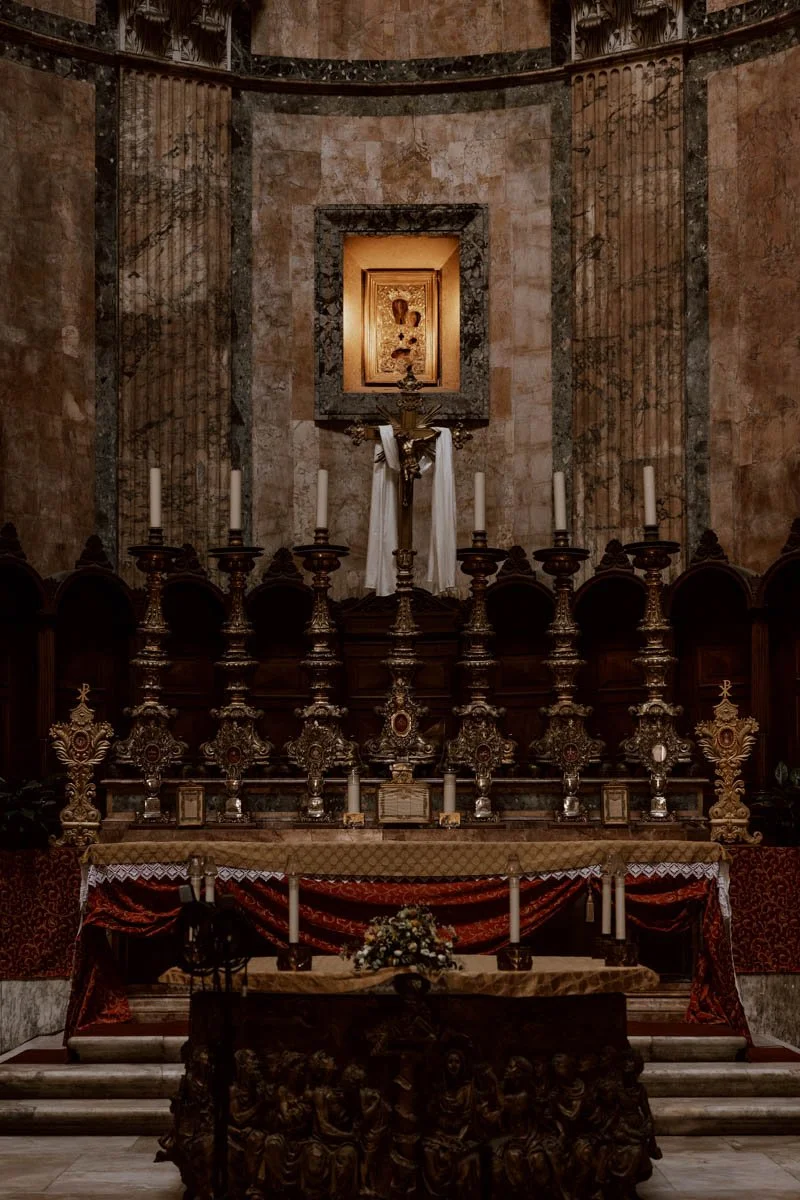
Conceived as a prestigious temple to many gods in Ancient Rome, the Pantheon has been known as the Basilica di Santa Maria ad Martyres since its Christian conversion in 609 AD. Still an active church and place of worship with the tombs of poets and kings, thousands of people visit it every day.
Unfortunately, this can diminish the experience.
In our practical guide to visiting the Pantheon in Rome, we’ve shared everything you need to know to learn from our mistakes. From tips on tickets and queues, the essential context and history, plus advice on what to wear, the crowds, how long you really need, and what to pair it with nearby, it will hopefully help you make the most memorable, meaningful experience possible.
This is our guide to visiting the Pantheon: Rome’s House of Gods.
The Pantheon Essentials
What / Architecturally astounding Roman temple from126AD, now the Basilica di Santa Maria ad Martyres church with tombs of poets and kings
Where / Piazza della Rotonda in central Rome, a 25-minute walk from the Colosseum
When / Open every day from 9am-7pm, but closed for religious services 5pm Saturdays and 10.30am Sundays
Cost / Standard tickets cost €5 or €2 for EU citizens aged 18-25. Free for pilgrims.
Buy / You can buy official tickets online here, or the recommended skip-the-line-ticket + audio guide with free cancellation is available here
Know / All visitors expected to dress and act appropriately in this sacred, religious building
Crowds / Expect it to be very busy, and try to book the quieter morning time slot
Plan / Set aside 45 minutes to enjoy it, and look up at the roof and oculus as often as possible
It Is One Of The Greatest Roman Buildings
If ruins or history lessons at school never did it for you, it is within the walls of the Pantheon where one can truly understand the magnificence of ancient Rome.
Emperor Hadrian (yes, he who built the eponymous wall in Britain) is the one chiefly responsible for completing the Pantheon we know today. Built more two thousands years ago in place of another which had twice burned down, it was originally a pagan temple for many gods, reserved for the elite of Roman society.
This isn’t just any old building though.
Built according to perfect classical proportions, it is rich in symbolism: a sphere the shape of the earth could fit inside, an oculus connects heaven and earth, and a sunbeam casts its light in specific places on specific days
The Pantheon is not simply remarkable or important due to its age or the fact it is Roman: it was a remarkably important Roman building since its creation.
One where an Emperor would be drenched in sunlight, and the line between gods and men was at its thinnest.
If this was simply another ruin, all that ingenuity and flourish would still be a fascinating testament to how the Romans thought and what they did for us. Yet, it’s the fact that so much of the original Pantheon has remained in such pristine condition that makes it doubly exceptional.
You are literally seeing what they saw.
Ironically, its conversion from a pagan temple to a Christian church in 609 AD is widely thought to be the key factor that enabled its survival. A couple of centuries after monotheistic Christianity became the official religion of the Roman Empire, Emperor Focas donated it to Pope Boniface, who renamed it Basilica di Santa Maria ad Martyres - and it remains an active place of worship today.
Here at Along Dusty Roads, we are fortunate enough to have visited Pompeii, Herculaneum, and the Colosseum - and many far-flung wonders of the world from different civilisations - and part of us is so glad to have left it until the age of 36 and whatever age Emily is these days, to see the Pantheon.
It would have made so many others seem inferior in comparison.
You Should Buy Your Ticket in Advance
In July 2023, an entrance fee was introduced for visitors to the Pantheon and there are now four ways to purchase your ticket:
Option One | The best place to purchase your Pantheon ticket in advance is via this section of the official Musei Italiani website.
Simply click on ‘bigletti’ to pull up the availability calendar and hourly time slots. The name of each visitor is required, and you are also rather annoyingly required to create an account for Musei Italiani in order to buy them. You will receive a QR code ticket via e-mail.
It’s €5 for a standard full-price ticket and €2 for EU citizens aged 18-25, but remains free for under 18s, disabled travellers and pilgrims.
Option Two | The official website of the Basilica di Santa Maria ad Martyres allows you to purchase various guided tours, plus a combo audioguide/entry ticket. You are currently unable to purchase standalone Pantheon tickets on their website. The audioguide and entry combo tickets costs €15 per adult, €10 for children up to the age of 17.
Option Three | You can also easily purchase fast-track tickets via aggregators such as GetYourGuide and Viator.
As we actually didn’t know where/how to buy the official tickets until we had visited the Pantheon, we purchased this Pantheon Fast-Track Ticket and Official Audio Guide a few days before we arrived in Rome.
It turned out to be the exact same €15 ticket + guide combo sold on the Basilica di Santa Maria ad Martyres website, at the same cost, but the main benefit of buying it on this website is that you can cancel up to 24 hours in advance for a full refund.
Check prices and availability here.
Option Four | Alternatively, there are two or three Musei Italiani ticket machines directly outside the Pantheon entrance (on the left), but the queuing time for these can be quite long. Also, as with the Vatican City and Colosseum queues for ‘on the day’ tickets, this has no shelter and would require you to stand in the sun for anything up to 30 minutes or more during peak Italian summer.
As well as letting you get a better time slot, buying the ticket in advance also gives you access to the much quicker, shorter ‘pre-bought tickets’ queue on the right hand side at the main entrance.
The Crowds Are A Big Issue
The Pantheon received around 9 million visitors annually when it was free, and part of the rationale for the introduction of the entrance fee was to better control numbers in one of Italy’s most visited cultural monuments.
We are not sure how much of a success it’s been.
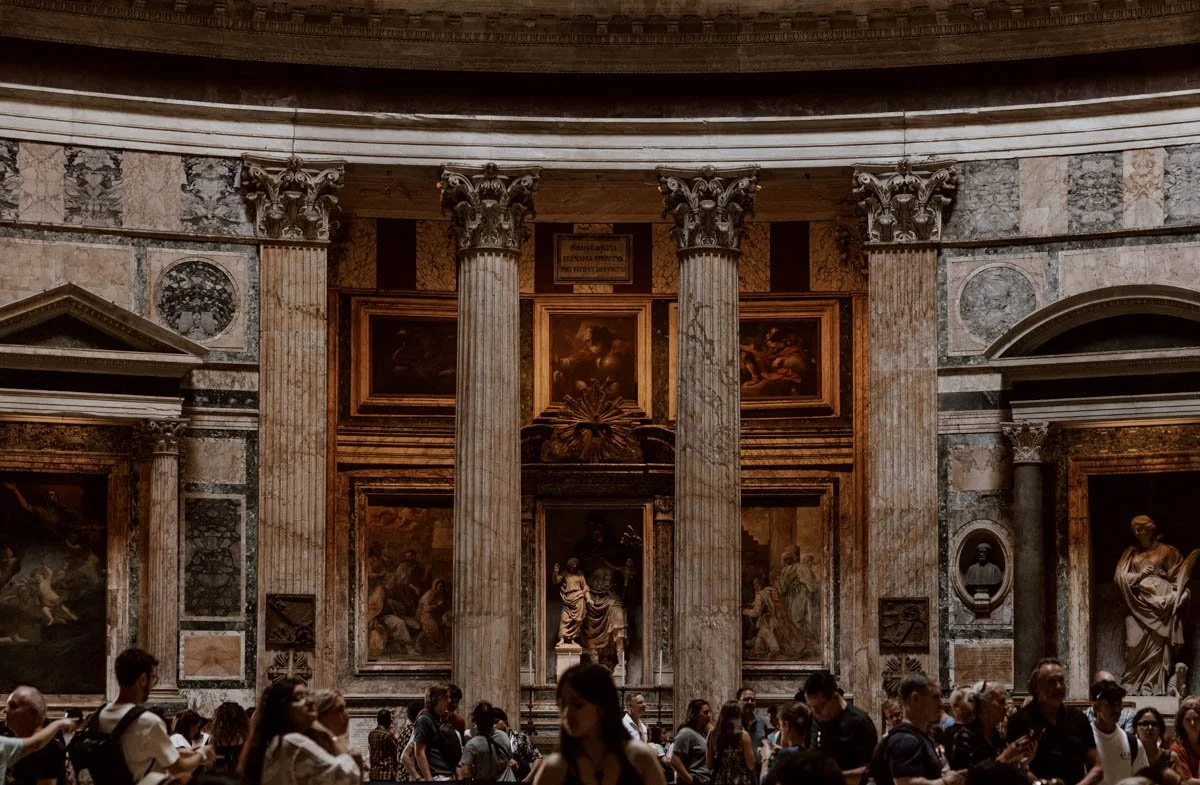
Both inside and out, it felt a like an overwhelming and overcrowded Disney-fied version of Rome, with long queues, large groups, and just far too many people for the space (though the Vatican Museum a few days later made it feel positively serene…)
When travelling, our two tried and trusted methods to avoid the worst of the crowds at big tourist sites are to either get up super early for first entry or turn up in the final few hours when most day-trippers and large tour groups have left.
Unfortunately, for an incredibly busy Rome in summer, the latter didn’t seem to do the trick.
We went into the Pantheon just after 5pm and it was still super busy when we left over an hour later, just before closing.
Therefore, if you really would like to have a quieter, more compelling experience - and not basing your visit around the position of the oculus sunbeam - we’d suggest trying to get a ticket for the first time slot of the day (9am-10am). From all the researching + refreshing we’ve done on the website, it appears that the Pantheon tickets and time slots never actually seem to sell out - underlining that they really do let far too many people in there at once - so securing that slot is very much possible.
Failing that, just arrive with your expectations set in high season, or make the absolute most of your time there if visiting in the quieter autumn and winter months.
Personally, we would support it if they significantly cut down the numbers who can enter in each time slot and had a much stricter fixed entry/exit process in order to preserve some of the experience and marvel for everyone. This works fantastically well with The Last Supper in Milan and the Veiled Christ in Naples, and we see it as an inevitable for the Pantheon.
Plan // If you’re in the middle of working out your itinerary for Rome, then make sure to read our guide to securing the best tickets for the Colosseum.
The Oculus & The Sunbeam
You should have a sore neck when you leave the Pantheon.
Whilst the tombs of poets and kings, the iconography and Christian art, the marble floor and pillars are all remarkable, the most captivating part of the Pantheon is above your head.
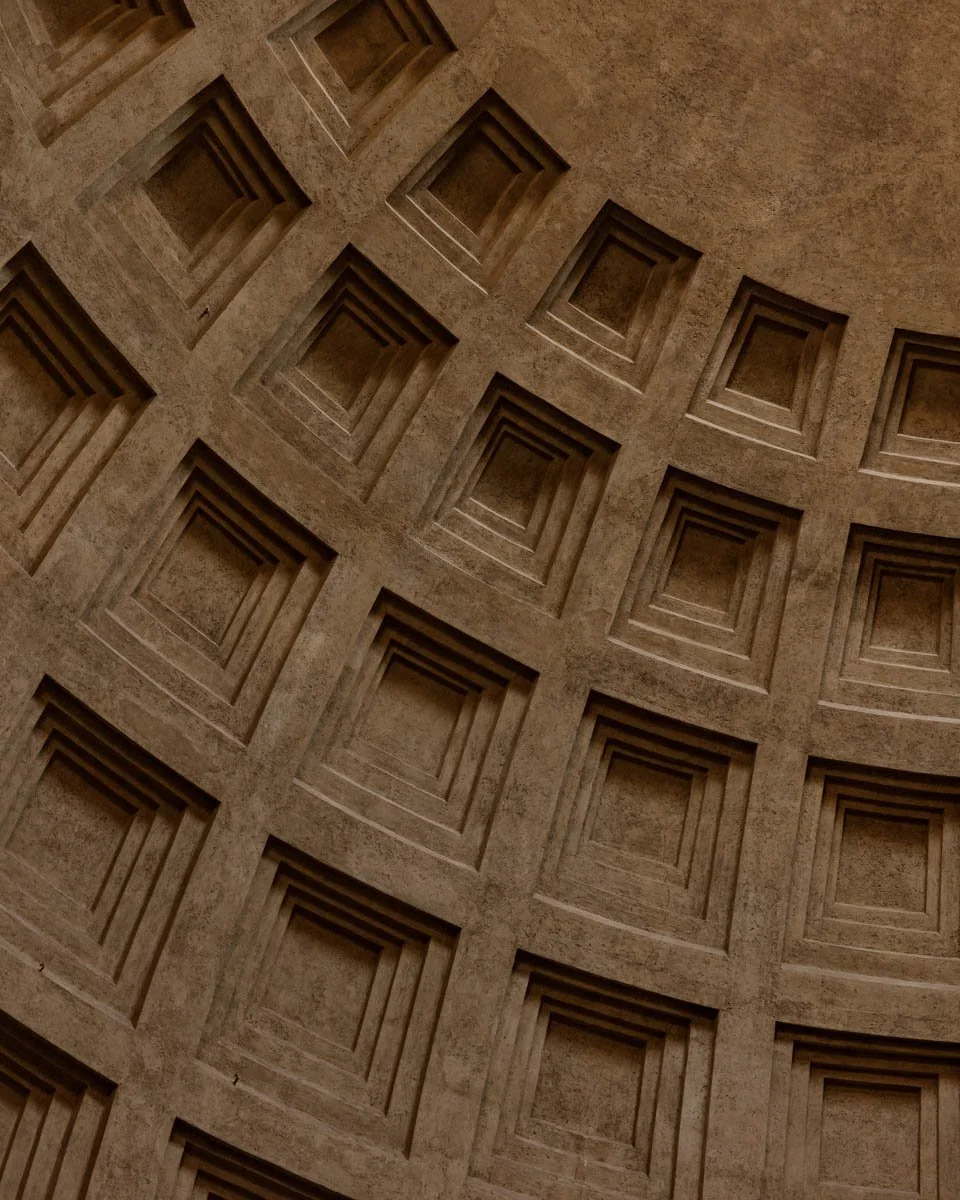
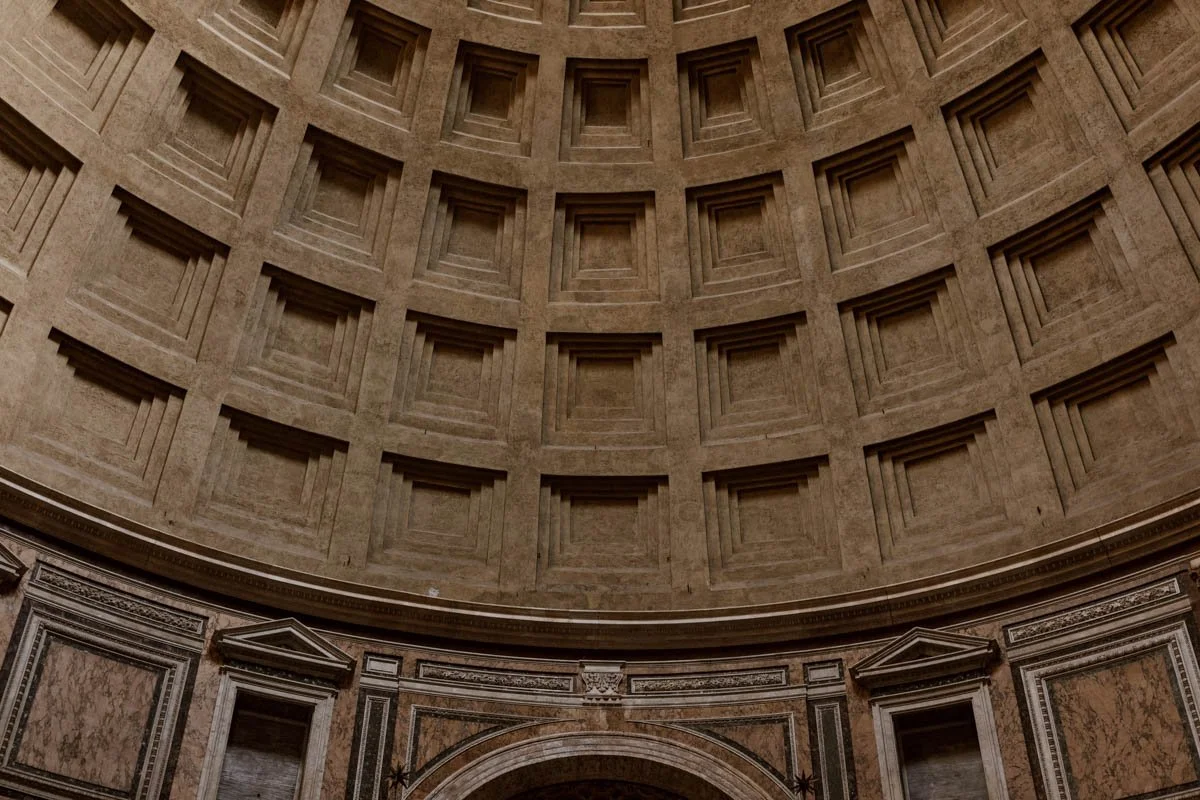
A masterpiece of architecture that has confounded and inspired for two millennia, the Pantheon’s wholly concrete hemisphere (yes, concrete has existed for thousands of years) should steal the show.
The largest in the world* until Brunelleschi built his giant cupola for Florence Cathedral, it does not feel like it should have been imaginable, let alone feasible, for the Romans to have constructed the 142-foot high dome.
It feels so modern, so pristine.
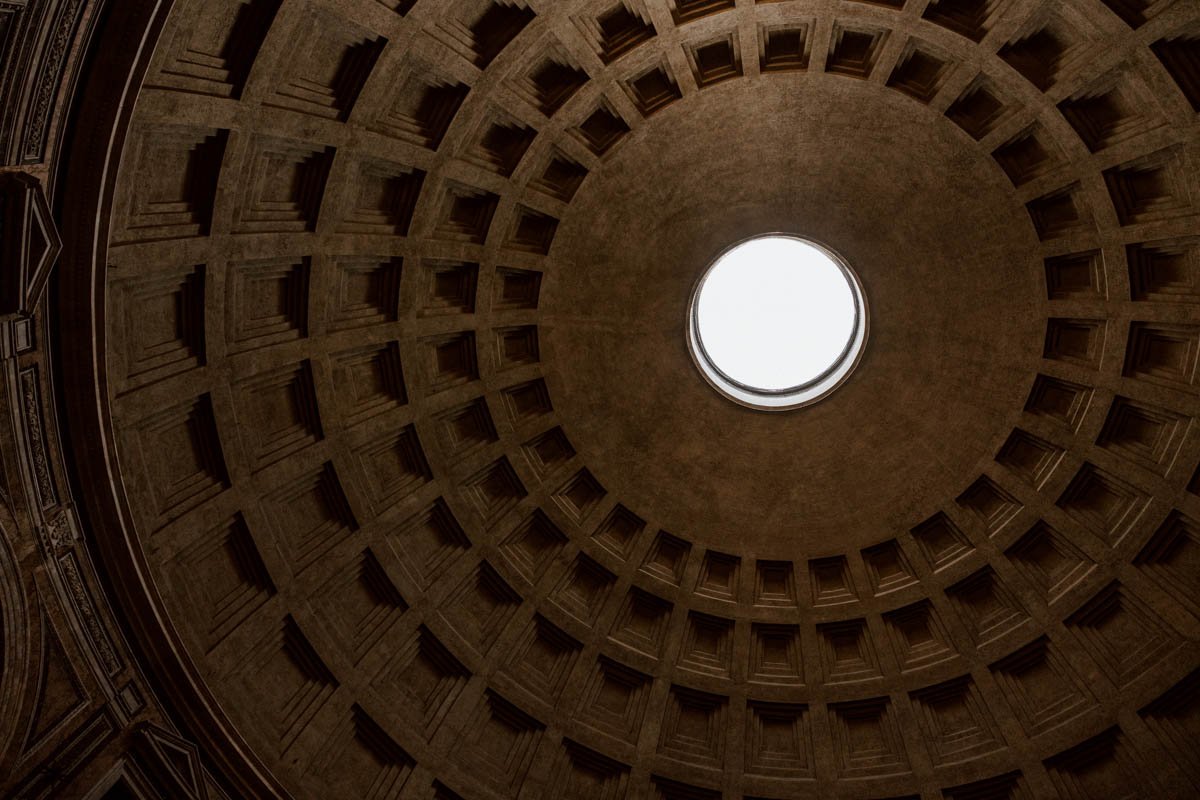
However, it is the boldness, ingenuity, and rationale of the nine-metre wide opening at its apex which is most awe-inspiring. Known as the oculus (eye), it provides the sole source of light within the Pantheon and has always been uncovered in order to provide an unbroken link between earth and heaven, a direct connection to the gods.
As if all that wasn’t enough, the Romans decided to show off that little bit more: through the oculus, the sun shines a beam of divine light that traces the dome, walls, and floor of the Pantheon in a distinctive way each day of the year, according to astronomical and seasonal rhythms.
Think of it as a celestial spotlight of sorts.
This is why, in the Pantheon, one must stop taking selfies, stop blabbering crap about past trips or comparisons, and simply look up as much as possible in silence.
It isn’t simply to see exactly what the Romans saw, but to be inspired by what humanity can achieve and the constant, unbroken traces of the sun through the ages.
Travel Tip // There are certain days of the year to visit the Pantheon where the impact of the oculus and the sunbeam would be even more powerful. On April 21st - the anniversary of the founding of Rome - the light strikes the door at noon, which was supposedly also the moment the Emperor would time his grand entrance for the ceremony in a perfect piece of political ‘optics’.
Around midday on the summer solstice - the longest day of the year which usually falls around the 21st June - the sun beams directly down on the centre of the floor, which would be a spectacular thing to behold.
On the Pentecost - the seventh Sunday after Easter and a very important day in the Christian calendar - thousands of rose petals rain down through the Oculus like confetti.
If you’d like to know more about the science behind movement and angles of light in the Pantheon, this is a good explainer.
* Technically, it is still the largest unreinforced concrete dome in the world!
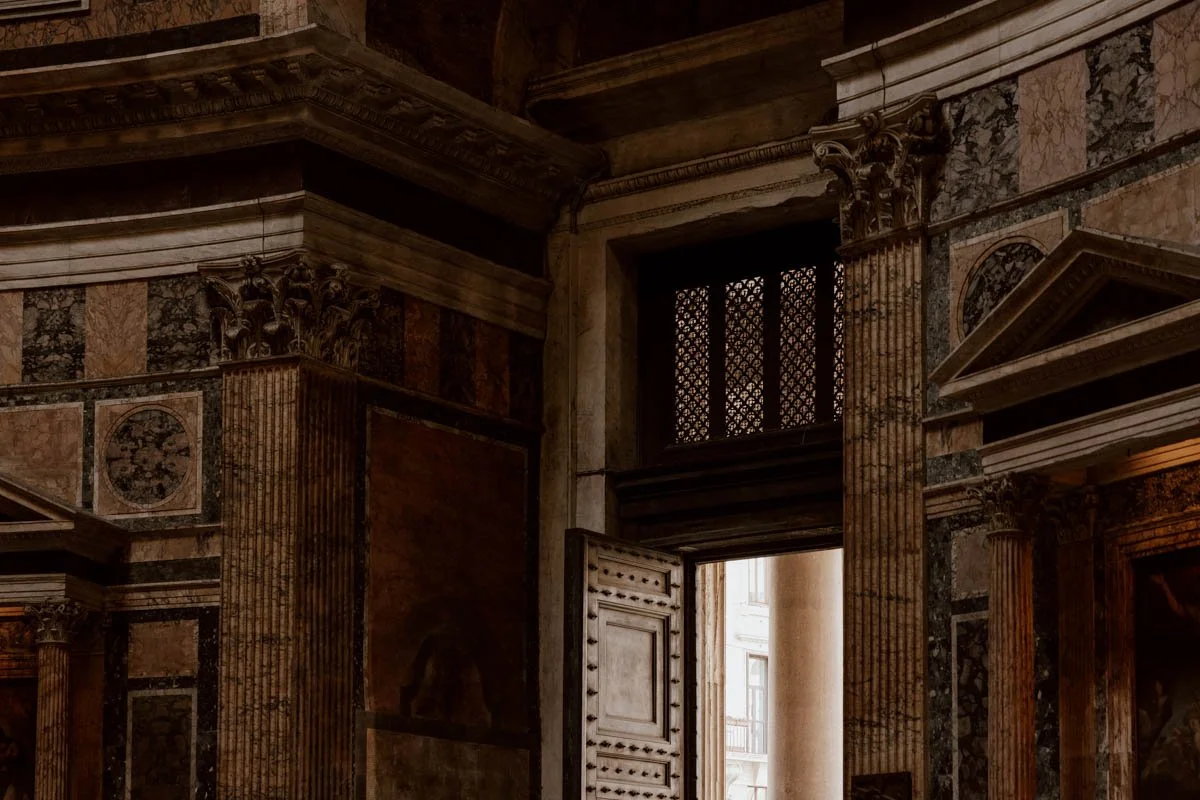
Get The Official Pantheon AudioGuide
We often turn up to old places and ruins on our own.
Sometimes it’s because the joy comes from discovering it independently at our own pace, sometimes it’s because we need to take lots of photos, and sometimes it’s because we’ve done quite a bit of context-setting reading beforehand, so don’t really need a guide.
However, as neither of us (rather embarrassingly) knew much about Rome’s Pantheon before this last-minute trip, we decided to get the official audioguide with our ticket.
Whilst it is certainly overpriced at €10 per person, it was at least a particularly well-voiced and structured one that gave us a lot of knowledge, context, and insights. The opportunity to put headphones in and sit beneath the oculus or stroll around the octagonal sides for half an hour also blocked out aspects of how busy and crowded it was, and certainly enhanced the experience.
The official audioguides are available at the kiosk inside the Pantheon, or you can reserve one alongside your ticket here: Pantheon Fast-Track Ticket and Official Audio Guide
In order to collect an audioguide, you are required to hand over an official ID as a deposit. According to their terms, they will not accept anything but the original of either a driving licence, passport, or government identity card. Pictures on your phone or photocopies - our usual go-to for showing ID to get into tourist attractions - are not valid.
This is annoying, as the last thing we’d suggest doing in Rome is carrying around your passport unnecessarily.
Thankfully, they accepted Andrew’s driving licence as a deposit for both of us. If you don’t have an alternative to your passport, we would 100% understand why you decided against getting the audioguide - but do let us know in the comments if they accept alternatives.
Buy your Pantheon ticket + audioguide combo here.
Given the size and the set-up, we personally don’t think joining a tour is necessary for the Pantheon. However, if that’s a better fit for your travel style + curiosity in Rome, or you’d like to know lots more on the architecture, symbolism, and history, then the below have fantastic reviews:
· Rome: Pantheon Small-Group Guided Tour with Entry Ticket
· Pantheon Guided Tour with Skip-the-Line Entry
· Welcome to Rome: City Stroll & Pantheon with Gelato Tasting
Know // Note that only downside of opting for the ticket + audio combo is that you have to collect your ticket from the Welcome Desk of the Basilica of San Lorenzo in Lucina (Google Maps), which is just a few minutes’ walk away from the Pantheon. You can then go straight to the priority pre-booked tickets entry line at the entrance.
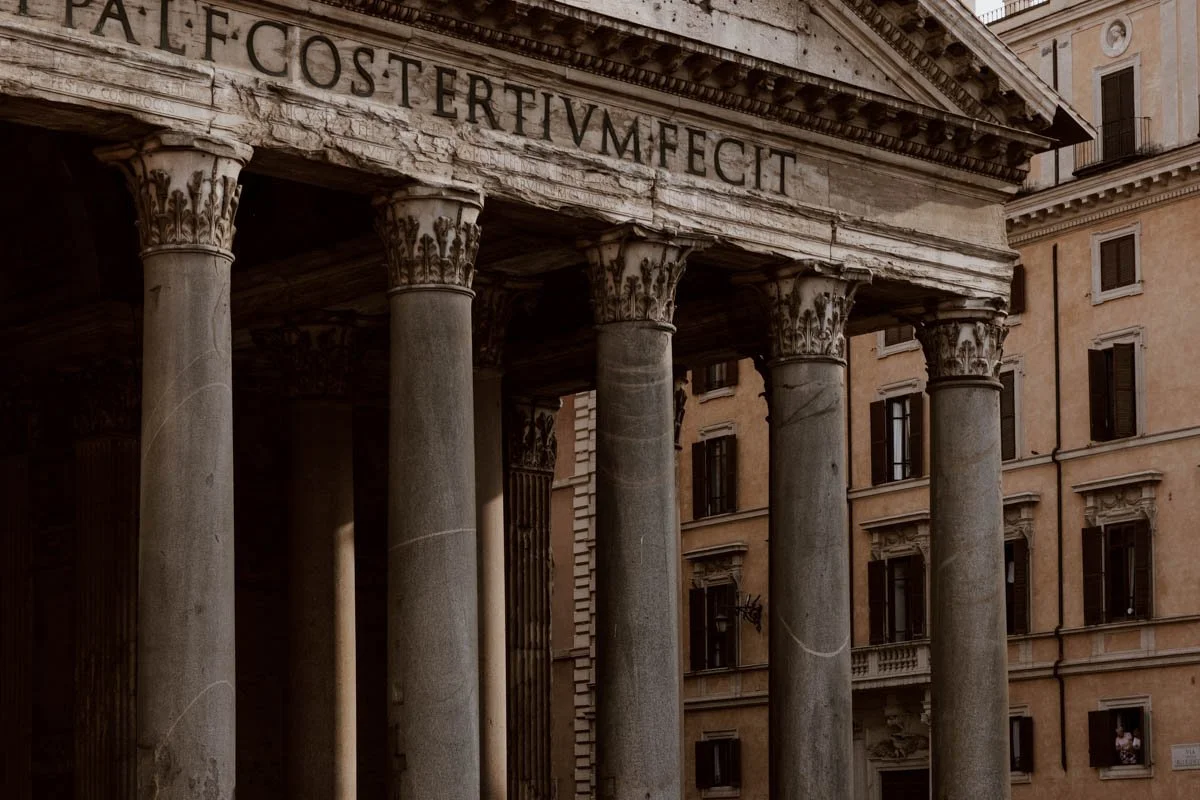
Dress & Act Appropriately
Given the importance of the Pantheon, and our experiences on many other Italian trips, it was a real shock to see how few people seemed to appreciate that this is still an active, important place of worship.
It wasn’t just the holiday attire, Instagram dresses, and preponderance of hats, but also the posing, the noise, and general lack of respect for place and people.
We don’t mean to sound curmudgeonly, but it pissed us off a lot and certainly tempered the faith and awe in humanity which the building inspired.
To be fair, we suspect a good amount of visitors may not have known that it was even a church, and the number of people in one space hardly encouraged decorum.
So, for the avoidance of doubt, one is not meant to enter the Pantheon unless dressed in a certain modest way. This is the same as the Vatican and many other Italian churches but, unlike them, we surprisingly didn’t actually see any enforcement of the dress code.
This is perhaps just another indication of how they have made too many sacrifices to tourism and permit too many people in there all at once, making it impossible to manage.
However, we’d feel great sympathy for any person visiting the Basilica as a pilgrim or to pray.
As you’re the best sort of traveller though, we know you’ll do it right. Here’s what you need to know:
· Appropriate modest clothing in this scenario means that shoulders and backs should be covered, and vests, sleeveless shirts, and shorts (above the knee) avoided by men and women; everyone should remove their hats on entry and within the church.
· Whilst making the most of your curiosity, try to keep voices low and act in the right way when taking photos + videos.
· If there are worshippers, give them space, priority, privacy, and peace.
· No food or drink is permitted inside.
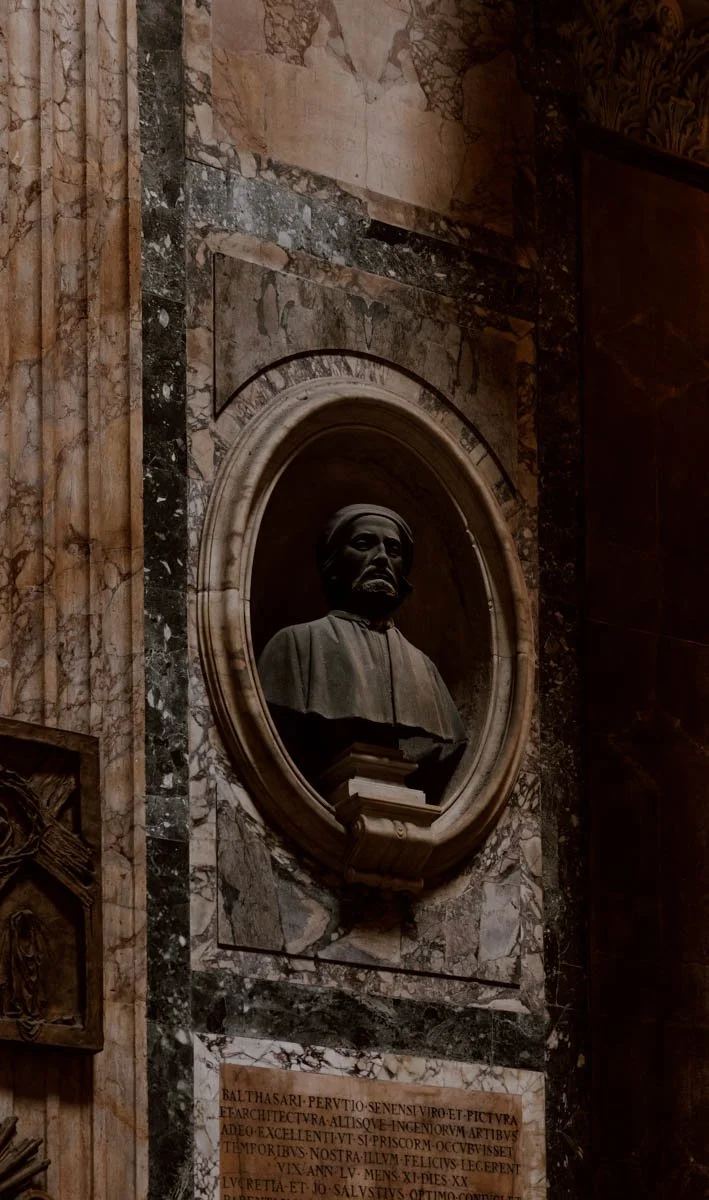
· Another reason to not simply treat this as TikTok backdrop is that the Pantheon contains the tombs of Vittorio Emanuele II - the first king of a united Italy- King Umberto, Princess Margherita, and the Renaissance artist Raphael.
Travel Tip // Expectations on female travellers are more restrictive in religious buildings, and so it’s a good idea in Italy to keep a light scarf in your daypack so you can pop in to churches and cathedrals you spontaneously come across, without basing your entire outfit around their modesty requirements.
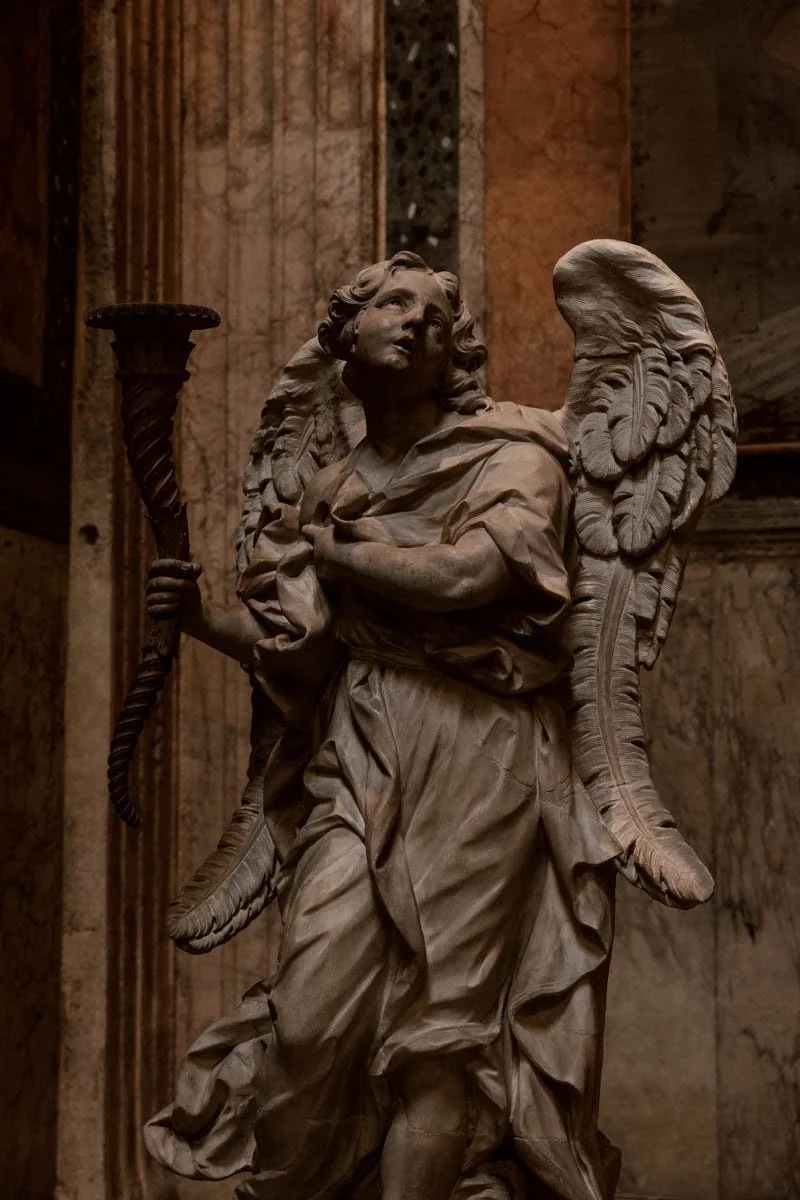
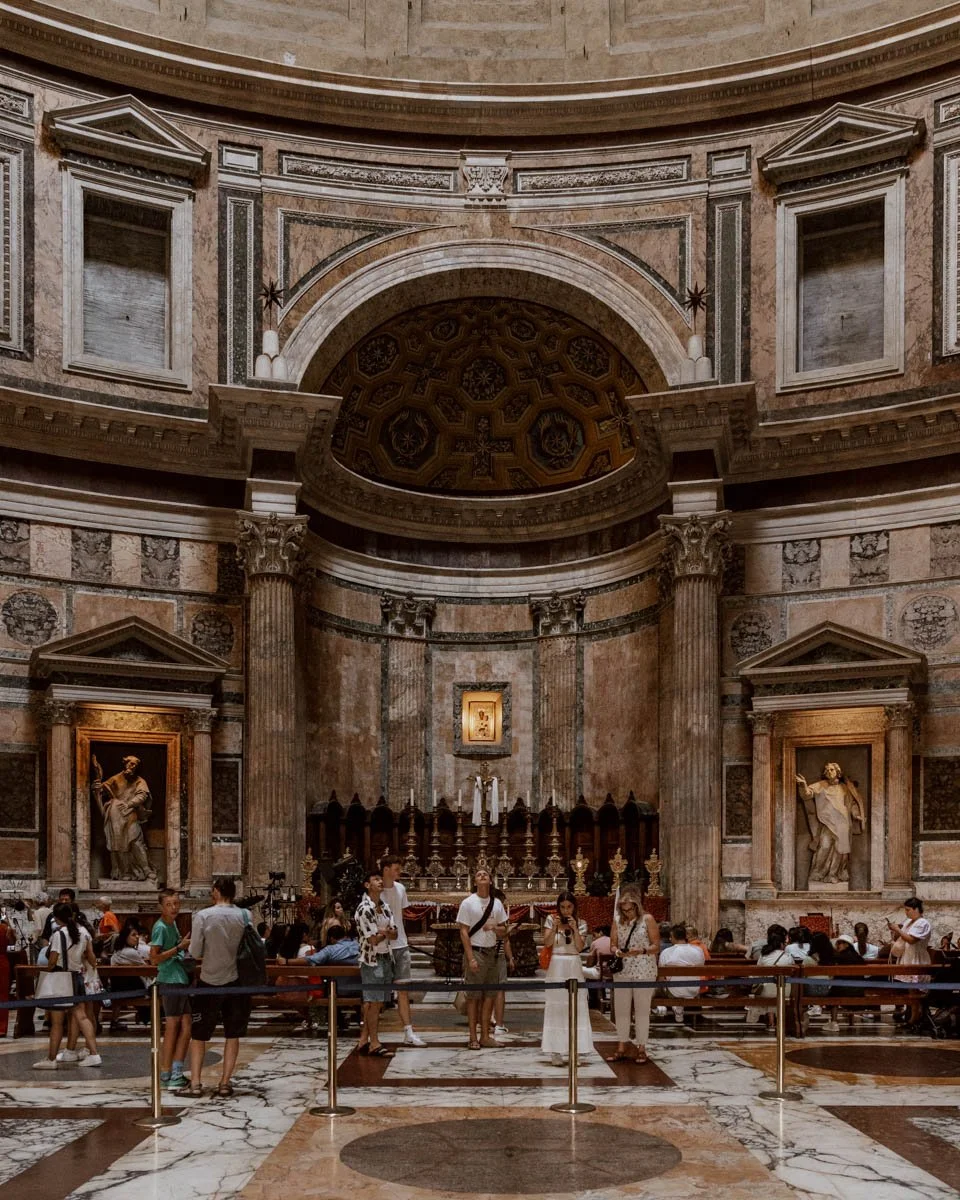
Stay Longer & Pantheon Pairing Suggestions
You will see so many masterpieces in Italy, and it is almost inevitable that you’ll become a little overawed and overdone by them.
The Pantheon really does deserve your curiosity and time though, and we recommend staying inside for at least 30 minutes. Walk around, read the signs, look up often from different angles, sit in the pews, see how the sunbeam has moved, and contemplate what it took to conceive and make this.
Don’t be one of the people who only give it five minutes attention, take the phone on the floor photo, then leave .
If you don’t have the audioguide, we’d even suggest putting some headphones in with choral or classical music to drown out the chatter and connect.
What to do before or after you visit the Pantheon?
Given how incredibly busy and touristic they are, we don’t recommend hanging around in the piazza outside the Pantheon or having an aperitivo in the surrounding streets. However, as the Pantheon will only takes 30-60 minutes of your day, it absolutely makes sense to combine it with your visit to a few more of the best things to do in Rome.
We suggest pairing it with a wander in Piazza Navona (Google Maps) and a stop at Chiesa di San Luigi dei Francesi (Google Maps). Just three minutes’ walk away, this treasure chest of a Baroque church is free to enter and has THREE Caravaggio paintings hanging in a single chapel. The Italian artist is Andrew’s absolute favourite, so we seek him out every time we’re in Italy; Rome actually has more of his paintings displayed than anywhere else. However, to be able to see three together in their intended setting for no entry fee makes this a unique, unmissable experience.
There is also a Caravaggio and a Raphael within the nearby Basilica of Sant’Agostino in Campo Marzio (Google Maps).
If you have the time, do check out the delightful little Emporio Centrale shop too (Google Maps) and, as the Trevi Fountain just 10-minutes away, it makes to stop there on the same day as the Pantheon (but just be aware that it’s super busy all the time unless you arrive before the crack of dawn).
If you’d like to join a small-group tour as you visit this part of the city, which includes time in the Pantheon, check out the highly-rated ‘Welcome to Rome Walking Tour’
The Colosseum and Roman Forum is a 25-minute walk from the Pantheon, whilst Vatican City is a 35-minute walk. Given the ridiculous overcrowding within the Vatican Museums and St Peter’s Basilica - which necessitated a stiff drink or two afterwards - we personally cannot recommend heading there on the same day. Instead, it’s going to be much more enjoyable to pair the Pantheon with the open-air Colosseum, but you will have to decide which one to prioritise an early, uncrowded morning at over the other.
Plan // How To Buy Colosseum Tickets (Even When It’s Sold Out)