The Best Things to Do in Palomino | Colombia's Backpacker Beach Town
Palomino is Colombia’s ultimate backpacker town, and this guide we’ll share with you everything you need to know to plan your visit including the best things to do in Palomino, where to stay, restaurant restaurants and - best of all - where to meet the cutest troupe of doggies, and do your bit to help the local animals.
Updated January 2026
Palomino is the sort of place which changes your plans.
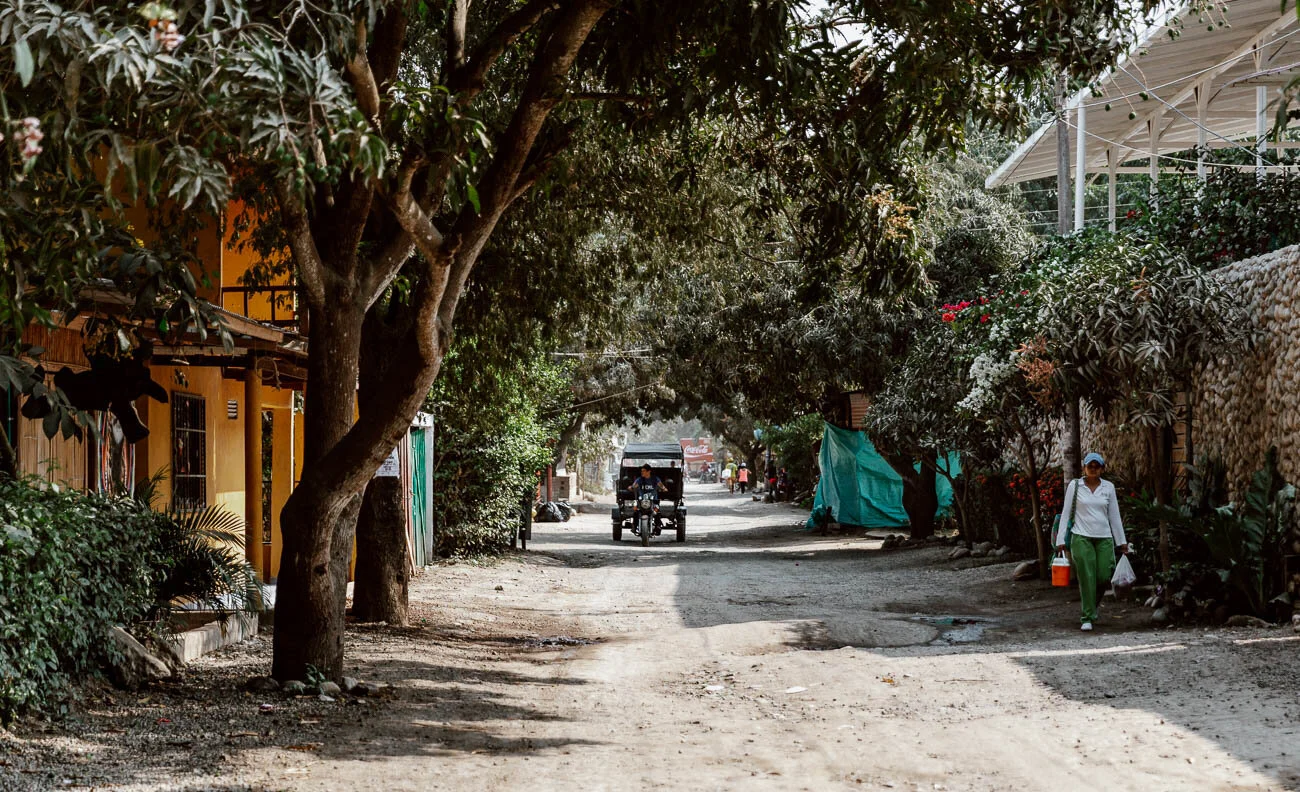
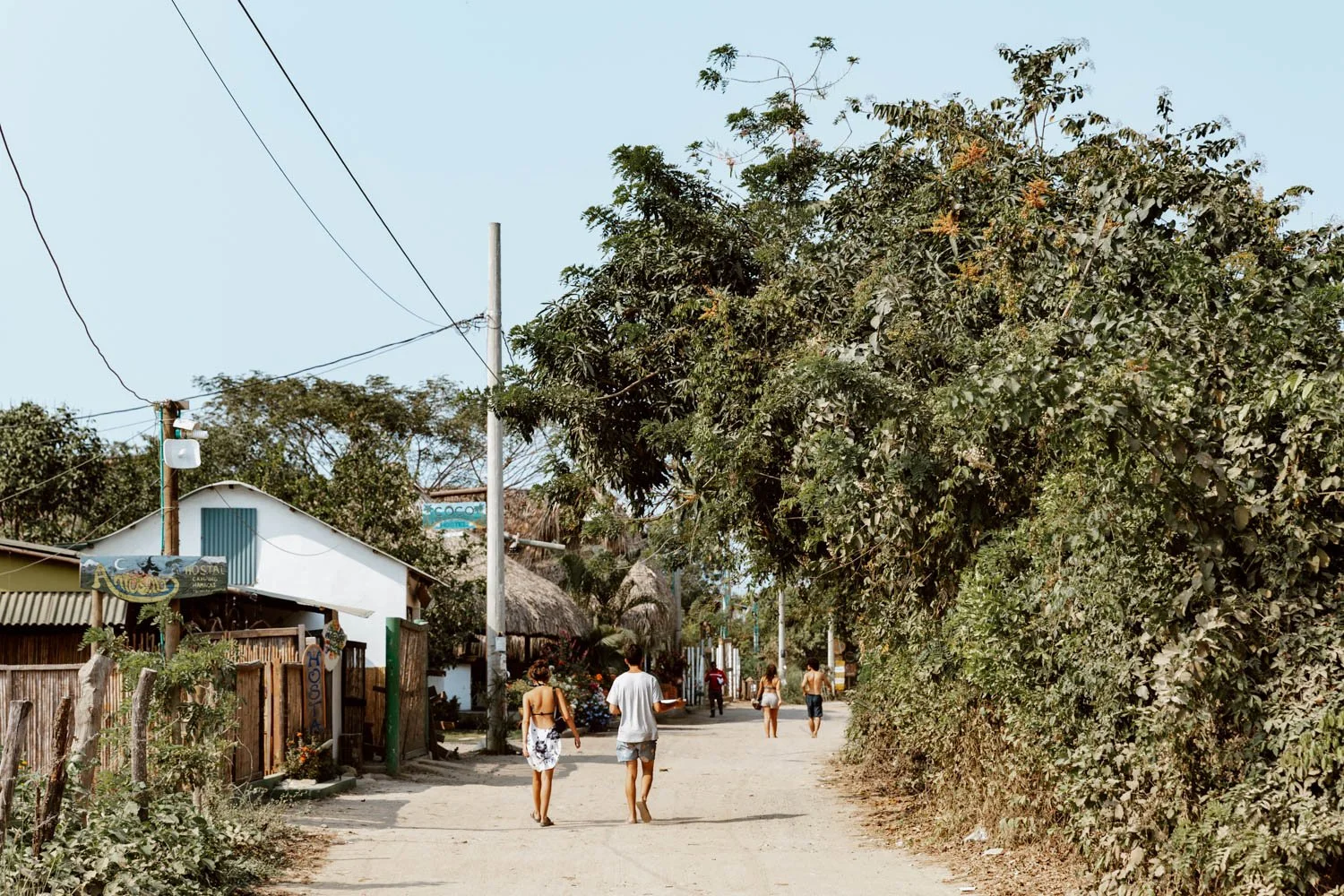
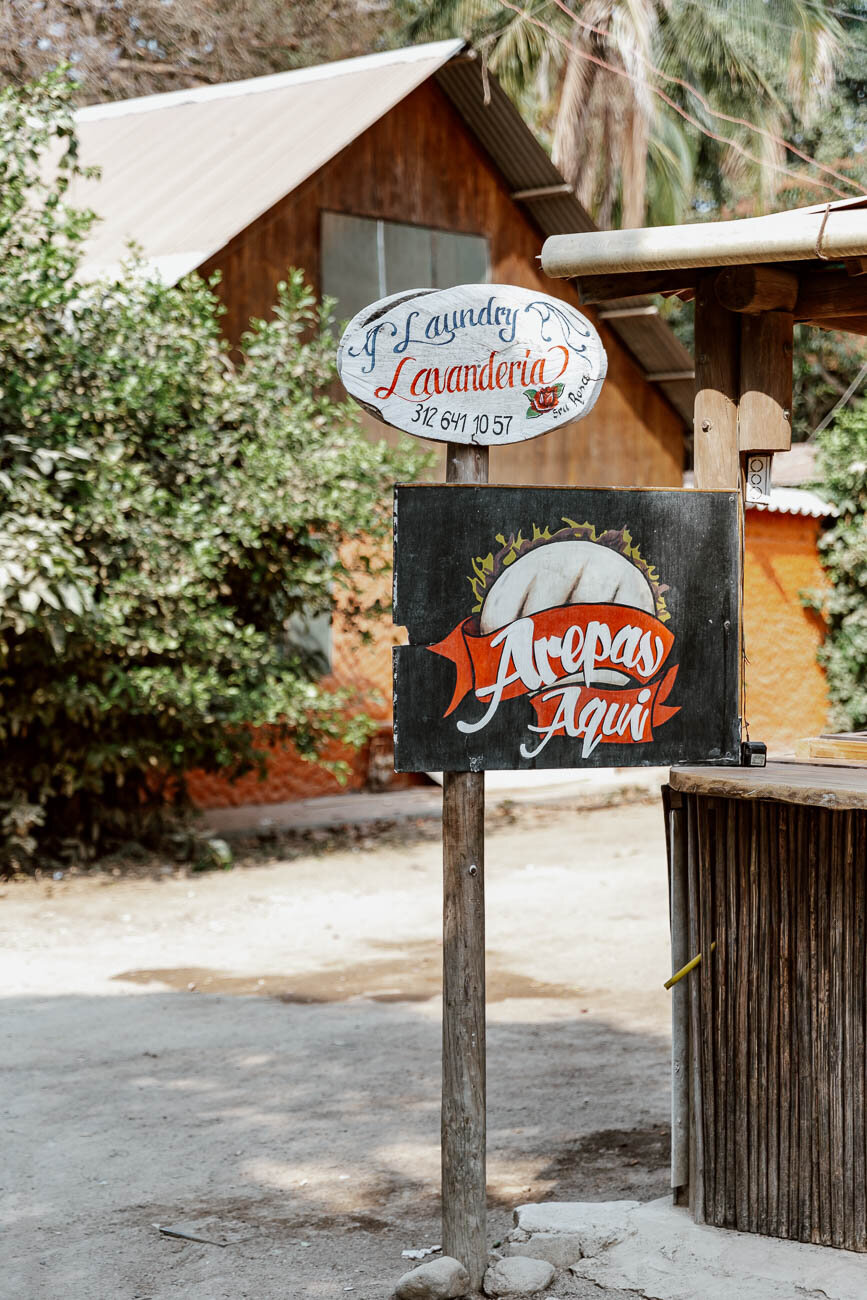
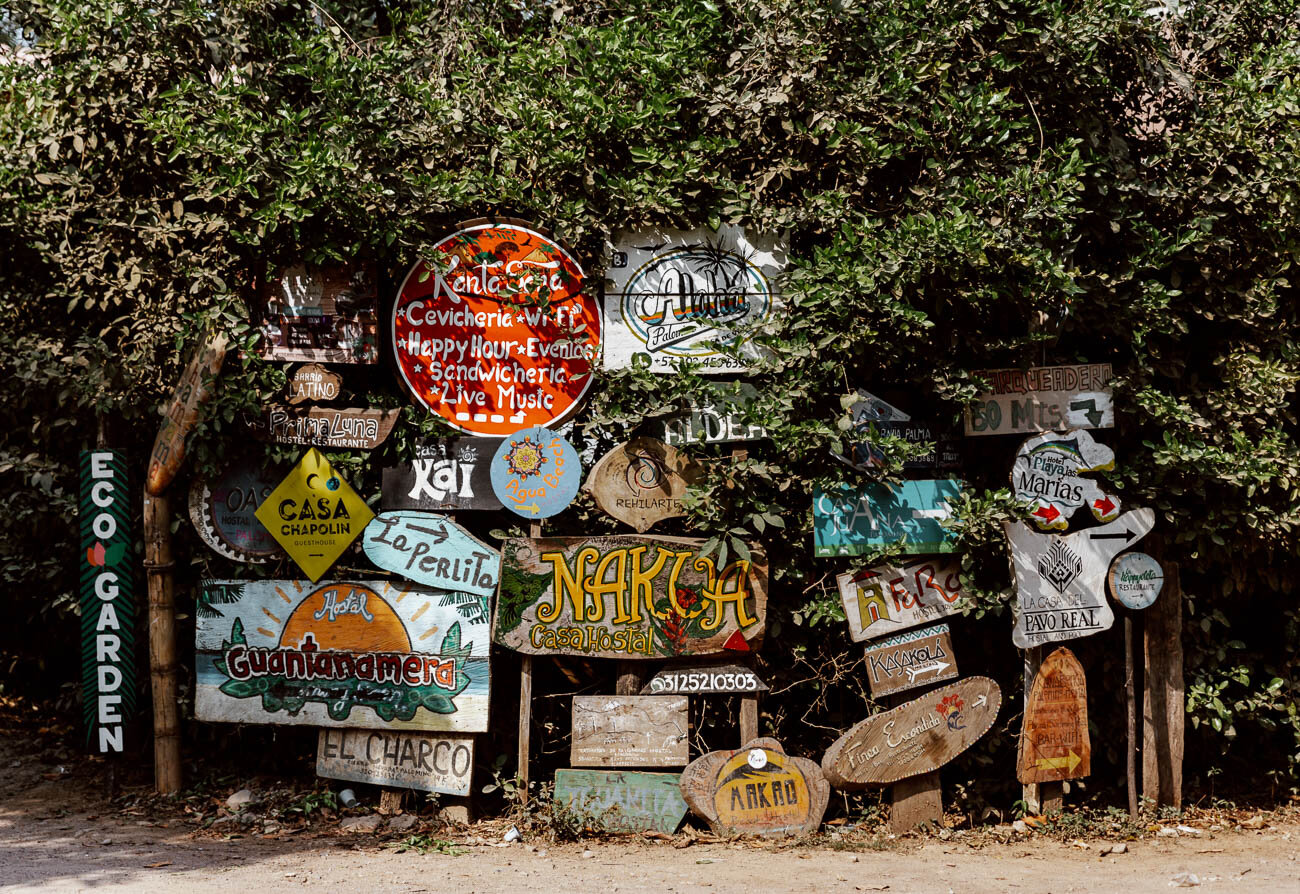
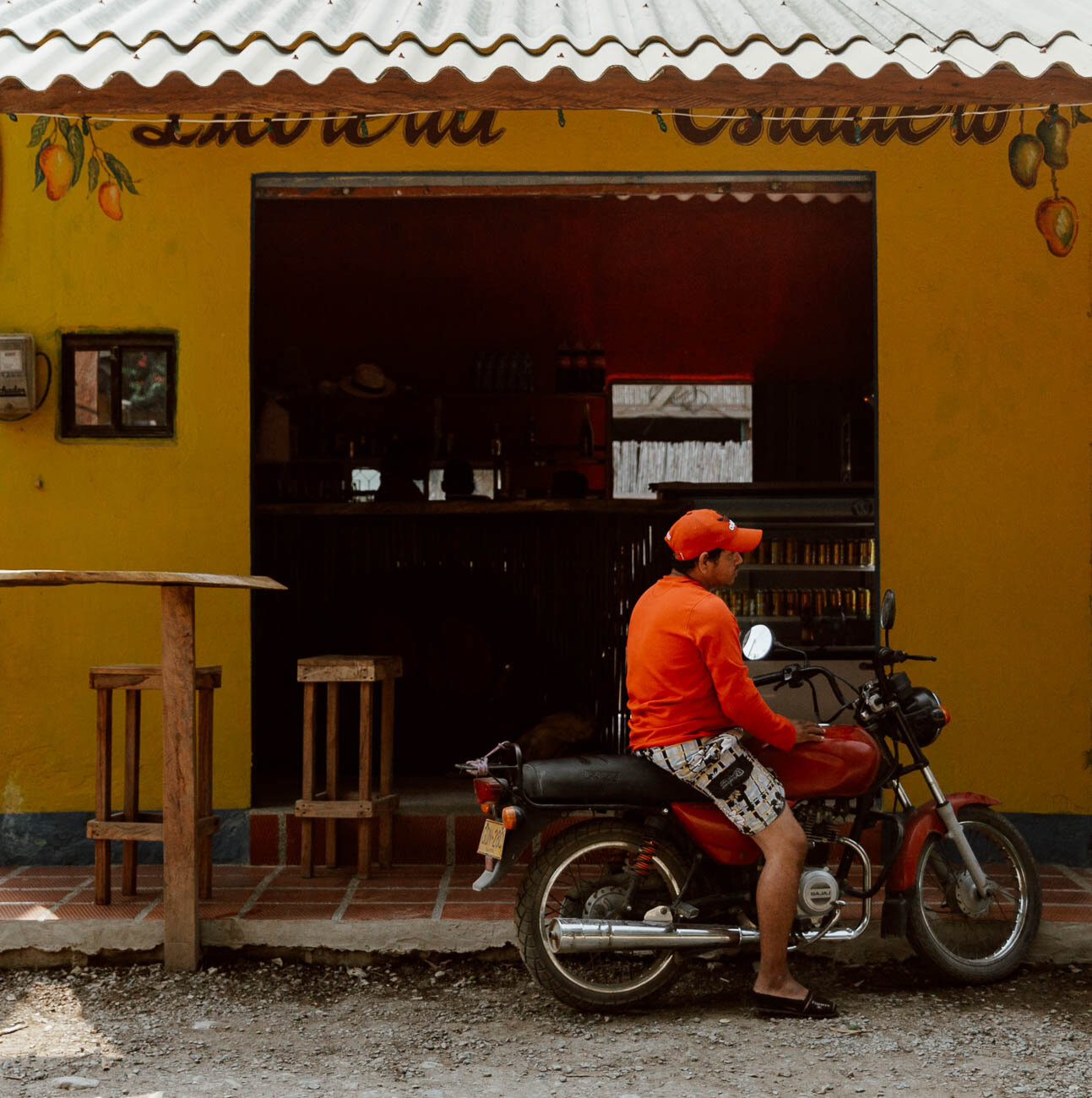
Its pace is slow, its air dry and salty. Its makeshift network of dusty streets, marked out by colourful handpainted signs for homes and hostels, lead through green fields, flowered verges, and open up to the wild sea. There are wooden shacks set up by locals to sell juices from fruit plucked from not too far away, open-sided bars and restaurants with tree trunk seats and tables where travellers shoot the breeze, and stalls laden with jewellery of copper, brass, and almost gold designed, chiselled, and hammered only that morning by the travelling artisan pop up on random corners.
On mainland Colombia, it's the closest place you'll find to the type of backpacker and hippy beach bum destination that is common place across south-east Asia. For some of you right now, that may be exactly what you're looking for; for others, that statement alone may be enough to put you off visiting.
As our visit to the village fell towards the end of our most recent four month South America trip, and directly after five days on the Lost City Trek, we craved somewhere exactly like it. Somewhere chilled out and sunny where we could laze on a white sand beach, sip a few happy hour cocktails, do a yoga class, share tales from the road with others over card games, eat some non-Colombian food, and not touch anything to do with hiking or route planning for four days.
Somewhere to feel a little bit more in 'holiday mode' rather than 'travel mode’.
Our first impressions of Palomino however, in that snapshot moment between the hot bus from Santa Marta dropping us off and our trundling walk from the side of the busy highway through abandoned paths, were not good. But, over the course of a couple of days, we adapted to the pace, the starry-eyed barefoot cliches of some, and began to revel in the laid back atmosphere of a place which bares little resemblance to how it once was only 10 or 15 years ago.

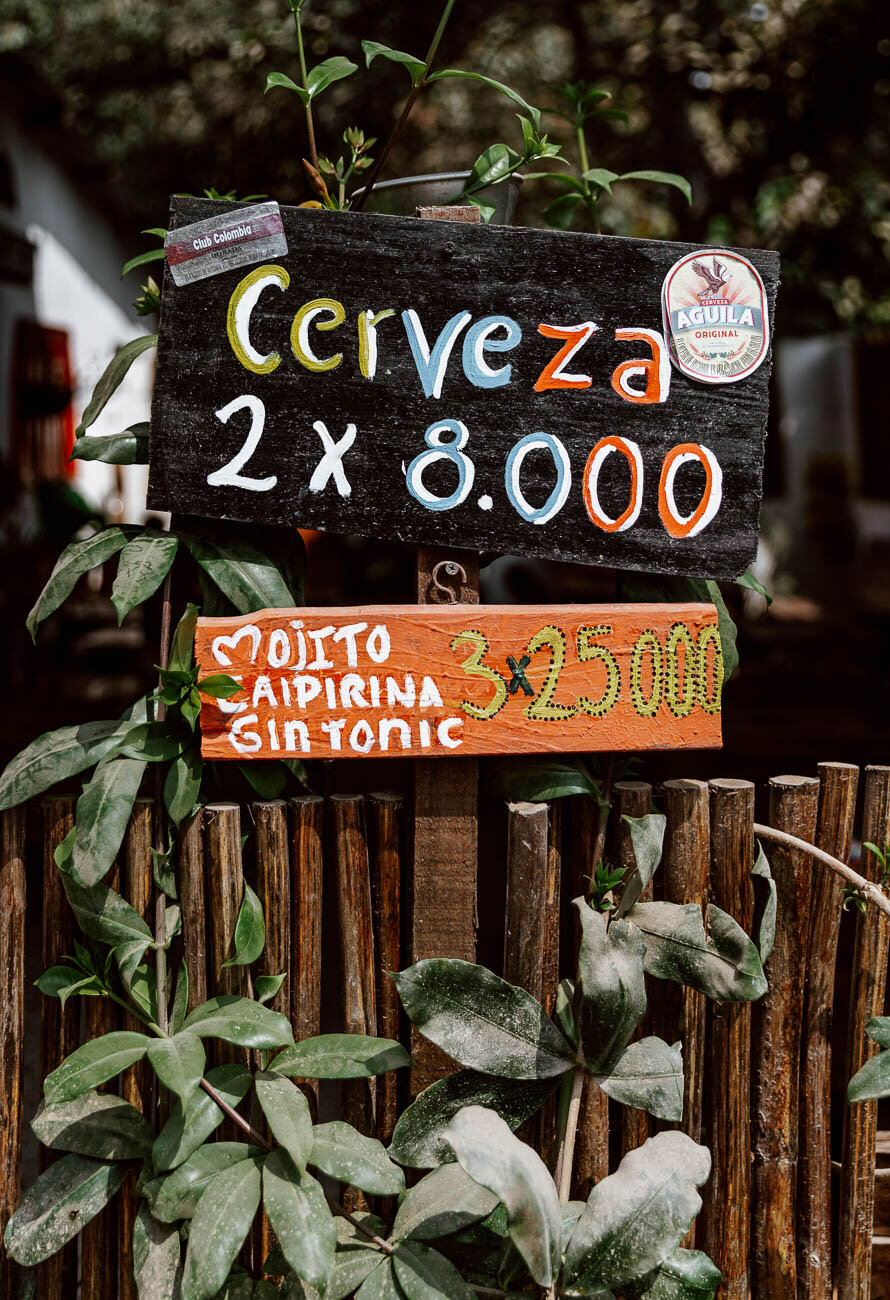

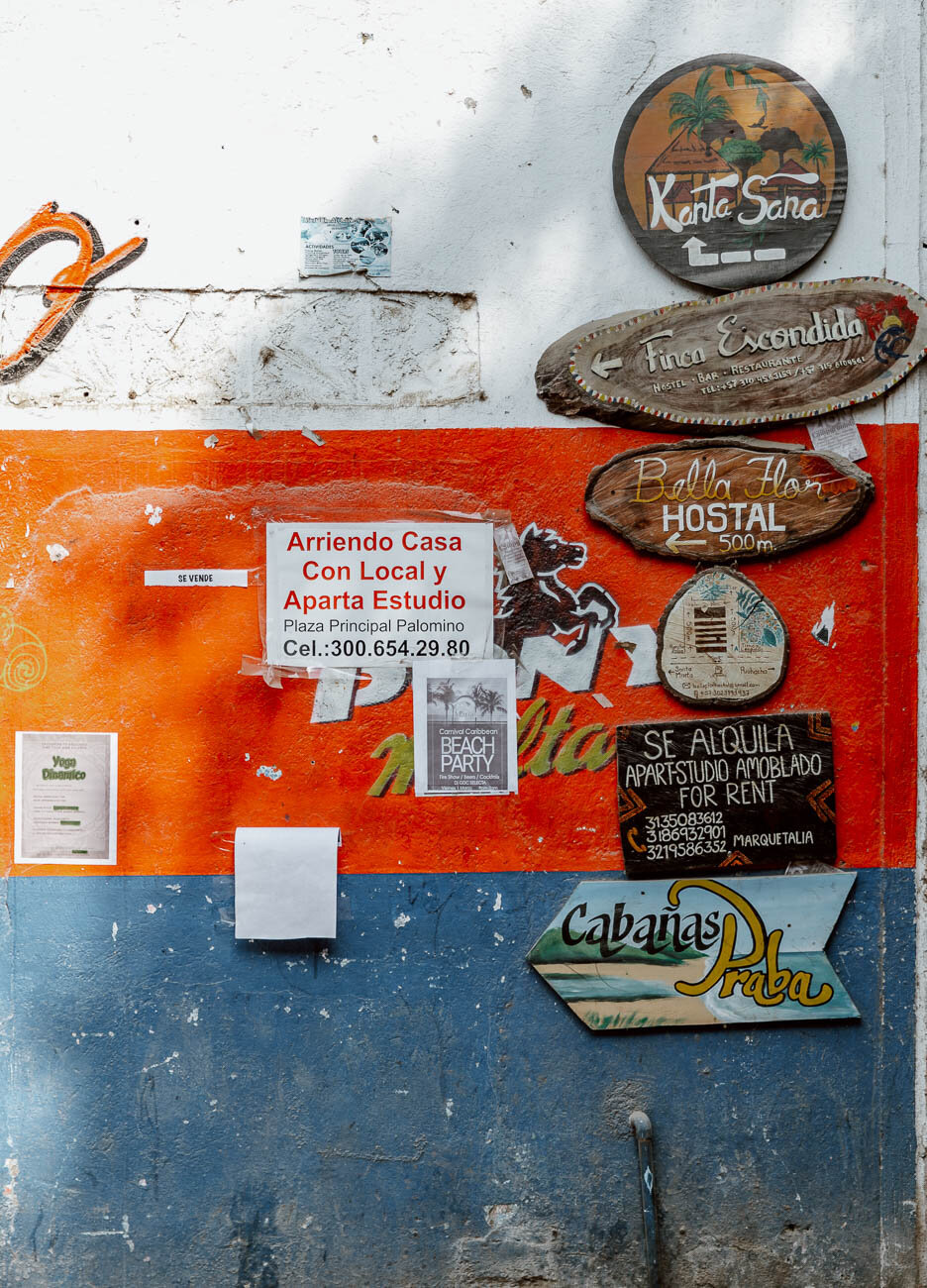
From its rural and remote beginnings off the side of a highway, Palomino village has developed into somewhere where tourism is deciding the destiny and character of everything. There’s a new bamboo walled and palm-leaf roof hostel or restaurant seemingly under construction off every street, and in any space where the field doesn't have roughly written 'no se vende' sign. A bunch of Colombia small-group tours now include a stop here. Palomino stands perhaps as the insurgent popularity of northern Colombia as a destination in microcosm. The pace of change in this small section of one of the poorest departments of Colombia has been very quick, and speaking to locals and longer-term residents, mis-managed and uneven. This will likely only increase in the next few years as more of us choose to stop in Palomino before or after Tayrona, or on their way to an off-the-beaten-track adventure in La Guajira, and Colombia's popularity continues to grow each year.
As ever, when tourism arrives in a place and spread, there are a myriad of positives and benefits. We just just hope that Palomino (and the travel community) learns from the lessons of Taganga a little further west along the coast so that it can thrive sustainably and responsibly rather than suffer the same fate of becoming overrun, debauched, and ruined in a very short space of time.
For the moment, Palomino is far from reaching that precipice. If it was close, we would tell you right now and this guide would have a different tone. However, we both really enjoyed it much more than expected and extended our stay not once, but twice.
After all, it's the sort of place that does that to you.
These are our favourite things to do in Palomino, plus advice on the best hostels for backpackers, a few excellent places to eat, and tips on transport connections to help you plan your itinerary.
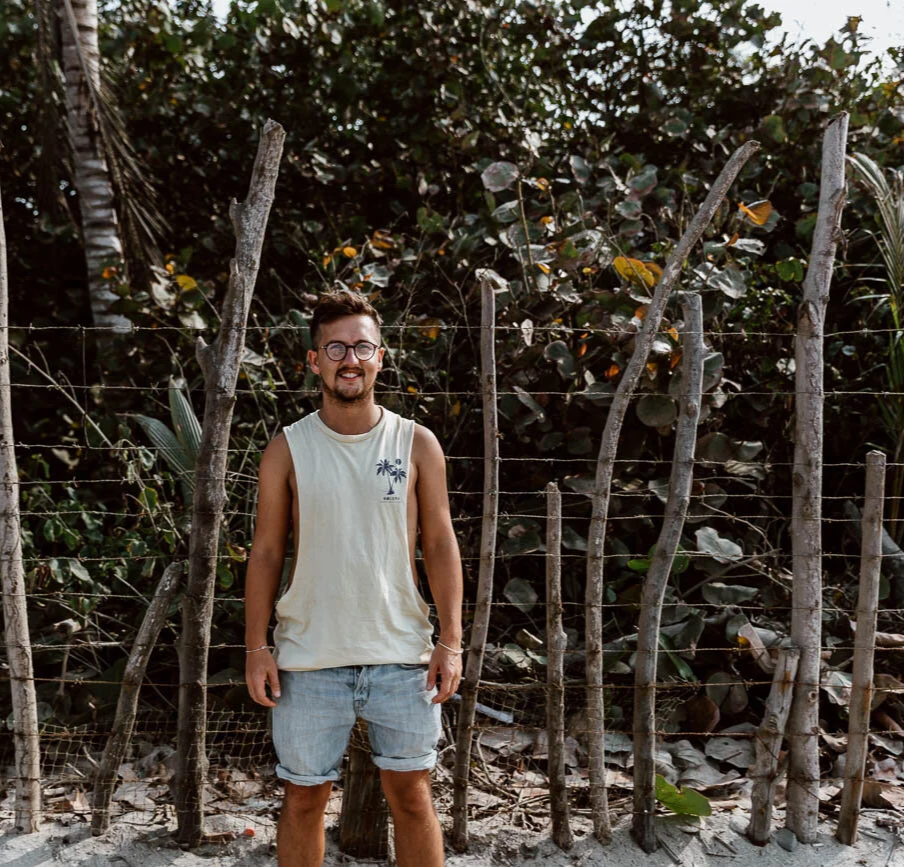
The Palomino Essentials
Hang / Out at the palm-lined beach
Help / The doggies at a local animal shelter
Take / A surf lesson (just try and avoid a windy day)
Visit / Tayrona National Park
Go / Tubing down the river (you can book this tour in advance)
Stay / Backpackers will love The Dreamer & Casa del Pavo Real, go beachfront and a little fancy at Makao Beach Hotel or, if you’d prefer an Airbnb, check out Casa Ocaso, Amazing House and Casa Ita
Our Favourite Things to Do in Palomino
Take A Beach Day
The reason that most of us travellers meander towards Palomino in the first place!
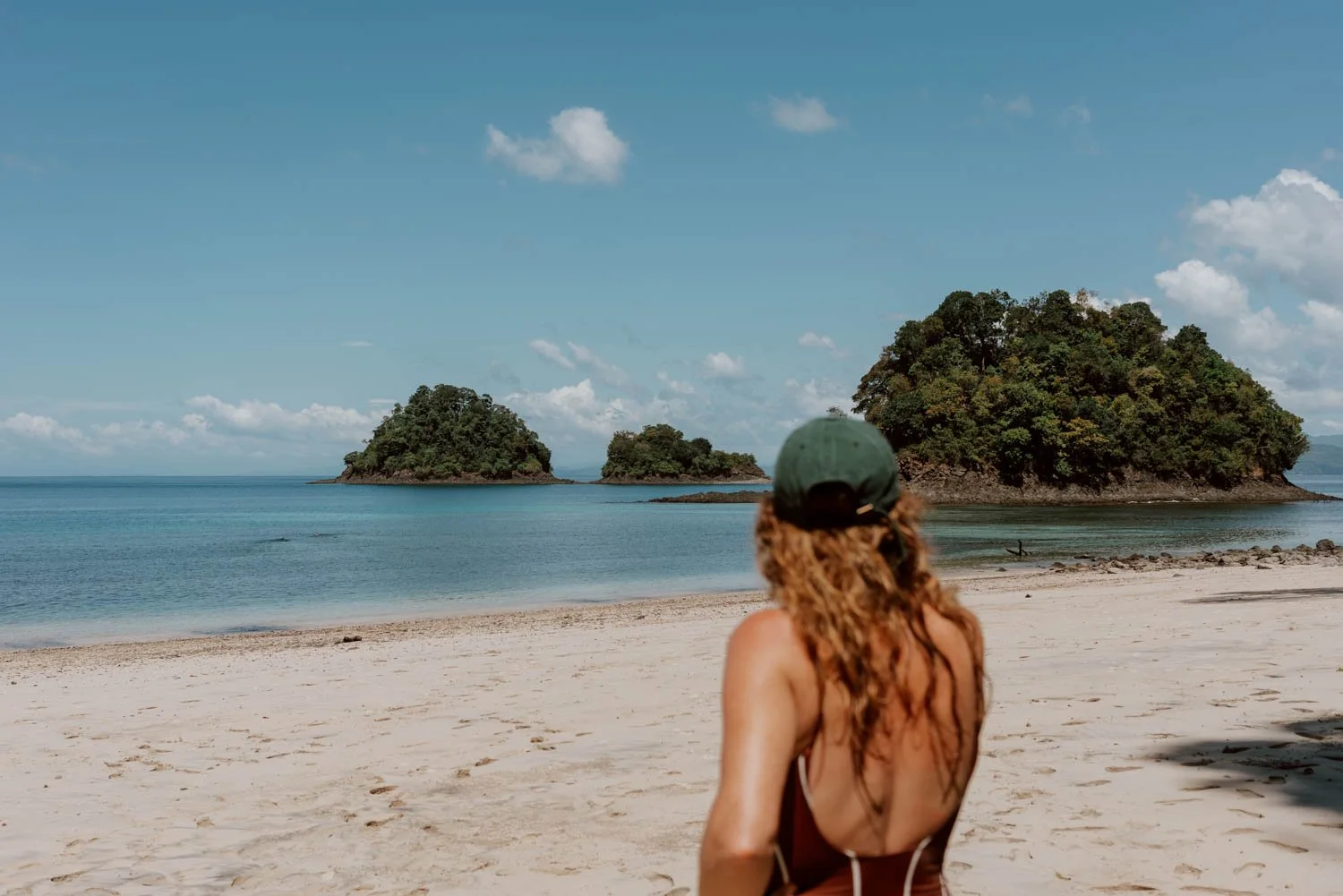
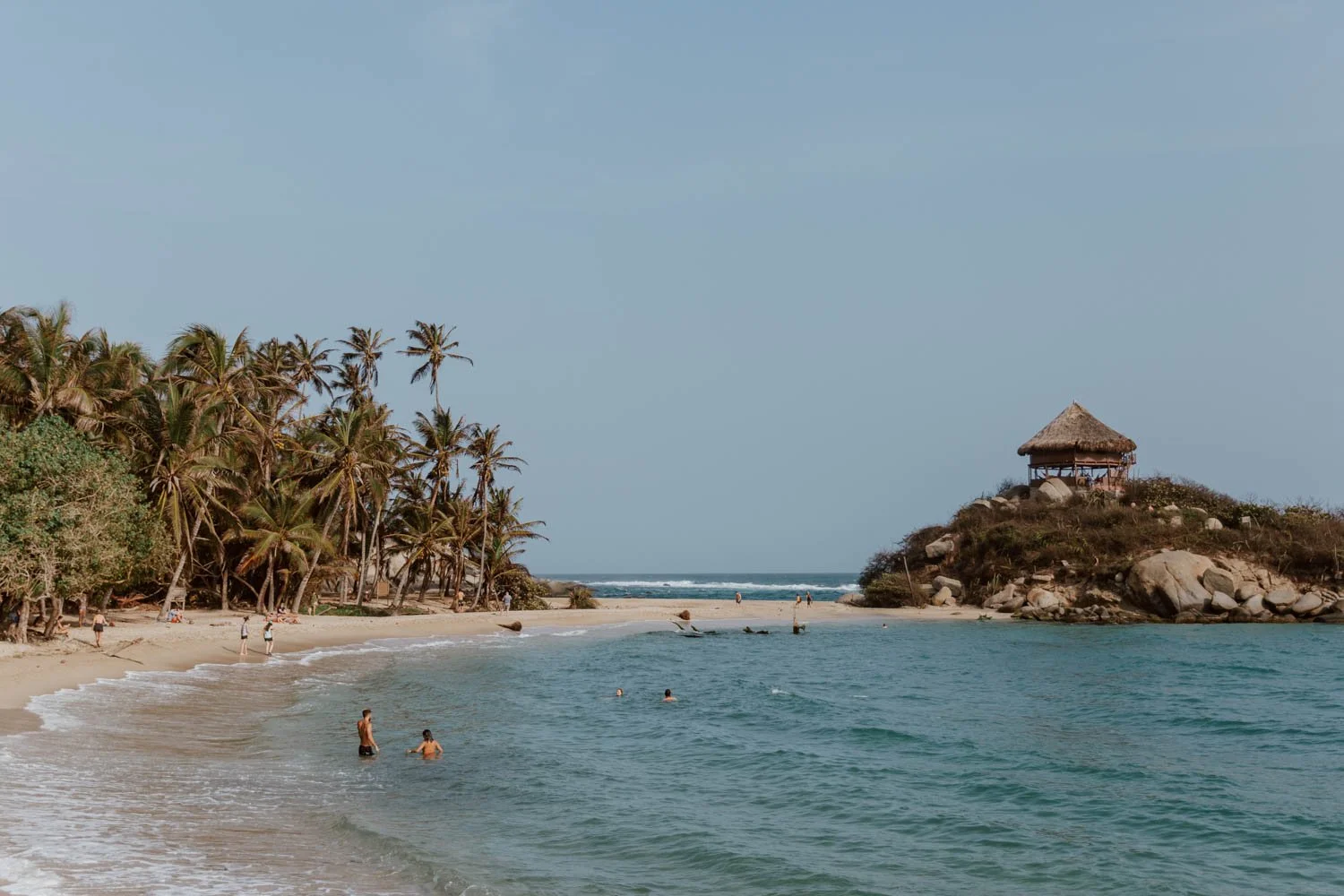
The beach here runs long and narrow, backed by palms and framed by a river at either end, and while it’s still sandy, relatively clean and largely undeveloped, it’s worth knowing that tides and erosion play a much bigger role than they once did. When the tide is in, the sand can shrink to a surprisingly thin strip, and when the wind picks up later in the day, it’s not always the place to sprawl out for hours - but when you time it right, it’s still pretty perfect for finding a quiet spot, laying down a towel, and doing absolutely nothing.



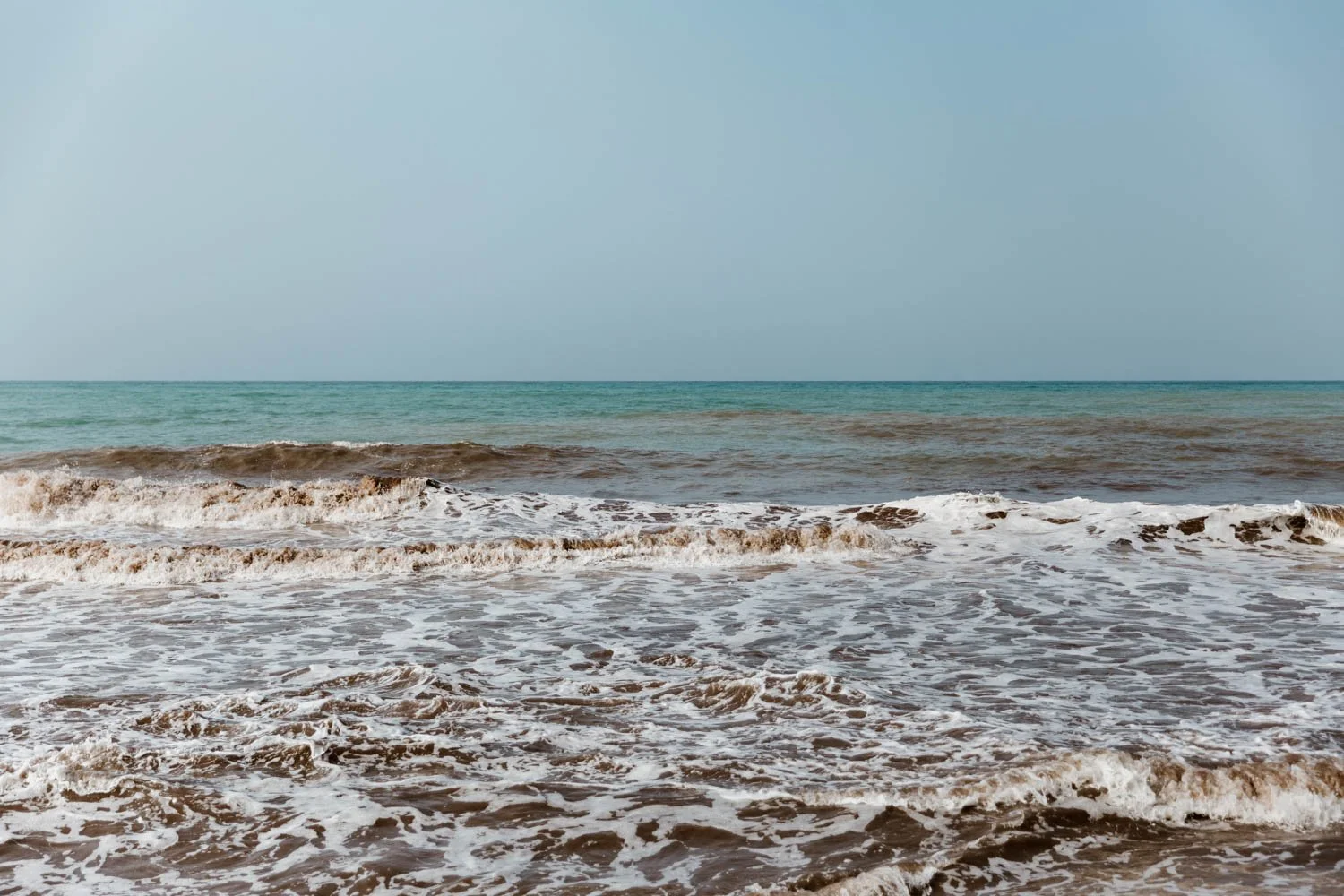
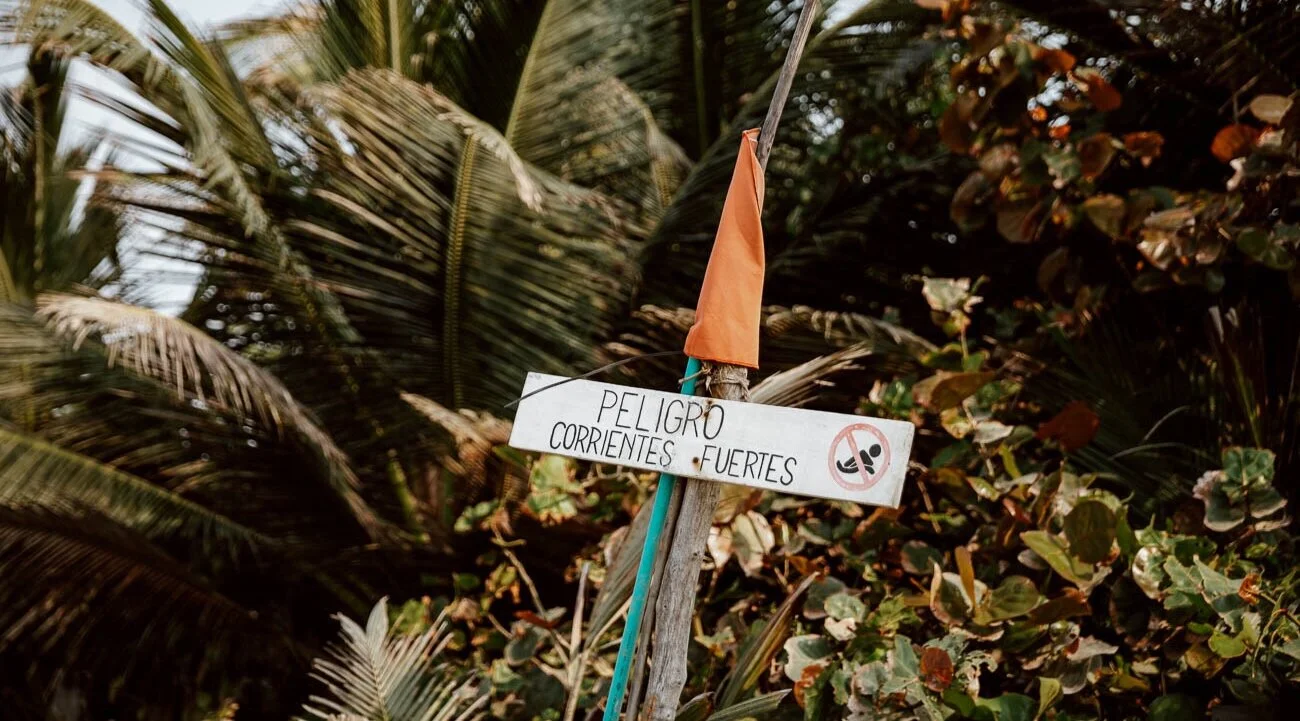
One thing many travellers don’t realise before arriving, however, is just how strong the currents are here. The Caribbean Sea at Palomino is no joke, and swimming is not considered safe.
We’ll say it again: it is not safe to swim in the sea at Palomino beach.
This isn’t unique to Palomino - there are several beaches along Colombia’s northern coast, including parts of Tayrona National Park, where swimming is either discouraged or outright forbidden - and it’s a warning that really should be taken seriously. You will see people ignoring the red flags and getting in anyway, but unless you’re an exceptionally strong swimmer with a good understanding of conditions, it’s not worth the risk.
In practical terms, beach time here tends to work best earlier in the day, before the wind picks up and before the tide squeezes the sand, with most people dipping in and out rather than committing to a full day sprawled out in the sun. Shade is limited, the sand gets hot quickly, and many travellers split their time between the beach, the river mouth, and a pool back at their hostel.
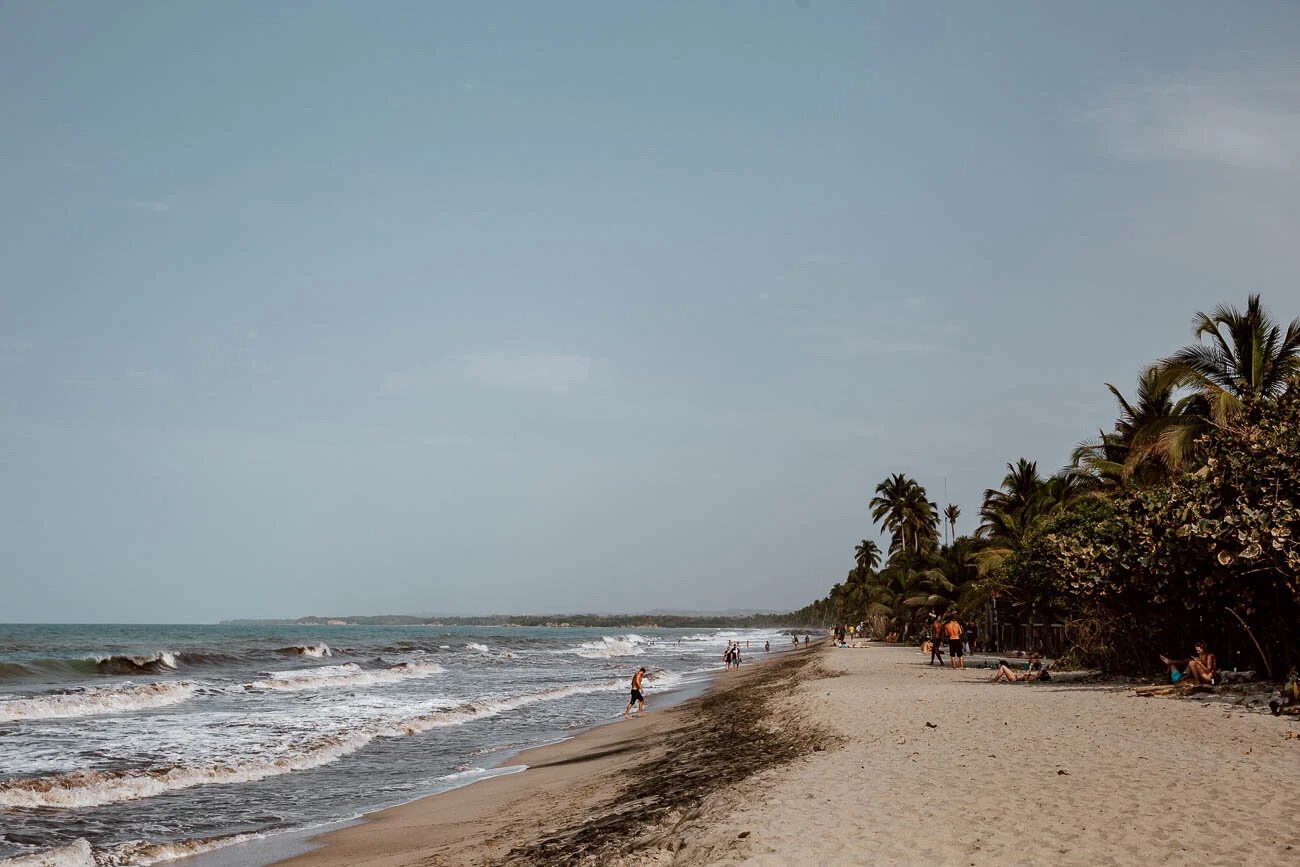
There are two main points of entry to the beach - the less-trodden one a short walk from Kawabonga Hostel (where we stayed) or the main entrance which is found by walking down the main street from the highway for a 7 or so minutes.
We've put a link here on Google Maps so you can easily find the main entrance point - it’s just after the popular Dreamer Hostel.
If you turn left upon entry and keep on walking, you'll find lots of free space to hang out - and you can keep on on walking to the rivermouth where the tubing finishes. On this side of the beach, Playa Mojito is a cool place with food, lounge chairs, and drinks.
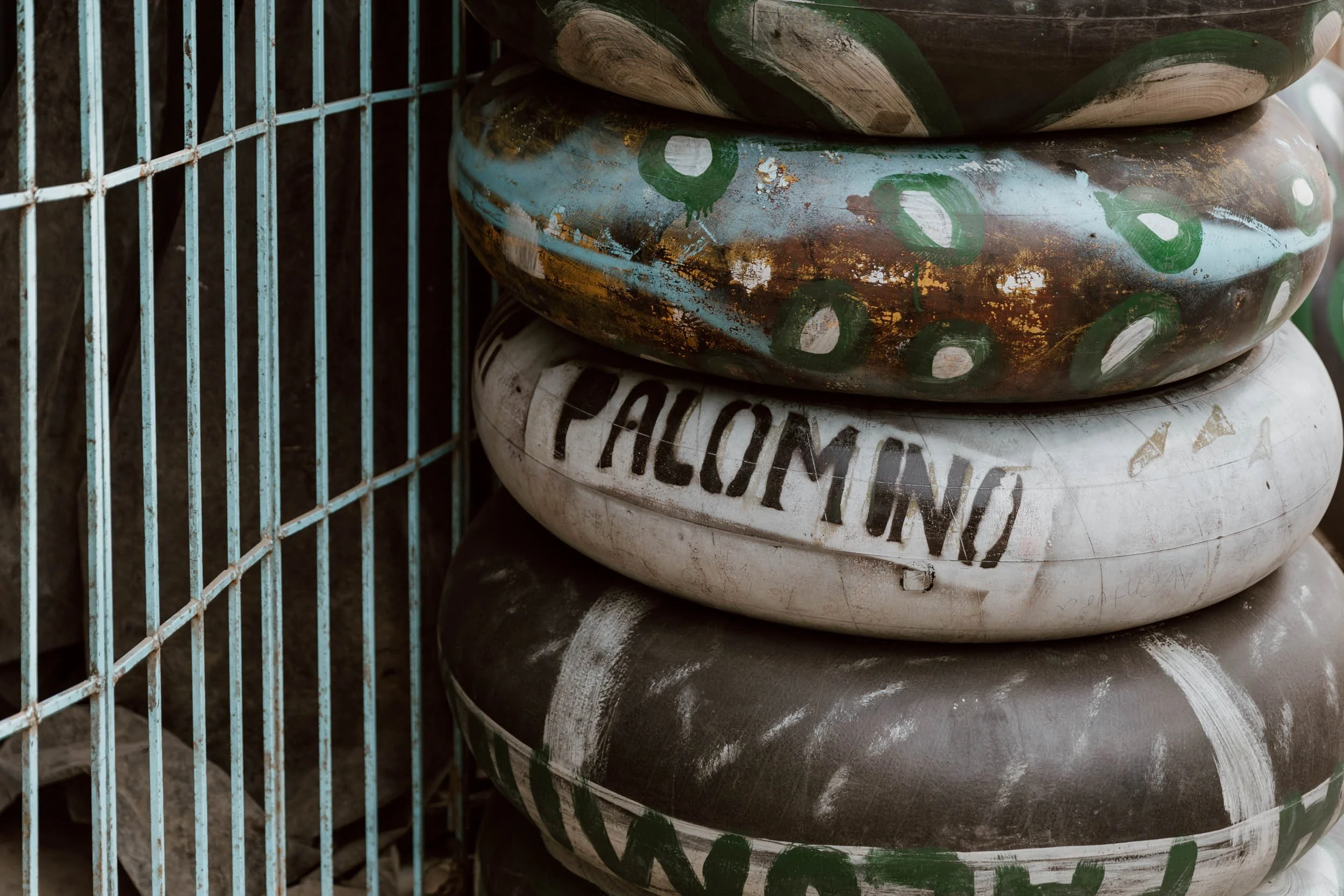
Turn right and there are more beach-front bars and restaurants to hang out at, plus some of the fancier beach-front hotels (i.e. Makao Beach Hotel). If you keep heading in this direction towards the abandoned tires, beyond these you will eventually reach another beach.
Insider Tip | As the sea is dangerous, many hostels in Palomino have a pool perfectly set up for hanging out by all day - knowing this in advance, we chose our hostel specifically because it had a pool to laze by. We've shared our pick of the best hostels in Palomino - including those with the best hangout pools - at the end of this post!
Good To Know // A reader kindly got in touch in the comments to let us know if you turn left at the main beach and walk for 15 minutes, you’ll find a better spot to swim and sunbathe on the sand when the ocean and the river come together - find it here on Google Maps



Get Your Doggy Fix
It was on our penultimate morning in Palomino when we saw the sign asking 'Are Your A Dog Lover?' and offering a rescue doggy picnic at the beach.
As animal lovers who literally go goofy over any pup we see anywhere - thinking up back stories, having imaginary conversations, and getting concerned looks from their hoomans - there is a double-edged sword to the street dog situation in South America.
Every day we got to make multiple dog friends, but often our hearts would break.

There are so so many doggies who live on the street, and a good few actually have a home and an owner - they simply take themselves out for walks in the day and have a very different domestic life to pooches back home. They've got a pretty great life actually.
However, for every one of those on the street, there are a rag-tag bunch of dogs with no home and no owner. Some of them get by ok, wandering around the same patch and being looked after by various people, but many are not loved, not looked after, and not in a good way.
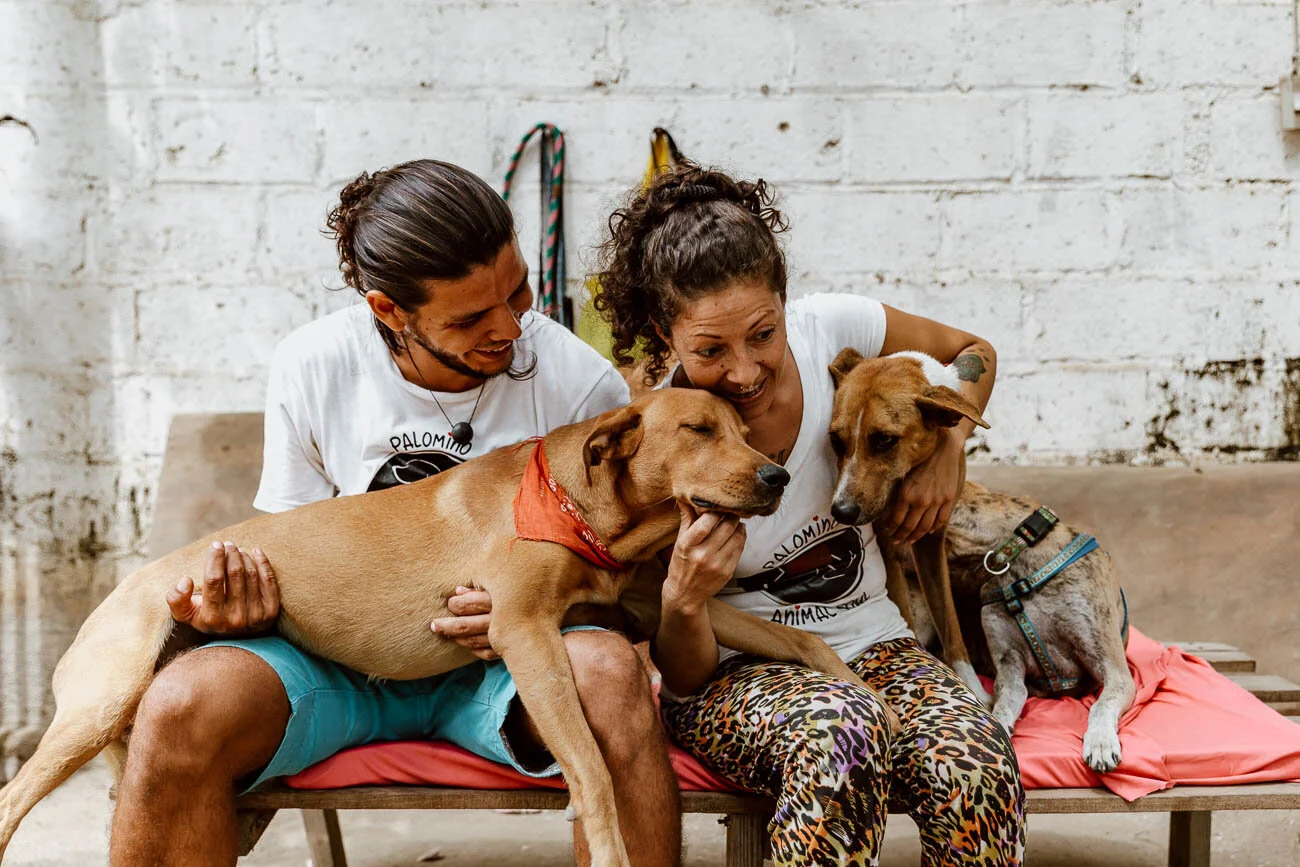
We promptly messaged Palomino Animal Soul* - the people who put up the sign - but unfortunately it was a little too short notice to join them on full doggy picnic. However, we wanted to find out more about he organisation and the work they were doing to help animals in the village, so arranged to meet at their makeshift shelter a short walk from our hostel.




What we discovered was Karina, an incredible woman doing her absolute best with very little to help rescue and rehabilitate abandoned street dogs and cats, and improve awareness in the local community about animal welfare. Their passion and commitment totally blew us away, and hearing the stories of the various doggies in their care brought tears to our eyes.
* Unfortunately, it looks like Palomino Animal Soul may no longer be operating (if anybody knows otherwise, please do let us know in the comments), but there is another excellent rescue - Dog Shelter Palomino - that has taken up the mantle.
Operating since 2021, they provide veterinary care to unwell and injured dogs and a safe home to those who cannot be put back on the street (most of which can be adopted), funded by a dog cafe and various local activities - like visits to the sanctuary, group walkies and even tubing with dogs!
We’ve had several people reach out to us to let us know what a great job they’re doing, so it’s definitely high on our list of things to do in Palomino, and a great thing knowing your money is going to a wonderful cause.
You can find out more on their official website, or head on over to their Instagram page.
Learn To Surf
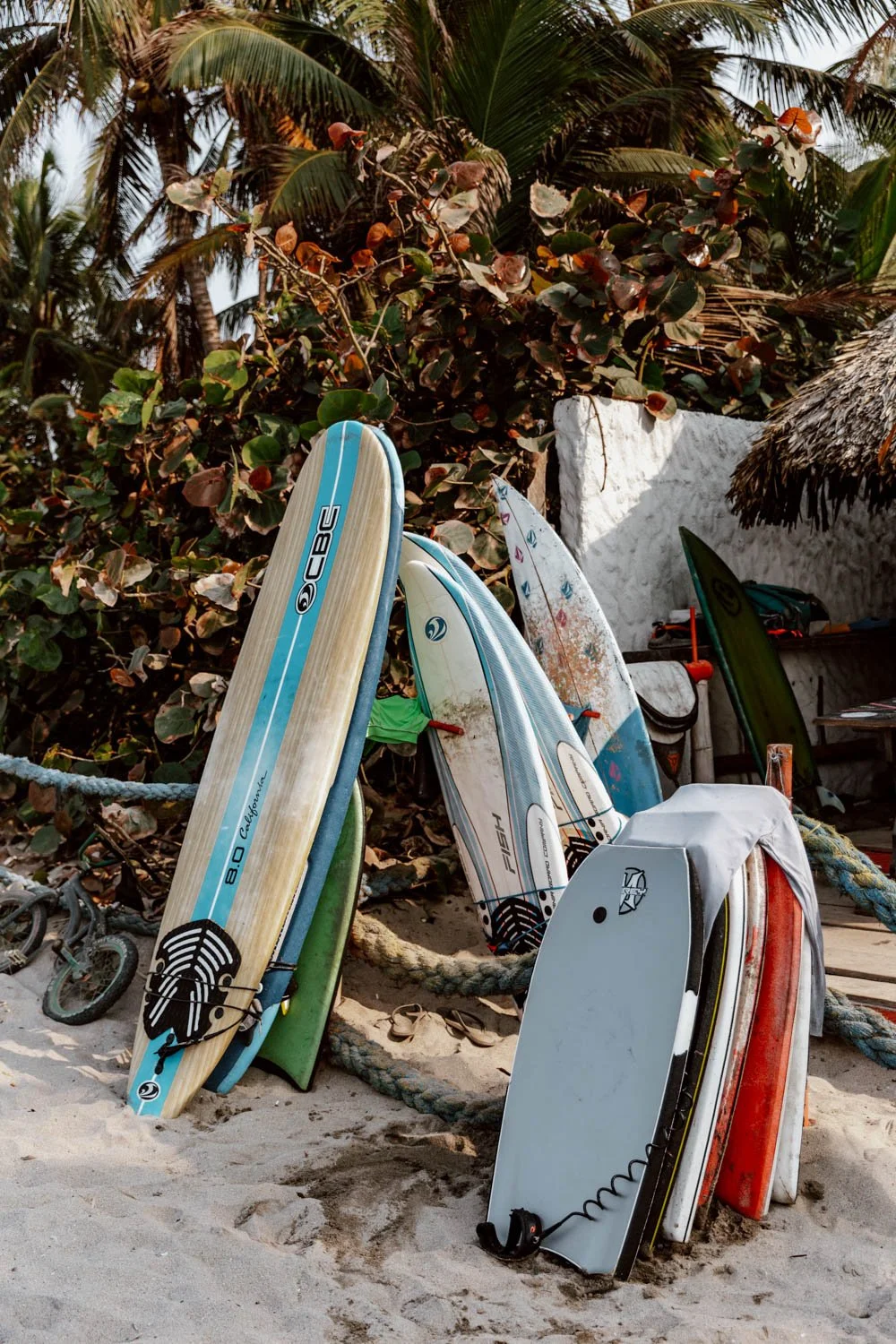
Palomino isn’t a surf destination in the classic sense - the beach is fully exposed, currents are often strong, and conditions change quickly - but on calmer days it can work for absolute beginners looking to try a first lesson. A small number of local instructors operate here seasonally, located in small shacks on the right hand side of the beach near Dreamer Hostel, and they’ll usually run lessons early in the morning when winds are lightest.
Lessons are informal and heavily weather-dependent, typically focused on whitewater rather than clean, rolling waves. As a rough guide, expect to pay in the region of 120,000–160,000 COP per person for a lesson, depending on whether it’s private or in a small group, with board use included. Standalone board rental is sometimes possible, but availability is limited and not guaranteed day-to-day.
Booking is usually done locally rather than online, and most people arrange lessons through their accommodation or by asking around once conditions look promising (you can find a few ‘surf schools’ on the right hand side of the beach), often with short notice. This isn’t somewhere to plan your trip around surfing, and sessions may be cancelled or shifted at the last minute if the sea turns.
If learning to surf is a priority - or you’re hoping for more consistent conditions - nearby Costeño Beach is a far better base, with a more established surf setup.
Top Tip // Really keen on getting to grips with the waves? You could consider this 5-day surf safari along Colombia’s Caribbean coast which includes time in Palomino.



Visit Tayrona National Park
Although our two-day visit to the beautiful beaches of Tayrona National Park didn't totally meet our expectations, there's zero risk that it's going to be dislodged from its place at the top of most first-time Colombia itineraries. And with regular bus connections along the Troncal del Caribe highway between Palomino and Tayrona, it makes perfect sense to combine the two on your itinerary - just with a bit of planning and realistic expectations.
From Palomino, simply catch the bus in the morning from the highway (on the corner of Carrera 6a and 7a is the best spot - they often park and wait here). Any bus passing by here on its way to Santa Marta will be passing the Tayrona entrance, but it's ways best in Colombia to confirm with the driver that they'll stop outside there. It's a 40-minute ride, and while fares can change, expect to pay around 8,000 COP each.
The park entrance will be on the right hand side of the bus as you travel, but the driver should give you a shout - you likely won't be the only person looking to disembark there.
If you’re visiting Palomino after spending a day or two in Tayrona, you can simply stand outside the park entrance and flag down one of the passing buses. As they’re running from Santa Marta, they’re frequent and often have space once people disembark for the park.
Whether you're going for a day trip to Tayrona or to stay for a night or two, we highly recommend that you set off early from Palomino and aim to arrive at the entrance before 8 am (therefore beating the majority of other travellers making their way from Santa Marta).
Entrance fees have increased quite significantly in recent years and are now seasonal: foreign visitors should expect to pay 96,500 COP in high season (1st December - 31st January, 1st June - 31st July, Semana Santa and various other public holidays) and 81,000 COP in low season. Online ticket sales have been intermittently possible over the last few years - and are again available at the time of update. Unfortunately we don’t know if this means you can skip any sort of queue.
It’s also worth being aware that Tayrona closes several times a year for environmental recovery and indigenous cultural observances, usually for a few weeks at a time. These closures are planned in advance but can easily disrupt travel plans if you’re not expecting them, so it’s well worth checking dates before building your Palomino itinerary around a visit. We believe that dates for 2026 are 1st - 15th February, 1st - 15th June, and 19th October - 2nd November.
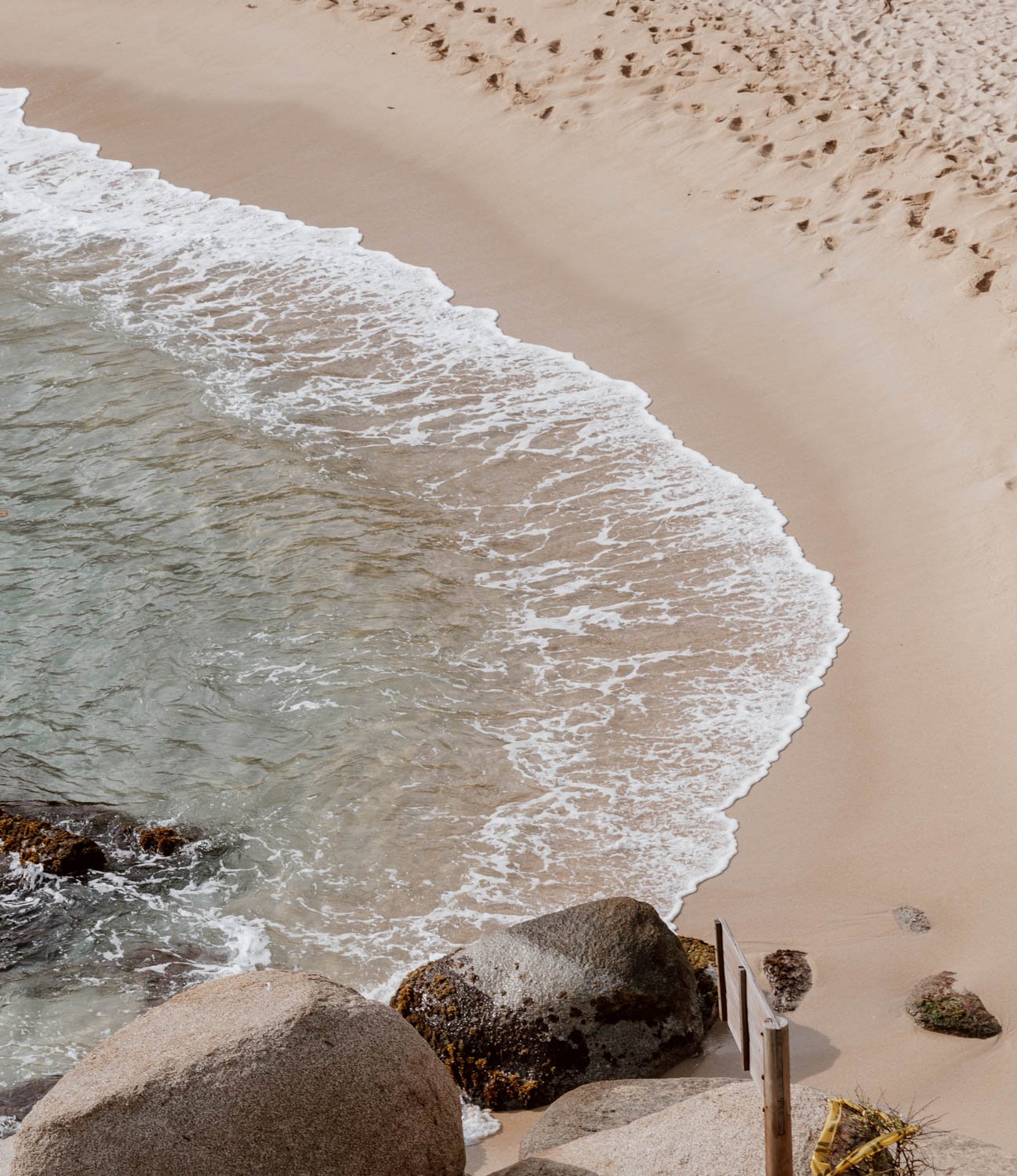
Finally, while Tayrona’s beaches look idyllic, not all of them are open for swimming, and those that are can still be affected by strong currents and changing conditions. Warning signs and flags should be taken seriously - this isn’t a park where swimming is universally safe, despite how calm the water may look.
For more detailed planning, including routes inside the park, accommodation options, and what to expect on the ground, you can read our full guide to Tayrona National Park.
Top Tip // If you’re visiting during the wet season (or the beginning of the dry season), another popular day trip is to the Quebrada Valencia waterfalls, about 30 minutes from Palomino. After a half-hour forest walk along a dusty trail and a few easy river crossings, you’ll reach a small, wide rocky waterfall that empties out into a pool below - the perfect antidote to those hot and humid days!
To reach Quebrada Valencia, catch a bus heading toward Santa Marta along the Troncal del Caribe and let the driver know you want to get off near the waterfall entrance. Local buses will usually stop for you, and from there it’s a straightforward walk in. There’s a entrance fee of 5,000 COP per person, payable at the trailhead, and advance booking isn’t required.



Go Spot Flamingos
If you’ve got an extra half day up your sleeve, another popular option from Palomino is a trip to the Los Flamencos Sanctuary, near the small fishing village of Camarones.
This shallow coastal lagoon is home to a resident population of flamingos, best seen from a small paddle boat that glides quietly through the water, often alongside local guides from the Wayuu community.
Trips usually run in the morning, when conditions are calmer and the birds are most active, and are often combined with time in Camarones itself. It offers a different perspective on Colombia’s Caribbean coast and works well as an alternative to Tayrona if the park is closed, overcrowded, or you’re simply not up for another early-start jungle hike.
Tours can be found advertised in Palomino, or alternatively you can book one in advance here.
River Tubing
We were too busy enjoying ourselves at the beach, by the pool, and wandering the dusty streets to actually go tubing ourselves, but drifting down the river in an inflated inner tube is the classic Palomino activity, and one that most travellers end up doing at some point.
Tubing here is slow, scenic and very much about the journey rather than adrenaline: think jungle edges, birds overhead and a welcome break from the coastal heat, rather than rapids or anything remotely technical. It’s best done with a small group, partly for the social side of it and partly because it just makes the logistics easier.
Pretty much every hostel, along with a handful of operators based along the main street, runs daily tubing trips. They’re broadly similar, though the exact starting point on the river can vary, which in turn affects how long you walk and how long you float. Typically, the experience involves a short drive by motorbike or truck out of town (tube in hand), followed by a 30 - 45 minute walk through trees and along the riverbank, before setting off downstream for around 1.5 - 2.5 hours, finishing back near the beach.
Prices are now fairly standardised, and you should expect to pay 40,000 - 50,000 COP per person, including transport to the start point and the tube itself. Cheaper offers do exist, but it’s worth booking through your hostel or a reputable operator so you’re not left organising your own way back or floating with minimal oversight.
A couple of practical things to know before you go: water levels matter. In drier periods the river can be slow and shallow in places, which makes the float more stop-start and less relaxing, while after heavy rain it can move faster and feel more chaotic. Either way, with any activity like this, it's best to do it in the morning or early afternoon to prevent any nighttime mishaps if everything goes, quite literally, up shit creek without a paddle (that may also be speaking from experience…).
Before you leave, slap on sunscreen, wear flip-flops or sandals you don’t mind getting wet, and only take what you’re happy to lose to the river - ideally nothing more than a bit of cash sealed in a dry bag. Many people bring a couple of beers along for the ride, but remember there’s no bin fairy floating behind you, so take all your rubbish back with you and dispose of it properly once you’re done - the river is one of Palomino’s biggest assets, and it doesn’t stay that way by accident.
Travel Tip // Whilst these tours are super easy to organise in Palomino, if you’d like to get something booked in advance with a cancellation policy, take a look at this popular option.




Eat. Eat. And Eat Some More!
We arrived to Palomino with no desire to do our usual thing of hostel cooking and budget eating - we wanted to gorge on big plates of backpacker burgers, pizzas, and noodles.
And, for such a small place, this is where Palomino really excels - especially for vegetarian and vegan options. You'll find most clustered on the main strip (Carrera 6a) in the area between Calle 2 and Calle 4a, and then again close to the main beach entrance and on the beach itself. However, it's worth noting that several places and food stalls only open from late afternoon onwards. Indeed, by the time you read this guide, it's likely that dozens of little restaurants and guys with grills will have come and gone, as that seemed to be the way in Palomino, but the below were our absolute favourites!
Turcolandia (maps) | It may not look like much from the outside, but this place on the main street was a bloody great find. With fresh pasta and sauces made on site, and a not half bad house wine, we had to go there twice. If you're a little hungover or in need of a carb-party, then order the Ravioli Caprese and thank us later. They also serve pizza, but we didn't try them.
Juntos (maps) | A good deal fancier than Turcolandia, this place has the Bali vibe down to a fine art with its driftwood, rope, and plant decor. The veggie burger and pad thai hit the spot, but the service was a little lacking. It also hosts late night live music on certain nights. An alternative place with a similar vibe is Suá, just a little down the road.
Los 7 Mares (maps) | As the main road approaches the beach, Los 7 Mares (The 7 Seas) stands out as a place that's put a great deal of thought into its design and philosophy. The menu is seasonal and organic, with local and sustainable ingredients at its heart. It's one of the few places in town where the focus is on local dishes too - but with a modern twist. It's a little more refined and expensive than backpacker restaurants in Palomino, but worth it - especially if you want seafood.
La Happycleta (maps) | A little off the main drag, the little bamboo complex of La Happycleta was really our sort of place. Run by a bunch of hippies, it has 3 little restaurants within the same space (each has its own little cooking area), where you could opt for tacos, Ecuadorian food, and something we can't remember. Lots of veggie and a few vegan options, with a relaxed slow food vibe.
Barba Beach Arabic Food (maps) | One of the few places in Colombia where we could get a falafel wrap fix! Not the best in the world, but hit the spot and excellent value. It's opposite Turcolandia. (we’re fairly certain this used to be called Salomé, but we DEFINITELY don’t mean the Latin restaurant next door).
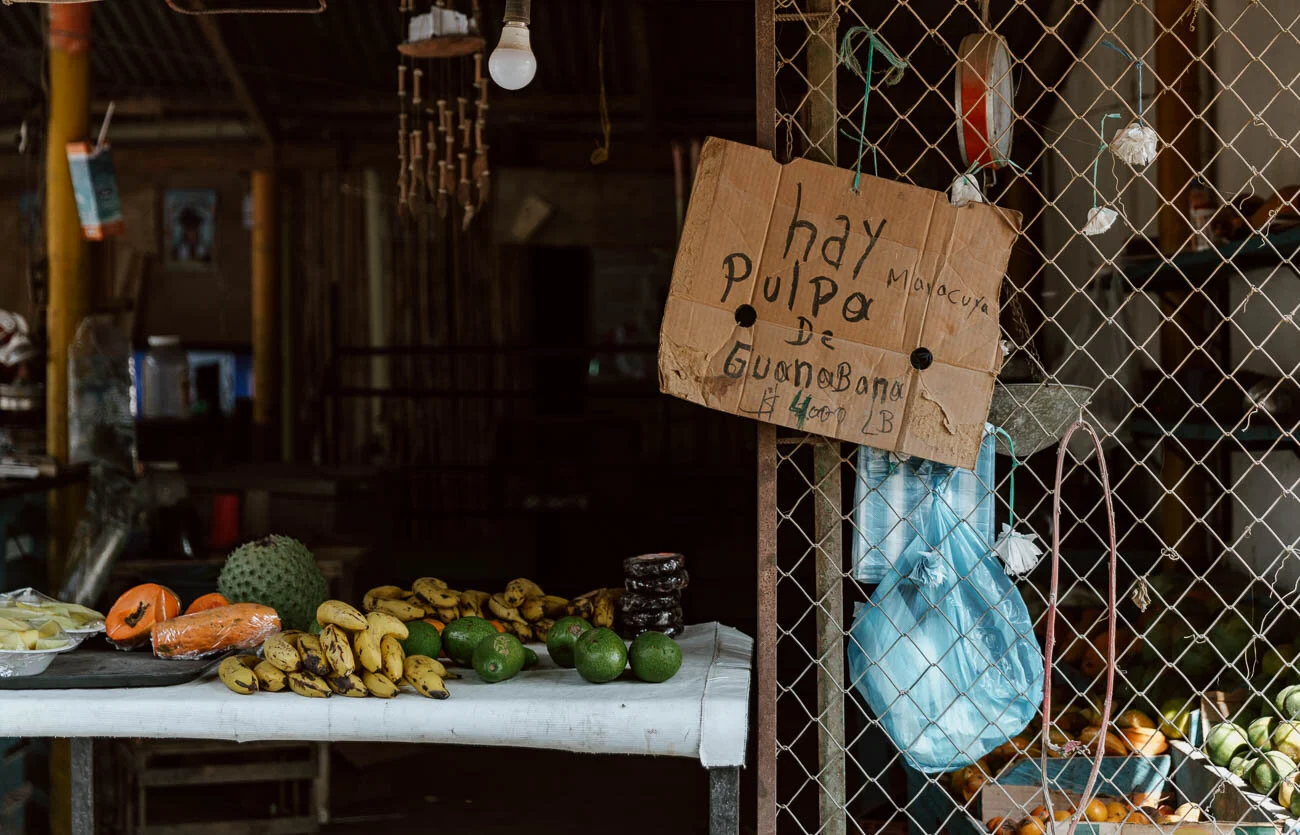
The Juice Ladies | They've got no sign, but we'll call them the juice ladies. If you're in Colombia for 2 weeks or 2 months, you HAVE to make the most of the wonderful fresh tropical fruit juices (with or without milk) which are the local staple. The stand, on the left of the main road as you approach the beach, is run by two friendly local woman - pick your fruits, choose milk or no milk, and enjoy!
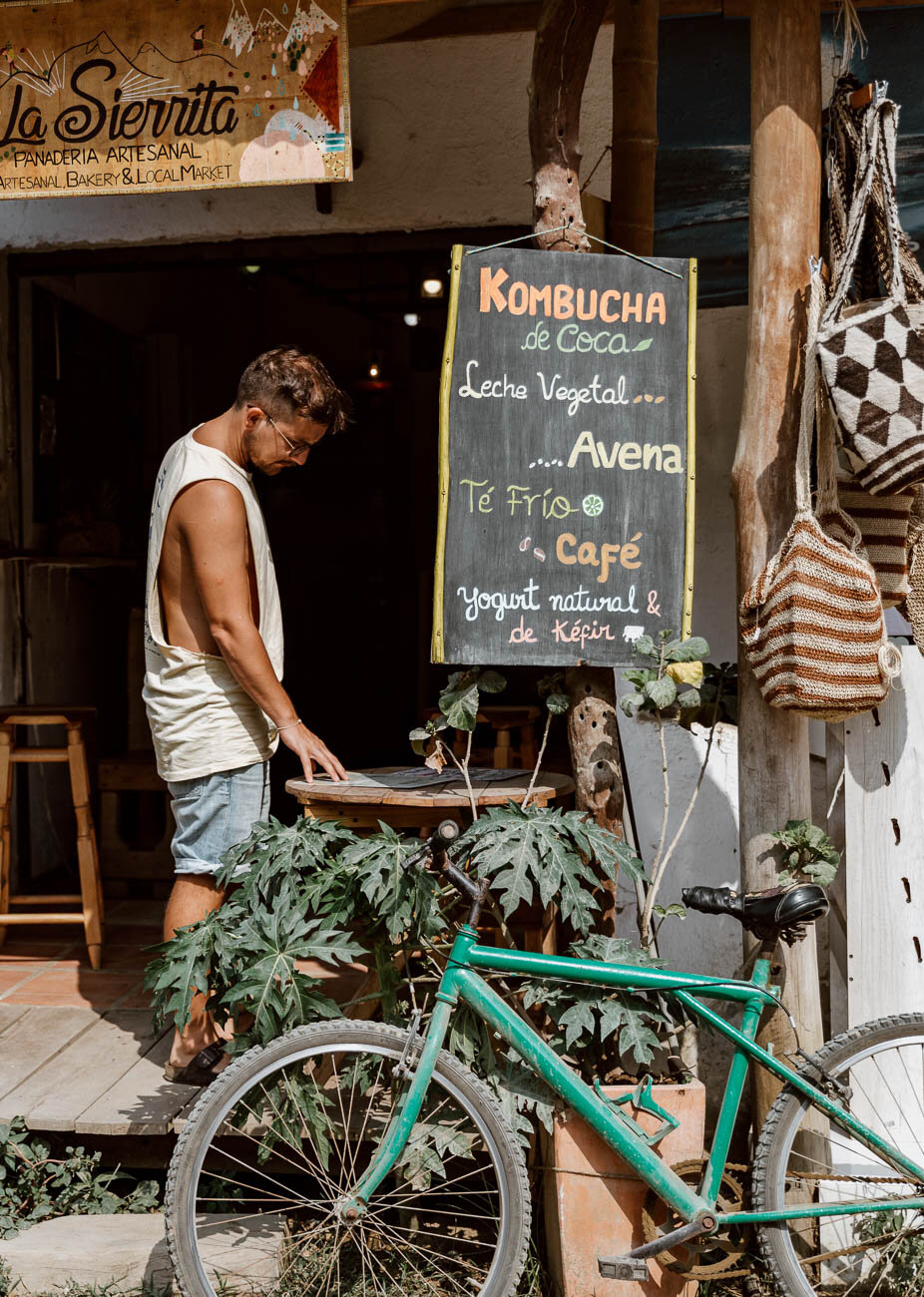
La Sierrita (maps) | A teeny tiny hipster bakery heaven. The vegan cinnamon rolls are in-cred-ible.
Casa Cocotte (maps) | A French-owned restaurant within a lovely garden, where the focus is as much on the food as it is about doing good. Offering a daily changing menu based on what’s available (always with a veggie/vegan option), they also provide a development programme for their local chefs. As one would probably expect, meals are a little on the pricier side but of excellent quality.
Laurel (maps) | Need a break from indulgent or fried food? Make a beeline to this small vegan restaurant that serves up super healthy set menus at a really great price.
We also have to give a special shout-out to the guy who turns up in the evening with his own burger grill and homemade signs - we regret to this day not getting a photo of his wonderful pop-up!
There are obviously a lot of businesses in Palomino which are not owned by those from the village, it’s therefore really important, where possible, make some of your traveller pesos also land in the pockets of the local community. If you are opting to cook at your hostel, there are a few shops and stalls with fresh fruit + veg etc on the main road, closer to the highway, and on the highway itself. If you are in Colombia for a short trip, then try to eat an almuerzo (lunch) at one of the cheap local places you can find at various points on the main street, with a bunch close to the highway.


Where To Stay in Palomino
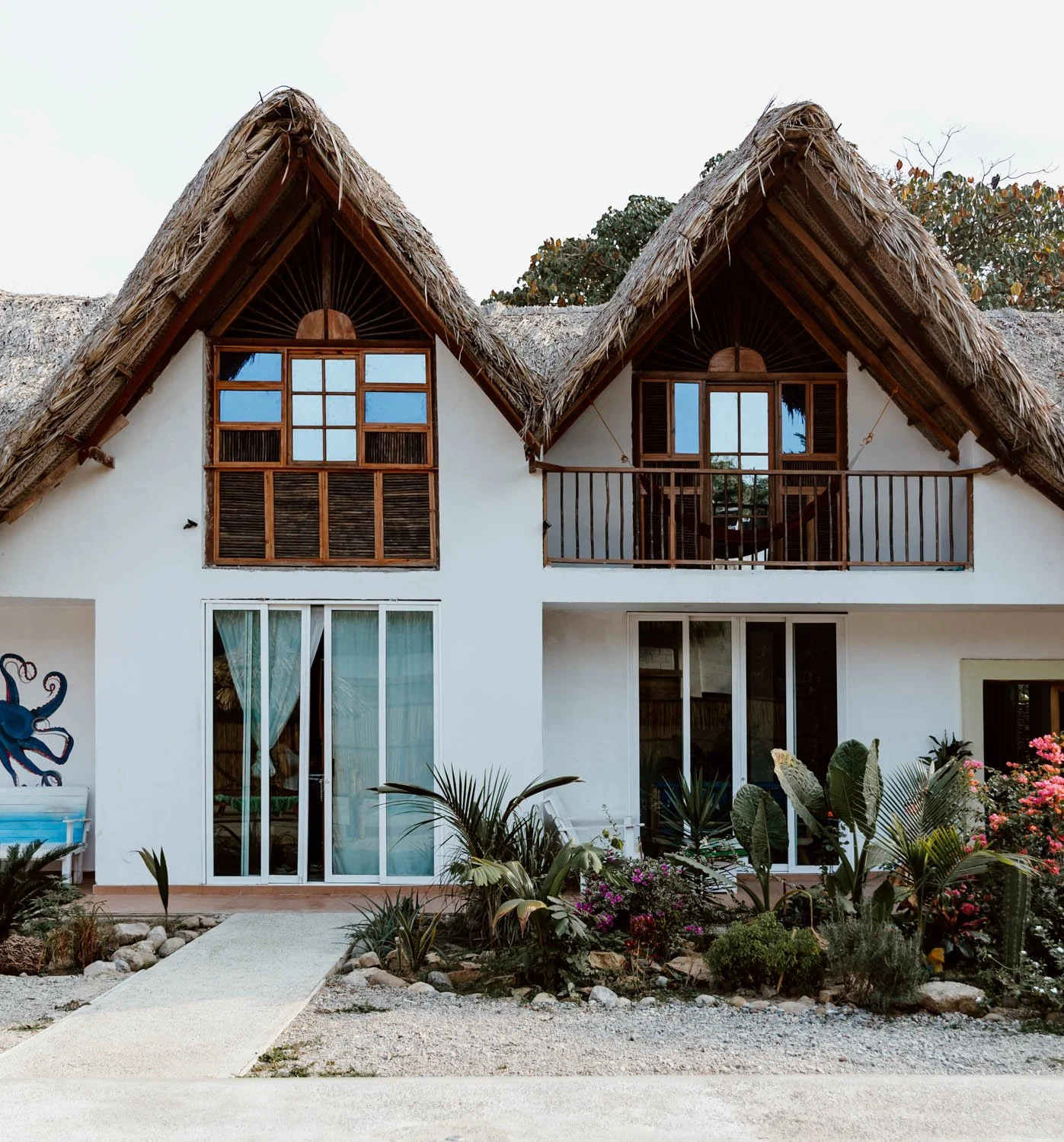
Picking the right accommodation in Palomino is key to your experience, as you're naturally going to be spending quite a bit of time hanging out there - that’s part of the vibe.
If you're on a tight budget, you will easily be able to rock up off the bus and find a bed for the night at a cheap local guesthouse, but if you want somewhere with a great social vibe and a decent pool, then you need to book ahead.
Prices along the northern coast of Colombia are more expensive than in the southern and central areas, but a good dorm can still be found in Palomino for £6-10 per person. Private room prices vary wildly in affordability however, with some hostels here charging £50+ for not very much. Note that Colombians absolutely love their holidays, so if you are visiting Palomino in December, January, or during the Semana Santa break, expect increased prices, increased crowds, and much reduced availability of accommodation. Additionally, this was one of several places we visited along the Caribbean coast where good hostels and hotels really do tend to get booked up in advance, so if you find one you like the sound of, we’d recommend booking before you arrive.
These our our pick of the best hostels, guesthouses and Airbnbs in Palomino for travellers.
Hostels
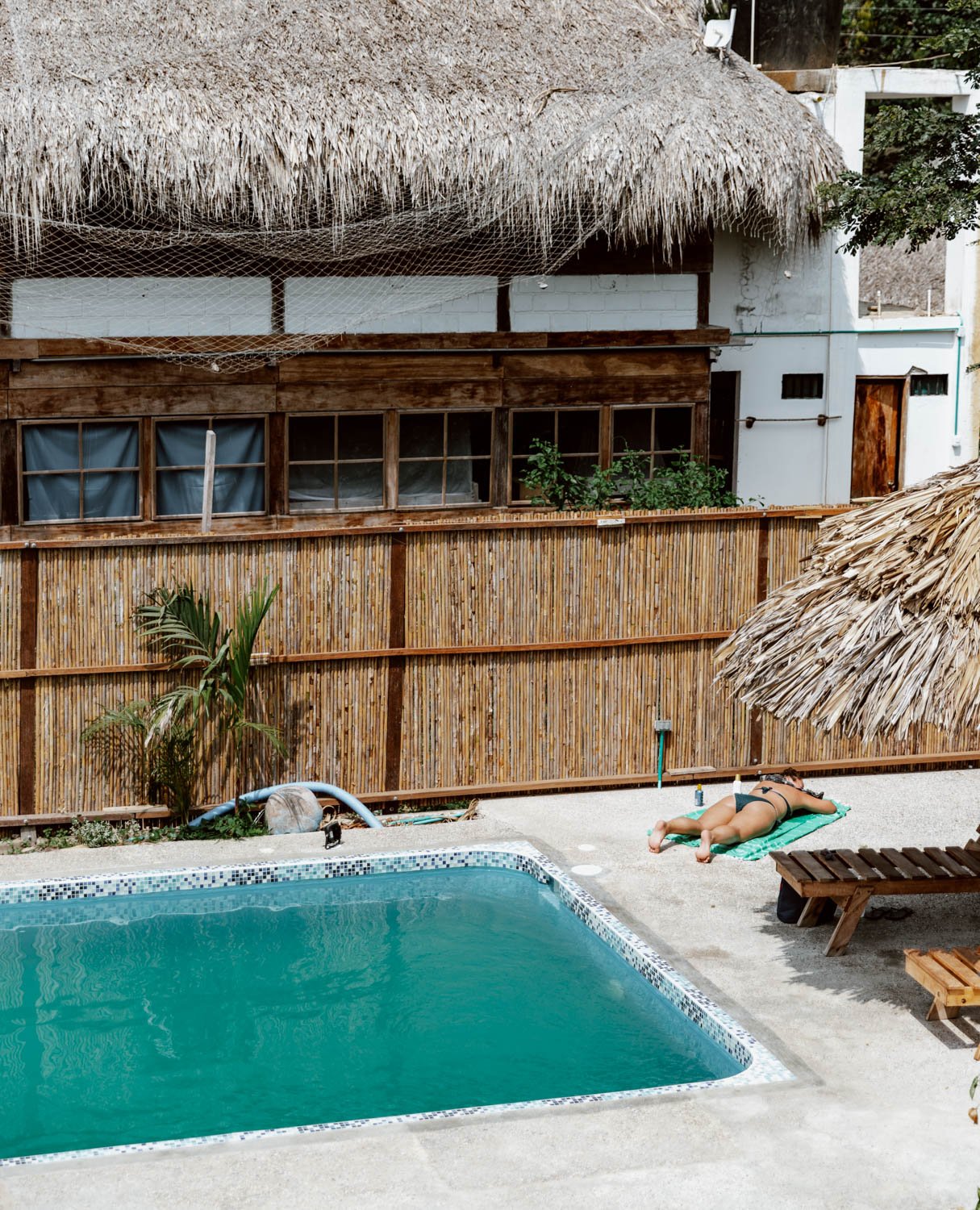
Kawabonga | After a lot of research before we arrived, we booked Kawabonga for its relaxed but social traveller vibe and the pool and we were really happy with our choice. It's got a few cats, a cheap guest-bar that opens until 11pm (where we spent most evenings - and our money), hammocks, and a really nice fresh fruit and pancake breakfast too. It's got dorms and privates. Unfortunately the reviews aren’t quite as good as they used to be but it’s still a decent choice.
The Dreamer | The go-to place for backpackers in Palomino, it was fully booked out when we visited. It's really close to the beach, has a huge pool, lots of communal social areas, and is set within large private tropical grounds. It's got lots of affordable dorms and 20 or so private rooms (but we think the private double rooms are overpriced). Check availability or make a booking on Hostelworld or Booking.com
Casa del Pavo Real | A short walk from the beach, this boutique hostel has Condé Nast Traveller levels of aesthetics, and whilst there prices have risen steadily as their reputation has grown, the standard of accommodation makes it a worthy splurge for those that can afford it (especially solo travellers staying in the surprisingly affordable dorms). It's a more relaxed hostel rather than a party one, with a lovely pool and highly recommended breakfast included. Check availability or make a booking on Hostelworld or Booking.com
Tiki Hut Hostel | Facilities give flashpacker hostel (lovely pool, restaurant, bar) but we love the little palapa-roofed bungalows that act as private rooms. The dorms are a little more rough around the edges but this is still a super popular choice.
Two other hostels we also really like are Kanta Sana (for the tropical vibes) and the super chill and beautiful Bella Flor.
Looking for a party hostel? Maria Mulata Palomino is the one for you.
Hotels & Guesthouses
Casa Chapolin Boutique Guesthouse | This is a fantastic choice in Palomino. The facilities are excellent - co-working space, yoga classes, lovely pool area, on-site restaurant - and the rooms are good-sized, considered and well-designed. The even have excellent dorms. Oh, and it’s really reasonably priced for what you get.
Makao Beach Hotel | With a private beach area, seaviews from your room's balcony, and a crisp, clean design, Makao is the option for couples who want to relax their travel budget, treat themselves to a hotel rather than hostel experience, and enjoy somewhere a little fancier than they've been used to on the road thus far. It's also cheaper than many other beachfront hotels in Palomino. If you're a couple looking for a beautifully designed private room in a hostel by the beach, then this is the one for you.
Naio Hotel y Villas | Probably the most luxurious hotel in Palomino, Naio is absolutely stunning. The price point is far out of the range of backpackers (and most travellers to be honest), but if you’re looking for somewhere really special, this might be it!
Other hotels that caught our eye are Haku, Casa Coraje and MAPUWI Villa & Suite.
Airbnbs
Whilst there is a lot of bouji accommodation in Palomino, if you’re travelling on a budget or simply don’t require where you stay to be insta-perfect, there are still properties here to cater to you including: Caseta Verde, Sistarasta, and Kallpa. This charming mini-house with two bedrooms is a particularly good option.
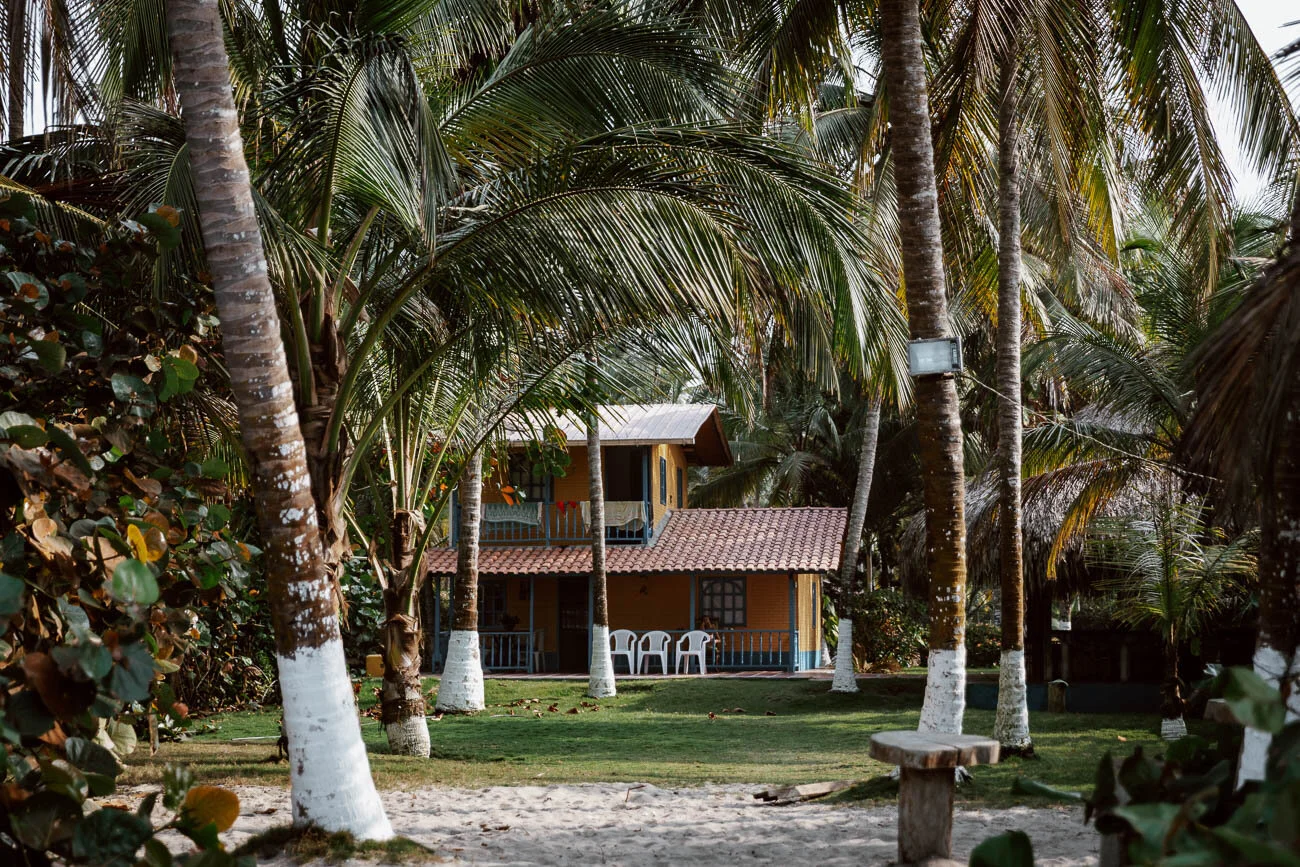
However, our very favourite affordable Airbnb is Casa Ocaso. It’s a little on the small side, but is perfect for a solo traveller or couple. New with a modern and considered finish, well located just a few minutes from main street and even has a small garden area.
Amazing House | Our two-bedroom pick, this villa is just gorgeous. It’s large, beautifully designed, well set-up for digital nomads (starlink and working area), a wonderful tropical garden/patio area with your very own small pool (plus hammock and dining area)!
This treehouse Airbnb also really impressed us.
Casa Ita | Design is right on point in these one-bedroom villas, offering a minimalist contemporary aesthetic (think poured concrete and natural hues) and, best of all, a small private pool and lounging area - ideal for a relaxing break. Find all listings here.
If you’re travelling with a larger group, some bigger properties to take a look at are Casa KASHiiKAii, Casa La Rayanna and Casas la Floristería.
Note that the beach and several of the best hostels in Palomino are a 10-15 minute walk from the highway drop-off point, so you may want to take a a mototaxi down the road if you have a lot of weight on your back or it's dark.
If you think another hostel in Palomino deserves to be on this list, then let us know in the comments!


Useful Palomino Travel Tips
ATMs in Palomino | Before making your way to Palomino - or Tayrona - it’s worth knowing that there’s still no ATM in town, and while some larger hostels and restaurants accept card, many smaller places don’t. It’s best to arrive with enough cash from Santa Marta or elsewhere to cover your stay.
If you do run low, the nearest cash machine is in Mingueo, around a 10,000 COP mototaxi ride or a 5,000 COP bus journey away. There are also a few shops and small pop-ups in Palomino where you can pay by card (or occasionally PayPal) and receive cash in return, usually with a 10% fee added.
Getting Around | Palomino itself is small and flat, and most people get around on foot. Distances between the main road, accommodation and the beach are short, though the sandy paths and heat can make them feel longer than they are. Mototaxis are easy to find if you don’t fancy walking, and are inexpensive for short hops around town.
After Dark | Although Palomino is generally relaxed, it’s very easy to lose your bearings once the sun goes down. There are few streetlights, paths disappear into trees, and dusty tracks often end abruptly. Bring your phone or a small torch if you’re heading out at night, and take the usual common-sense precautions, especially if you’re walking back from the beach or a bar.
Internet & Working Remotely | Having improved slightly since our visit, internet in Palomino is now patchy rather than non-existent. Some accommodation has invested in better Wi-Fi and backup power, while other places still struggle with slow speeds and outages, particularly in the afternoons or after rain. If you’re hoping to work remotely, check with your accommodation before booking; Palomino can work for a few days of light tasks, but it’s not somewhere to rely on for consistently strong connectivity.


How To Get To Palomino
If you're going to Palomino, then you're likely going to be travelling eastward along the coast from Santa Marta.
The city isn't one of Colombia's finest, but it's gritty, authentic, and the main jumping off point for Lost City Trek tours. The good news is that, along the single stretch of the arterial highway calle Troncal del Caribe - which snakes its way from Santa Marta toward Cabo de la Vela, the most rugged and remote area of Colombia we've visited - you can find several of the Caribbean coast's best beaches and attractions. This means the public transport connections are frequent and straightforward.
Santa Marta to Palomino Bus
Buses run daily and very regularly, and you’ve got two realistic options.
If you're based in the centre of Santa Marta, then head to the intersection of Calle 11 and Carrera 9 at the market (the same spot for Minca + Tayrona bus connections - here on Google Maps). Travel time is 2 hours with buses departing every 15-30 minutes. A ticket costs 12,000 COP.
Buses also run to Palomino from the Santa Marta Bus Terminal, which is a 10-15 minute, 6,000 COP taxi ride from the city centre. Most of the buses you want will be travelling to Riocacha or Maicao, and prices are more expensive generally. Berlinas, Brasilias, and Superstar are the companies to look for and expect to pay around 16,000 COP per person. Note that bargaining isn’t as common as it once was, particularly with larger operators, and in most cases it’s easier (and cheaper) to use the buses from the city centre.
Whilst we don’t think that this is necessary given the regular bus service, for those that would prefer a private transfer from Santa Marta to Palomino (or vice versa), you can book this highly-rated option in advance.
Read our Santa Marta guide to decide whether you need to include it on your itinerary, or whether you simply need to pass through!
Cartagena to Palomino Bus
It's a decent journey from Cartagena to Palomino with public transport (6-8 hours), but it’s possible to do it in a single day.
The route is pretty straightforward with a bus or shuttle from Cartagena to Santa Marta, then a change over for a bus to Palomino. Prices vary dependent upon which specific option you chose, but expect to pay around about 90,000 COP per person for the entire journey.
Read our guide on the how to get from Cartagena to Santa Marta for further details and best things to do in Cartagena for more inspiration and information.
Tayrona to Palomino Bus
As we mentioned above, it's very easy and quick to get between Tayrona and Palomino by bus - just hang out at the entrance and flag down any bus that's heading in the direction of Riohacha.
Travel Better in Colombia
13 Wonderful Things to Do in Cartagena
Tayrona National Park | How to Plan Your Visit
Rincon del Mar | A Traveller’s Guide
The Best Things to Do in San Andres
The Best Things To Do In Santa Marta | The Gateway To Northern Colombia