17 Really Useful Things to Know Before Visiting Puglia, Italy
Including why you should alway dstay in the historic centre, hire a car and follow the rhythms of southern Italian life, these are 17 essential things to know before you visit Puglia, Italy.
Updated January 2026
If you're a keen follower of Along Dusty Roads, you'll know that we fell a little bit - okay, a lot - in love with Puglia during our first road trip to the boot.
And for good reason.
This delightful southern region of Italy, with its stunning coastline, cute little towns and villages, quaint countryside vibe, and oh so very Italian way-of-life has everything one would hope to find - whether it's your first time in the country or sixth.
As with every holiday however, knowing a little more about what to expect (and some insider tips from people that have already been) can be the difference between a good trip and a great trip. So, that's where this post comes in.
Keep on reading to discover 17 really useful things to know before visiting Puglia - all picked up after three trips to the region - and lots of advice to help you plan your own holiday in a glorious part of Italy.
17 Really Useful Things to Know Before Visiting Puglia, Italy
A Week Or Two Is Perfect!
If you’re in the planning stages of your Puglia holiday, then you should know that the southern region of Italy - it’s the ‘heel of the boot’ if you look at the map - is perfect for a week, or even better if done in two.
For those of you aiming to spend around seven days in the region, you have options. Either base yourself somewhere relatively central (Ostuni is a great choice as it’s a destination in itself and is actually where we based ourselves when we returned to Puglia for the second time, but Monopoli is another really great choice, especially during the summer months given that the city itself is on the coast) and then make a few day trips to beaches and surrounding towns, or if you’re drawn to a number of spots on the map that don’t seem terribly close, pick two different places to call home for your stay.
If you’re planning a trip for ten days to two weeks, then the world is your oyster and you’ll be able to cover a lot of ground and have many fantastic experiences at a really enjoyable pace - we opted to do a road trip and recommend this as the best way to explore Puglia.
Keep Reading // There are a variety of routes that you can travel around Puglia, depending upon what you’d like to see and we plan on putting together a few more articles to reflect this. To begin with however, take a look at this in-depth itinerary we followed on our first visit to Puglia.
Oh, and if you’re planning on visiting during the summer months, don’t leave sorting your rental car too late. We book all our road trip vehicles via Auto Europe or RentalCars, and usually manage to secure really great rates.


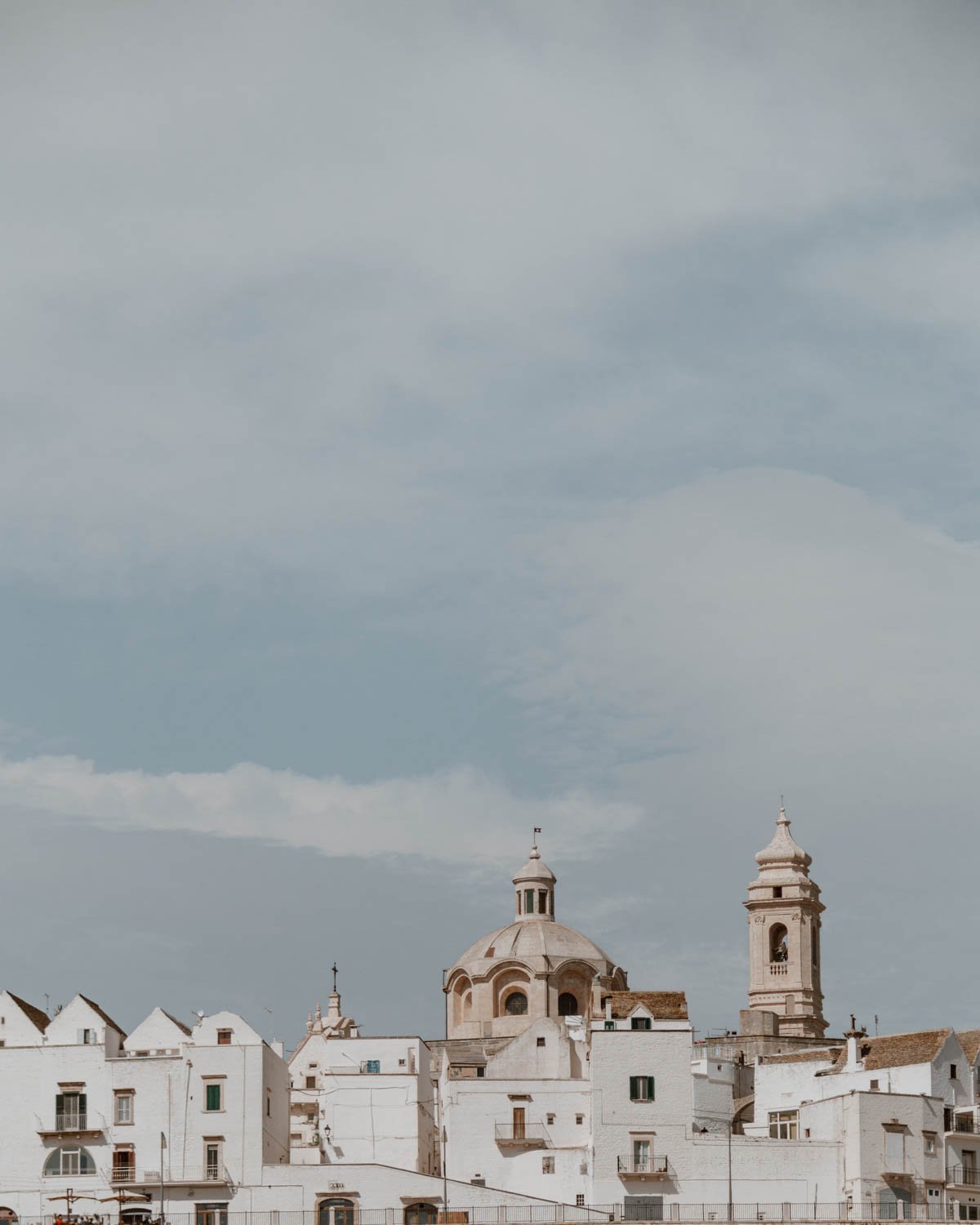
Life Follows A Slower Pace
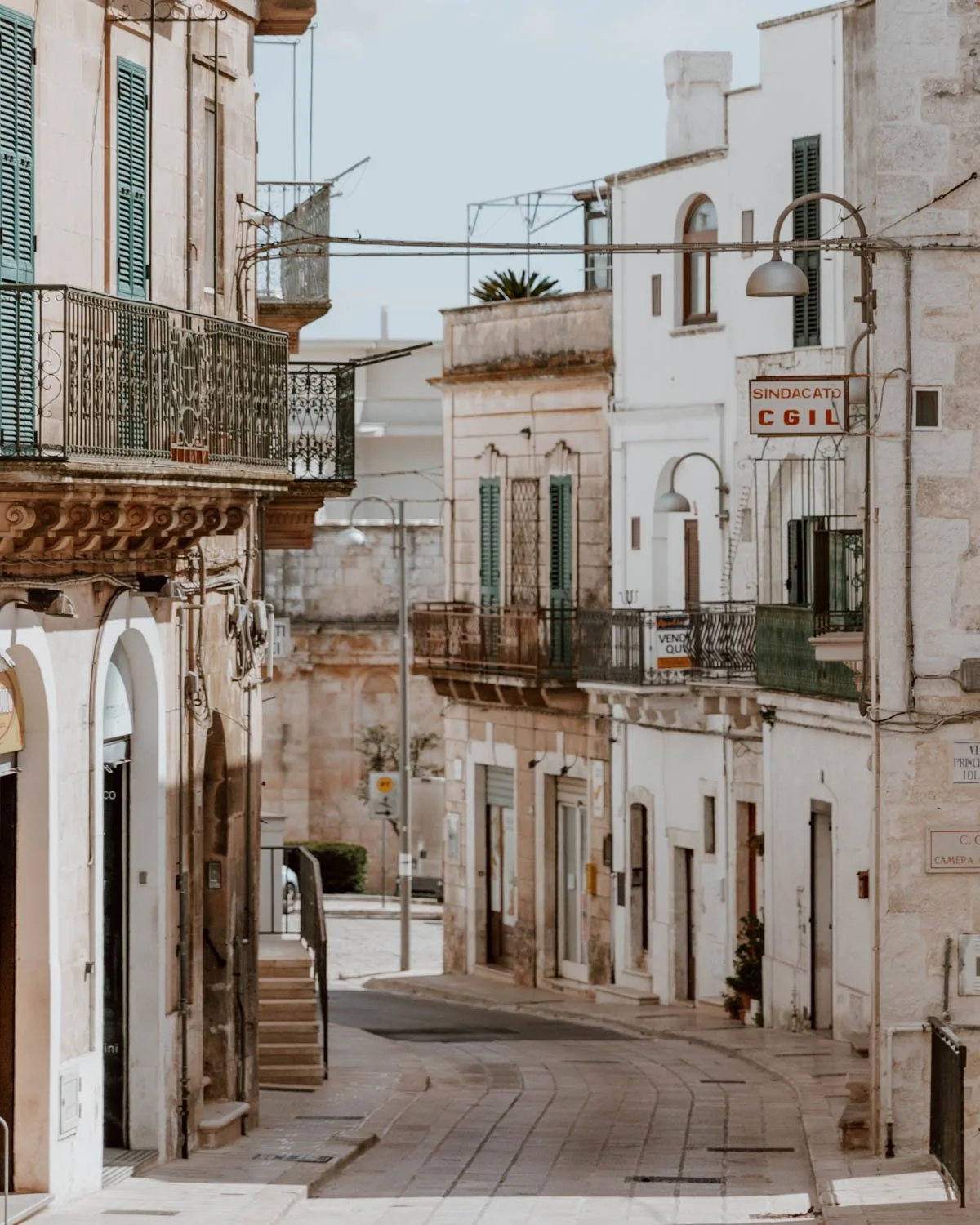
This is a part of the world where the beating heart of community is set firmly in the rhythms of the past.
This means long siestas, shops opening early in the morning and late afternoon (but not in between) and a true sense that however much of a rush you may be in, it really makes very little difference to those that live here.
Sure, it can get a little frustrating when you want to be productive in the afternoon, but instead of fighting it, go with it. Do your sight-seeing in the morning and save the afternoon for beach time, have an extra scoop of gelato for your afternoon treat to tide you over til your late dinner and generally do what the locals do!
If you’re visiting in the peak summer months you may find that this works better for you - those afternoon temperatures are no joke, especially for those not used to the heat!
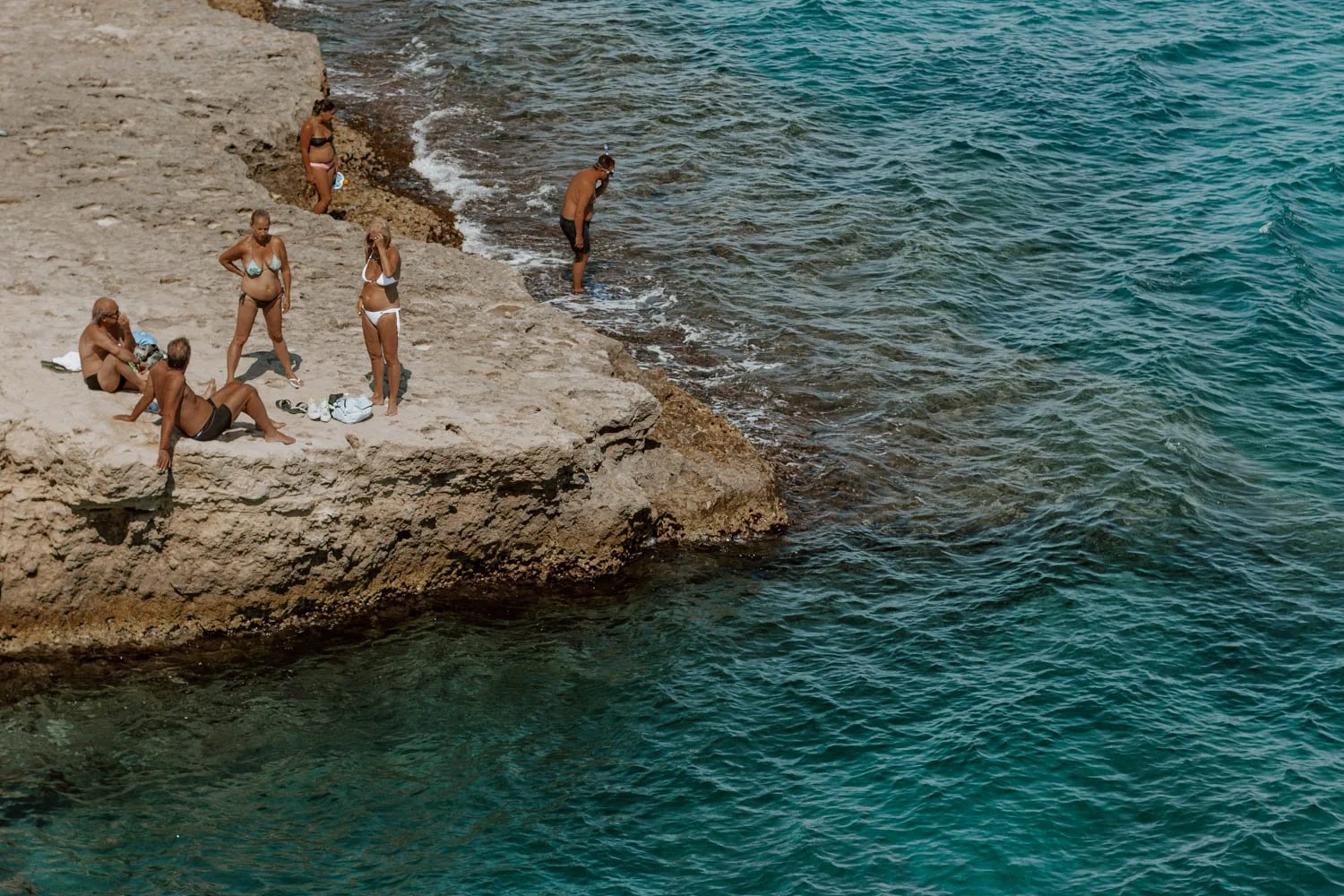
Keep Reading // Follow the locals to the sea with our guide to the best beaches in Puglia, filled with our favourite stretches of sand, hidden coves and rocky swimming spots.
...And Everything Is Just So Italian
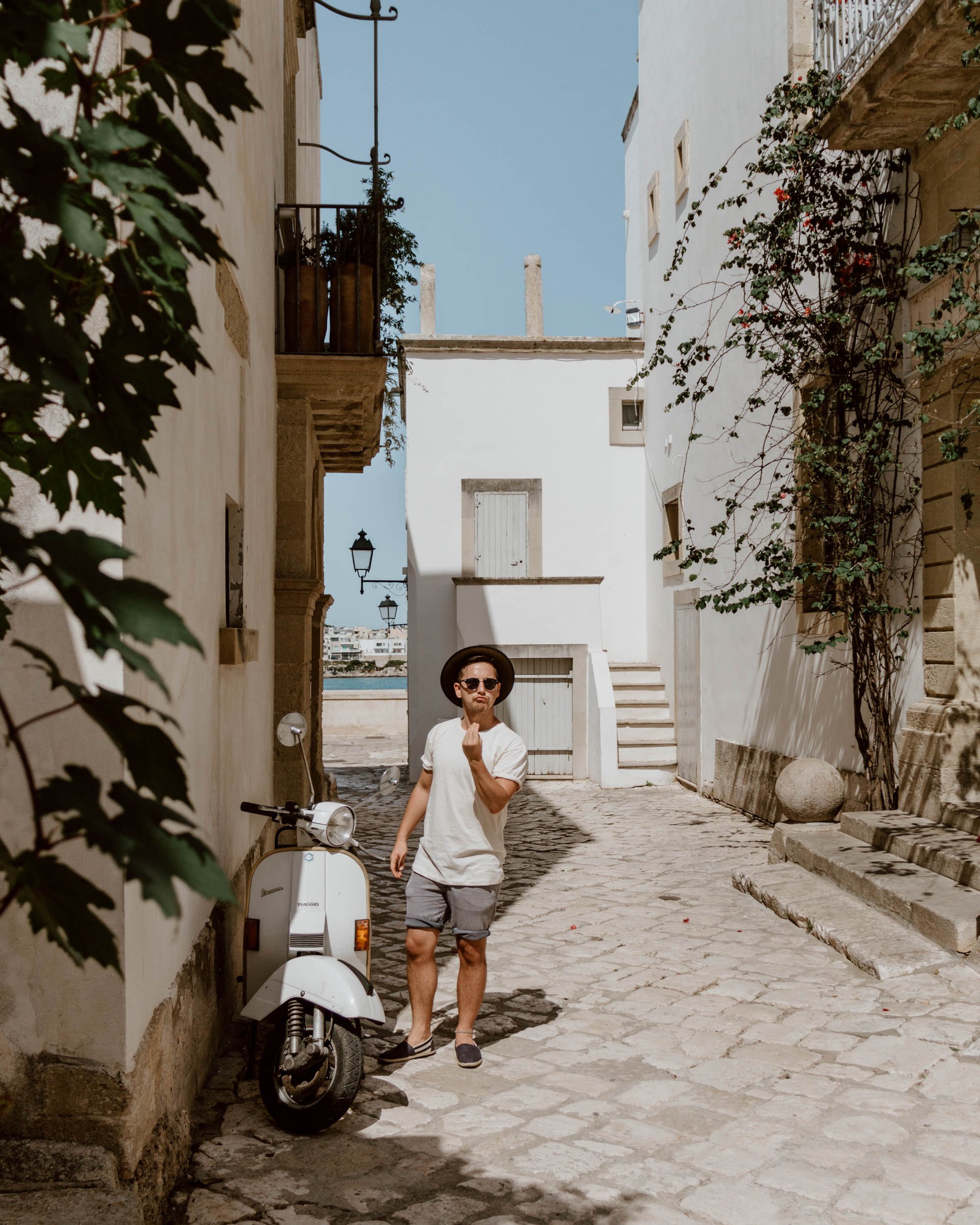
Yeah we know this sounds ridiculous; we were in Italy after all. However, during our first visit, having previously only spent time in Rome, Venice and Milan, we weren't prepared for just how Italian Puglia would feel.
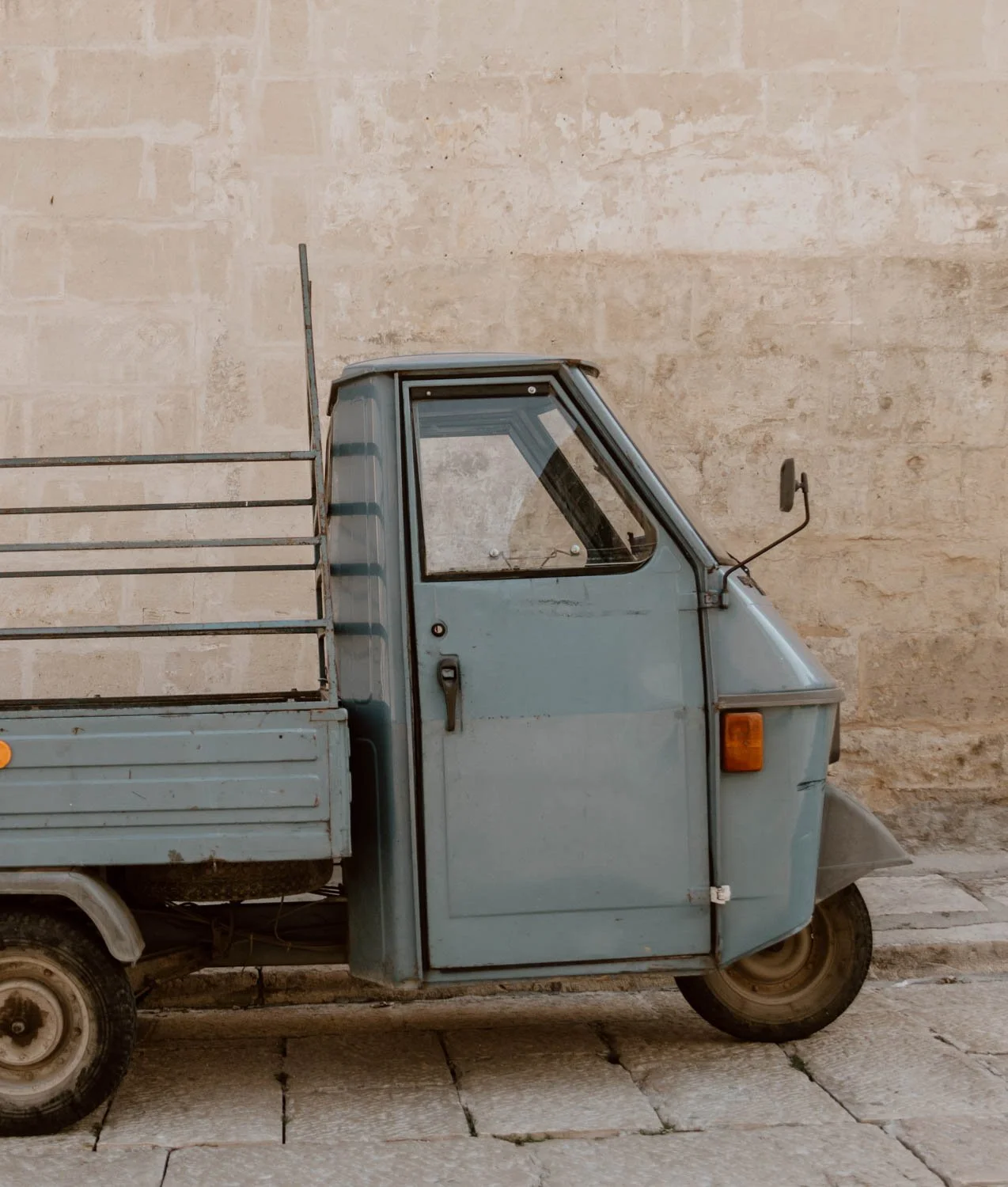
Elderly nonnas chatting on the side of the street (each sporting identical haircuts), 'Ape' trucks still being used, as, well, trucks, vespas EVERYWHERE and groups of old men playing cards in the late afternoon sun.
It was like watching a movie - and all kinds of fabulous!
This is just one of the reasons we fell in love with Puglia.


The Tourism is Changing
When we first visited Puglia nearly a decade ago, it still felt like a region Italians quietly kept to themselves, with Polignano a Mare the obvious exception and plenty of other towns ticking along at a slower, more local pace. That version of Puglia doesn’t really exist anymore. While it still hasn’t reached the saturation levels of Rome, Venice, Florence or Cinque Terre, it is now very firmly on the map, and in 2026 it’s best thought of as one of Italy’s most popular regions rather than a discovery.
Italian holidaymakers still make up a huge proportion of visitors, particularly in August and around the coast, but you’ll now hear plenty of English, French, German and Dutch, with noticeably more Americans than there once were and a very loyal British following. In most places this hasn’t spoiled the experience - especially if you base yourself slightly inland, explore smaller towns, or travel outside peak summer weeks - but Puglia is no longer under the radar, and planning with that reality in mind will make a real difference to how much you enjoy it.
Top tip // Like the idea of heading inland for a day or two? We based ourselves in the charming little town of Sternatia for a few nights during our first stay (in this gorgeous little airbnb - still one of our favourites around the world), and had a wonderful slow experience, surrounded by locals and gained a real small town Italian life.
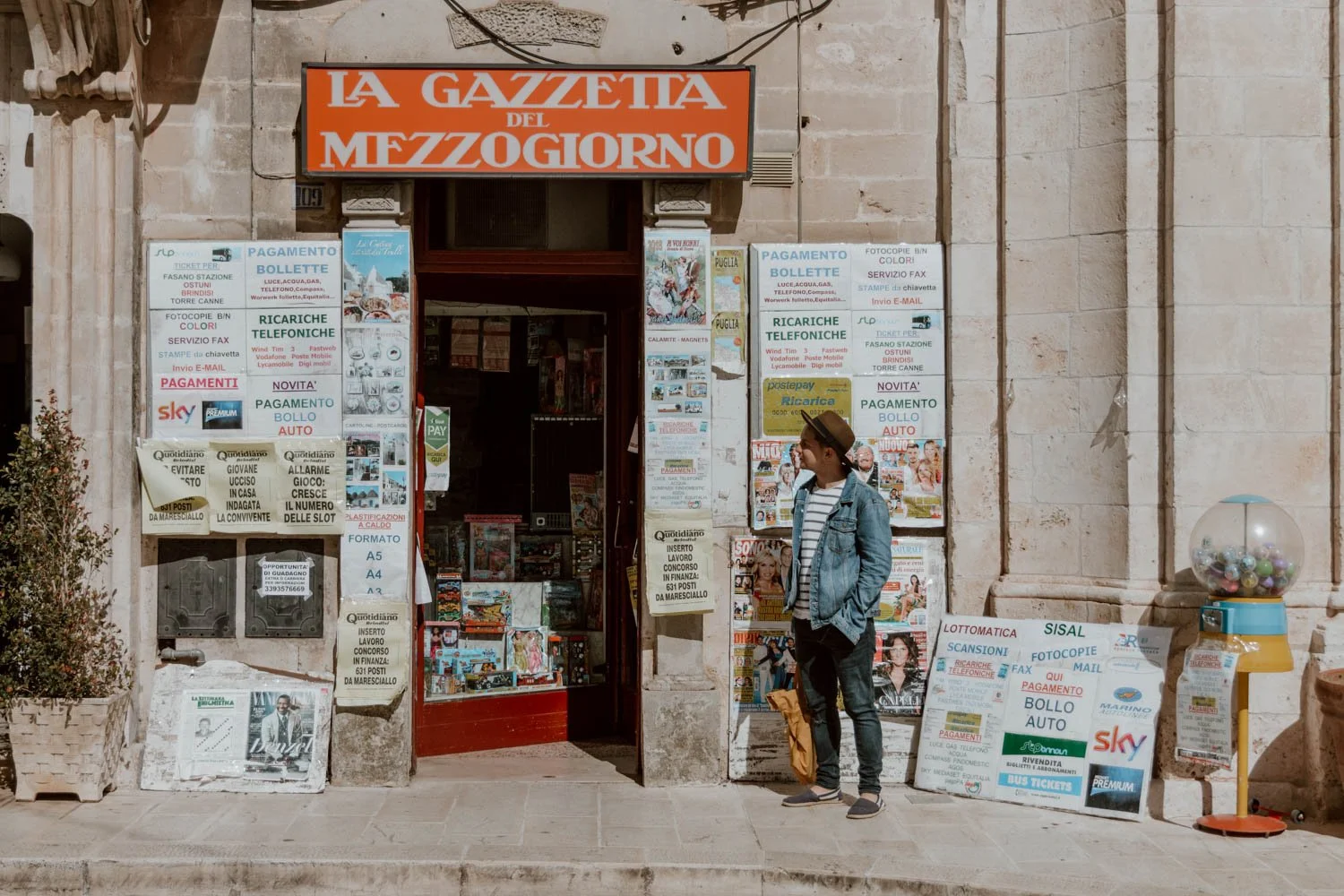
You Really Do Need A Car
As travellers who have spent many an hour (or day) on buses, we're strong believers that you can reach most places with public transport.
Puglia, however, may be an exception to this rule.
Sure, there are trains and local buses, but using them exclusively to cross this varied region is going to take more time than most travellers have. It also means you’ll likely miss many of the small coves and cute little towns and villages that make Puglia so wonderful.
Thankfully for those that choose to travel on a little more of a budget, car hire here really doesn't have to cost an arm and a leg. Our first car rental in Puglia was really, really excellent value and whilst in the intervening years it has definitely increased (not helped by the post-pandemic rush to get away plus car shortage), we still secured a fantastic rate during our third visit of just over £35 a day.
Before travelling, to get the best overview on rates and availability, we always search and compare car hire vehicles on both AutoEurope and RentalCars. We have used both these companies exclusively for all our road trips and highly recommend them.
Keep Reading // You can see our Puglia road trip route in this post, but if it’s your first time renting a car and driving in Italy, then you should read this post too.

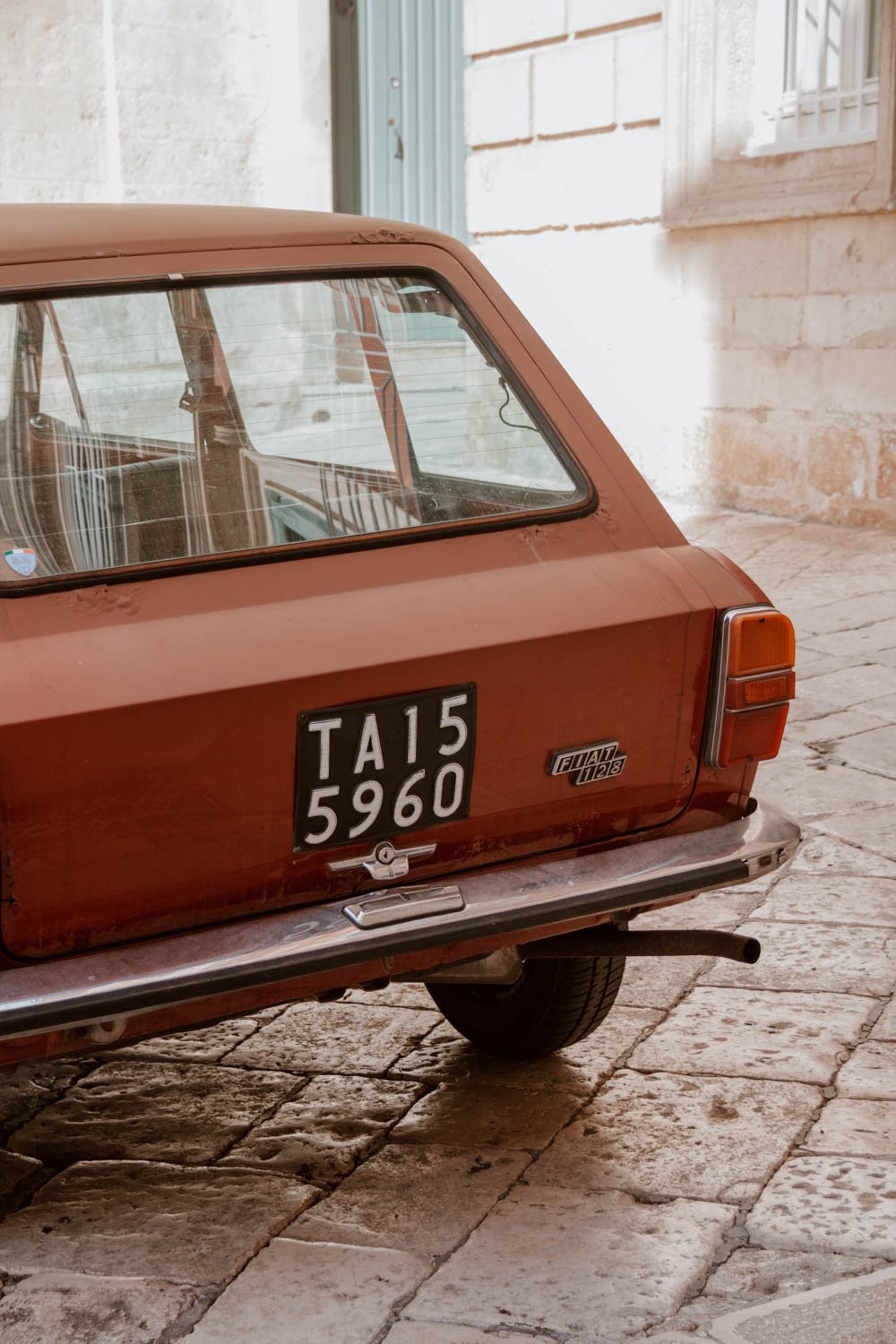

It Extends Further Than Otranto
When we were researching our first trip, it took some time before we released just how large the region of Puglia was, as most articles that we could source to help us plan our route involved sticking firmly to the east coast.
In many cases this was a time-related thing - after all, if you only have three days, you don't want to spend hours in the car. However, we just want to make clear that there is soooo much more to Puglia than just Polignano, Ostuni, Alberobello, Lecce and Otranto!
If you've got more than a couple of days, we implore you to head all the way around the coast to the city of Gallipoli, with its gorgeous historic old town located on an island. This is especially true if you prefer sandy beaches over rocky coves, in which case be sure to the nearby Punta Prosciutto, Torre Lapillo, Santa Maria al Bagno and Parco Natural Reginoale Porto Selvaggio e Palude del Capitano to your itinerary.
Or if you feel like going completely off the beaten track, head up to the pretty little hilltop towns of Foggia or the cave city of Ginosa. You can read more about our our undiscovered tour of Puglia in this guide: A Different Side of Puglia | Caves, Hill Towns & History By The Sea
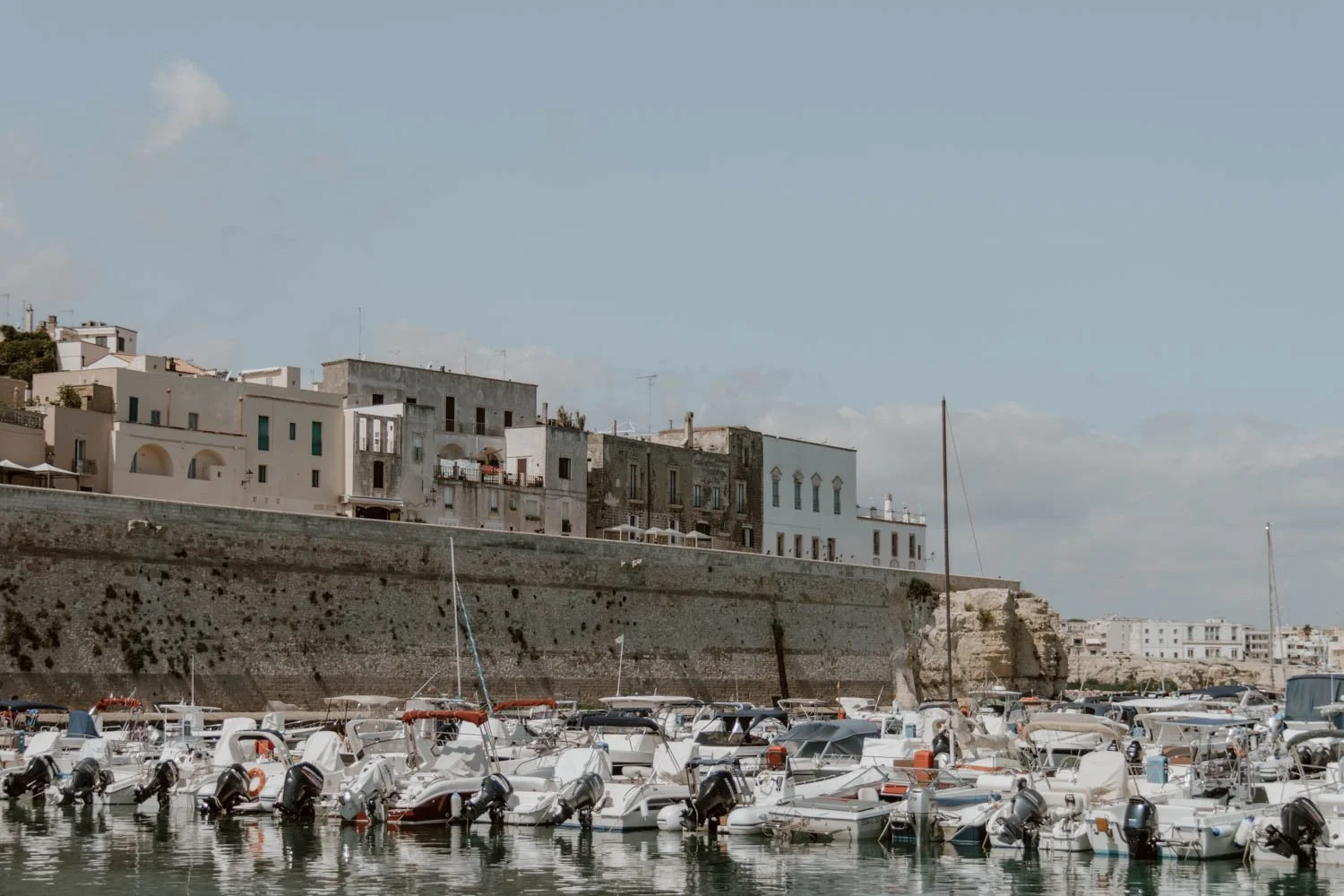
The Lido Is King - And Bloody Confusing
And, if we're honest, sometimes kind of annoying.
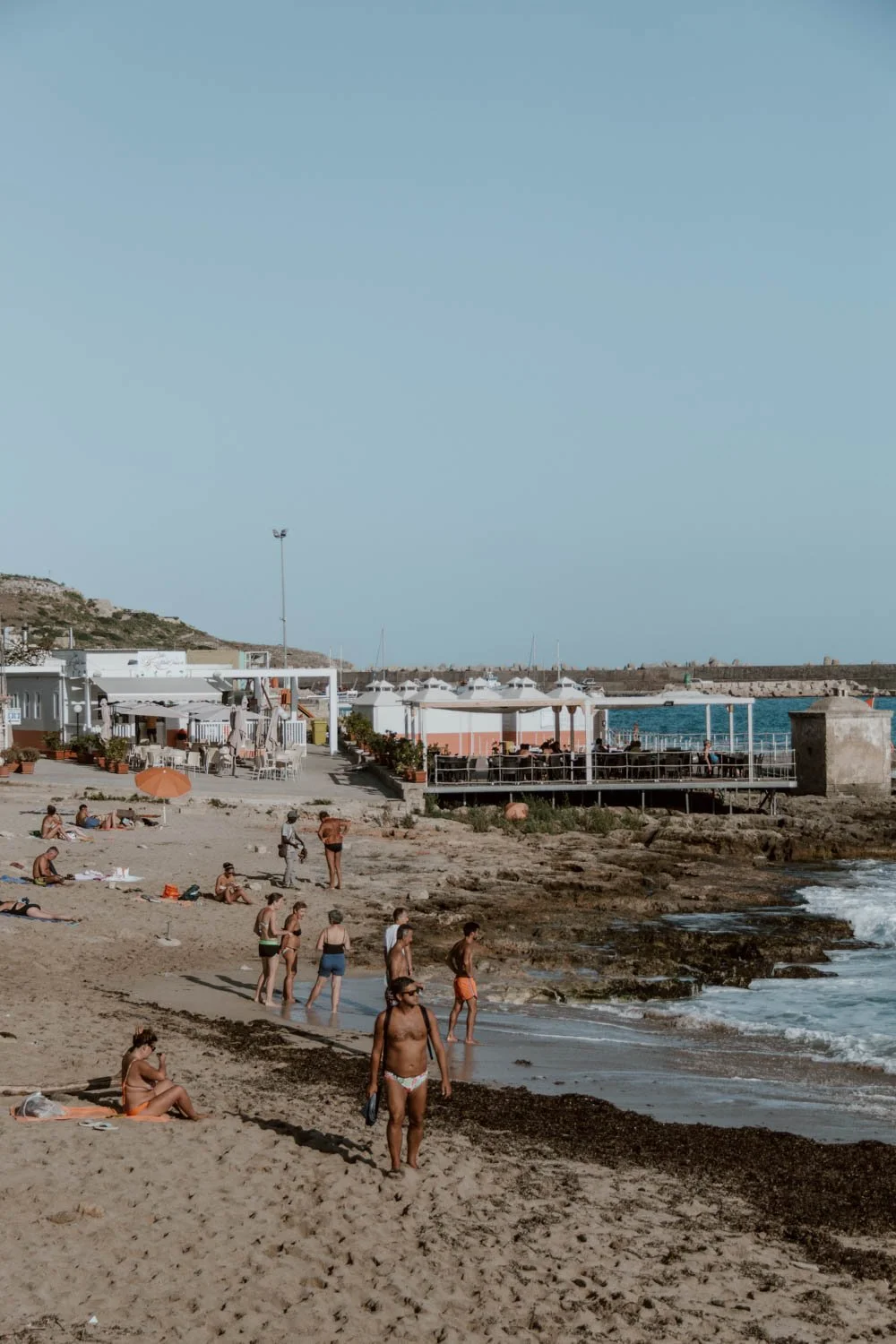
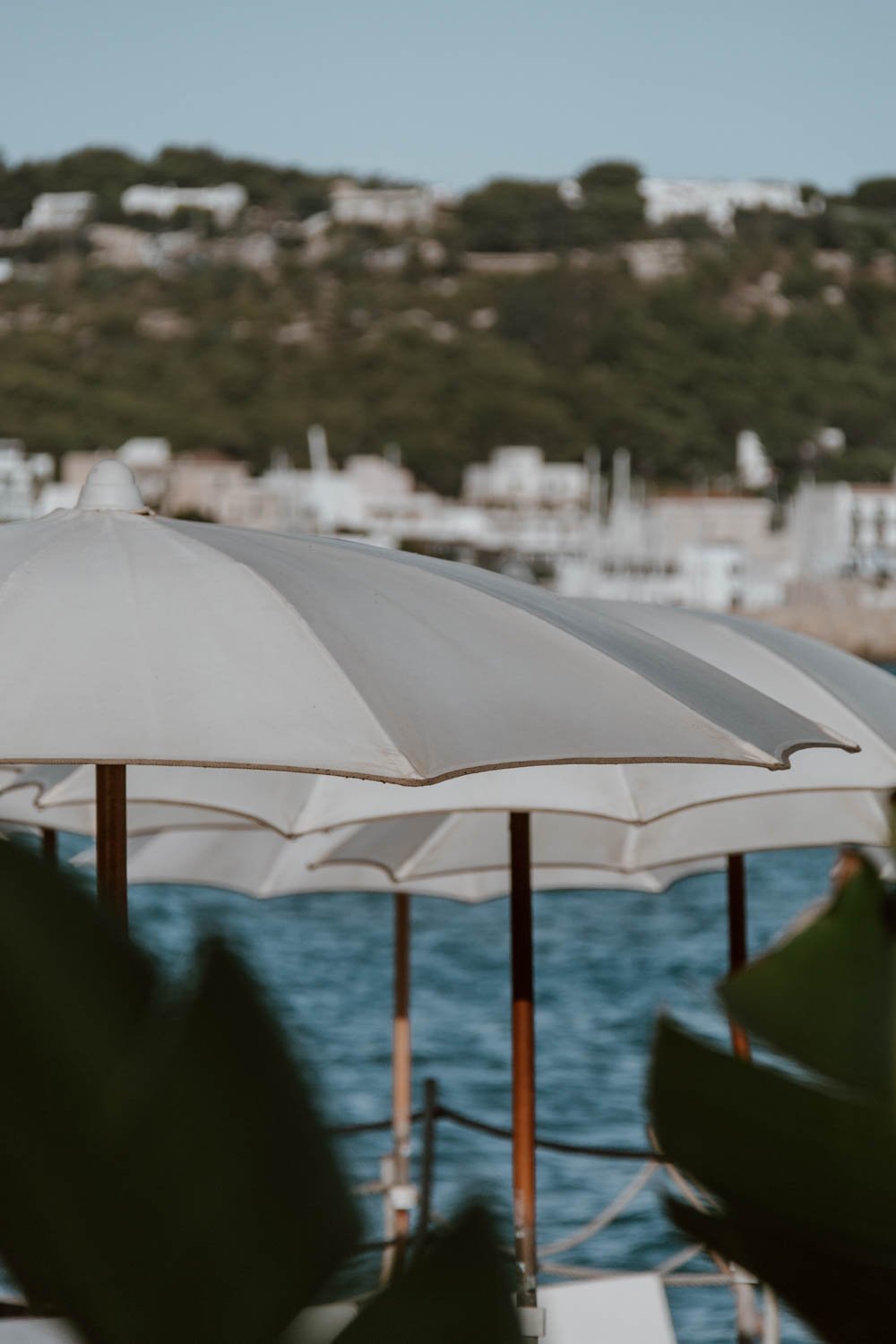
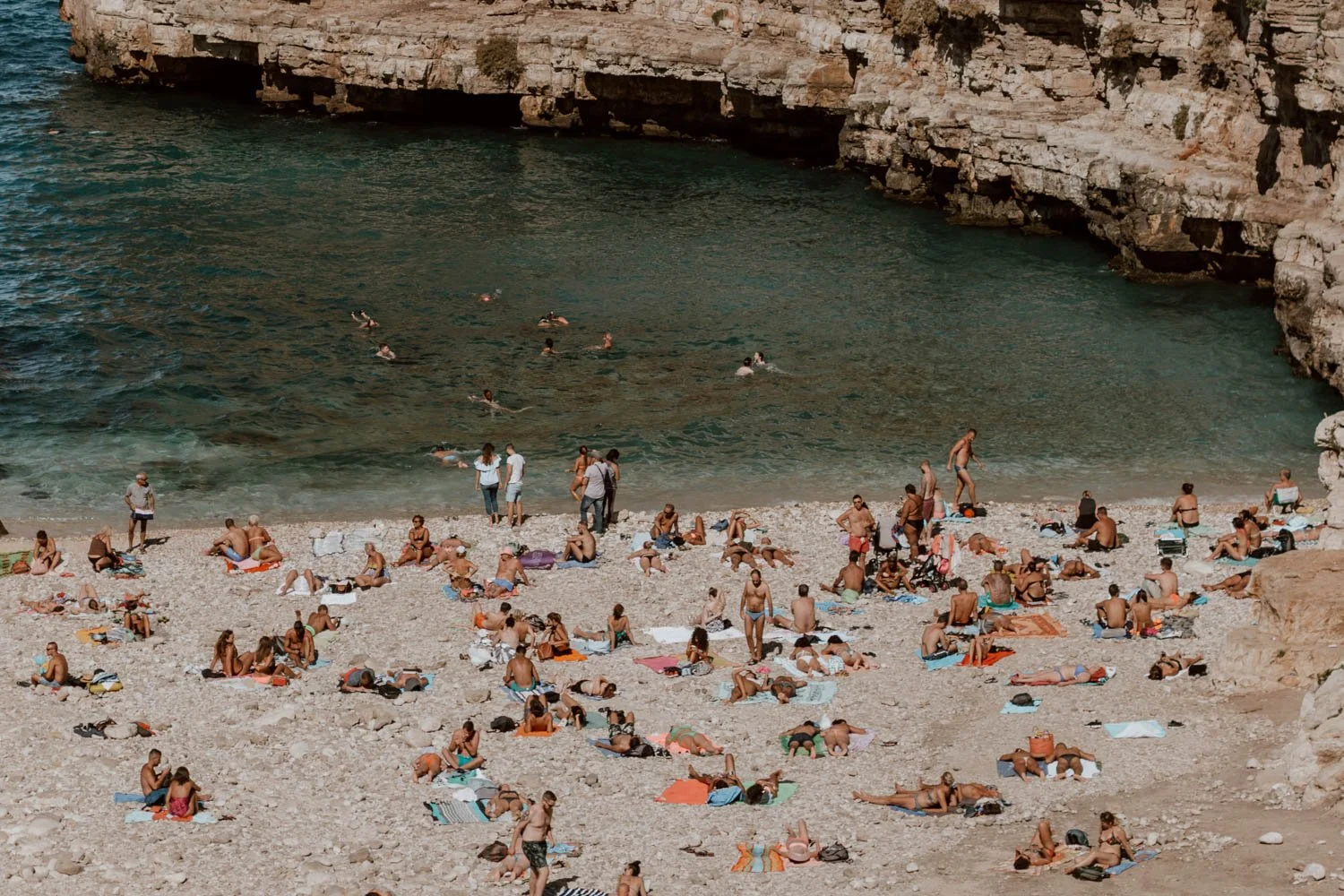
There are some fabulous beaches in Italy - you can find our favourites in this guide - and we happen to be of the opinion that everybody should have access to them. Unfortunately, in Puglia, as in many areas of Italy, large sections of beach along the coast are either completely inaccessible without paying a fee (many of which tout themselves as beach clubs), or covered in privately owned pay-to-play sun loungers.
These are usually called ‘lidos’ and it means that those of us that make do with a oversized sarong and artfully crafted piles of sand have no choice but to bed down together along narrow slithers of sand that provide 'public access to the sea'.
It's a thorny issue in Italy, and whilst you may see some brave Italians placing towels right at the water's edge, directly in front of the lido’s sun loungers, technically they're on private property and could be moved along. It unfortunately meant that we pulled up to what we thought as a beautiful beach area on a couple of occasions, only to find it an explosion of signs, sunbeds and people, meaning we didn't even get out of the car.
If the somewhat nuanced rules of these beaches become a little too much for you, consider visiting one of the 'free beaches', or spiaggia libera. Although significantly rarer, they at least allow you the opportunity to plonk your towel wherever you damn please!
As for the best beaches in Puglia to visit? We loved those around Ostuni, Otranto and Gallipoli, and the coves we chanced upon whilst driving around the very southern tip at Santa Maria di Leuca.
Keep Reading // Want to know more about how these beach clubs work - and why we’re now fans of them after several summers in Italy? Read our post - The Art of The Italian Lido.


You Have Two Airports To Choose From
Flying into Puglia? You have two choices - Bari in the north, and Brindisi about a two and half hour drive further south.
For those travelling from the UK, Bari is the obvious choice.
The flights are more abundant (and a little cheaper)*, plus it’s a gorgeous city to explore - definitely deserving of being on a longer itinerary. You needed spend days there either, with a two hour walking tour covering the main sites.
If you’re planning on doing a full Puglia-loop road trip, and trying to choose between the two airports from a practicality standpoint, it really doesn’t matter too much which one you fly into, or out of as you’ll inevitably pass through both cities.
Oh, and you should know that 'Puglia' - pronounced poo-lee-yah - is the Italian name for the region, whilst ‘Apulia’ is the historical Latin and English-speaking version. You may have seen both in your research, and they can be used interchangeably, but we always go with the Italian.
*The exception seems to be if flying from Manchester, where there is no direct flight to Bari, but one several days a week during the spring / summer to Brindisi.
Top Tip // Read our guide to Bari for ideas on things to do and where to stay.
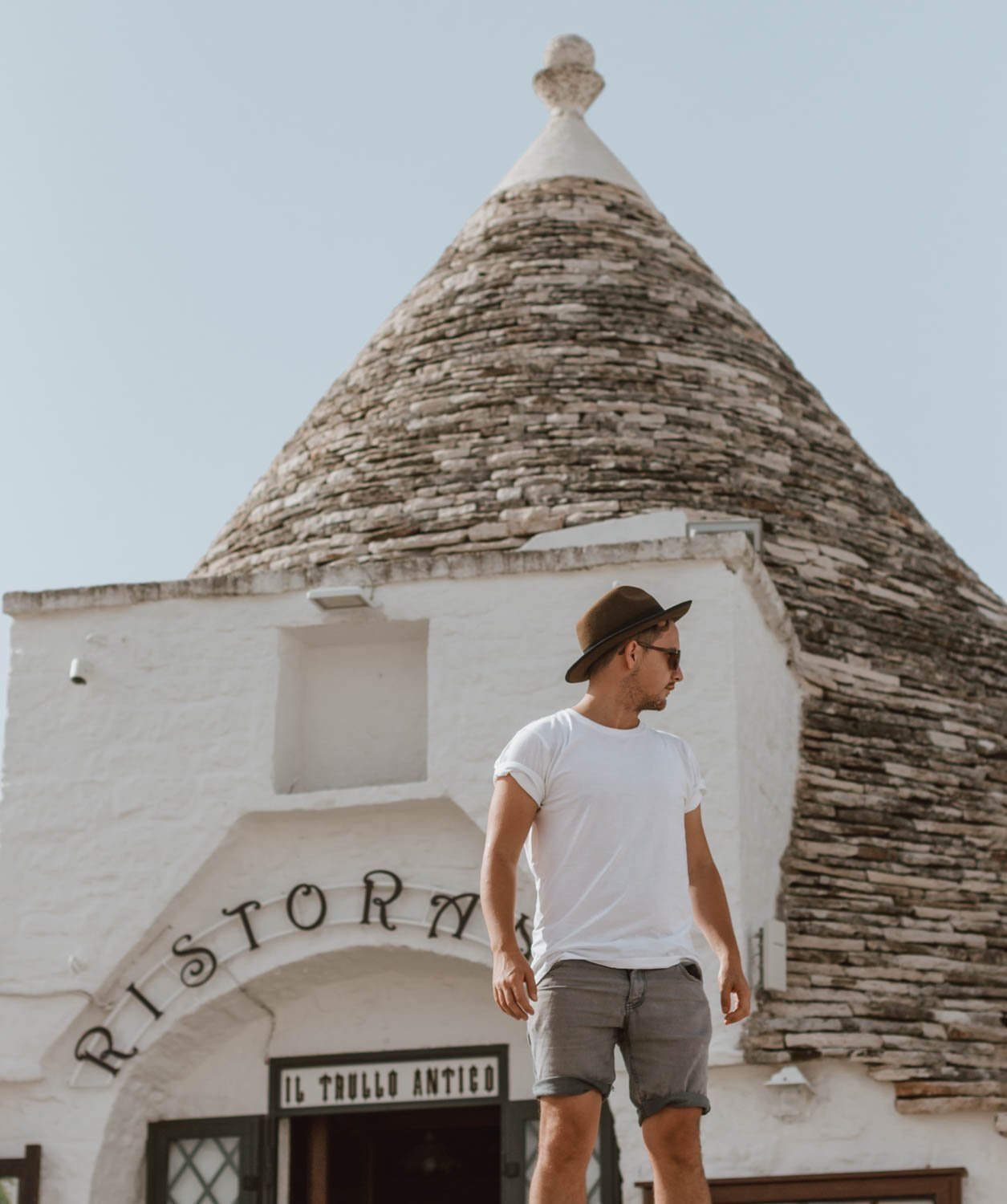
You Can Stay In A Trulli
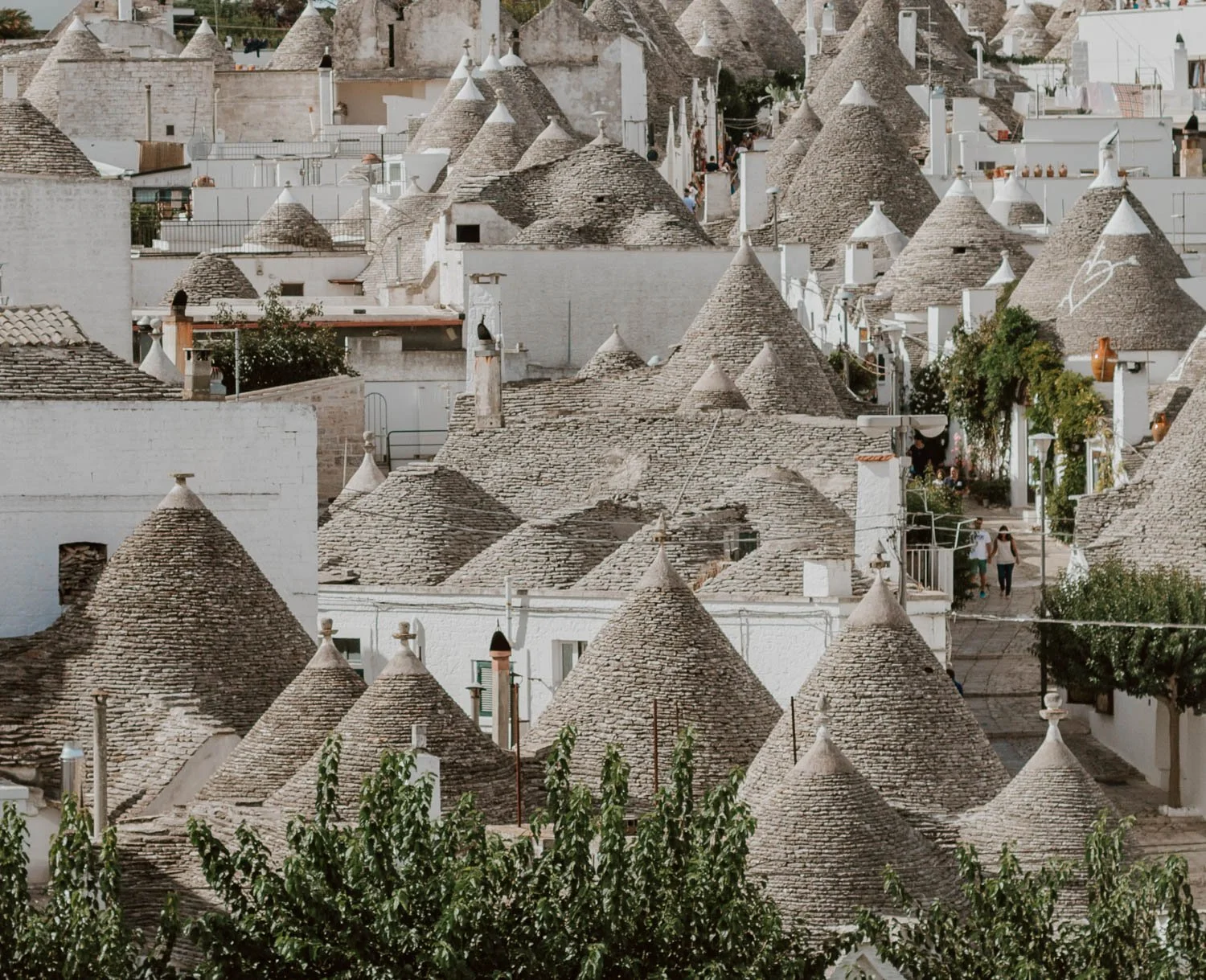
The trulli dotted across the Puglian landscape are a curious structure.
Present for hundreds of years, these cone shaped dwellings have a history that although widely discussed, continue to mystify historians as to their true origins. Were they the result of Greek invasion or deforestation? Or could it be the heavy tax laws of the 17th century, when any permanent structure incurred a significant levy - being able to topple your trulli with the removal of a single keystone would have been of tremendous benefit to poor farmer!
Perhaps we'll never know, but that doesn't make their existence - and experience - any less of a Puglian must.
If simply visiting the trulli-heavy spot of Alberobello (and perhaps taking a walking tour) isn't quite enough for you, consider staying in one overnight. We’ve recommended a number of trulli experiences in various guides across our site but a handful of our top picks include:
Grandi Trulli Bed & Breakfast is one of the best options in Alberobello for those looking for a place which serves as base for a few nights, alongside a unique trulli experience. A two-minute walk from the church, it is over two floors, with a gorgeous en-suite bedroom within its conical roof, a lovely outdoor terrace and breakfast included.
Astra, is a 16th century trullo set in a wonderfully peaceful and romantic location and run by Giuseppe & Anna-Maria. It's a perfect choice for couples or honeymooners, with prices starting at £117/night.
With its rustic luxury vibe and excellent design features, Il Trullo dell' Agricoltore oozes authentic Italian charm and offers a uniquely beautiful trulli experience in Alberobello for £126 per night.
Hermanas Relais. By far the most luxurious option in the centre of Alberobello (with a price tag to match - £172 per night for two people), this has been beautifully restored to a high standard a boutique hotel feel.
Il Trullo della Massaia. Surprisingly large for, this 400 year old trullo is the perfect combination of new and old. Full of original features, it has been exceptionally well updated to provide the needs of a modern traveller.
I trulli di nonna Totò. Located a little out of Alberobello, you get an awful lot for your money here! Recently refurbished, it has all mod cons plus a lovely little terrace.


The Food Is Regional & Delicious
If you’ve travelled widely in Italy, this will feel familiar rather than disappointing. Puglian cooking is unapologetically regional, and most menus work within a fairly tight framework rather than chasing constant variation or novelty.
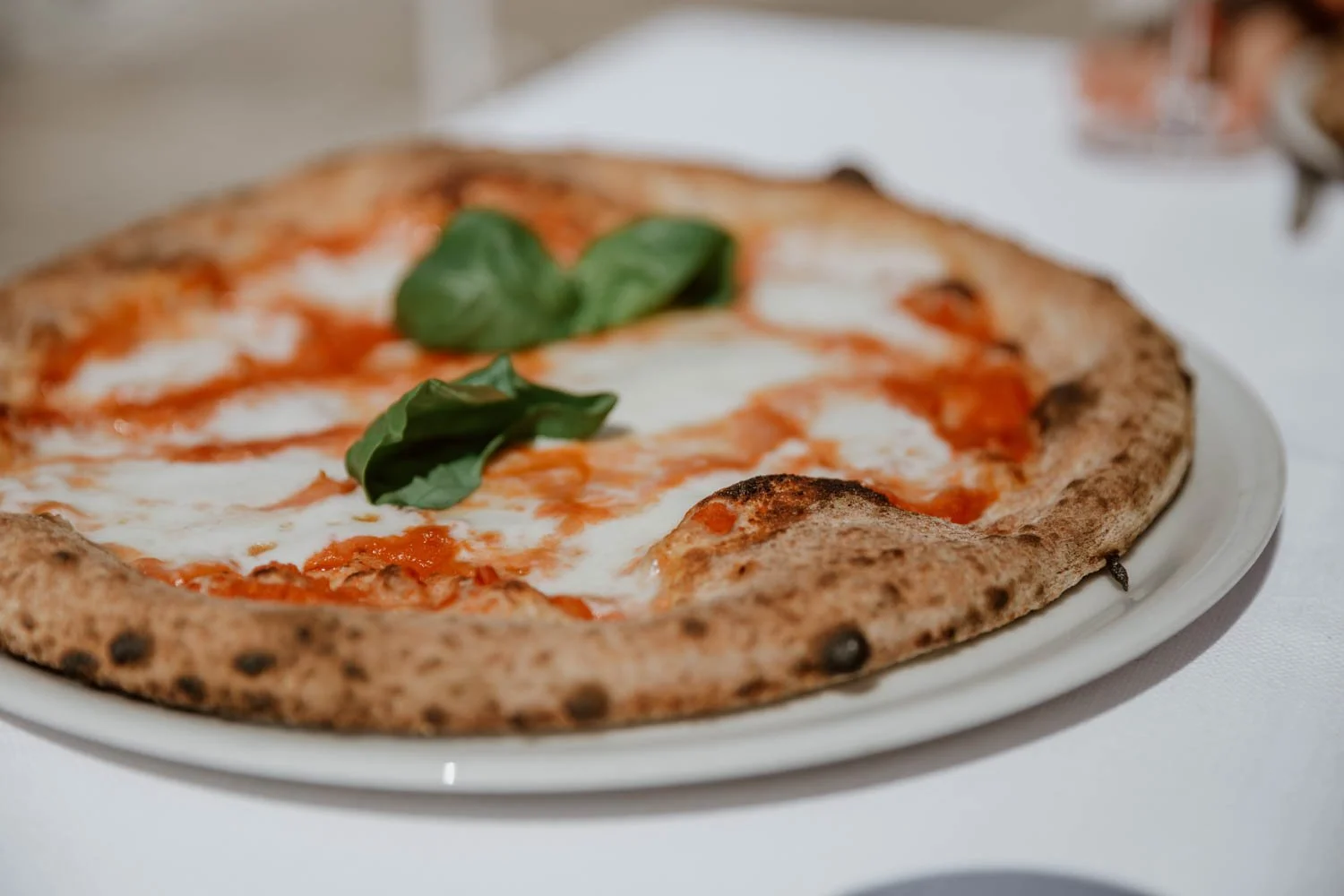
Now don’t get us wrong, food in Puglia is delicious. Seafood is plentiful and usually very fresh, pasta is still handmade in many places, pizza is reliably good, olive oil is local, and the bread alone deserves its reputation - we never met a basket we didn’t immediately demolish.
What this does mean is that you’ll see the same dishes reappear from town to town, often prepared in subtly different ways but rooted in the same traditions. For a shorter trip, this is part of the pleasure; for longer stays, it simply becomes noticeable rather than tiring, and some travellers find themselves happily cooking a few meals at home just to balance things out.
Vegetarians are also well catered for, despite Puglia’s reputation for seafood. Orecchiette with tomato sauce is almost always available, vegetables are treated seriously, and even fancier coastal restaurants tend to offer simple, plant-based dishes that feel entirely at home on the menu.
Top tip // There’s nothing like learning to make fresh pasta, from scratch, with your own two hands (although we must admit, having taken three classes thus far, we’re still a long way from being experts!), and the good news for keen chefs travelling to Puglia is that there are an abundance of cooking classes available across most popular tourists spots in the region, including Bari, Lecce, Otranto and Alberobello.
There's No Escaping The 'Coperto'!
The first few times we ventured to a restaurant we couldn't understand why we were getting charged an additional fee; we'd established that there were service charges levied in many restaurants but the rules of their application didn't seem clear.
The vast majority of restaurants in Italy (and almost all we came across in Puglia) charge something called a 'coperto'. This is an additional fee, charged per person, that is applied to the bill irrespective of what you eat, how much you spend and where you sit. Generally it ranges between one and two Euro per person, which may not seem very much if sitting down for a large evening meal, but will make you think twice if just nipping in for a quick cheap and cheerful lunch.
It is most definitely not a tip though, and the charge should be noted in the menu or signs outside.
Note that the coperto tends to increase the closer you are to big tourist destinations or plazas - yet another reason why it's always a good idea to explore some hidden streets! It is also almost certain to be higher (or supplemented by a 'terraza' charge) if you choose to dine in the outdoors space provided by a restaurant, rather than inside.
Don’t want to be that first-timer in Italy getting unjustifiably outraged at the coperto change or confused about whether to tip or not? Find out more in this short post - What Is The Coperto in Italy?


For A Quieter Time, Avoid August
This probably won’t come as a surprise. August is peak holiday season in Italy, and Puglia fills up fast - beaches, restaurants, accommodation and roads included. Prices rise sharply, availability drops, and everything from restaurants to boat tours will be chock-a-block with tourists, particularly around Ferragosto in mid-August.
Obviously, we're not saying that to avoid the crowds you have to head over to Puglia in the dead of winter (although we're sure it would lovely, that ocean deserves to swum in!), but shifting your trip even slightly can make a real difference. Late June is now one of the best windows: the weather is properly summery, the sea is warming up, and prices and crowds haven’t yet reached their peak.
September is still a lovely time to visit, but it’s no longer the quietly empty month it once was. After years of being recommended as the sweet spot (we’re definitely guilty of this), it has become increasingly popular, especially in the first half of the month. It’s certainly calmer than July and August, but if you can travel later in September, you’ll notice the atmosphere soften considerably, particularly inland and away from the busiest beaches.
In short, avoiding August remains the single most effective way to enjoy Puglia at a gentler pace - and being flexible by just a few weeks either side of it can dramatically improve both cost and experience.
You Can Nip Across To Matera
When we were planning the first leg of our road trip, one place kept popping up - Matera.
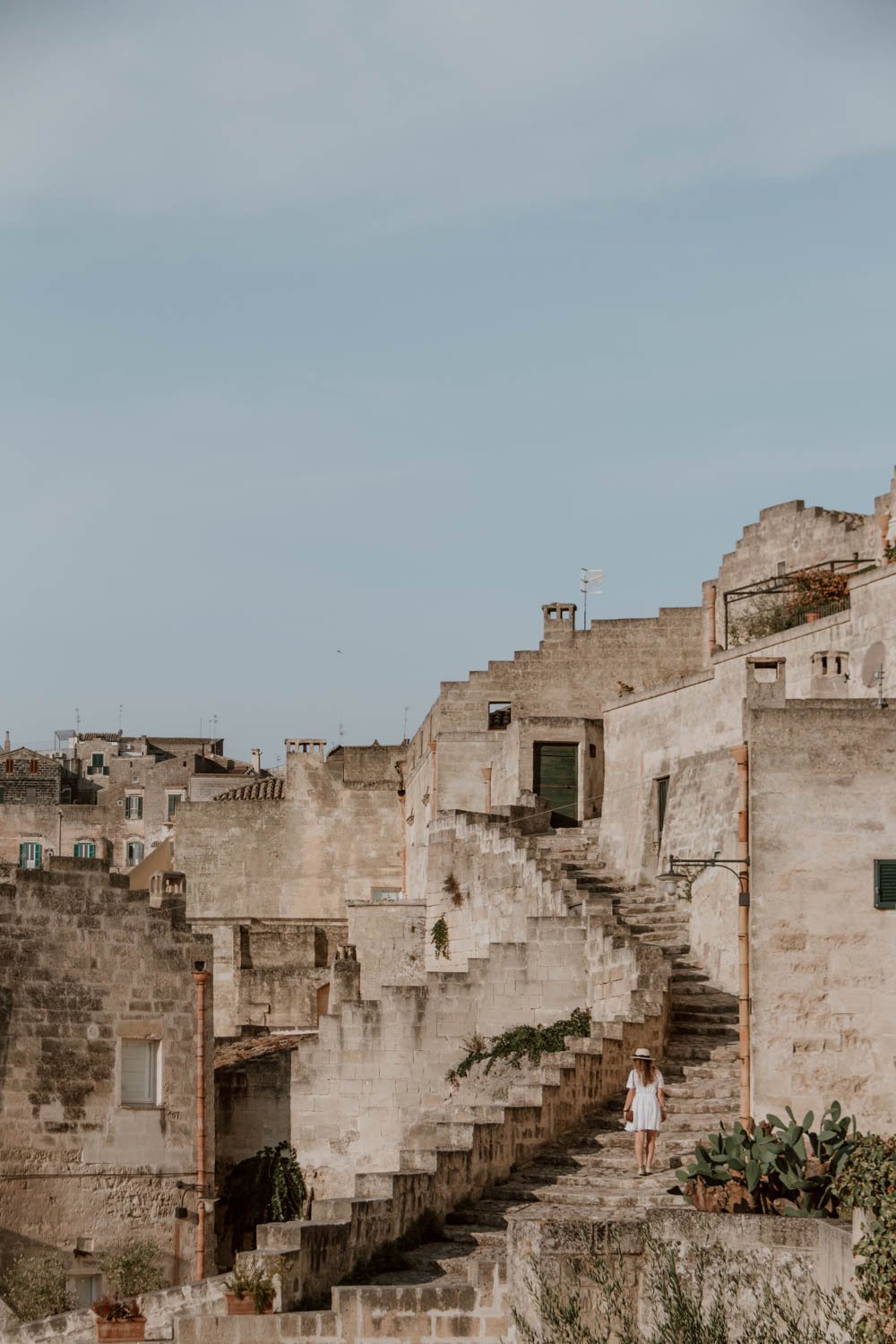
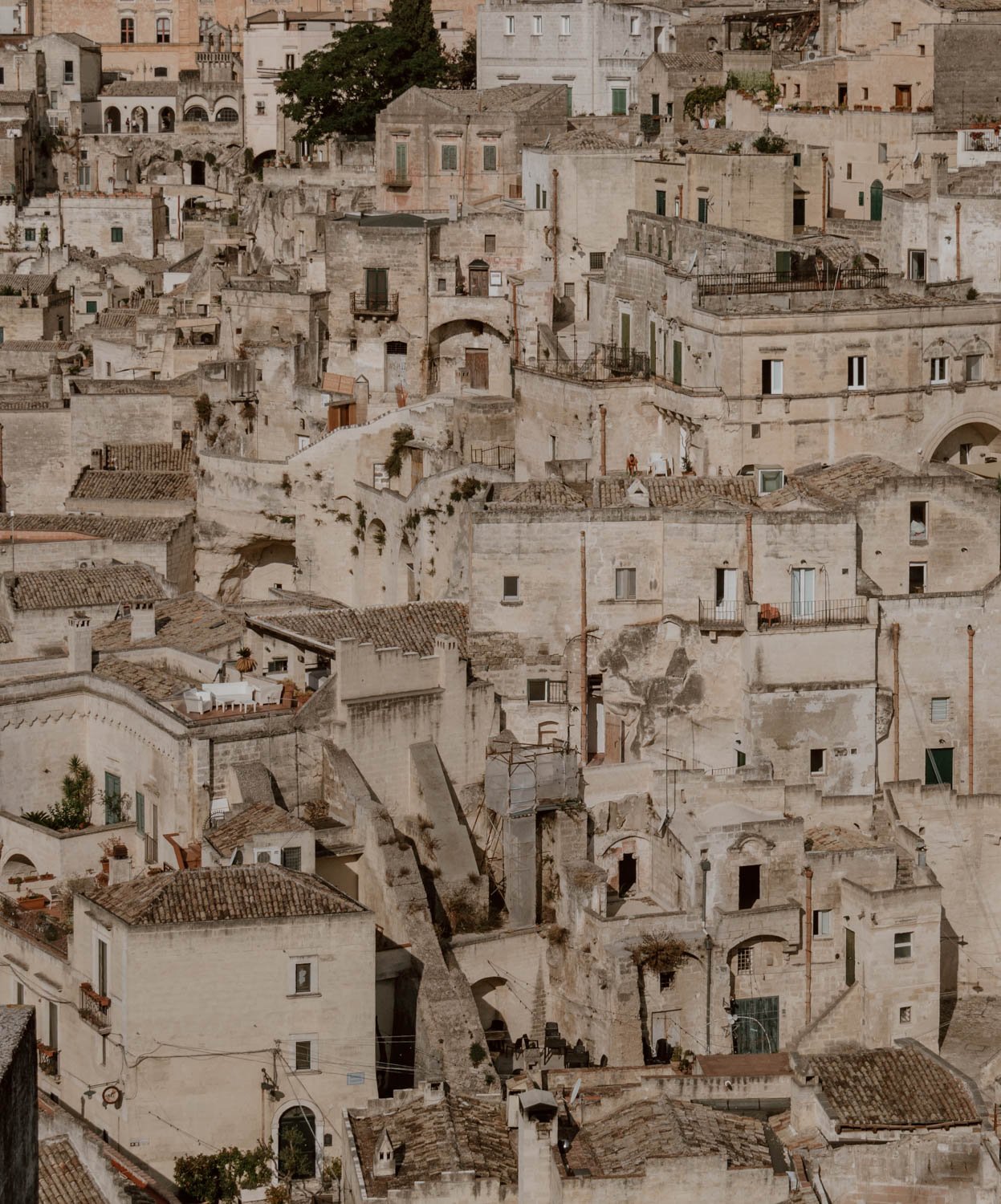
This remarkable city, one of the longest inhabited in the world, the 2019 European City of Culture, and the filming location for the latest Bond film, is a no-brainer when planning your Puglia road trip. Of course, it's not actually in Puglia (something that embarrassingly took us a while to realise), but don't you dare let that put you off.
Get lost in the Sassi di Matera, take a slow hike across a ravine, stay in a boutique cave hotel, marvel at the beautiful cathedral, or join a walking tour - there’s plenty to keep you occupied for a few days but if you only have a night, it’s still worth adding it in.
We've created a lovely little guide to Matera, full of things to do, where to stay and how to get there - and of course, lots of pretty pictures!
Did you know ?? // Whilst Matera is by far the most well-known cave city in southern Italy, Puglia actually has its very own miniature version by the name of Ginosa. Located in the Terra delle Gravine Regional Natural Park (alongside Laterza and Mottola, two other delightful off-the-beaten-track canyon towns), this is a land of scars from the deep cuts and crevices of ravines and canyons formed millions of years ago, and the pockmarks of hundreds of human cave settlements carved within the soft tufa rock slopes. It’s a fantastic area to visit, and a delightful alternative to the increasingly busy and popular Matera.
You can read more about these three towns in this post.


English Is Not That Widely Spoken
Not a surprise given that it's not an English speaking country, but definitely one to note if you're used to travelling in the north of Italy or other popular tourist destinations in Europe.
The larger hotels will be fine, as are hostels, and fancier restaurants should have at least one member of staff who can speak English, but in small eateries, tiny towns, petrol stations - even our car rental depot - we had to rely on our limited Italian.
Instead of seeing it as a hindrance however, look at it as a fun way to learn a little more about a country, spend some time before your trip learning some basic Italian (a phrase book might come in handy - this is the one that we used) and have fun chatting with locals - you'd be amazed how far a little of the local language can go!
Top Tip // Since visiting Puglia, and falling further for Italy with subsequent summers in Sicily and the north, we made a point of learning some Italian with the Michel Thomas Method. It’s the teacher and technique we used when learning Spanish, and we both personally recommend it to everyone we meet as it’s totally different to how languages are taught in school and so intuitive.
You can get 30% off all his language courses with the discount code ‘MTMADR’.
Always Stay In The Old Town
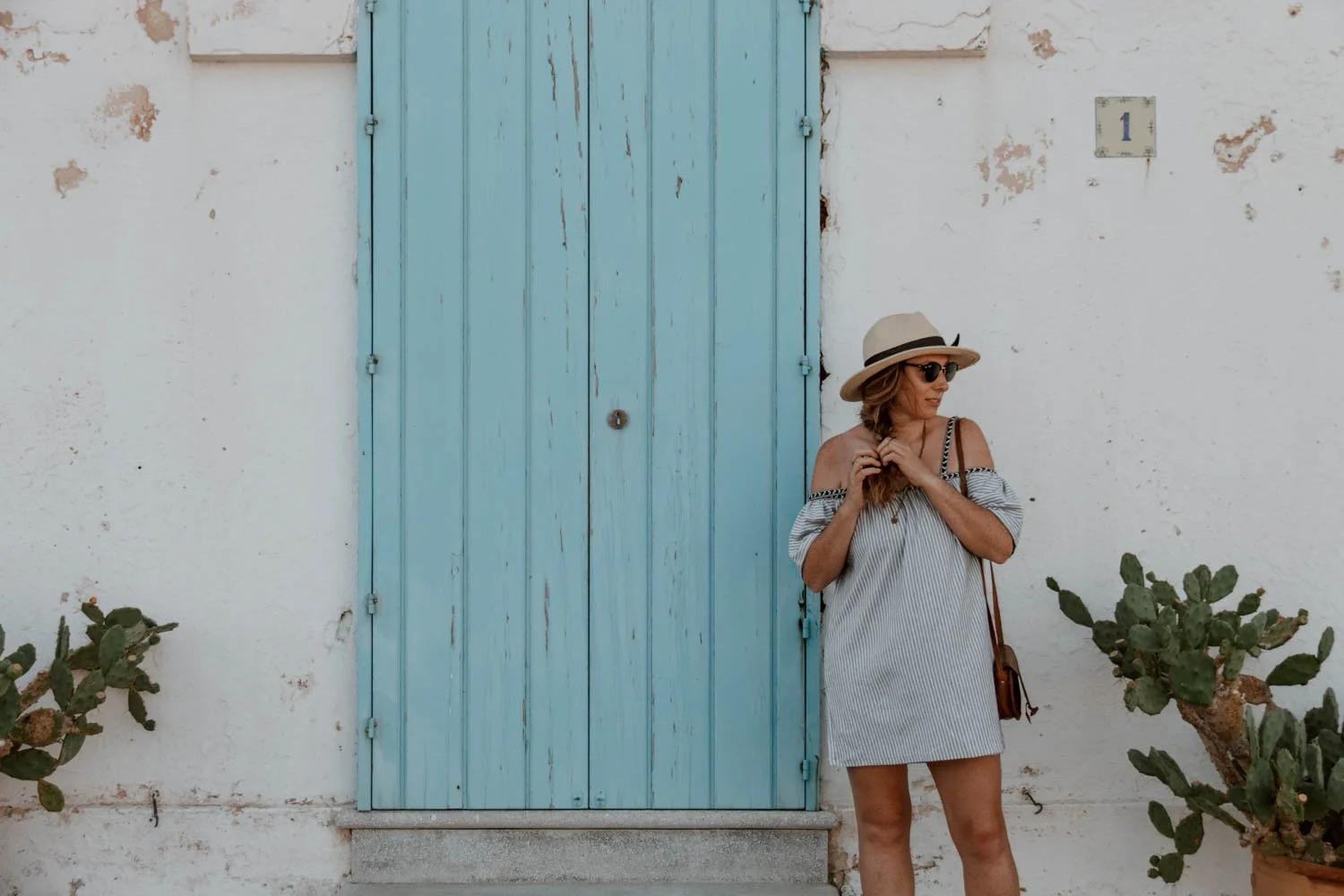
Every single town and city in Italy has a centro storico, a wonderful place of crumbling facades and labyrinthine streets, now returned to ancient splendour by those who left for the new town many years ago.
Naturally, this is where the tourists flock, and for short stays, by virtue of sights and amenities, where you'll likely spend most of your time.
It's practical - but they're also so beautiful. We found the most photogenic to be in Gallipoli, Locorotondo, and Ostuni.

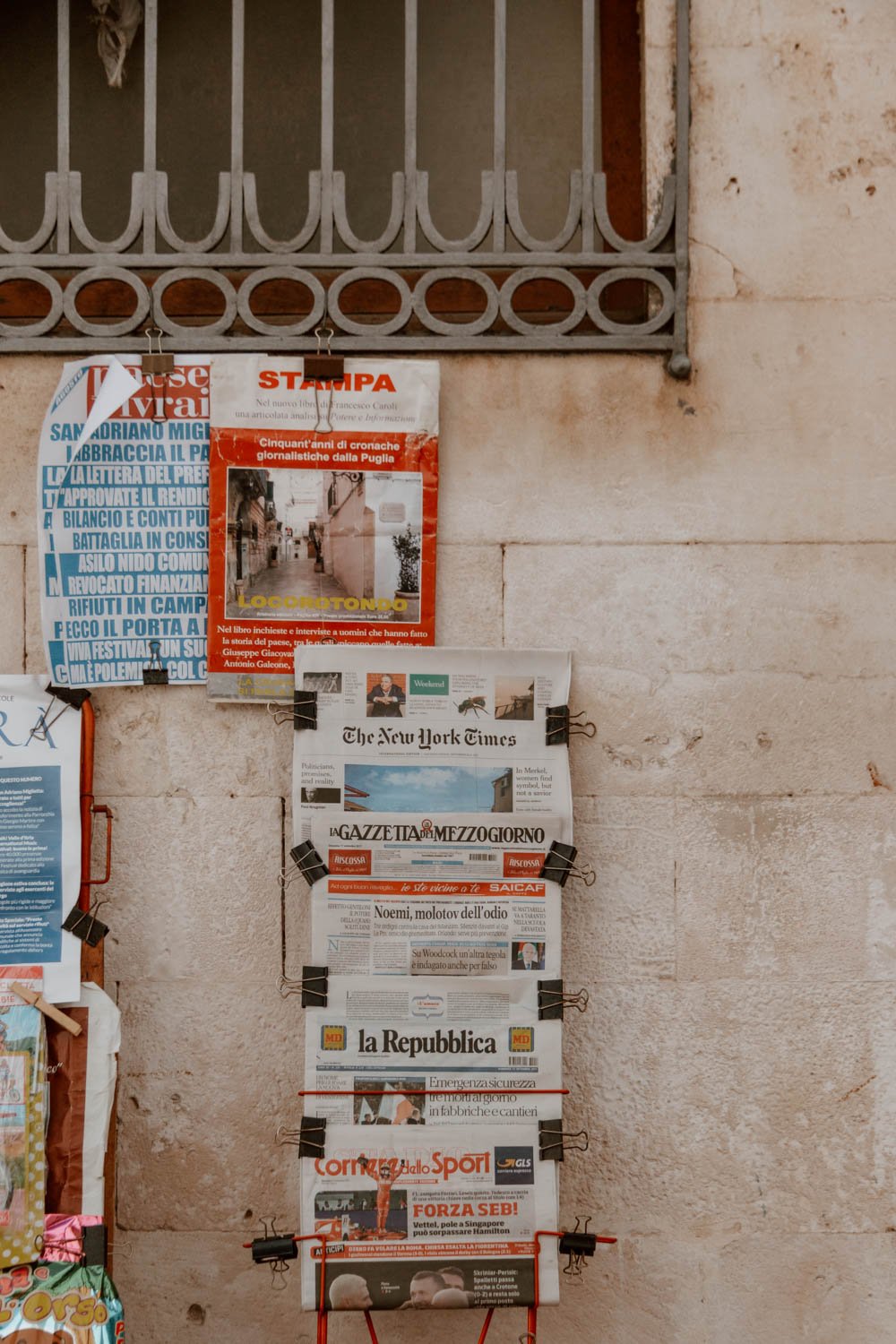

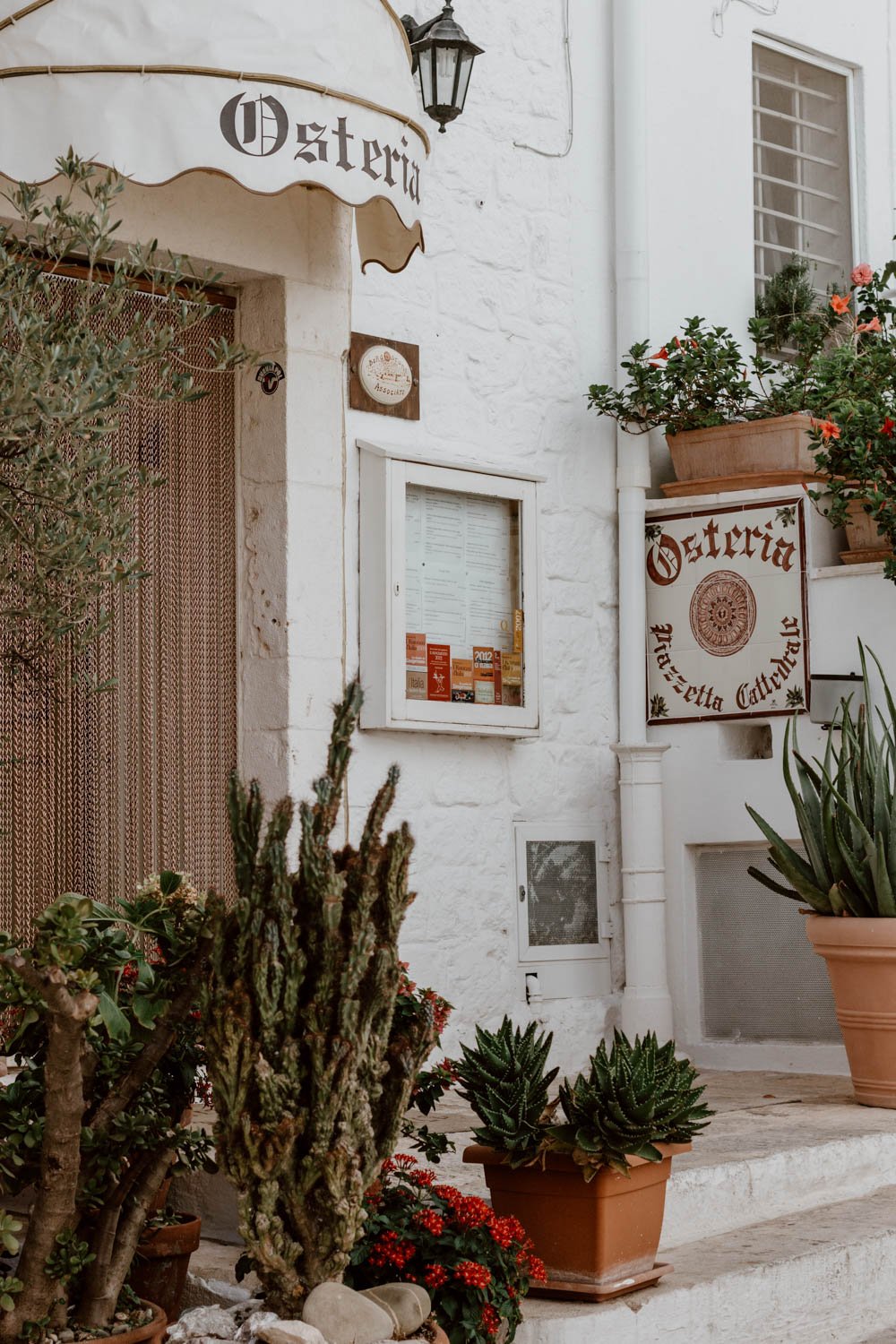
Breakfast Is Sweet - And Honestly, We’ve Fully Converted
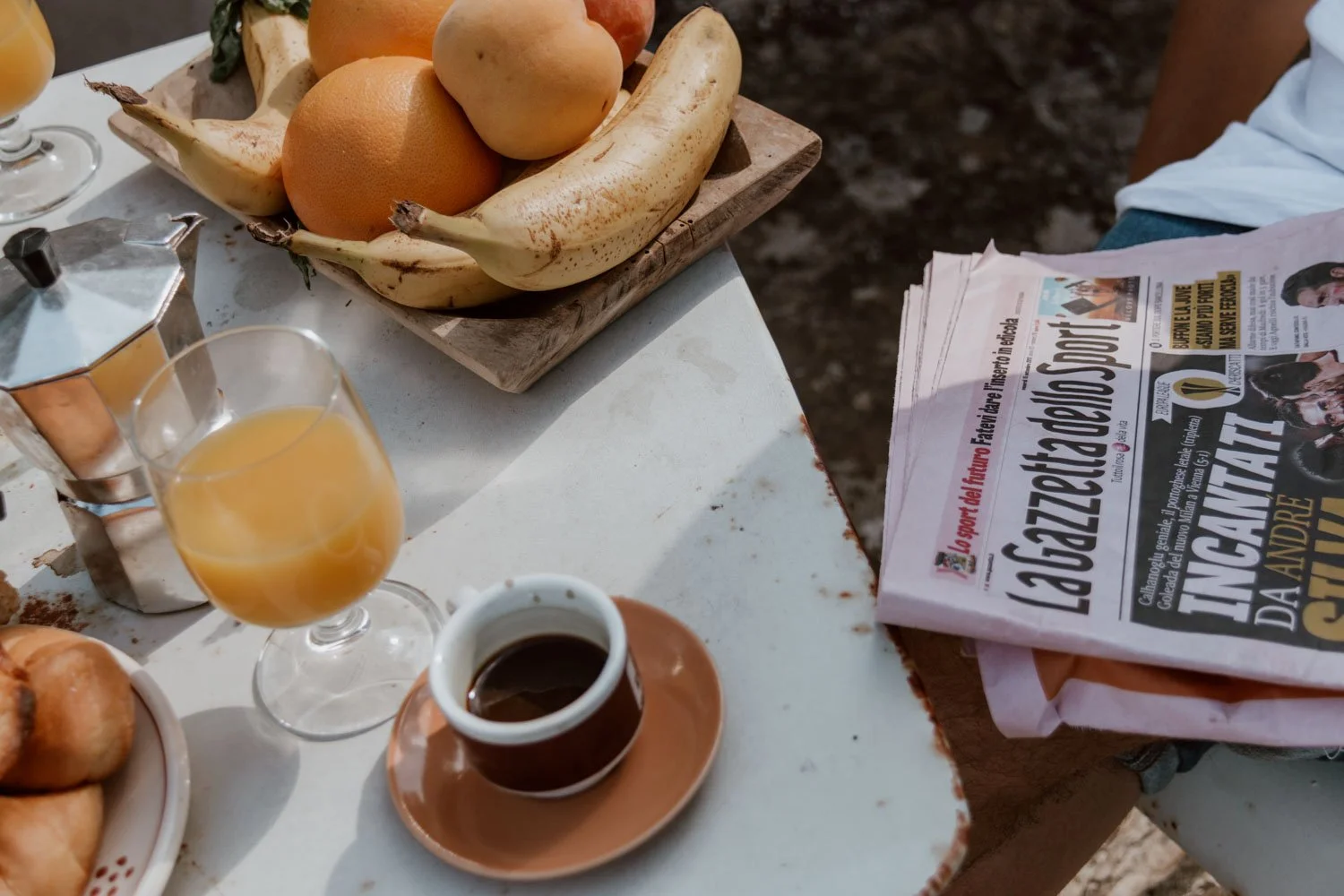
If you’re imagining long hotel breakfasts piled with eggs, fruit and endless options, Puglia (like most of Italy) does things very differently. Breakfast here is simple, sweet, and built around a cappuccino and a cornetto - the Italian answer to a croissant, often filled with chocolate, custard or jam - taken standing at the bar or lingering over a small table.
When this post was first published, we thought we’d miss a bigger, savoury start to the day. After spending many more months travelling in Italy since, we’ve done a complete U-turn. There’s something genuinely joyful about starting the morning like a local, and we now consider a daily cornetto not just acceptable, but an essential part of the experience. Give Emily a cornetto al cioccolato and a frothy cappuccino and she’s very happy indeed.
That said, if you’re firmly in the savoury-breakfast camp, it’s worth setting expectations. Outside of places geared towards international visitors, eggs, avocado toast and similar options aren’t the norm. You’ll find them in some coastal hotspots and larger towns, but they’re the exception rather than the rule.
If a sweet breakfast really isn’t for you, staying somewhere with a kitchen - or a hotel that offers a more substantial spread - can be a good compromise for a few mornings. For everyone else, we’d strongly recommend embracing the Italian way, if only to eat where Italians actually eat, rather than defaulting to cafés designed around foreign tastes.
Puglia Isn’t a Bargain Anymore
A decade ago, one of Puglia’s biggest draws was how far your accommodation budget could stretch, particularly once you looked beyond places like Polignano a Mare. In 2026, that’s no longer the case. Prices across the region have risen noticeably, and even fairly unremarkable apartments in the most popular towns can now feel eye-wateringly expensive in high season.
That said, where you stay still makes a big difference. Step away from the headline destinations, or base yourself in smaller inland towns and lesser-known coastal villages, and you can still find better value - often in places that feel calmer, more local, and better suited to exploring the region as a whole. The saving isn’t always dramatic anymore, but it’s usually enough to justify the short drive.
If you do want to stay in Puglia’s most popular spots, a bit of strategy helps. Booking early is increasingly important, particularly for good-value Airbnbs, which tend to sell out well in advance. Looking just outside historic centres can also make a surprising difference; prices often drop noticeably a few streets beyond the old town perimeter. However, travelling outside the busiest summer weeks - especially July and August - remains one of the most effective ways to keep costs under control without sacrificing location.
What has changed alongside the rising prices is the standard of what’s available. Puglia now has a genuinely impressive range of places to stay, from thoughtfully designed boutique hotels to beautifully restored apartments and masserie, and in many cases the higher costs do reflect a real step up in quality, comfort and overall experience.
In short, Puglia rewards flexibility more than ever. It’s no longer a budget destination, but thoughtful choices about timing and location can still make it feel good value.



There's Excellent Weather All Year Round
Our first visit to Puglia took place in late September, and we were amazed at just how wonderful the weather was. Beach days are shorter than the height of summer but with plenty of days breaching 28C we had ample opportunity to top up our tans, and bar one stormy day in Gallipoli, never had to change our plans because of bad weather.
And whilst the winter months certainly require a jumper or two (our second visit was mid-March), you'll still be able to enjoy most of what the region is famous for - just with a little more time to discover pretty little towns rather than secluded coves.