11 Super Useful Things To Know Before Visiting Ischia
There are certain places where turning up without a plan, bookings or real idea of what to expect can be part of the fun: Ischia isn’t one of them.
Whilst it has all the hallmarks of a laidback southern Italian island - think beaches designed for full days rather than a quick dip, a plethora of excellent seafood restaurants perfect for long, wine-fuelled lunches, and lungomares designed for a slow passegiata come golden hour - Ischia is also much bigger than many people expect. This means getting around from beach to beauty spot takes more time than you might think, ferries don’t all arrive at the same port, and a few other surprises.
That’s why we’ve we’ve written this post.
After our own stay, we’ve pulled together the sort of advice we wish we’d known before arriving - the practical, occasionally unglamorous stuff that helps you plan more confidently and enjoy your time on the island once you’re there. Like how to get from Naples to the right ferry terminal without sprinting across town, why that beach that looks “right there” on the map might actually involve 150 vertical steps, and what to expect when you try to board a packed bus in 34-degree heat.
We’ll cover which areas are best to stay in (spoiler: it matters more than you think), how to navigate the island’s surprisingly extensive and indispensable bus network, and why you might want to buy your own beach umbrella. You’ll also find out why it’s probably not worth coming on a day trip, what kind of food to seek out (it’s not just pizza), and which thermal spa charges nearly €50 just to get in.
Some of these tips will help you plan your days better. Others might just save you from the sort of minor meltdowns that happen when your sunlounger budget has disappeared before lunch, and Google Maps insists there’s a shortcut that’s actually a goat path!
So, whether you’re visiting for two days or ten, we hope this guide helps you make the most of your time in Ischia - or at the very least, helps you avoid standing in the wrong ferry queue.
This is 11 Things To Know Before You Visit Ischia.
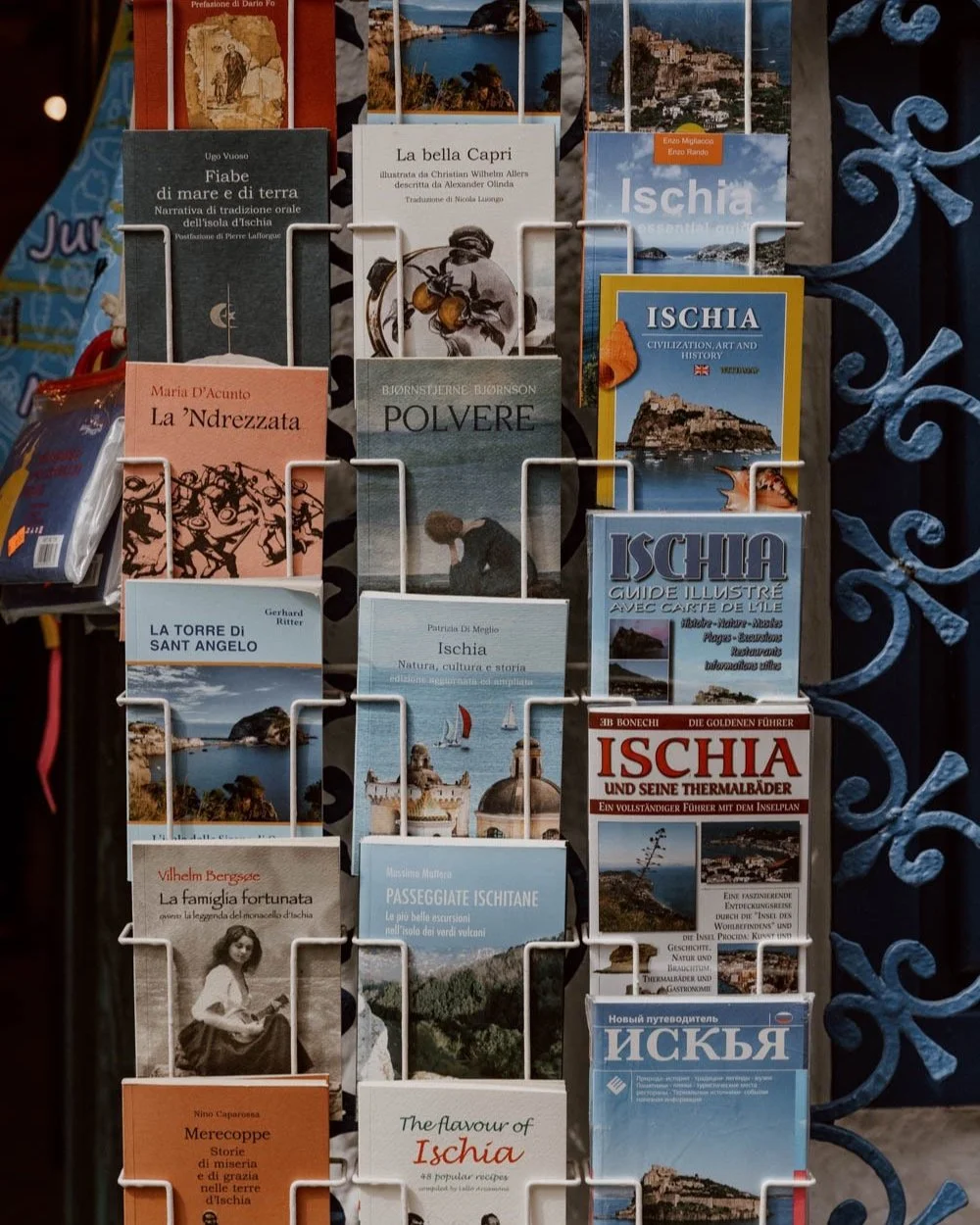
The Ischia Essentials
Arrive / from Naples, Procida, or Sorrento
Distinguish / between the island’s three ports
Enjoy / Ischia’s thermal spa credentials
Choose / the right area to stay for your style
Book / accommodation before your ferry tickets
Size / matters - Ischia’s much bigger than you think
Transport / buses great, but often jam-packed
Do / a highly-rated boat excursion around the island
Avoid / a day trip from Naples et al
Consider / shoulder-season but not too late
Getting to Ischia: Ferries, Tickets, and Ports
Once you’re in Naples, reaching Ischia is relatively straightforward, but there are a few important things to know that’ll make the journey a lot easier.
There are three ferry ports on the mainland that connect to Ischia:
Molo Beverello for fast hydrofoils
Porta di Massa for slower ferries that accept vehicles
Pozzuoli which is slightly further out from Naples
Molo Beverello and Porta di Massa are close to each other in the city, but not easily walkable from one to the other with luggage, so double-check which one your ferry leaves from before arriving at the port - signage isn’t always obvious, and the last thing you want to do is drag a suitcase across a busy multi-lane road in 35°C heat.
The hydrofoils are quickest (around 50-60 minutes) and more comfortable for foot passengers, but they have stricter luggage rules and you’ll often be charged a few euro extra for anything bigger than a small backpack. The slower ferries take around 90-100 minutes, but they’re cheaper and accept cars, scooters, and bulky luggage. If you're prone to seasickness, they're also usually a safer bet for a smooth ride.
Whilst you’ll see plenty of people turning up and buying their tickets on the day, during the summer or at weekends it’s definitely best to book tickets in advance. You can buy direct from operators like Caremar, Alilauro, or Medmar - or compare all schedules and tickets on a site like FerryHopper. You don’t need to print your ticket, but definitely have a digital copy to hand (preferably downloaded already). Also, be aware that delays and last-minute changes are fairly common, particularly if the sea is rough.
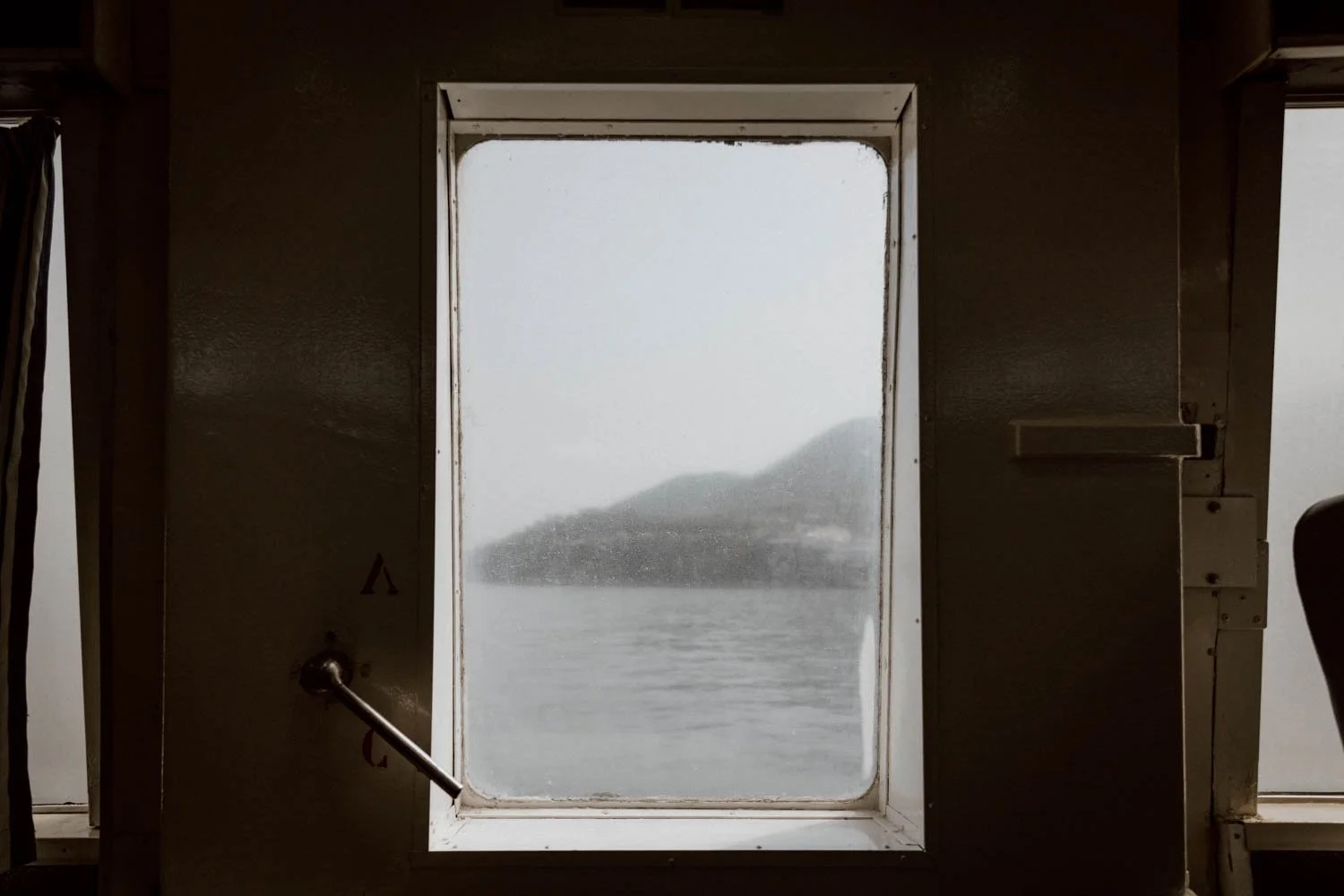
The most important point to be aware of before booking anything though is that Ischia also has three ports:
Ischia Porto (maps) | The busiest, most connected, and a good base if you’re not planning to rent a vehicle - the majority of hydrofoils dock here.
Casamicciola Terme (maps) | Quieter and closer to some spa parks, but with fewer ferry connections
Forio (maps) | A handy option if you’re staying on the west coast - like us - but not all ferries stop here.
Knowing which port your ferry arrives at - and how that relates to onward travel for your accommodation - can save you a lot of hassle and extra expense once you land on the island (it’s also quite common for people to accidentally disembark at the wrong port).
This is why booking your accommodation before you book your ferry is the best idea.
Keep Reading // We’ll be writing a full guide on how to get to Ischia (published soon)
Choose the Right Area to Stay
As we mentioned, Ischia is a lot bigger than you might expect, so where you stay can really affect your experience - especially if you're not planning to rent a scooter or car.
Ischia Porto is the island’s main town and transport hub. It’s busy and touristic, but convenient with plenty of restaurants, shops, and ferry access. It’s not the prettiest place on the island, but if you’re only staying a couple of nights or want to explore other areas by bus, it does the job well.
Forio, on the west coast, has a much more relaxed feel. It’s a great all-rounder with pretty streets, some lovely churches, excellent sunsets, and easy access to several of the best beaches. This is where we chose to base ourselves (in this apartment) and we were really happy with our decision.
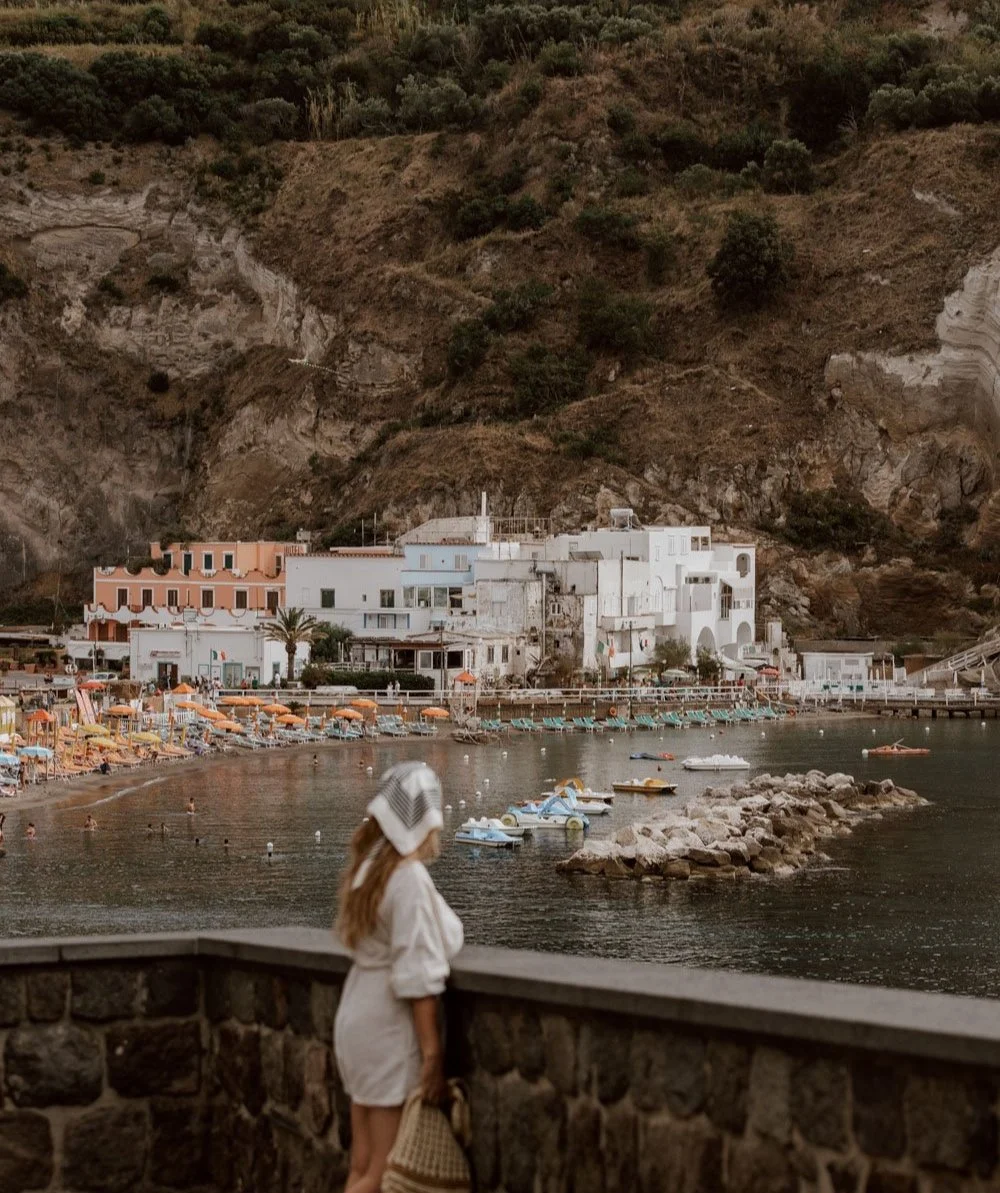
Sant’Angelo is car-free, quiet, and more upmarket - a cluster of pastel buildings and boutiques on a rocky peninsula. It’s beautiful, but you’ll need to walk down from the main road (and back up again), and food and accommodation here are more expensive than elsewhere. It wouldn’t be a great base for our travel style, but for those looking for a certain type of Ischia holiday, it will be absolutely perfect.
Casamicciola Terme is a solid choice if you want to be close to the thermal spas without Sant’Angelo prices. It’s also a good base for inland hikes or visiting villages.
Lacco Ameno, just along the coast from Casamicciola, is small, elegant, and known for its boutique hotels, leafy streets, and proximity to a few of the island’s better spa options. It’s also home to the famous Negombo thermal park. While it feels a little more polished and resort-like, it’s a good middle-ground if you want something stylish but not too overdeveloped.
Barano and Serrara Fontana are up in the hills and far more rural. You’ll find vineyards, peaceful walking trails, and a much slower pace - perfect if you're after somewhere quiet and don’t mind being away from the coast (Ischia really is defined by its countryside as much as its shoreline).
Each area has its pros and cons, so it’s worth working out what kind of trip you want - beaches, spas, walks, boat trips, long lazy meals, lots of day trips - and choosing your base accordingly. And if you’re relying on public transport, double-check that your accommodation is on or near a main bus route.
Keep Reading // Our 'Where to Stay in Ischia' guide has personally picked recommendations in each base to suit every style and budget.

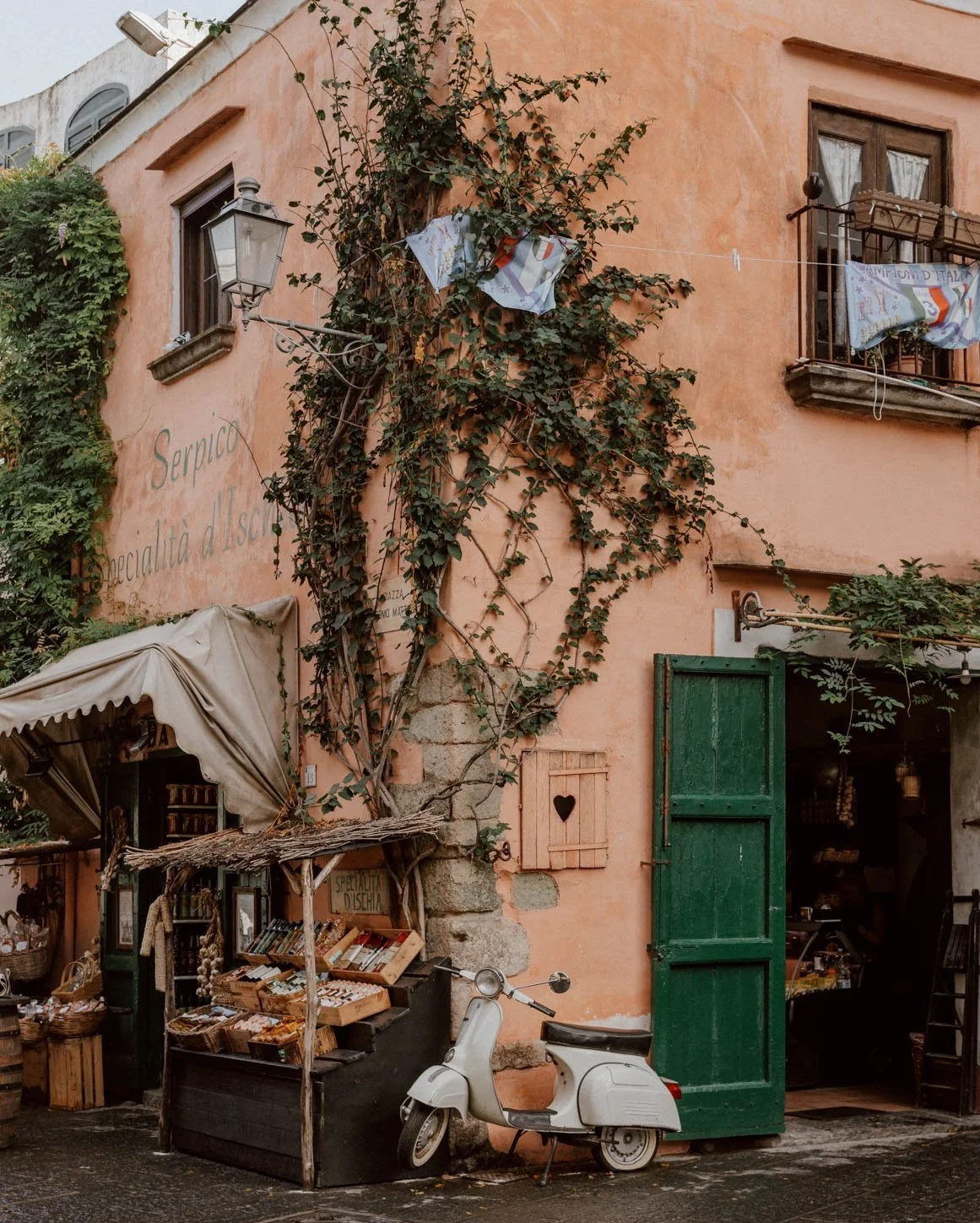

Public Transport is Good - But It Has Its Quirks
For a small island, Ischia has a surprisingly extensive bus network, and it’s the main way to get around the island if you’re not driving or renting any vehicles.
The most useful lines are the CS (Circolare Sinistra, counter-clockwise) and CD (Circolare Destra, clockwise) buses that loop clockwise and anti-clockwise around the island. They pass through most of the major towns and beaches, while other lines connect you to smaller villages or go inland toward Mount Epomeo or Maronti Beach.
Tickets must be bought before boarding, and Ischia still operates on the old school Italian model of only making these available to buy from from newsstands, tabacchis, bars, and hotel desks. Due to a vendor not always being available or obvious, it’s worth working out if you’ll need a few singles or a certain type of multi-day pass when you first come across one.
As of 2026, fares are:
Single ticket (no changes) / €1.70
100-minute ticket (permits connections) / €2.10
Daily pass (unlimited buses) / €5.10
3-day pass / €11.00
Weekly pass / €14.50
Tickets must be validated on the little machines once you’re on the bus. We must say that it is also possible to buy tickets from the driver on the bus for €2 but due to the issue we’ll mention next, it’s often not possible.
Basically, the buses in Ischia are often very very busy in summer. Between 10am and 6pm, they’re often standing room only - if you can even board - and wait times can be long. We were left stranded at the stop quite a few times when drivers simply couldn’t take on any more passengers. Add in that the air conditioning is hit and miss, and journey times can be longer than expected due to traffic and narrow roads, and it can sometimes be a horribly crowded, uncomfortable, and sweaty way to spend your holiday.
Our sympathy lies primarily with the locals who depend daily on these buses though, and they must get really pissed off.
That said, it doesn’t mean you should avoid taking the bus in Ischia as it’s a super affordable and practical way to get around the island.
Instead, our advice is to start early and, instead of being too ambitious about how much you can cover in a day by bus, plan around visiting one or two areas.
If the buses don’t sound appealing, there are some alternatives:
Taxis are everywhere, but they’re expensive. Prices are fixed, clearly listed at official taxi ranks and the drivers really don’t seem to want to negotiate (trust us, we tried). We really recommend trying to limit the number you take though, as unless you have a very large travel budget, daily trips will quickly eat into your cash. Note that Uber doesn’t work here.
Scooters are a popular and genuinely fun way to explore Ischia. We spent a couple of glorious days zipping around the island’s winding roads and loved the freedom two wheels gave us. That said, Ischia is hilly and narrow in parts, so it’s best suited to those with a bit of scooter confidence. Rental is about $25-30 per day, but cheaper the longer you have it.
Rental cars are obviously possible, but just note that parking can be both challenging and expensive in places, and they’re not ideal or enjoyable on some of the narrow countryside and village roads versus a zippy little scooter.
Walking is fine for short stretches, but don’t expect a gentle coastal stroll. Roads between towns often have no pavements, steep inclines, and blind bends. On our first day in Ischia we decided to walk between Forio and La Mortella gardens and it was a tad stressful to say the least! That said, hiking trails inland are a different story - and a great way to experience a quieter side of the island.
Exploring the island by boat is a popular and practical way to go, especially if you want to focus on the coast and avoid crowded buses. This is a super highly-rated excursion from Forio, whilst this is a good alternative if it’s already sold out.
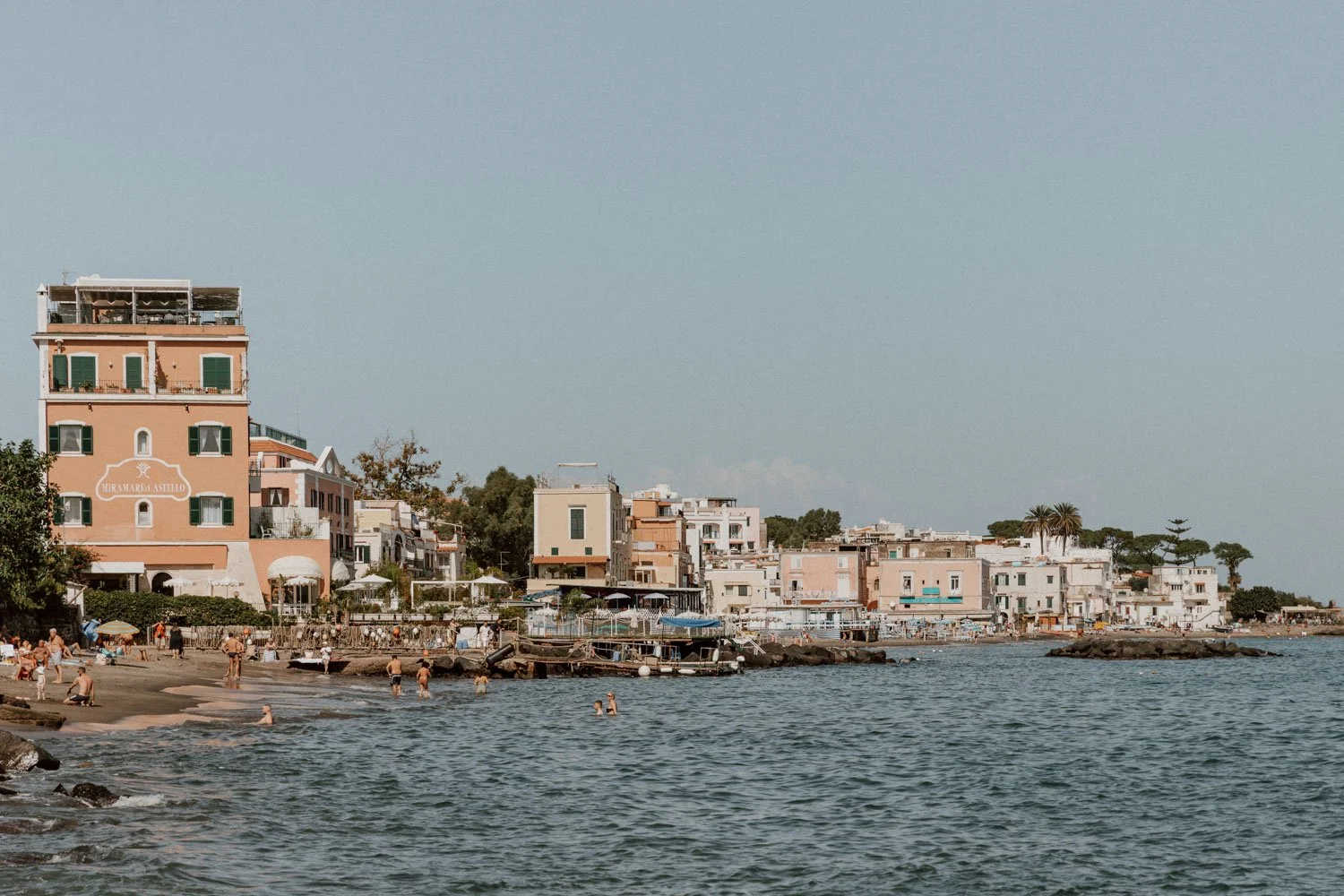
Ischia Is Big - Don’t Try to See It All in Two Days
One of the most common mistakes people make is underestimating just how big Ischia is.
At 46 square kilometres, it’s significantly larger than nearby Procida or Capri, and it’s not a place where you can tick everything off in a weekend. The island is mountainous and winding, and distances that look short on a map can easily take 45 minutes to cover by bus. If you’re walking or scootering, expect things to take even longer - not because they’re far, but because the terrain will slow you down.
This is an island of corners and gradients and sharp turns. It’s made for pottering and lingering, not rushing from one side to the other in a single afternoon.
If you actually want to relax - to enjoy a spa park, stretch out on a beach, wander through a town, and make it back in time for aperitivo - give yourself at least four or five days. That’s long enough to see a few different parts of the island, find your favourite beach, and feel like you’ve properly been to Ischia, not just passed through it.


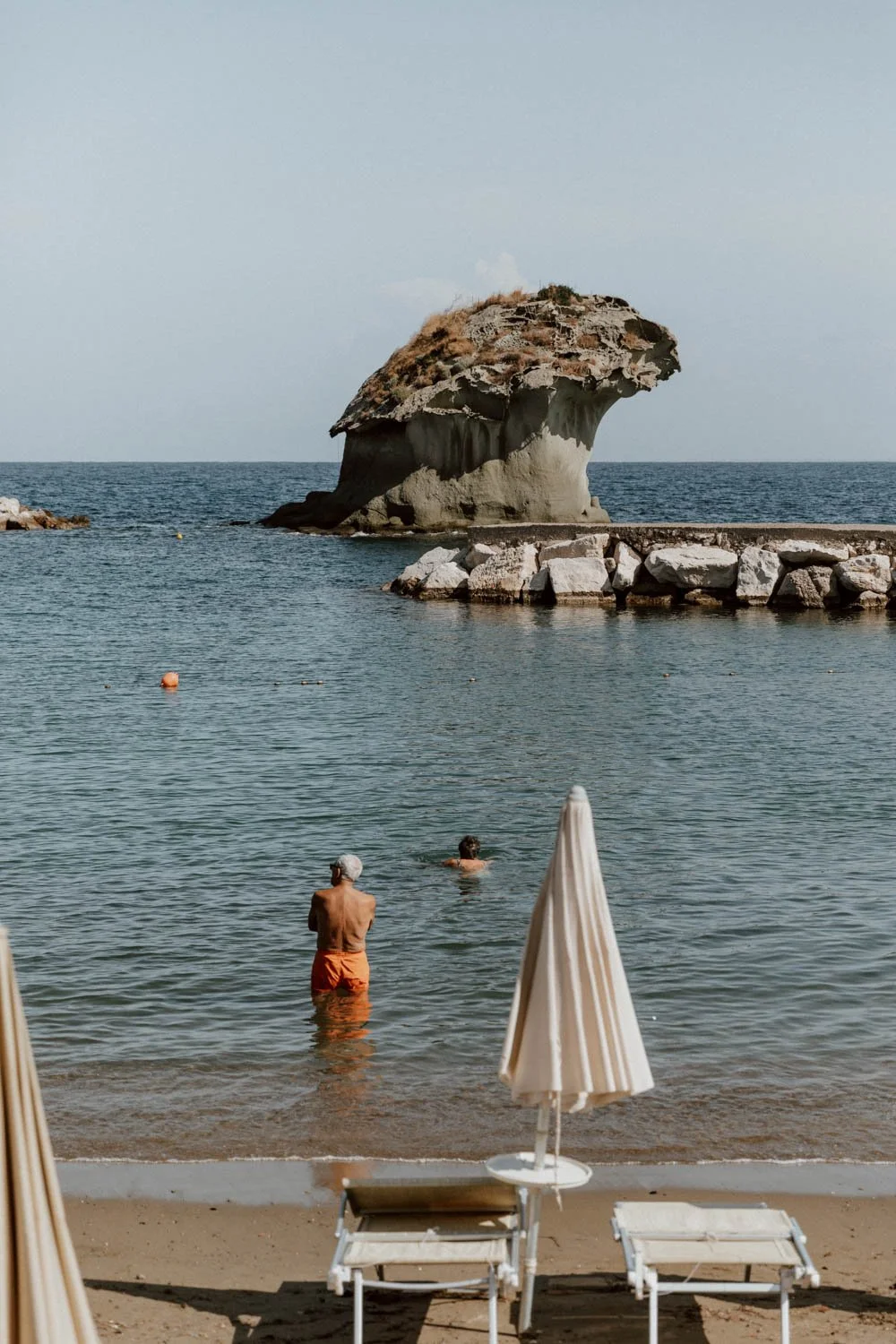
…And That’s Why You Really Shouldn’t Visit on a Day Trip
Ischia might technically be reachable from Naples in under an hour by fast ferry, but that doesn’t mean it’s suited to a quick visit.
To start with, you lose a lot of time in transit. Even on a well-timed day trip, you’re spending around three to four hours just getting to and from the island - and that’s assuming the ferries run on time, which they sometimes don’t. Once you arrive, you’ll only have a few hours to explore, and most of that will be spent within walking distance of the main port.
But more importantly, Ischia isn’t a ‘one-town’ island. What makes it special is the variety: soaking in natural thermal pools, watching the sunset in Forio, hiking above the vineyards inland, or having a long seafood lunch by the water in Sant’Angelo. That diversity takes time to appreciate.
If you only come for the day, you’ll likely end up with a rushed walk around Ischia Porto and maybe an hour on a nearby beach, and missing out on much that gives the island its real character.
So yes, you can visit Ischia on a day trip from Naples or Sorrento - and you’ll see a variety of tours available online. But, unless your goal is simply to tick off another island in southern Italy, you’re far better off planning a proper stay. Even just two or three nights will make a huge difference.
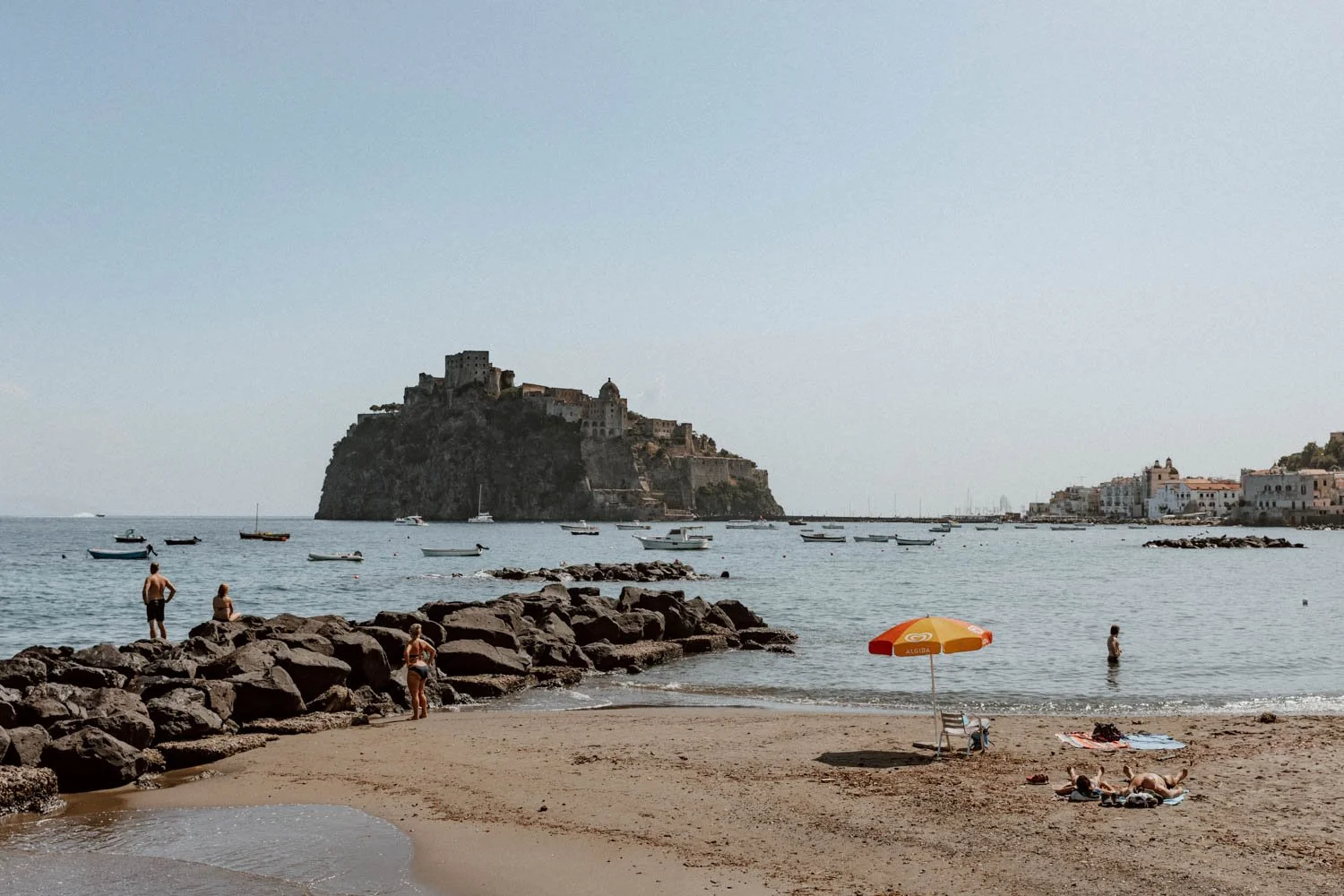
Ischia Is Beautiful, But…
We’d dreamt of Ischia for years.
A sun-soaked volcanic island surrounded by clear water, dotted with beaches, and famed for its thermal springs, it had long sat on our list of must-visit places for a classic Italian summer.
But if we’re honest, it didn’t quite live up to the version we’d imagined.
That’s not to say it isn’t beautiful - it absolutely is. But for us, something didn’t quite land.
In many parts, Ischia felt more like one large holiday resort than the kind of place with the slower, lived-in charm we’ve come to adore in other corners of Italy. The towns are polished and often feel built to cater to tourism, and while they’re easy to enjoy, they sometimes felt like they lacked that layer of lived-in character or scruffiness that can make places feel a little more special.
It’s also a destination that clearly trends older. Perhaps because of the spas, the pace, the time of year we visited, or just the overall style of holiday it offers but we found ourselves among mostly older visitors; the island didn’t have the energy we tend to connect with when travelling in summer.
All that said, we’re still glad we went.
Ischia has its moments - beautiful west coast sunsets, long seafood lunches, and beaches that feel like they haven’t changed in decades - and it’s undeniably striking in parts. It just didn’t quite grab us in the way we’d hoped or expected given our time in Calabria, Puglia, and Sicily.
But that’s not to say it won’t grab you.
Travel isn’t always about falling in love with every place - it’s about figuring out what resonates, and what doesn’t. And sometimes that clarity can be just as valuable.


Bring Your Own Beach Kit (and Be Prepared to Pay for Sand)
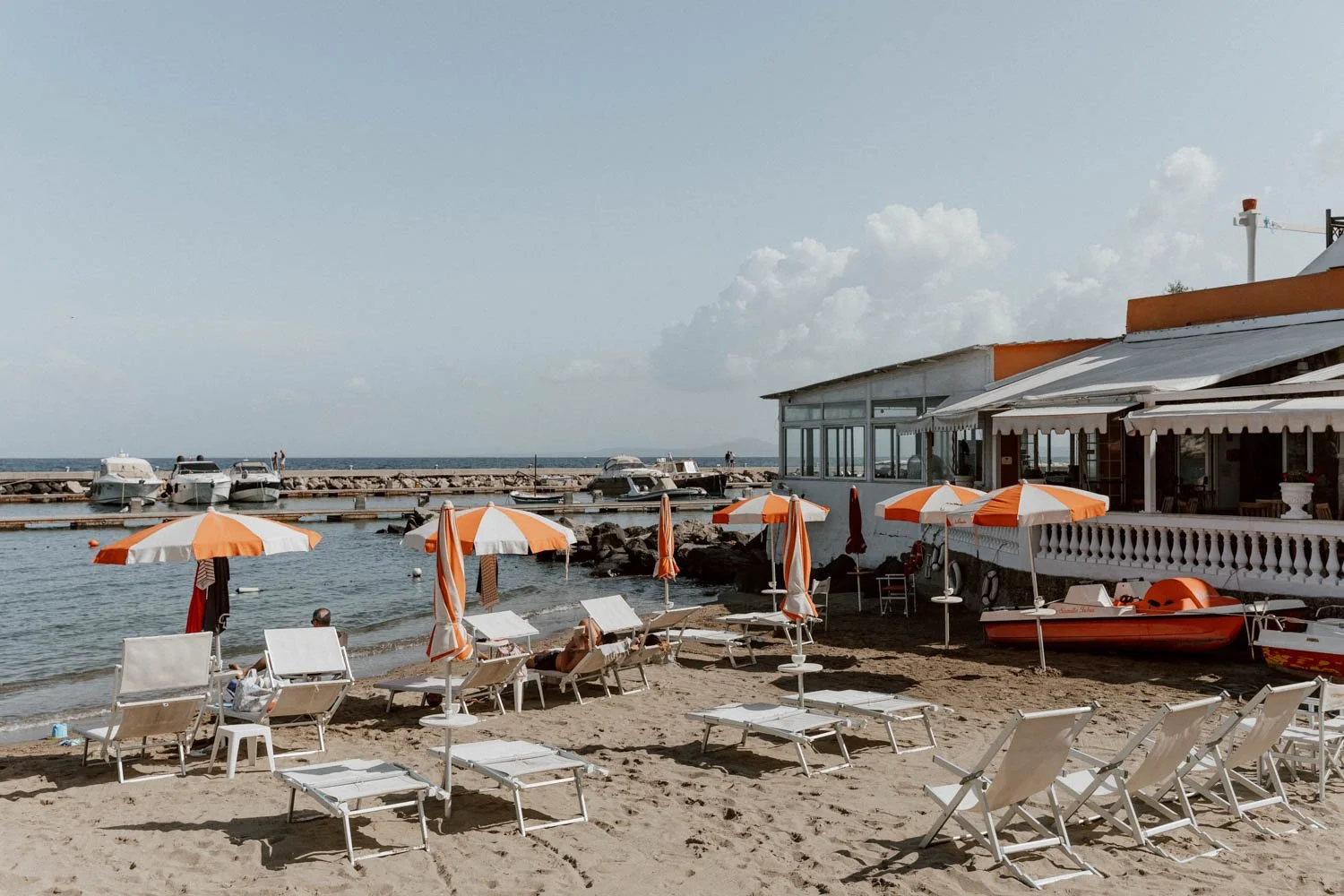
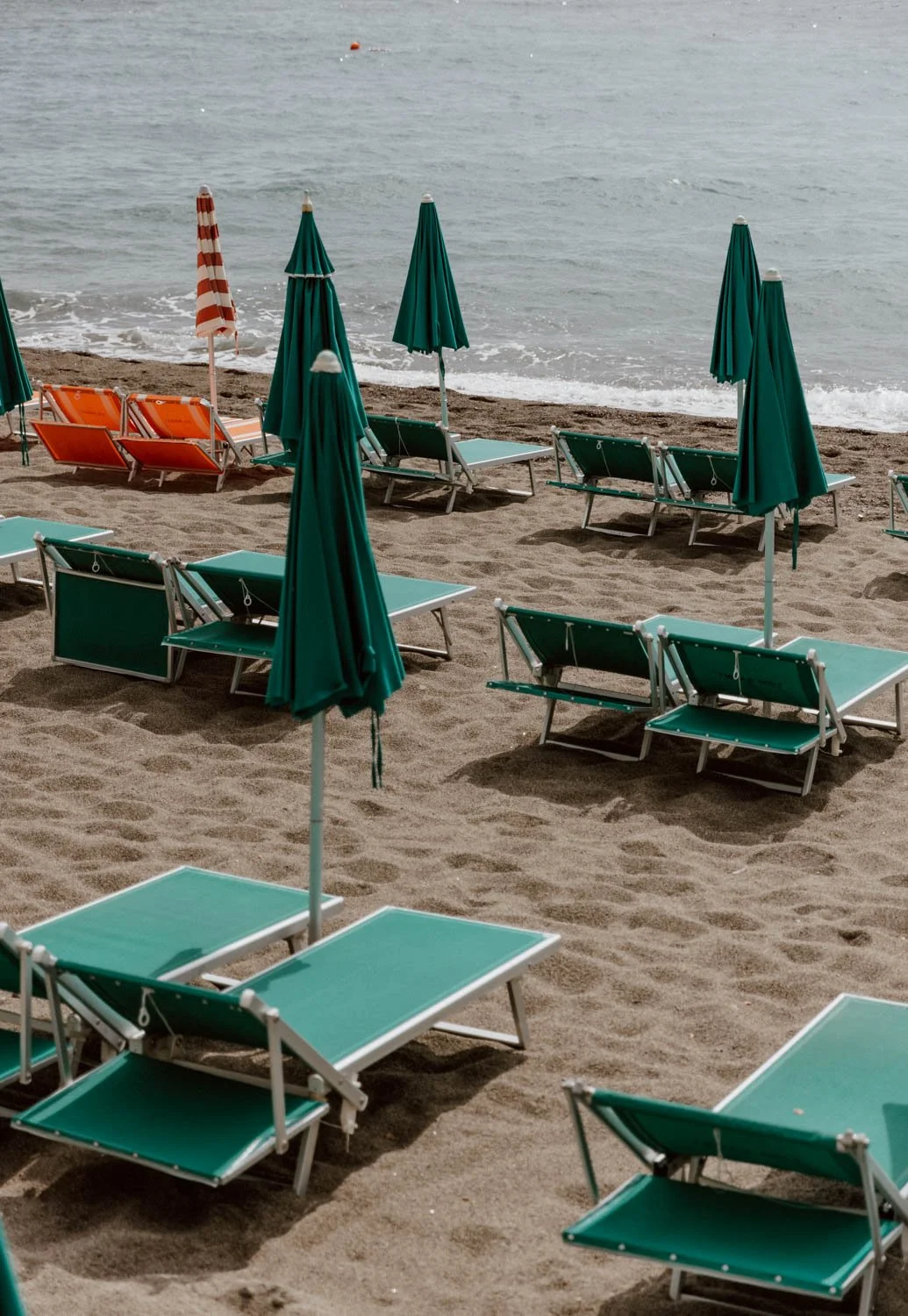
Ischia has a wide range of beaches, from sandy stretches to rocky coves and pebbly thermal pools. What many travellers don’t realise is that free beach space is limited, especially in high season.
The island is full of lidos, beach clubs that rent out sun loungers and umbrellas for the day. Prices vary, but expect to pay between €20-30 per person in the peak summer months, depending upon the particular beach and your position on the sand. In return, you get facilities like toilets, changing rooms, showers, and often a bar or small restaurant.
If you’re keen to save your holiday cash for meals, activities and the quintessential pre-dinner aperitivo - or you haven’t quite gotten on board with the whole Italian lido thing yet - you’ll be pleased to know that there are also free beaches (spiagge libere) in Ischia, but they can be small, crowded, or less appealing. Some, like parts of Spiaggia dei Maronti, offer both free and paid zones whilst others like Cava dell’Isole are entirely lido-free.
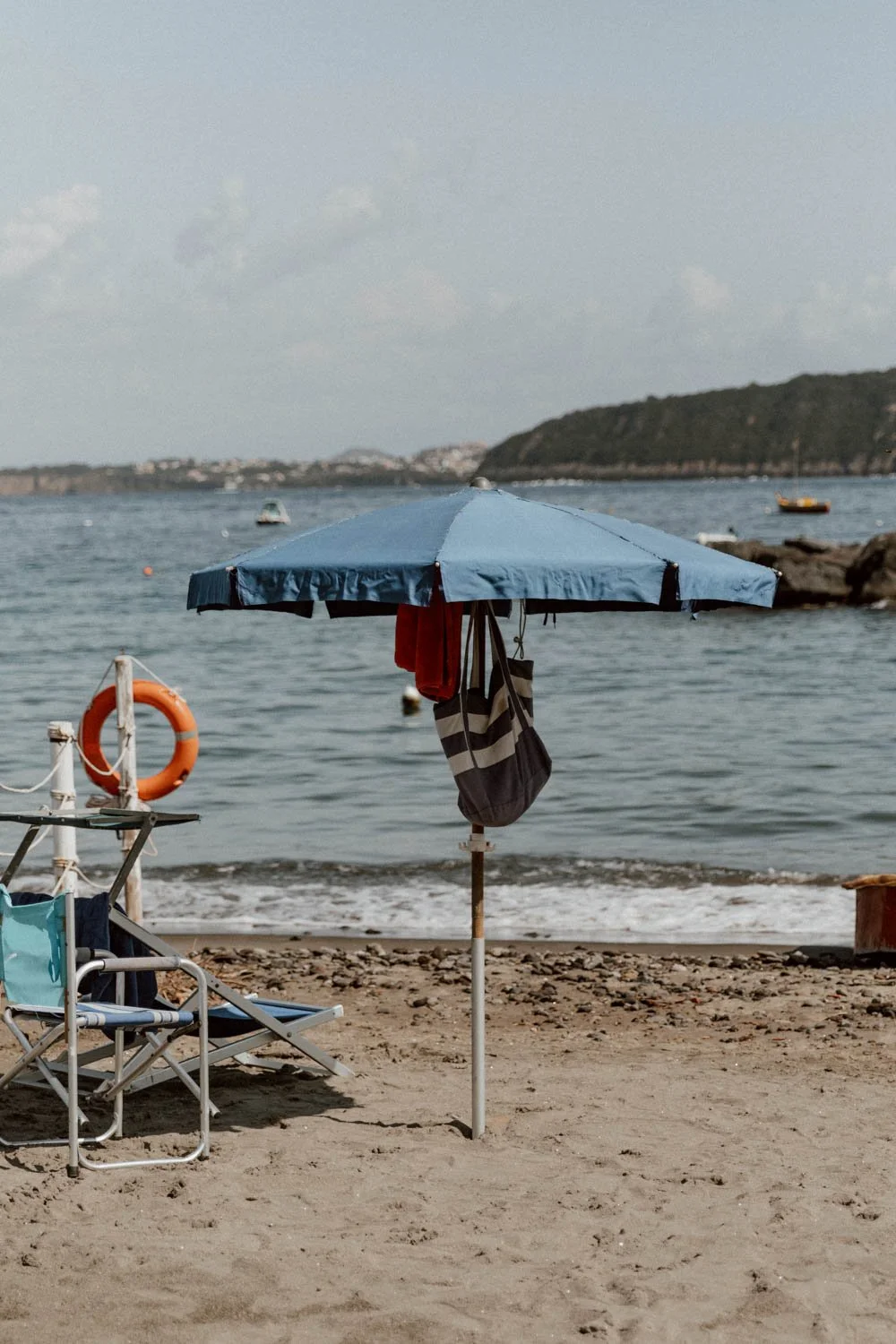
To save money and be more comfortable, bring your own beach mat, umbrella, and water shoes; the latter are essential for many of the pebbly or rocky access points, especially at Sorgeto or Cartaromana. A dry bag and small change for beachside lockers or facilities are also useful.
Keep Reading // Our Guide to the Best Beaches in Ischia
Embrace the Thermal Springs and Spa Culture
Ischia’s reputation as a spa island is well deserved. Thanks to its volcanic geology, there are dozens of natural thermal springs and mud pools across the island, and several have been developed into expansive spa parks.
The most well-known are:
Poseidon Gardens (Forio / maps) | The largest, with over 20 pools, a private beach, and beautiful terraced gardens.
Negombo (Lacco Ameno / maps) | A little smaller, more considered option in a wonderful botanical setting with a more relaxed feel.
Castiglione (between Casamicciola and Ischia Porto / maps) | We didn’t personally see this spa, but it was recommended as a more affordable park with great views and a more local atmosphere.
A full-day entrance ticket typically costs around €40 - 50 during peak summer months, although some parks offer discounts for afternoon visits. Remember to also factor in spending on food, drinks, towels and lockers etc.
If you’re visiting on a budget, Baia di Sorgeto is the island’s best-known free thermal spot. Hot water seeps from the rocks straight into the sea, creating naturally heated rock pools - and while the steps down are steep and the rocks underfoot aren’t the comfiest, it’s a unique and memorable experience. Just know that it gets very busy in peak season, and space is limited.
Many hotels on the island also have their own thermal pools, so if spa access is a priority, it’s worth filtering for properties that include this in the room rate - we'‘ve shared several in the ‘Where To Stay in Ischia’ post.
The spas mentioned above do not require you to wear a swim cap, but they are mandatory in some located within hotels (they’re not flattering, but everyone’s in the same boat).


Don’t Skip the Inland Villages
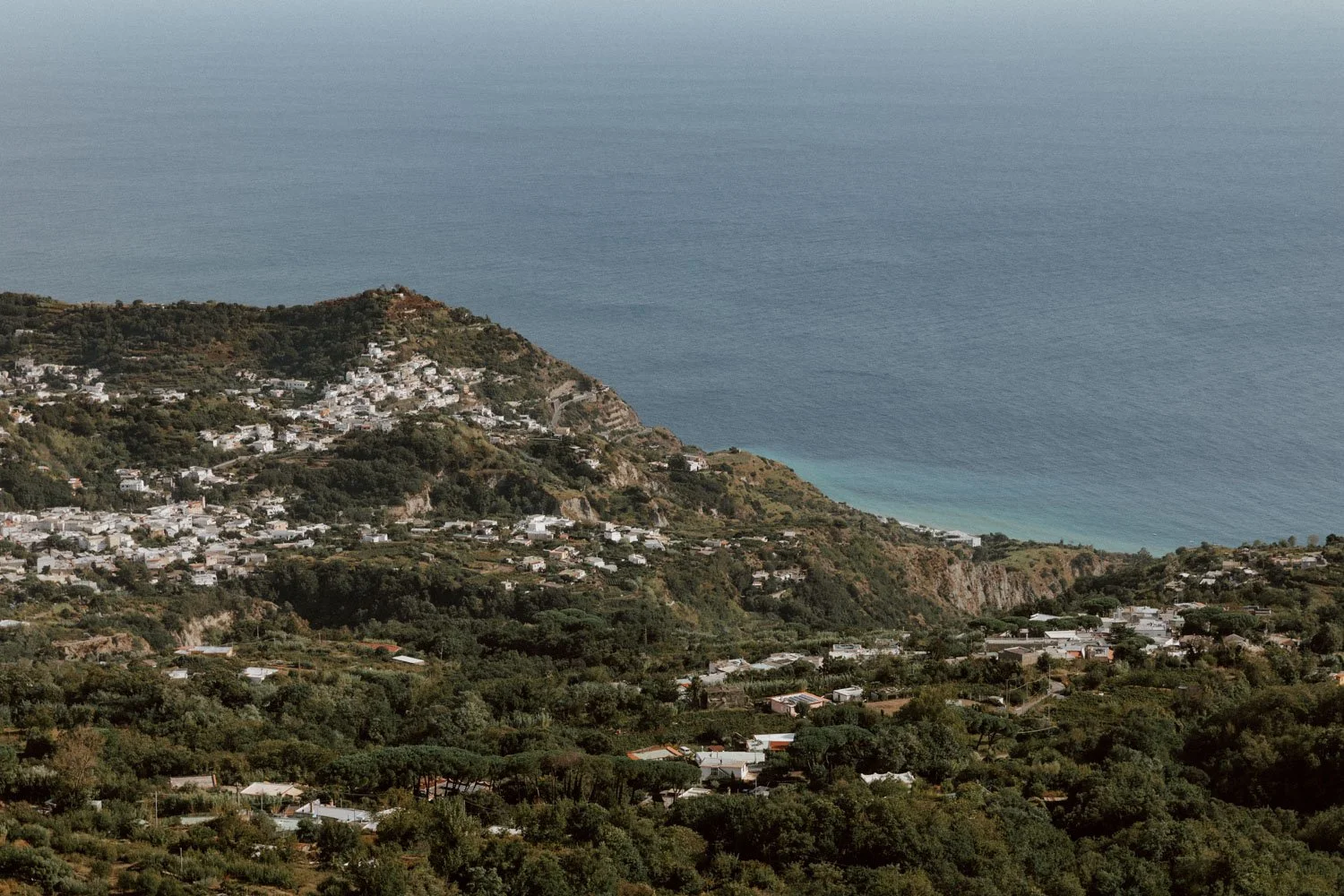
While most visitors understandably focus on the coast, Ischia’s interior is full of quiet villages, vineyards, and mountain trails that show a more traditional, agricultural side of island life.
Places like Serrara Fontana, Panza, and Buonopane feel a world away from the beach clubs and crowds. These villages offer panoramic viewpoints, unpretentious trattorias, and walking trails that pass through chestnut groves, terraced gardens, and ancient paths.
One of the best ways to explore inland Ischia is on a hike to Mount Epomeo, the island’s highest peak. The route from Fontana is well-marked and takes about 1.5 - 2 hours each way. At the summit, you’ll find a small bar carved into the rock and some of the best views over the island and Bay of Naples.
Even if you’re not up for a hike, it’s worth venturing inland for a few hours - especially in the late afternoon when the light softens and the day-trippers have gone.
Plan // Find out more and other unmissable experiences in 13 Wonderful Things To Do in Ischia
Dining Out | Think Local and Seasonal
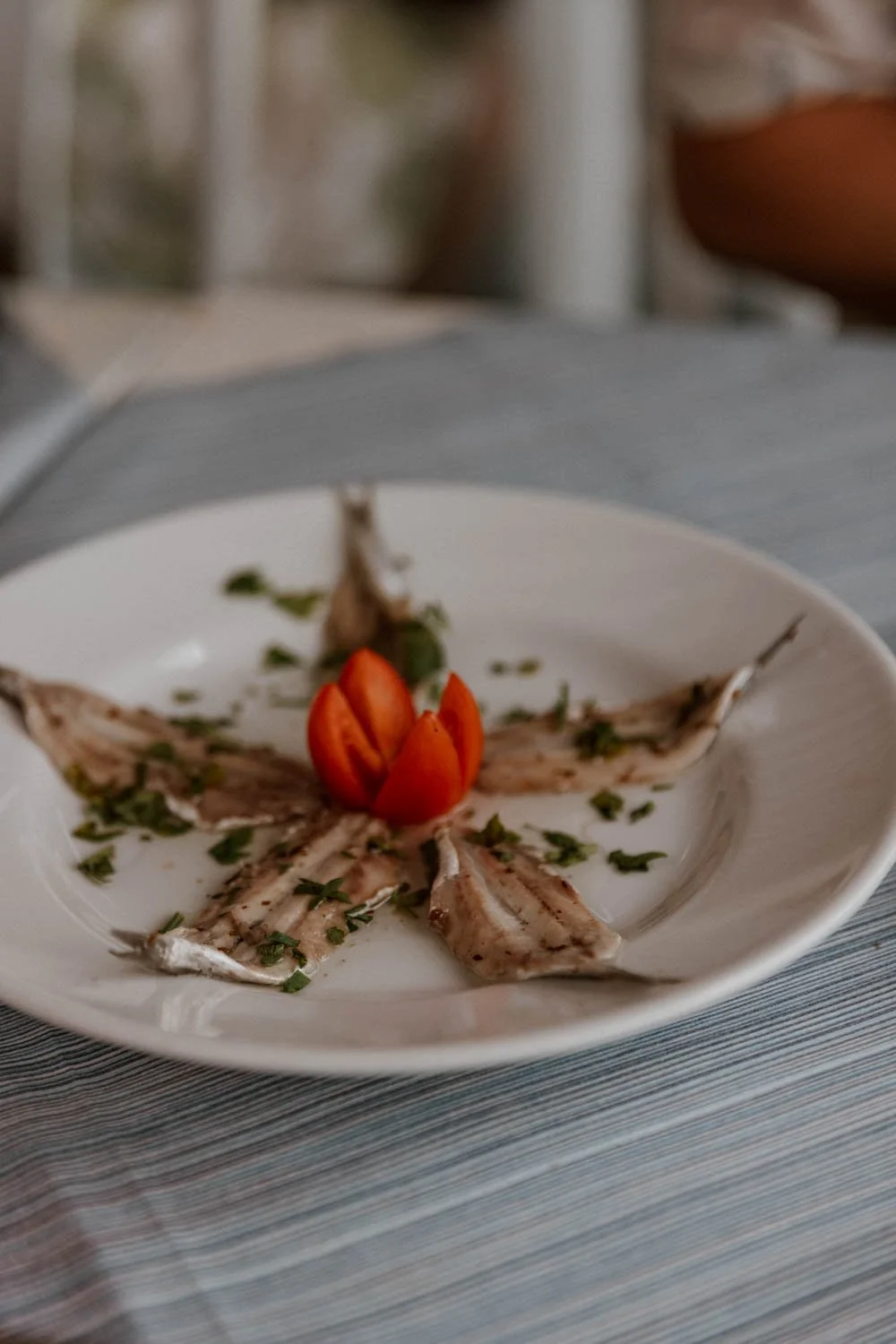
Ischia’s food scene is grounded in local produce, fresh seafood, and age-old recipes, often with a rustic, home-cooked feel rather than fine dining polish. While you’ll find classic Neapolitan dishes like pizza and gnocchi alla Sorrentina almost everywhere, the island’s most rewarding meals usually come from family-run trattorias serving what’s in season and from nearby land or sea.
A few dishes worth seeking out:
Coniglio all’ischitana. Although we’re pescetarians, it would be remiss of us not to mention Ischia’s signature dish: rabbit stewed slowly with white wine, garlic, tomatoes, herbs, and chilli. Traditionally cooked in terracotta pots, it’s found mostly in inland restaurants and apparently goes particularly well with local red wine.
Spaghetti alle vongole. A coastal classic made with fresh clams, garlic, white wine, and parsley. Often simple, but when it’s fresh, it’s unforgettable.
Zucchini flowers, frittura di paranza (mixed fried fish), and insalata di mare are common starters, especially in beachside restaurants.
Having arrived in Ischia from Procida, where lemons are everywhere, we were a little surprised to discover that Ischian limoncello is also very much a thing here.
Local white wines like Biancolella, Forastera, and San Lunardo are light, crisp, and made to be drunk with seafood in the sunshine.
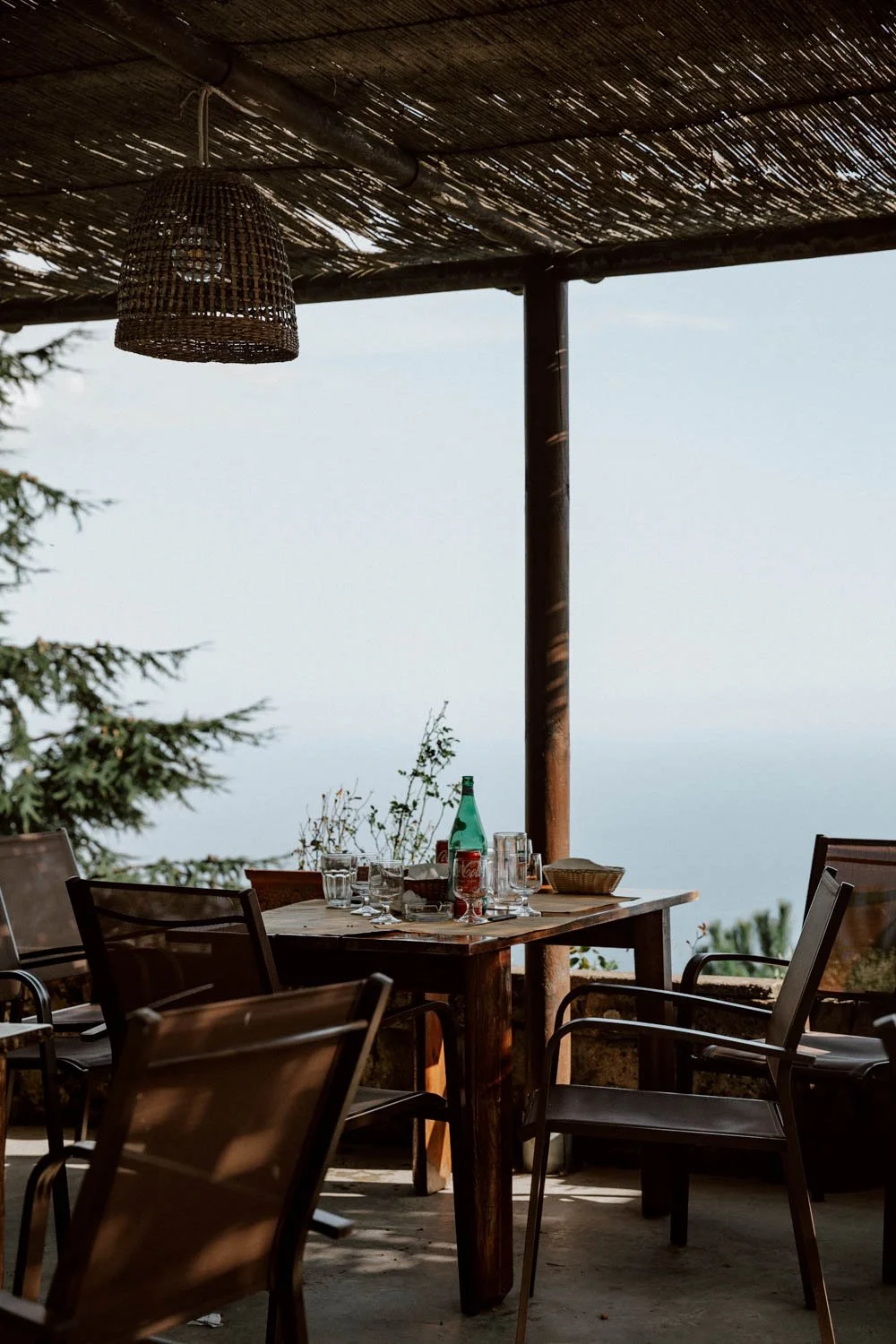
Restaurants tend to open late. While you’ll always find a few hungry tourists tucking into dinner before sunset, Italians and those in the know generally don’t show up until 8-8.30pm. If you’re starving but want to blend in, go for an aperitivo first - you’ll usually get a decent round of snacks alongside your drink and it’s the proper way to be in Italy.


Visit in the Shoulder Season for the Best Experience
Mid-July through to the end of August is Ischia at its most intense with packed beaches, overflowing buses, and restaurants booked out long before 9pm. It’s hot, buzzy, and a bit much unless you’re really into peak-season energy.
That’s why most advice points to the shoulder season being the best time to visit - and we’d agree, to a point.
We were there in late September, and while the weather was still good and the sea warm, the island felt surprisingly subdued. Italian holidaymakers had gone home, a few restaurants were already closing for the season, and some beaches felt a bit too empty if you’re after those classic summer scenes. Ischia doesn’t carry quite the same buzz into autumn that we’ve experienced elsewhere in Italy - and for us, that was unexpected.
The first two weeks of September are probably ideal: the summer atmosphere is still hanging on, but the chaos of August is behind you. Alternatively, late June or early July should strike a nice balance between warm weather, lively evenings, and still-manageable crowds.
If you’re not in it for the beaches, though, spring and autumn are great for hiking - especially around Mount Epomeo or the inland villages. The trails are cooler, quieter, and incredibly scenic.
Just keep in mind that between late October and March, the island slows right down. Ferry schedules are reduced, many hotels and restaurants close, and the weather becomes more unpredictable. If you do visit in winter, it’s best to lean into the quiet with spa time, cliff walks, and reading on the balcony rather than big days out.